
What to Wear in Aurangabad
Dress for heat, stone steps and one strict temple. Light cotton that covers shoulders and knees works almost everywhere, and good shoes matter more here than in most cities.
Trending wear
Modern, Instagram-friendly looks
Traditional wear
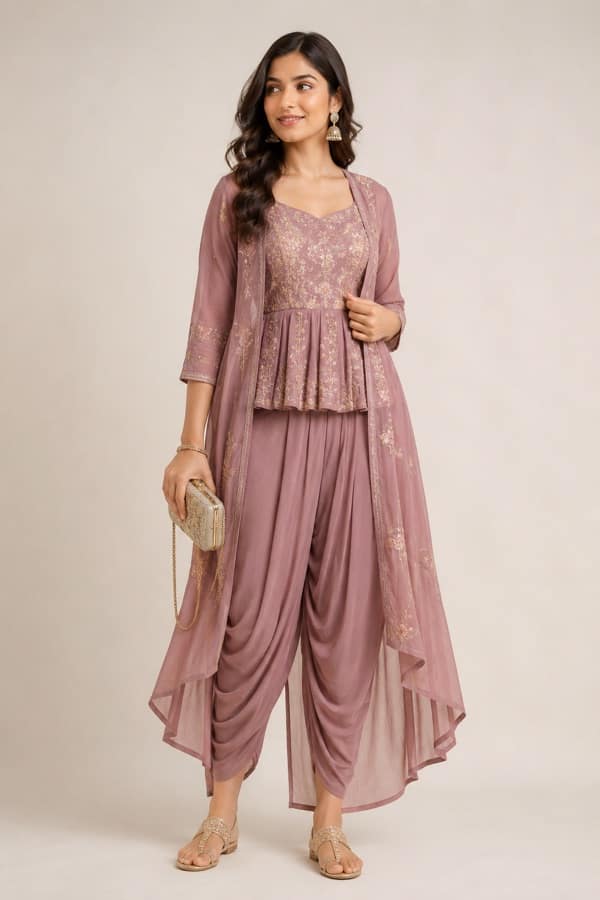
Local cultural outfits
For the climate
Aurangabad sits on the dry Deccan plateau. From March to May the days are very hot and the sun is strong, so loose cotton or linen in light colours, a hat and sunglasses are the basics. The monsoon, roughly June to September, is warm and humid rather than cold; quick-dry clothes and an umbrella are enough. From November to February mornings and evenings can be cool, especially on an early drive to Ajanta, so bring one warm layer. October and March feel closer to summer than winter.
For the caves and the fort
Ellora and Ajanta mean hours of walking on uneven rock, with steps between caves. You take your shoes off inside some caves, so slip-on shoes with a good grip save time. At Daulatabad Fort the climb goes through a dark rock-cut passage and up steep steps; closed shoes are far safer than sandals, and a small torch or phone light helps. Carry water on both.
For Grishneshwar and the dargahs
Grishneshwar is an active Jyotirlinga temple. Dress modestly, with shoulders and knees covered. Men who want to enter the inner sanctum are expected to remove their shirts, so wear something easy to take off. At the Sufi shrines in Khuldabad and the Panchakki dargah, cover your head and wear long sleeves.
Local textiles worth knowing
Two weaves come from here. Paithani is the silk saree with a peacock or lotus pallu in gold zari, named after Paithan, about 50 km south of the city, and it carries a GI tag. Himroo is a silk-and-cotton brocade with Persian-style patterns, which tradition links to the weavers who came south with Muhammad bin Tughluq's move to Daulatabad in the 14th century. A Himroo stole or shawl is a lighter buy than a Paithani, and it suits a sunset visit to Bibi Ka Maqbara.
Colours that work
White, cream and pastels read cleanly against the Maqbara's white plaster. Against the dark basalt at Ellora and Ajanta, ochre, rust, maroon and mustard stand out; black tends to disappear into the rock.
Questions
Aurangabad — FAQ
Do men have to remove their shirts at Grishneshwar?
To enter the inner sanctum, yes, by local custom. You can visit the rest of the temple dressed normally. Wear a shirt that is easy to take off and put back on.
What shoes should I wear for Ajanta and Ellora?
Comfortable closed or slip-on shoes with a good grip. The rock can be smooth and dusty, you will walk several kilometres, and you take shoes off in some caves.
Where can I buy a Paithani or Himroo in Aurangabad?
Himroo is sold by weaving workshops and shops in the old city, and Paithani by silk shops in town. For a Paithani, Paithan town itself, about 50 km south, has many weavers. Ask to see the handloom mark before you buy.
Is it cold in Aurangabad in winter?
Days are pleasant and warm. Nights and early mornings in December and January can feel cool, so a light jacket or shawl is enough.