

Temple in Deoghar
Baba Baidyanath Dham
Deoghar, Jharkhand
A Jyotirlinga, and the destination of one of the largest pedestrian pilgrimages on earth. For most of the year it is a busy temple; for one month of it, the town is unrecognisable.
Photo: Shivsh0336 — CC BY-SA 3.0, via Wikimedia Commons
Overview
Who it's to, and what's expected
Deity
Shiva as Baidyanath
Tradition
Shiva temple
- Entry
Visitors are required to wear modest, traditional clothing and are strictly prohibited from taking photographs inside the inner sanctum (Garbha Griha).
- Footwear
Visitors should use the designated shoe stands to store their footwear, and slip-on shoes are recommended for convenience.
- Access
Straightforward in the ordinary season and extremely difficult during the Shravani Mela. The complex is organised around a central courtyard with numerous smaller temples, so expect a fair amount of walking and repeated footwear removal - slip-on shoes are recommended. Deoghar is hot and humid for much of the year and darshan involves standing, so simple cotton clothing is advised. During Shravan (July-August) the town is congested and a routine visit can take most of a day; confirm current darshan arrangements at the temple's own counters.
- Prasadam
A midday food offering is made to the deity at 12:00 PM.
Usually visited with
Time your visit
The darshan clock
A single opening-hours line cannot express a midday closure or an evening ceremony.
4:00 AM
Opening hours
The temple is open for visitors in the morning from 4:00 AM to 2:00 PM and in the evening from 6:00 PM to 8:00 PM.
Rules, timings and fees change — confirm locally before you rely on this.
At the gate
Before you go in
What gets refused, and what you cannot take past the door.
What to wear
Visitors are advised to wear modest, traditional clothing, with simple cotton garments recommended for comfort in the local climate.
Phones and cameras
Photography is permitted within the temple complex, but it is strictly forbidden inside the inner sanctum (Garbha Griha).
Rules, timings and fees change — confirm locally before you rely on this.
When not to come — unless you mean to
Festival windows
These follow lunar calendars and move by weeks each year, so the windows are months, not dates.
The month of Shravan — July into August
Extreme crowdsShravani Mela
Millions of kanwariyas carry Ganga water from Sultanganj in Bihar and walk roughly 105 km to Deoghar — barefoot, in saffron, chanting 'Bol Bam'. It runs for weeks, not days. Accommodation, roads and the temple queue are all governed by it, and an ordinary visit in Shravan is not really possible.
Crowd levels are our reading of the notes above, not an official measure. Rules, timings and fees change — confirm locally before you rely on this.
Practicalities
The things that go wrong
Book through official channels, and treat anyone promising a guaranteed slot as a warning sign.
What to watch for
- Charging for entry
- General darshan at Baidyanath Dham is free
- Anyone offering to photograph the lingam inside the Garbha Griha for a fee
- Photography is strictly forbidden in the inner sanctum and no payment lifts that, though it is permitted in the wider complex
- Guides attaching themselves near the station and producing a fee at the temple
- The complex is well organised around a central courtyard and the surrounding shrines are signposted
- Inflated accommodation and transport rates quoted during Shravan without disclosure
- Prices do rise legitimately in the mela month, so agree rates in advance and book early - but a sudden surcharge presented at arrival is not the same thing
- Claims that the temple is open through the late afternoon
- The doors close for cleaning and the midday bhog, from about 2:00 or 3:30 PM until 6:00 PM
General guidance
Planning the visit
Customary practice and what Deoghar's climate means for a barefoot visit — not rules posted at this temple. Anything specific to Baba Baidyanath Dham is above.
Circling the shrine
At most Shaiva temples the circuit around the sanctum is not completed in a full circle — the channel draining the abhishekam is not crossed. Walk to it, turn, and come back the way you came. Watching what the queue in front of you does is the reliable guide.
Come in winter
Winter is when Deoghar is most comfortable to walk around, which matters here because a temple visit is done on foot and barefoot. Locally the window is given as october to march (shravani mela in jul–aug).
Stone gets hot — go early
You will be barefoot from the shoe rack onwards, often across an open courtyard. Between late morning and mid-afternoon in the hot months that stone is genuinely painful to stand on. Socks help, and are permitted almost everywhere shoes are not.
Arriving by train
Deoghar has a railway station, and auto-rickshaws wait outside it. Agree the fare or use a meter before you set off, and expect to be dropped a short walk from the temple rather than at its door.
Outfit guide
What to wear at Baba Baidyanath Dham
Cover shoulders and knees — the rules above win over anything here.
Trending wear for this spot
Modern, camera-ready looks picked for Baba Baidyanath Dham.

Traditional wear for this spot
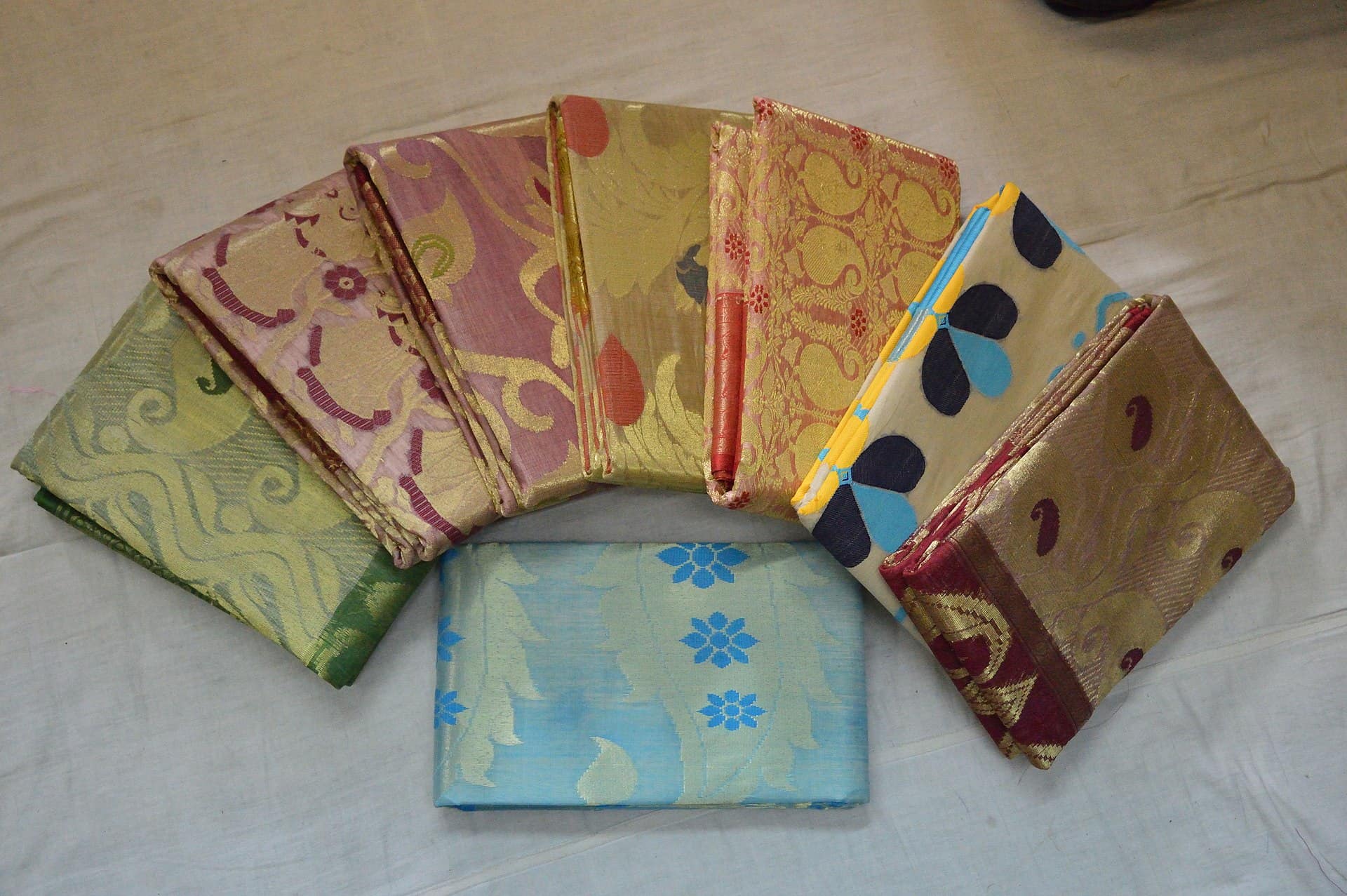
Timeless, cultural outfits worn across Deoghar.
Baba Baidyanath Dham, Deoghar
Baidyanath is a Jyotirlinga and the destination of one of the largest pedestrian pilgrimages on earth. For most of the year it is a busy temple in a Jharkhand town. For one month of it, the town is unrecognisable.
That month is Shravan, and the pilgrimage is the Shravani Mela — when between 70 and 80 lakh devotees (seven to eight million) walk barefoot from Sultanganj to Deoghar carrying Ganga water.
🚶 The 108-kilometre walk
Kanwariyas take water from the Uttarvahini Ganga at Sultanganj, in Bhagalpur district of Bihar — about 108 to 109 km from Deoghar — and carry it on foot to offer at the lingam.
The scale is what makes it extraordinary: a line of pilgrims stretching more than a hundred kilometres, walking barefoot through the monsoon, carrying water in kanwars (bamboo shoulder-poles with vessels at each end), chanting as they go. It is among the largest gatherings of walking human beings anywhere, and it happens every July and August.
Practical consequences if you are visiting during Shravan:
- Deoghar is congested beyond recognition. The route through the town, the temple approaches and the roads from the station are all affected.
- Accommodation sells out far in advance and prices rise sharply.
- A visit that takes two hours in November can take all day in Shravan.
- The pilgrims have priority on the road and at the temple. Plan around them rather than expecting the town to operate normally.
If you want the temple rather than the mela, come October to March, which is also the pleasant weather window.
🕉️ Vaidyanath — Shiva as physician
The name means "Lord of Physicians" — vaidya, doctor, and natha, lord — and the traditional account explains it through Ravana.
Ravana, the demon king of Lanka, was a great devotee of Shiva and performed severe penance to win a boon. Shiva granted him a lingam on the condition that it must never be set down on the ground, since wherever it was placed it would become fixed. The gods, unwilling to let the lingam rest in Ravana's Lanka, contrived to have it set down — in the classic version, a boy agreed to hold it and then put it down when Ravana was delayed. Where it landed was Deoghar, and there it remains.
Shiva is also held to have cured Ravana here, which is the direct source of the name: Shiva as the physician who healed the devotee who had exhausted himself carrying him. The temple is therefore associated with healing petitions, and devotees come for recovery from illness as much as for general darshan.
💎 The sanctum and the complex
The sanctum sanctorum houses the Jyotirlinga, believed to be around five inches in diameter. Above it, the temple is described as holding a Chandrakanta Mani — an eight-petalled lotus jewel, one of the details devotees come specifically to see.
The complex is organised around a central courtyard, with numerous smaller temples surrounding the supreme shrine, each dedicated to a different deity. That arrangement — a Jyotirlinga at the centre of a field of subsidiary shrines — means allowing more time than a single-sanctum visit would need.
The Naulakha Mandir is the other significant temple in Deoghar, a short distance away, and is conventionally combined with Baidyanath.
🕒 Timings — published hours conflict
The temple opens at 4:00 AM, and the two published closing patterns differ:
- Two sources give 4:00 AM to 3:30 PM and 6:00 PM to 9:00 PM, with the main doors closed in the late afternoon for cleaning and midday offerings.
- The official Incredible India listing gives 4:00 AM to 2:00 PM and 6:00 PM to 8:00 PM.
Timings can be extended on special religious occasions, and they change substantially during the Shravani Mela. Plan for the earlier closing to be safe, and treat the afternoon break as firm in both versions.
The daily ritual sequence:
- 4:00 AM — Mangal Aarti / Kakad Aarti, the temple opening
- 5:30 to 9:00 AM — general morning darshan
- 12:00 PM — Bhog, the midday food offering to the deity
- 2:00 to 3:30 PM — cleaning and rest, doors closed
- 6:00 PM — the temple reopens and Shringar Puja begins
- 9:00 PM — Shayan Aarti, temple closed for the night
The 5:30 to 9:00 AM window is the practical target for general darshan — early enough to avoid the heat and the crowds, late enough to be past the opening ritual.
📷 Rules
Photography is permitted within the temple complex but strictly forbidden inside the inner sanctum (Garbha Griha). That is a clear and useful distinction: the courtyard and the surrounding smaller temples can be photographed; the lingam cannot.
Modest, traditional clothing is advised, with simple cotton garments recommended for comfort in the local climate. Deoghar is hot and humid through much of the year, and the queue involves standing.
Use the designated shoe stands for footwear, and slip-on shoes are recommended — you will remove and replace them repeatedly across a complex with many shrines.
🍛 Bhog and prasad
A midday food offering is made to the deity at 12:00 PM, and prasad follows. The bhog window is also the reason for the afternoon closure, so arriving around noon means the temple is preparing to shut rather than opening for darshan.
🌸 Shravani Mela
The temple's defining occasion, and the reason Deoghar exists as a pilgrimage destination. During Shravan (July to August):
- Seven to eight million devotees walk the 108 km route from Sultanganj
- The town's population and infrastructure are overwhelmed for the month
- Timings and queue arrangements change
- The continuous chant of the kanwariyas is audible throughout Deoghar
Maha Shivratri (February or March) is the other great night, and Sawan Mondays within Shravan are the peak days of an already peak month.
📍 Getting there
Deoghar is in Jharkhand, served by Deoghar railway station and by Deoghar Airport, which has limited connectivity — most visitors arrive by rail. The temple is close to the town centre, and Naulakha Mandir is the standard second visit.
⚠️ Practical notes
- October to March for the temple; July to August only if the mela is the point.
- Aim for 5:30 to 9:00 AM for general darshan.
- Wear slip-ons and carry little.
- Allow time for the surrounding smaller temples, not just the sanctum.
- Do not photograph the lingam. The complex is fair; the Garbha Griha is not.
Last verified: 2026. The daily ritual sequence (4:00 AM Mangal Aarti, 5:30-9:00 AM darshan, 12:00 PM bhog, 2:00-3:30 PM closure, 6:00 PM Shringar Puja, 9:00 PM Shayan Aarti) is documented. Closing hours conflict between 3:30/9:00 PM and the official 2:00/8:00 PM listing. The Shravani Mela figure of 70-80 lakh devotees walking ~108 km from Sultanganj is consistent across sources.
Questions
Baba Baidyanath Dham — FAQ
Who is Baba Baidyanath Dham dedicated to?
Baba Baidyanath Dham in Deoghar is dedicated to Shiva as Baidyanath.
Who can enter Baba Baidyanath Dham?
Visitors are required to wear modest, traditional clothing and are strictly prohibited from taking photographs inside the inner sanctum (Garbha Griha).
What is the dress code at Baba Baidyanath Dham?
Visitors are advised to wear modest, traditional clothing, with simple cotton garments recommended for comfort in the local climate.
Do I have to take my shoes off at Baba Baidyanath Dham?
Visitors should use the designated shoe stands to store their footwear, and slip-on shoes are recommended for convenience.
Can I take photos inside Baba Baidyanath Dham?
Photography is permitted within the temple complex, but it is strictly forbidden inside the inner sanctum (Garbha Griha).
What prasadam is offered at Baba Baidyanath Dham?
A midday food offering is made to the deity at 12:00 PM.
Is Baba Baidyanath Dham wheelchair accessible?
Straightforward in the ordinary season and extremely difficult during the Shravani Mela. The complex is organised around a central courtyard with numerous smaller temples, so expect a fair amount of walking and repeated footwear removal - slip-on shoes are recommended. Deoghar is hot and humid for much of the year and darshan involves standing, so simple cotton clothing is advised. During Shravan (July-August) the town is congested and a routine visit can take most of a day; confirm current darshan arrangements at the temple's own counters.
Checked, not remembered
Sources
Every rule and timing above traces back to one of these.