
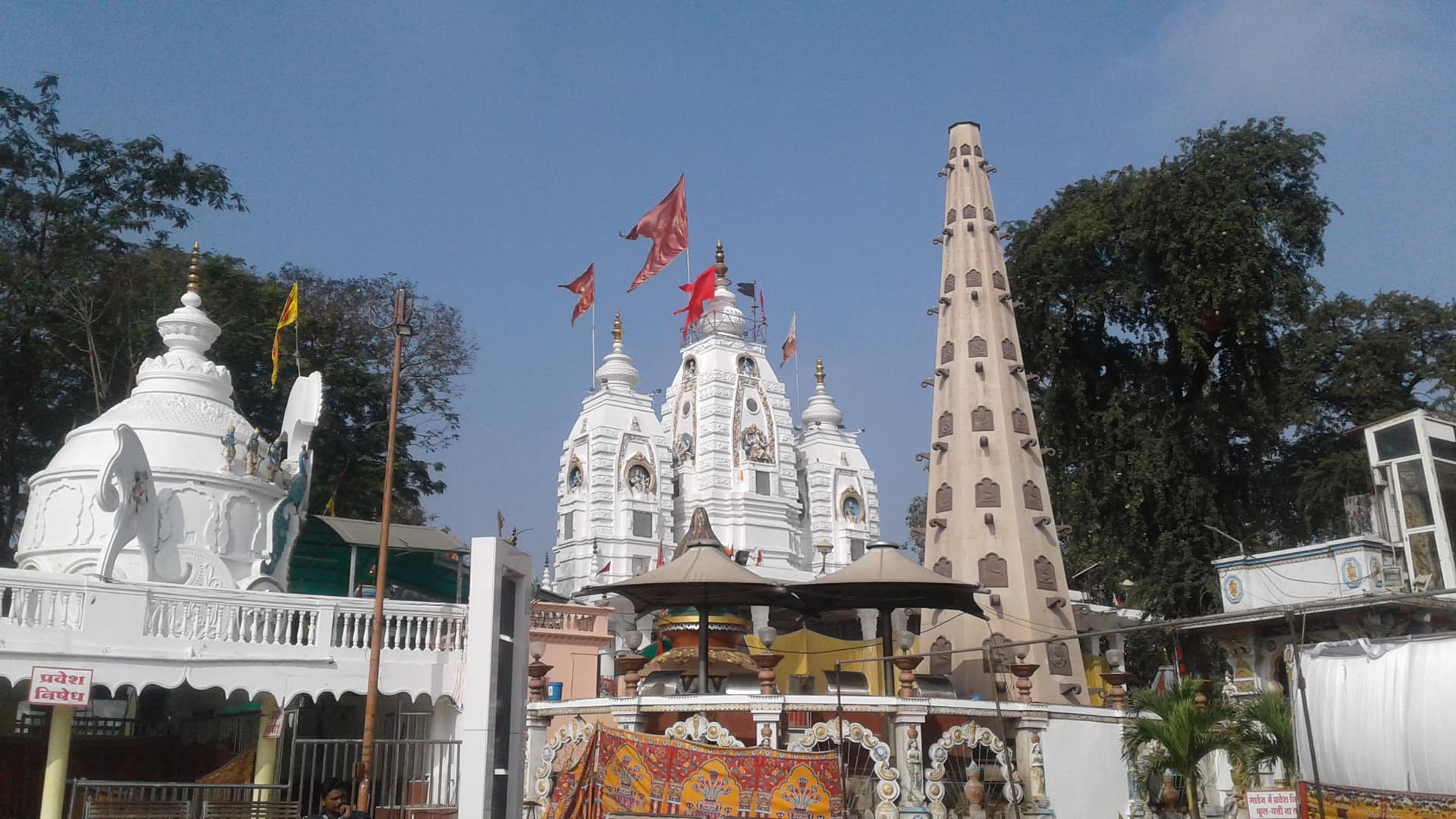
Temple in Indore
Khajrana Ganesh Temple
Indore, Madhya Pradesh
Built in 1735 by Ahilyabai Holkar around an image that had been hidden in a well to keep it safe — and now one of the richest temples in Madhya Pradesh. Wednesdays and Sundays are when the crowds come.
Photo: Vishwa Sundar — CC BY-SA 4.0, via Wikimedia Commons
Overview
Who it's to, and what's expected
Deity
Ganesha
Tradition
Ganesha temple
- Entry
The custom here is to draw an inverted swastika on the wall behind the deity and make your wish, then return to draw it the right way up when it is granted. The back wall is covered in them, which is the thing nobody explains to a first-time visitor.
- Prasadam
The temple offers Laddu Prasadi, with a center for distribution coming soon to the International Airport in Indore.
Time your visit
The darshan clock
A single opening-hours line cannot express a midday closure or an evening ceremony.
5:00 AM
Opening hours
The temple opens about 5:00 AM and closes at noon, reopening from about 4:00 PM to 9:00 PM. Abhishek is in the first morning hour, the morning aarti around 8:00 to 9:00 AM and the sandhya aarti around 8:00 PM.
Rules, timings and fees change — confirm locally before you rely on this.
How long this takes
Ways in
The difference between a twenty-minute visit and a three-hour one.
General darshan
- Free, in two sessions - about 5:00 AM to noon and 4:00 PM to 9:00 PM. On a normal day the wait is around half an hour; the temple's own arrangements beyond general entry are made at its counters
Wednesdays and Sundays
- Ganesha's day and its runner-up - the fullest ordinary days, with the queue moving slowly through the morning session
Vinayaka Chaturthi and Ganeshotsav
- The August or September festival, when lakhs of devotees arrive from across the country and the complex runs full through every session
When not to come — unless you mean to
Festival windows
These follow lunar calendars and move by weeks each year, so the windows are months, not dates.
Vinayaka Chaturthi / Ganeshotsav
Monthly Chaturthi
Rang Panchami
Practicalities
The things that go wrong
Book through official channels, and treat anyone promising a guaranteed slot as a warning sign.
What to watch for
- Charging for entry or for making the wish itself
- The sanctum, the wall and the thread are open to all devotees; nobody is authorised to charge for them
- Selling 'guaranteed wish' pujas at the approach; the temple's own arrangements are made at its counters, and no one outside can promise what the deity grants
- Modak and laddu sellers at the gate quoting first prices; the bazaar prices are a fraction
- Auto-rickshaw drivers quoting a fare only on arrival from the city centre; agree it before setting out
- During Ganeshotsav, anyone claiming to hold a place in the queue for a fee; the queue is managed by the temple's own volunteers
General guidance
Planning the visit
Customary practice and what Indore's climate means for a barefoot visit — not rules posted at this temple. Anything specific to Khajrana Ganesh Temple is above.
Busiest on Tuesdays and Chaturthi
Ganesha shrines fill on Tuesdays and on Sankashti Chaturthi each lunar month, and overwhelmingly during Ganesh Chaturthi. A weekday morning outside those is the calm version of the same temple.
Come in winter
Winter is when Indore is most comfortable to walk around, which matters here because a temple visit is done on foot and barefoot. Locally the window is given as october to march.
Stone gets hot — go early
You will be barefoot from the shoe rack onwards, often across an open courtyard. Between late morning and mid-afternoon in the hot months that stone is genuinely painful to stand on. Socks help, and are permitted almost everywhere shoes are not.
Metro, then walk
Indore has a metro, and it is usually the fastest way to get near a busy temple — the streets immediately around one are often closed to vehicles or jammed with them.
Outfit guide
What to wear at Khajrana Ganesh Temple
Cover shoulders and knees — the rules above win over anything here.
Trending wear for this spot
Popular modern looks travellers are wearing across Indore.

Traditional wear for this spot
Timeless, cultural outfits worn across Indore.
Khajrana Ganesh Temple, Indore
Built in 1735 by Rani Ahilyabai Holkar around an image that had been hidden in a well to keep it safe — and now the most visited temple in Indore and one of the richest in Madhya Pradesh.
🕉️ The idol in the well
The image of Ganesha at Khajrana had been concealed in a well for safekeeping through an unsettled era, and its retrieval is the temple's founding story. The tradition records that the idol's location was revealed in a dream to Pandit Mangal Bhatt, a local priest — and in 1735 Ahilyabai Holkar, the great builder-queen of the Holkar dynasty, had the image raised and a temple built around it.
The Bhatt family still manages the temple, an unbroken line from the dream to the present administration — and Ahilyabai's name keeps the temple inside her larger story: the woman who rebuilt Maheshwar, restored Kashi's ghats and raised shrines across a kingdom, remembered at Indore's most beloved one.
🙏 The wish ritual — the wall of swastikas
The custom here is the thing nobody explains to a first-time visitor: a devotee with a wish draws a swastika upside-down on the wall behind the deity, and returns — whenever the wish is granted — to draw it the right way up.
The back wall is covered in them, right side up, each one a wish that came true. It is the most eloquent wall in Indore, and it explains the temple's crowds better than any schedule does.
The fuller practice runs: circumambulate the shrine, tie a thread in prayer for work to be completed, offer modak and laddu to Ganesha — and come back to right the swastika and give thanks. The temple's local standing rests on the belief that wishes made here are granted quickly, which is why Indore treats Khajrana not as a monument but as a working arrangement with the deity.
🕒 Timings
The temple opens at about 5:00 AM, closes at noon, and reopens from about 4:00 PM to 9:00 PM. Abhishek — the ritual bathing of the deity — is performed in the first hour of the morning; the morning aarti falls around 8:00 to 9:00 AM, and the sandhya aarti around 8:00 PM, with shayan closing the night.
Darshan on a normal day takes about half an hour; during aarti the hall slows and fills.
📅 Wednesdays and the calendar
Wednesday is Ganesha's day and Khajrana's busiest — Sunday runs it close — and every monthly Chaturthi brings the special worship that fills the complex, with the first hour of abhishek the fullest of all. Vinayaka Chaturthi, the great annual festival in August or September, is the peak: during Ganeshotsav, lakhs of devotees come from across the country, and the deity is adorned with the jewellery donated to the temple over the centuries — a treasury of gold and gems worth crores, placed on the god for the festival.
Anant Chaturdashi closes the Ganeshotsav season, and Diwali and Rang Panchami — Indore's own signature festival of colours — fill the calendar after it.
🏛️ The complex today
Ahilyabai's shrine has grown into a large complex — the work of two and a half centuries of the city's devotion — with several shrines to other deities around the central Ganesha, and gates and halls that keep being added by families marking their own granted wishes. The scale is the point: this is not a monument preserved but a temple in continuous expansion, funded entirely by what devotees believe they received here.
On festival mornings the whole precinct becomes a single slow-moving congregation — flower sellers outside, families with prasad in their hands, and the wall of swastikas doing quiet work at the centre of it all.
💍 The treasury
The temple receives donations of money, gold and precious stones at a scale matched by few in the state — the visible evidence being the festival adornment and the scale of the complex that has grown around Ahilyabai's original shrine. The wealth is the community's own statement of the temple's standing: a city that believes in its Ganesha, saying so in gold.
🍽️ The prasad
Laddu Prasadi is the temple's standard offering — the modak-and-laddu of the wish ritual made at scale — and the temple's kitchens feed the festival crowds through Ganeshotsav. Buy it at the temple's own counter; the boxes travel well and are the standard gift brought back from an Indore trip.
📍 Indore
Khajrana is a neighbourhood of east Indore, an easy auto-rickshaw ride from the centre of a city that is itself one of India's most liveable. Pair the temple with Indore's other shrines — Bada Ganpati with its vast image, the glass-walled Kanch Mandir, Annapurna in the heart of the old city — and with the food for which Indore is famous: Sarafa Bazaar's night market is the essential end to any day here.
Last verified: 2026. The 1735 founding by Ahilyabai Holkar, the concealment in and retrieval from a well, the Mangal Bhatt dream tradition and the Bhatt family's management, the inverted-swastika wish custom and the wall it has produced, the thread-tying practice, the two-session day with the aarti times, the Wednesday and Sunday crowds, the Ganeshotsav scale and the crores of donated jewellery, and the festival calendar are documented. Session times shift on festival days and the temple's own schedule is authoritative.
Questions
Khajrana Ganesh Temple — FAQ
Who is Khajrana Ganesh Temple dedicated to?
Khajrana Ganesh Temple in Indore is dedicated to Ganesha.
Who can enter Khajrana Ganesh Temple?
The custom here is to draw an inverted swastika on the wall behind the deity and make your wish, then return to draw it the right way up when it is granted. The back wall is covered in them, which is the thing nobody explains to a first-time visitor.
What prasadam is offered at Khajrana Ganesh Temple?
The temple offers Laddu Prasadi, with a center for distribution coming soon to the International Airport in Indore.
Checked, not remembered
Sources
Every rule and timing above traces back to one of these.