
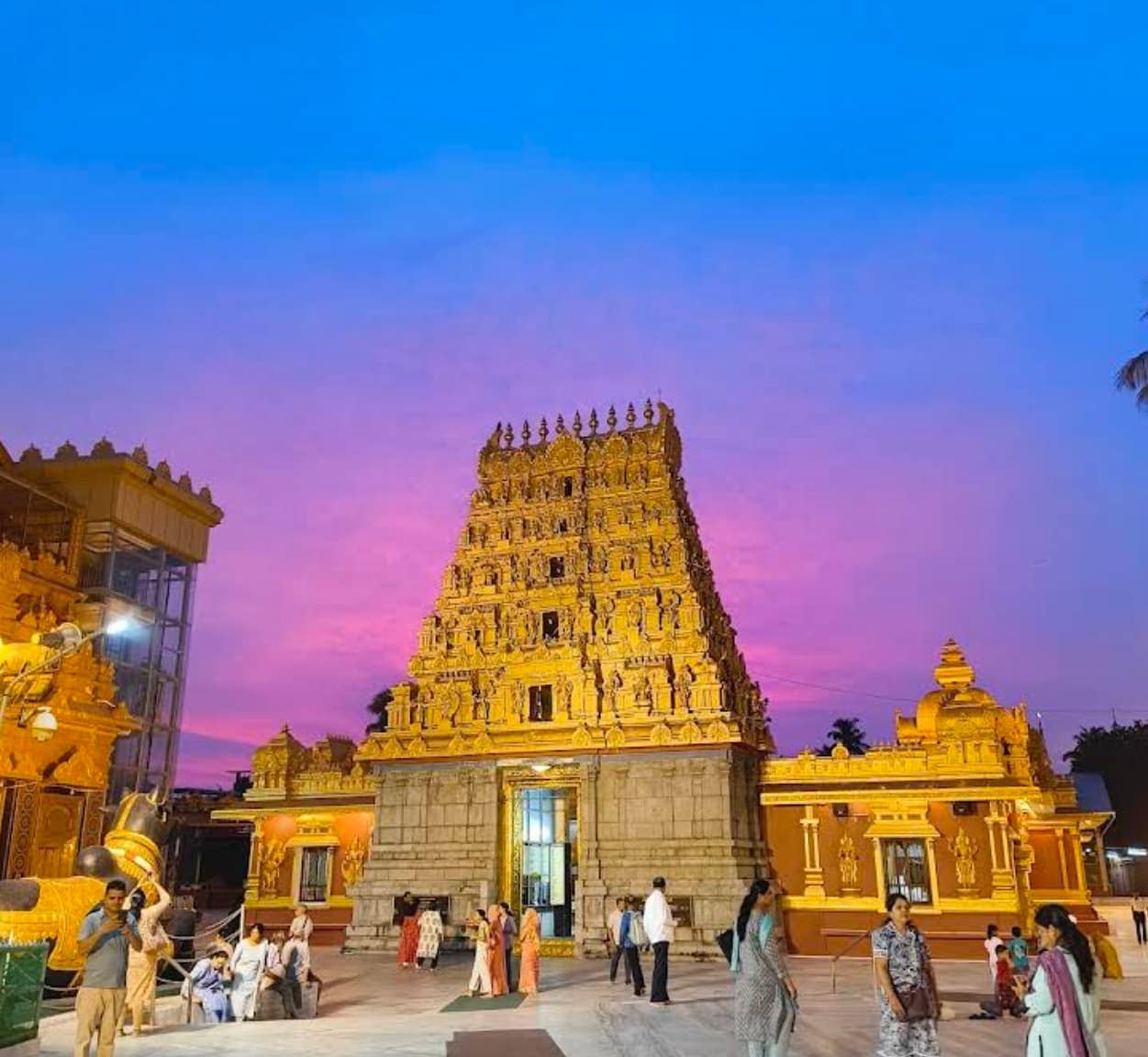
Temple in Mangalore
Kudroli Gokarnanatheshwara Temple
Mangalore, Karnataka
Founded in 1912 and consecrated by Narayana Guru for the Billava community, who were barred from the temples that already existed. It was built as an argument about who may worship, and it is the reason it stands where it does — that history is the point of visiting, not the architecture.
Overview
Who it's to, and what's expected
Deity
Shiva as Gokarnanatha
Tradition
Shiva temple
- Entry
The temple is open to devotees from all religions and communities, and historically, the temple administration allowed "Harijans" to enter.
- Access
The temple grounds are largely flat and suitable for elderly visitors and children.
Time your visit
The darshan clock
A single opening-hours line cannot express a midday closure or an evening ceremony.
6:00 AM
Opening hours
The temple is open daily from 6:00 AM to 9:00 PM.
Rules, timings and fees change — confirm locally before you rely on this.
How long this takes
Ways in
The difference between a twenty-minute visit and a three-hour one.
General darshan
- Free, with no booking of any kind - you arrive during opening hours and join
- The temple is open from about 6:00 AM into the evening; some published schedules split the day into morning and evening sessions, and the temple's own notice is the safest guide
Mangaluru Dasara
- The ten Navratri days in September or October, when the temple is the centre of the city's year - the installation of the Navadurga idols, the evening crowds, and the overnight tenth-day procession ending at dawn with immersion in the kalyani
Festival evenings
- Evening aarti on ordinary days is the calmest full experience; Shivaratri and other Shiva observances bring moderate additional crowds
At the gate
Before you go in
What gets refused, and what you cannot take past the door.
What to wear
Visitors are expected to dress modestly by keeping their shoulders and knees covered; traditional Indian clothing is recommended, while shorts and sleeveless tops should be avoided.
When not to come — unless you mean to
Festival windows
These follow lunar calendars and move by weeks each year, so the windows are months, not dates.
Mangaluru Dasara / Navratri
Shivaratri
Practicalities
The things that go wrong
Book through official channels, and treat anyone promising a guaranteed slot as a warning sign.
What to watch for
- Charging for entry; the temple is free and has no booking of any kind - you arrive and join
- Selling puja arrangements or 'priority' at the gate; nothing of the kind exists at Kudroli
- Prasadam sellers outside quoting first prices aimed at visitors; the temple's own distribution is inside
- Auto-rickshaw fares quoted only on arrival from Hampankatta; agree the fare before setting out
- During Dasara, self-appointed 'procession guides' quoting fees afterwards; agree any fee beforehand or watch from any street corner free
General guidance
Planning the visit
Customary practice and what Mangalore's climate means for a barefoot visit — not rules posted at this temple. Anything specific to Kudroli Gokarnanatheshwara Temple is above.
Circling the shrine
At most Shaiva temples the circuit around the sanctum is not completed in a full circle — the channel draining the abhishekam is not crossed. Walk to it, turn, and come back the way you came. Watching what the queue in front of you does is the reliable guide.
Come in winter
Winter is when Mangalore is most comfortable to walk around, which matters here because a temple visit is done on foot and barefoot. Locally the window is given as october to february.
Salt air and bare feet
Coastal temple courtyards stay damp and the stone can be slick underfoot, particularly near a tank or a sea-facing entrance. Take the steps slowly rather than the queue's pace.
Arriving by train
Mangalore has a railway station, and auto-rickshaws wait outside it. Agree the fare or use a meter before you set off, and expect to be dropped a short walk from the temple rather than at its door.
Outfit guide
What to wear at Kudroli Gokarnanatheshwara Temple
Cover shoulders and knees — the rules above win over anything here.
Trending wear for this spot
Popular modern looks travellers are wearing across Mangalore.


Traditional wear for this spot
Timeless, cultural outfits worn across Mangalore.
Kudroli Shree Gokarnanatheshwara Temple, Mangalore
Founded in 1912 and consecrated by Narayana Guru for the Billava community, who were barred from the temples that already existed. It was built as an argument about who may worship — and that history is the point of visiting, not the architecture.
🕉️ The reformer and his temple
Sri Narayana Guru (1856–1928) was a saint and social reformer who had already transformed religious life in Kerala, consecrating temples open to all at a time when caste determined who could enter any of them. When the elders of Mangalore's Billava community — among them the merchant-adhyaksha Hoige Bazar Koragappa — sought his help, he travelled to Kudroli and consecrated the Shiva linga he had brought with him, naming the shrine Shree Gokarnanatha Kshetra: Gokarnanatha, a form of Shiva, as its deity.
From its first day the temple admitted everyone, and it remains open to devotees of all religions and communities — the living continuation of the founding. To visit Kudroli is to stand inside that decision.
🕉️ One caste, one religion, one god
Narayana Guru's whole message is compressed into the phrase he left the world: oru jathi, oru matham, oru daivam — one caste, one religion, one god for humanity. The temples he consecrated were that message built in stone: functioning houses of worship that made their argument simply by admitting everyone.
Kudroli is the argument standing on the Kanara coast. The Billava community, whose traditional work in toddy-tapping and basket-weaving had placed them outside the temple order of their own city, did not build in resentment — they built in invitation, and the temple has kept the invitation open ever since. That is why the temple matters beyond Mangalore: it is one of the places where modern India's religious life visibly changed.
🏛️ The temple today
The modern temple wears a tall Dravidian rajagopuram bright with murals of the gods and scenes from the epics, an elephant porch at its entrance, marble floors and a complex of about two lakh square feet. The main sanctum holds Gokarnanatha's linga; around it stand shrines to Annapoorneshwari, Ganesha, Subramanya and the Navagrahas.
The grounds are largely flat and easy for elderly visitors and children, and the temple sits about 2–3 km from Mangalore's Hampankatta centre — close enough to be a city temple in practice.
Within the complex lies the kalyani, the ritual pond — the quietest corner on an ordinary day, with the rajagopuram reflected in it, and the place where the Dasara idols return at dawn for immersion after their night through the city. The Gajaraja porch at the entrance, the elephant gateway of South Indian temple design, is the standard photograph; the pond is the one worth walking for.
🐯 Mangaluru Dasara — the temple's spectacle
For ten days of Navratri, in September or October, Kudroli becomes the centre of the city's year. Idols of the Navadurgas — nine forms of the goddess — along with Mahaganapathi and Sharada are installed and worshipped through the nine nights.
On the tenth day the great procession sets out from the temple around 4:00 PM and moves through Mangalore all night — tableaux, bands, chende drums, Yakshagana characters, Dollu Kunitha, Karaga, and above all the Hulivesha, the tiger dance, with performers painted head to toe leaping through the streets — before returning to the kshetra in the small hours of the next morning, where the idols are immersed in the temple's kalyani, its pond.
The temple also runs an Anna Santarpana, a mass free feeding, during the festival — and the evenings of all ten days carry cultural programmes, with artistes from Mangalore and across Karnataka performing at the temple. The installation of the Sharada and Navadurga idols at noon on the first day, marked by the lighting of the lamp, opens the festival; the colour lights that wrap the rajagopuram make the kshetra the brightest place in the city after dark. If you are anywhere near Mangalore in Navratri, the procession is the thing to see; if not, any ordinary evening gives the temple in its working mood.
🕒 Timings
The temple is open from about 6:00 AM into the evening — published schedules differ, with some giving two sessions, morning from about 6:00 and evening from about 4:00, and the temple's own notice the safest guide. Morning and evening aarti are the natural times to visit; entry is free and no advance booking exists — you arrive and join.
👗 Dress and rules
Modest dress with shoulders and knees covered; traditional Indian clothing is recommended. The temple makes no distinction between devotees — its whole reason for existing is that it never has — and a visitor's respect is met with complete ease.
📍 Getting there
Kudroli, in the Kodailbail area, 2–3 km from the Hampankatta centre of Mangalore — a short auto-rickshaw ride, and usually combined with the city's other sights in a morning. Mangalore is the coastal gateway between Kerala and Karnataka; the temple is its single most important religious site and the one that tells the city's own story.
Last verified: 2026. The 1912 founding and consecration by Narayana Guru with the linga he brought, the role of Hoige Bazar Koragappa and the Billava community, the open-to-all founding and practice, the rajagopuram and shrines, the Mangaluru Dasara structure with the Navadurga installation, the overnight procession from about 4:00 PM and the dawn immersion in the kalyani, the Anna Santarpana, and the flat accessible grounds are documented. Published session hours differ between sources and the temple's own notice is authoritative.
Questions
Kudroli Gokarnanatheshwara Temple — FAQ
Who is Kudroli Gokarnanatheshwara Temple dedicated to?
Kudroli Gokarnanatheshwara Temple in Mangalore is dedicated to Shiva as Gokarnanatha.
Who can enter Kudroli Gokarnanatheshwara Temple?
The temple is open to devotees from all religions and communities, and historically, the temple administration allowed "Harijans" to enter.
What is the dress code at Kudroli Gokarnanatheshwara Temple?
Visitors are expected to dress modestly by keeping their shoulders and knees covered; traditional Indian clothing is recommended, while shorts and sleeveless tops should be avoided.
Is Kudroli Gokarnanatheshwara Temple wheelchair accessible?
The temple grounds are largely flat and suitable for elderly visitors and children.
Checked, not remembered
Sources
Every rule and timing above traces back to one of these.