
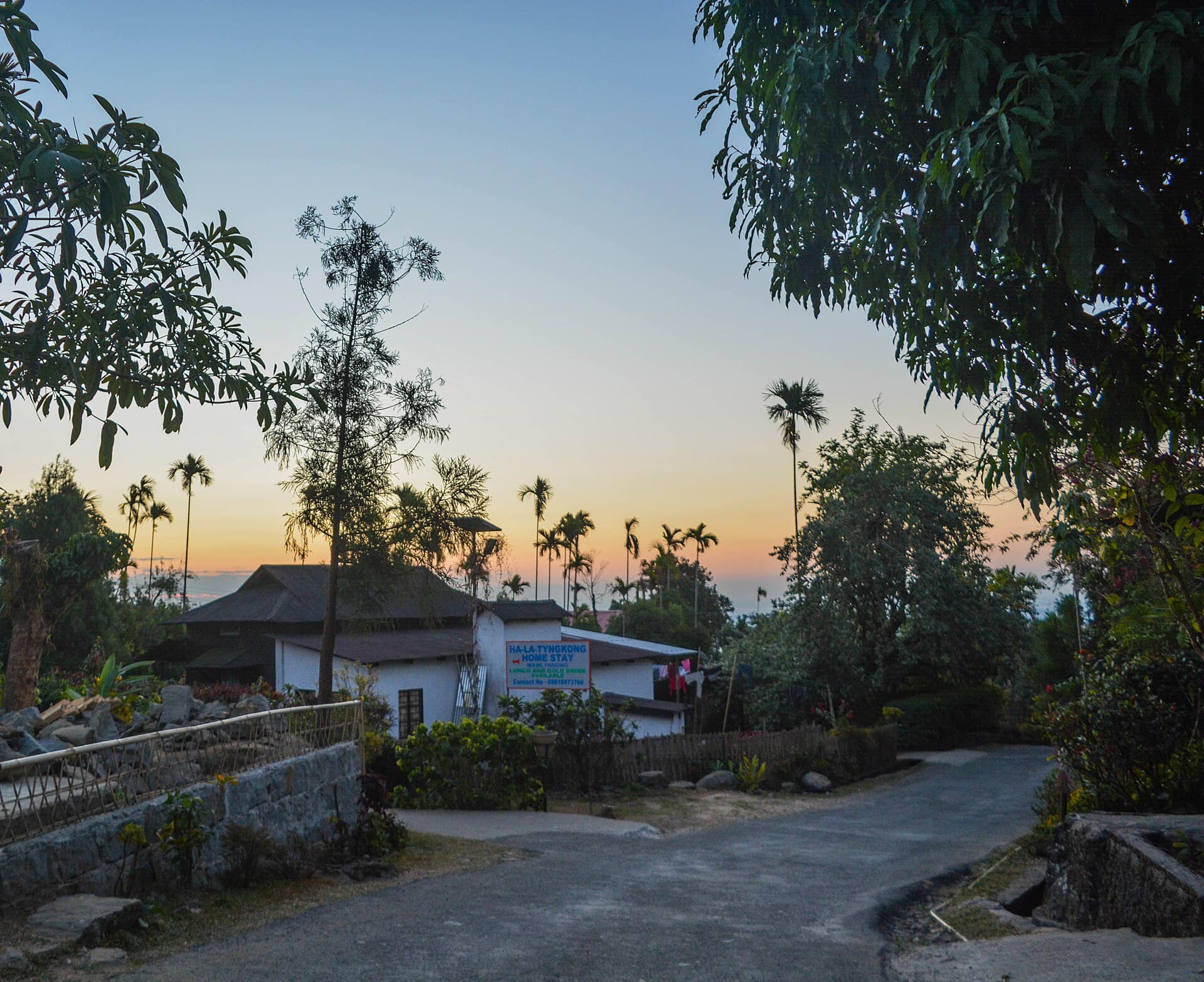
Photo spot in Mawlynnong
Riwai Living Root Bridge
Mawlynnong, Meghalaya
A single-span living root bridge near Mawlynnong at Riwai, grown over decades by training the aerial roots of rubber-fig trees across a stream — an easy walk to a striking piece of Khasi bio-engineering.
Best time
Early morning, when the stream is in soft shade and the bridge is empty; late afternoon for a quieter second chance.
Best angle
Walk down to the stream bank below the bridge and take a wide photo looking up, with the roots arching over the water and the forest behind.
Entry fee
Nominal
Opening hours
Daylight hours
Crowd level
Medium
Best outfit colors
Overview
Best time to visit Riwai Living Root Bridge
Early morning, when the stream is in soft shade and the bridge is empty; late afternoon for a quieter second chance. Crowds here are typically medium. Arrive a little early to claim your angle and catch the softest light before the day tips over.
Poses & angles
Photo tips for Riwai Living Root Bridge
Walk down to the stream bank below the bridge and take a wide photo looking up, with the roots arching over the water and the forest behind. Work a few of the pose ideas below, shoot wide for context and tight for detail, and give yourself a couple of extra minutes to get the frame right.
On the root bridge
By the woven roots
Outfit guide
What to wear at Riwai Living Root Bridge
For photos at Riwai Living Root Bridge, forest green, rust and cream work beautifully — they stand out against the setting without fighting it. Pick one hero colour and keep the rest of the look calm so you stay the subject of the frame.
Best outfit colors for photos
Trending wear for this spot
Modern, camera-ready looks picked for Riwai Living Root Bridge.
Traditional wear for this spot
Timeless, cultural outfits worn across Mawlynnong.

Eat nearby
Food near Riwai Living Root Bridge
Round out the visit with something to eat. Look for momos nearby, or settle in at one of the 1 restaurants close by.
Special dishes to try

Restaurants & food places nearby

Search food by craving
Good to know
Local tips
Come early in the morning, before the day-trip cars from Shillong arrive.
Wear shoes with a grippy sole, as the steps and roots are often damp and mossy.
Cross the bridge slowly and wait your turn if another group is on it.
Do not pull at, cut or carve the roots, which are part of a living tree.
Step down to the stream bank below for the best view of the whole span.
Allow about 40 minutes in total, including the climb back up the steps.
Pick up a snack or red tea at the stalls near the top of the path.
A bridge that grows
Riwai's bridge is a single-span living root bridge across a forest stream, a few kilometres from Mawlynnong. Over many years, Khasi villagers guided the aerial roots of rubber-fig trees across the water, using a hollow betel-nut trunk as a frame. The roots thicken and knot together as they grow, and the bridge gets stronger with age rather than weaker. It is often said to be about 300 years old, though no one can date it exactly. You may hear it called Jingmaham.
Getting there
From Mawlynnong it is a short drive to Riwai village. From the road a paved path and steps lead down through the forest to the stream, about 300 m. Most people take ten to fifteen minutes down and a little longer back up. It is one of the easiest root bridges in Meghalaya to reach, and a good choice for anyone who cannot manage the thousands of steps down to Nongriat.
At the bridge
The bridge is short and busy. Walk across slowly, one group at a time, and keep to the worn path over the roots. Below it you can step down to the stream bank for the classic view. The water is fullest and the moss greenest after the monsoon; in the dry months the stream drops and the rocks show.
Visiting
There is a small entry fee, and it is open in daylight hours. It is busiest in the middle of the day, when day trips from Shillong stop on their way to Dawki, so come first thing in the morning or late in the afternoon. The steps and roots are slippery when wet. For more on the sights nearby, see the Mawlynnong photo spots.
Questions
Riwai Living Root Bridge — FAQ
What is the best time to visit Riwai Living Root Bridge?
Early morning, when the stream is in soft shade and the bridge is empty; late afternoon for a quieter second chance. Walk down to the stream bank below the bridge and take a wide photo looking up, with the roots arching over the water and the forest behind.
Is there an entry fee at Riwai Living Root Bridge?
Entry to Riwai Living Root Bridge is nominal.
What are the opening hours of Riwai Living Root Bridge?
Riwai Living Root Bridge keeps daylight hours.
What should I wear at Riwai Living Root Bridge?
Forest green, rust and cream photograph especially well here. Explore the trending and traditional outfit ideas on this page for full looks.
How crowded does Riwai Living Root Bridge get?
Crowd levels are typically medium. To miss the busiest window: early morning, when the stream is in soft shade and the bridge is empty; late afternoon for a quieter second chance.
What food should I try near Riwai Living Root Bridge?
Try momos, available at nearby restaurants.
How far is the walk to the Riwai root bridge?
About 300 m down steps and a forest path from the road at Riwai. Most people take ten to fifteen minutes each way.
How is a living root bridge made?
Villagers guide the aerial roots of rubber-fig trees across a stream, often along a hollow betel-nut trunk. Over years the roots grow thick, join together and take a person's weight.
Is the Riwai bridge the same as the double-decker root bridge?
No. Riwai has a single-span bridge and is easy to reach. The double-decker bridge is at Nongriat, near Sohra, at the bottom of a long, steep descent.
Is the Riwai root bridge suitable for children and older visitors?
Mostly yes. The path is short, but it has steps and can be slippery, so take it slowly and hold the rails on the climb back.