
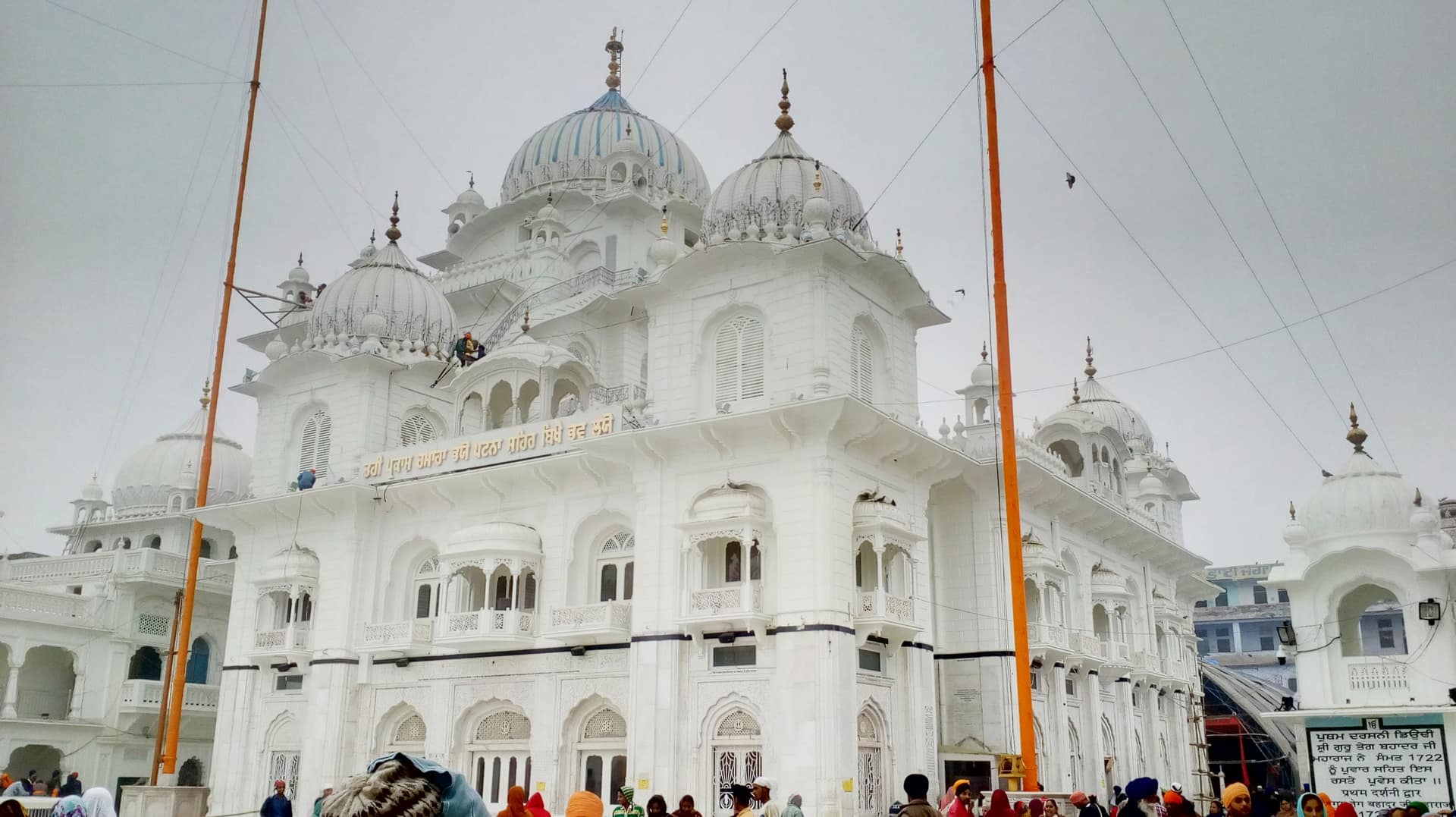
Temple in Patna
Takht Sri Harmandir Ji Patna Sahib
Patna, Bihar
One of the five Takhts — the seats of Sikh temporal authority — and the birthplace of Guru Gobind Singh in 1666. The present building was raised by Maharaja Ranjit Singh, and the relics of the tenth Guru kept here are the reason people travel to it.
Photo: Shivamsetu — CC BY-SA 4.0, via Wikimedia Commons
Overview
Who it's to, and what's expected
Deity
Guru Granth Sahib
Tradition
Sikh shrine
- Entry
Open to visitors of every religion, free, with langar running as at any gurdwara.
How long this takes
Ways in
The difference between a twenty-minute visit and a three-hour one.
General darshan
- Free and continuous from about 4:00 AM to 10:00 PM; no separate arrangements exist - everyone moves through the same hall
- The gurdwara publishes its own schedule of ceremonies on its notice boards
Prakash Parv
- The Guru's birth anniversary in late December or January - pilgrims from across the Sikh world, the surrounding area closed to traffic, and the halls at their fullest
Langar
- The free kitchen serves through the day; queues form at mealtimes and move quickly
- Everyone sits on the floor together
At the gate
Before you go in
What gets refused, and what you cannot take past the door.
What to wear
Head covered by everyone inside, scarves available at the entrance. Shoes deposited and feet washed on the way in. No tobacco or alcohol on the premises.
When not to come — unless you mean to
Festival windows
These follow lunar calendars and move by weeks each year, so the windows are months, not dates.
Late December or January
Prakash Parv — Guru Gobind Singh's birth anniversary
Patna fills with pilgrims from across the Sikh world and the area around the Takht is closed to traffic. It is the one week the city is unmistakably a Sikh pilgrimage centre.
Practicalities
The things that go wrong
Book through official channels, and treat anyone promising a guaranteed slot as a warning sign.
What to watch for
- Charging for entry or for a meal
- Entry and langar are free for everyone; nobody is authorised to collect money at the gate for either
- Offering guided access to the birthplace sanctum or the relics for a fee
- The museum and halls are open to all visitors and need no guide
- Selling karah prasad or offerings at inflated prices at the approach; the gurdwara distributes what it prepares
- Auto-rickshaw drivers in the old city quoting a fare only on arrival through the narrow lanes; agree it before setting out
- Anyone claiming a dress-code exemption for a tip; scarves are available free at the entrance
General guidance
Planning the visit
Customary practice and what Patna's climate means for a barefoot visit — not rules posted at this temple. Anything specific to Takht Sri Harmandir Ji Patna Sahib is above.
Langar is open to you
The community kitchen serves anyone who sits down, without charge or expectation, and sitting on the floor in the row is part of the point. Tobacco and alcohol must not be carried onto the premises at all.
Come in winter
Winter is when Patna is most comfortable to walk around, which matters here because a temple visit is done on foot and barefoot. Locally the window is given as october to march.
Stone gets hot — go early
You will be barefoot from the shoe rack onwards, often across an open courtyard. Between late morning and mid-afternoon in the hot months that stone is genuinely painful to stand on. Socks help, and are permitted almost everywhere shoes are not.
Metro, then walk
Patna has a metro, and it is usually the fastest way to get near a busy temple — the streets immediately around one are often closed to vehicles or jammed with them.
Outfit guide
What to wear at Takht Sri Harmandir Ji Patna Sahib
Cover shoulders and knees — the rules above win over anything here.
Trending wear for this spot
Modern, camera-ready looks picked for Takht Sri Harmandir Ji Patna Sahib.
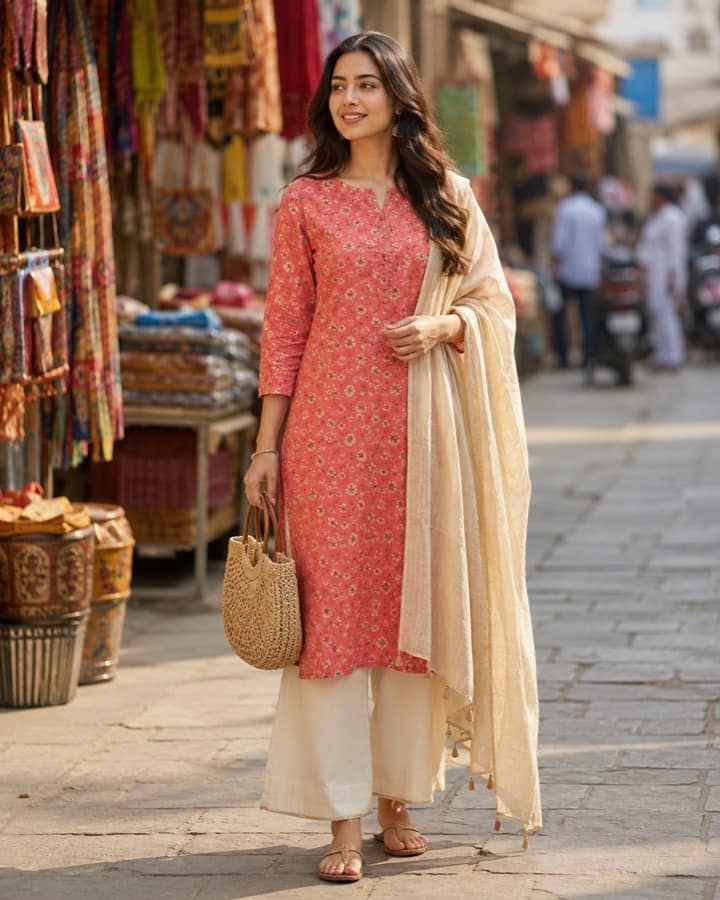
Traditional wear for this spot
Timeless, cultural outfits worn across Patna.
Takht Sri Harmandir Ji, Patna Sahib
One of the five Takhts of Sikhism — the seats of temporal authority — built at the birthplace of Guru Gobind Singh, and the reason Patna is a Sikh pilgrimage city.
🙏 The birthplace of the tenth Guru
Guru Gobind Singh was born here on 22 December 1666, in the house where the shrine now stands, while his father Guru Tegh Bahadur was away in Bengal and Assam. He spent his first years in Patna with his mother Mata Gujri before the family moved to Anandpur.
Patna's Sikh connections do not begin or end with the birth: Guru Nanak had visited the city earlier, and Guru Tegh Bahadur stayed here too — the tradition records the site as the house of Salis Rai Johri, a devout jeweller of the city. For a building to shelter a birth, two visits and a childhood makes it one of the most storied sites in the Sikh world.
🏛️ The building, twice rebuilt
The shrine has been reconstructed at least twice. The earlier structure burnt down and was rebuilt in the early nineteenth century under Maharaja Ranjit Singh, who raised gurdwaras at many of Sikhism's historic sites. After damage in an earthquake, the present building was raised in the mid-twentieth century — a white-marble hall on a large raised platform, in the style of the other great Takhts, with a sanctum marking the exact birthplace.
What the rebuilding never displaced is the reason people come: the site itself, and what is kept inside.
🗡️ The relics of the Guru
The Takht preserves relics of Guru Gobind Singh — his weapons, including iron arrows and a sword, a cradle associated with his infancy, and personal items — displayed in the shrine's museum. A historic hukumnama, a written decree, is preserved here, and the gurdwara's library keeps rare manuscripts.
For pilgrims this is the substance of Patna Sahib: the tenth Guru is present here not only as memory but as artefact, and the walk from the marble hall to the relics cases is the pilgrimage's centre of gravity.
🕒 Timings and the rhythm of the day
The gurdwara is open from about 4:00 AM to 10:00 PM daily. The day opens with Prakash — the ceremonial opening of the Guru Granth Sahib — around 4:00 AM, and closes with the evening Ardas around 9:00 PM followed by Sukhasan, the ceremonial resting of the scripture.
Early morning and evening are the best windows for a visitor: the hall is fullest, the kirtan is underway, and the atmosphere is at its most complete. Kirtan — sung verses from the scripture — runs through much of the day, and the hall's acoustics make even a short sit worth staying for. The langar hall serves free meals through the day.
🍽️ Langar — the open kitchen
As at every gurdwara, the langar runs all day and everyone eats: pilgrims from the Panjab and abroad, travellers, locals, visitors of any religion or none. Sitting on the floor of the langar hall for a simple meal is part of the visit, not an optional extra — it is the practice the Takht exists to keep alive, and refusing it politely is the only wrong move a visitor can make here.
👑 The five Takhts
A takht — literally a throne — is a seat of Sikh temporal authority. There are five: the Akal Takht at Amritsar, the oldest and first in precedence; Keshgarh Sahib at Anandpur, where the Khalsa was founded; Hazur Sahib at Nanded, where the Guru passed on; Damdama Sahib in the Panjab; and Patna Sahib, the birthplace. Visiting all five is a recognised pilgrimage in itself, and Patna is usually the one farthest east.
🛕 Rules
Head covered at all times inside — scarves are available at the entrance. Shoes are deposited and feet washed on the way in. No tobacco or alcohol on the premises. Entry is free and open to visitors of every religion. Photography is customary in the halls but should keep a respectful distance from the sanctum and the scripture; ask before photographing people at prayer.
🎉 Prakash Parv
The Guru's birth anniversary — Prakash Parv, in late December or January — is the one week Patna is unmistakably a Sikh pilgrimage centre: pilgrims arrive from across the Sikh world, the area around the Takht closes to traffic, and the old city fills. If your dates are flexible and you want the Takht at its fullest, this is the week; if not, any ordinary morning gives you the shrine in its working mood.
📍 Getting there
Old Patna City, near the Ganga — a dense, older quarter of the city, around 15–20 minutes' drive from the modern centre. Patna Sahib has its own railway station on the eastern line, and the Takht is the neighbourhood's centre. Combine it with the riverfront and the older stretches of the city, which are the Patna the shrine belongs to.
Last verified: 2026. The 22 December 1666 birth, the visits of Guru Nanak and Guru Tegh Bahadur, the rebuilding under Maharaja Ranjit Singh after a fire and the mid-twentieth-century rebuilding after an earthquake, the relics, the 4:00 AM to 10:00 PM hours with Prakash around 4:00 AM and evening Ardas around 9:00 PM, and the langar through the day are documented; festival dates and hours shift, and the gurdwara's own notice is authoritative.
Questions
Takht Sri Harmandir Ji Patna Sahib — FAQ
Who is Takht Sri Harmandir Ji Patna Sahib dedicated to?
Takht Sri Harmandir Ji Patna Sahib in Patna is dedicated to Guru Granth Sahib.
Who can enter Takht Sri Harmandir Ji Patna Sahib?
Open to visitors of every religion, free, with langar running as at any gurdwara.
What is the dress code at Takht Sri Harmandir Ji Patna Sahib?
Head covered by everyone inside, scarves available at the entrance. Shoes deposited and feet washed on the way in. No tobacco or alcohol on the premises.
Checked, not remembered
Sources
Every rule and timing above traces back to one of these.