
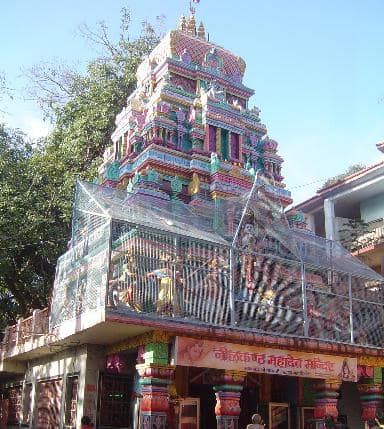
Temple in Rishikesh
Neelkanth Mahadev Temple
Rishikesh, Uttarakhand
At about 1,330 m on a ridge above Rishikesh, where Shiva is held to have swallowed the poison churned from the ocean. It is roughly 32 km by road, or a 20–22 km forest trek from Ram Jhula — and which of those you choose is the whole decision.
Photo: Rahuldewangan — public domain, via Wikimedia Commons
Overview
Who it's to, and what's expected
Deity
Shiva as Neelkanth
Tradition
Shiva temple
- Entry
Visitors are required to dress modestly and remove their footwear at the temple entrance. Additionally, photography is strictly prohibited inside the inner sanctum.
- Footwear
Visitors are required to remove their footwear before entering the temple.
- Prasadam
Bel leaves, water, milk and flowers are the customary offerings; the temple's own counters distribute prasad from what devotees leave.
Time your visit
The darshan clock
A single opening-hours line cannot express a midday closure or an evening ceremony.
About 5:00/6:00 AM
Opening hours
The temple opens early - published hours range from about 5:00 or 6:00 AM into the evening; sources differ, and the temple's own schedule is authoritative. The morning aarti falls around 6:00 AM.
Rules, timings and fees change — confirm locally before you rely on this.
How long this takes
Ways in
The difference between a twenty-minute visit and a three-hour one.
General darshan
- Free, from opening into the evening
- Mornings are the fullest; the abhishek with Ganga water and milk is the customary act of darshan
Shravan - the kanwar weeks
- July into August: enormous numbers of kanwariyas carrying Ganga water make the road a weeks-long procession; the temple precincts are at their fullest and an ordinary drive is not possible
Mahashivratri
- The great night of Shiva fills the shrine through the day and night at the temple of the blue throat
At the gate
Before you go in
What gets refused, and what you cannot take past the door.
What to wear
Visitors are required to dress modestly when visiting the temple.
Phones and cameras
Photography is strictly prohibited inside the temple sanctum.
Rules, timings and fees change — confirm locally before you rely on this.
When not to come — unless you mean to
Festival windows
These follow lunar calendars and move by weeks each year, so the windows are months, not dates.
July into August
BusyShravan and the Kanwar Yatra
Kanwariyas come here in enormous numbers after collecting Ganga water at Haridwar — the road up is effectively a procession for weeks and an ordinary drive is not possible.
Crowd levels are our reading of the notes above, not an official measure. Rules, timings and fees change — confirm locally before you rely on this.
General guidance
Planning the visit
Customary practice and what Rishikesh's climate means for a barefoot visit — not rules posted at this temple. Anything specific to Neelkanth Mahadev Temple is above.
Circling the shrine
At most Shaiva temples the circuit around the sanctum is not completed in a full circle — the channel draining the abhishekam is not crossed. Walk to it, turn, and come back the way you came. Watching what the queue in front of you does is the reliable guide.
Come in winter
Winter is when Rishikesh is most comfortable to walk around, which matters here because a temple visit is done on foot and barefoot. Locally the window is given as september to april.
Cold stone, early starts
Barefoot on stone at altitude before sunrise is colder than the air temperature suggests, and the first darshan of the day is usually the coldest hour. Socks are permitted almost everywhere shoes are not.
Arriving by train
Rishikesh has a railway station, and auto-rickshaws wait outside it. Agree the fare or use a meter before you set off, and expect to be dropped a short walk from the temple rather than at its door.
No airport here
Rishikesh has no airport of its own, so the last leg is by road or rail. Plan the return the same way — the last bus out is often earlier than visitors expect.
Outfit guide
What to wear at Neelkanth Mahadev Temple
Cover shoulders and knees — the rules above win over anything here.
Trending wear for this spot
Popular modern looks travellers are wearing across Rishikesh.


Traditional wear for this spot
Timeless, cultural looks that suit Neelkanth Mahadev Temple.
Neelkanth Mahadev Temple, above Rishikesh
At about 1,330 m on a ridge above Rishikesh, where Shiva is held to have swallowed the poison churned from the ocean — his throat turning blue, and the name Neelkanth, the Blue-Throated One, entering the language. It is roughly 32 km by road, or a 12-to-14 km forest trek from Ram Jhula — and which of those you choose is the whole decision.
🌊 The churning and the poison
The Samudra Manthan — the churning of the ocean by the Devas and Asuras for the nectar of immortality — first brought up the Halahala, a poison that threatened all creation. Shiva gathered it and drank it, holding it in his throat, which turned blue; the deliverance earned him the name this temple carries.
The shrine stands where the tradition places that act, and its exterior tells the story in carved and coloured relief — Devas on one side, Asuras on the other, and Shiva between them swallowing the poison. It is one of the handful of temples in India whose entire identity is a single act of the god it serves.
🥾 The trek — or the road
The forest route from Ram Jhula and Swargashram is 12 to 14 km one way, climbing through sal forest, and takes four to five hours up and about three down. It is a real walk, not a promenade: the trail passes the Patna Waterfall and the cave of the Mauni Baba, the silent sage, before the steepest final ascent to the temple — and it is the version of the visit that people remember for the rest of their lives.
The road is 32 km from Rishikesh, an hour and a half to two hours by taxi or shared jeep from the Ram Jhula and Lakshman Jhula stands, through a forested gorge that is an attraction in itself. Start at 6:00 AM for either: the trek needs the whole day (seven to eight hours round trip with darshan), and the road traffic builds fast after mid-morning.
🥾 The hour-by-hour walk
The Ram Jhula route, for those who take it: cross the bridge in the first light and walk through Swargashram's morning — chanting, incense, the sounds of a waking ashram quarter — then enter the sal forest as the trail leaves town. Two to three kilometres in, the mid-trail dhabas appear with chai and biscuits; the gradient stiffens gently. At about the halfway mark, the Patna Waterfall drops beside the trail — the standard rest and water stop — and above it the cave of the Mauni Baba, the silent sage, gives the walk its second shrine. The last stretch is the steepest, and the temple's roofs appear before the path agrees to end.
Four to five hours up, three down, seven to eight for the round trip with darshan and lunch. Walkers commonly take a shared jeep down from the temple parking — the knees vote for it, and the forest keeps nothing back for the descent that it did not show on the way up.
🕒 Timings
The temple opens early — published hours range from about 5:00 or 6:00 AM into the evening, and sources differ, so treat the edges as approximate and confirm locally. The morning aarti around 6:00 AM is the devotional high point, and the abhishek — the pouring of Ganga water and milk over the lingam — is the customary act of darshan here, performed by every pilgrim with the water carried up from the Ganga below. Midday is the quiet window, the trekkers' lunch hour; the evening closes early, as mountain shrines do. Entry is free.
🌿 What stands around it
A sacred peepal tree shades the complex, and the small shrine of Mata Balkunwari stands nearby with the valley's finest view. The temple's dhabas feed trekkers and pilgrims alike — the standard lunch stop on the walking route. And below, always, the Ganga: the natural day pairs the climb with the evening aarti at Rishikesh's ghats, which is the counterweight the mountain deserves.
🌧️ Shravan — when the road becomes a procession
In Shravan, from July into August, the kanwariyas come in enormous numbers, carrying Ganga water from Haridwar up to the temple — the road effectively becomes a procession for weeks, and an ordinary drive is not possible. It is a spectacle of devotion on the largest scale, and a period to plan around rather than through: check conditions before committing to the road in those weeks.
February to April and August to November are the comfortable windows for the visit itself.
📍 Getting there
Ram Jhula and Swargashram are the trekkers' start; the taxi and jeep stands at Ram Jhula and Lakshman Jhula serve the road. Rishikesh railway station is the railhead and Jolly Grant airport at Dehradun the closest flight. If you trek up, take the shared jeep down — the knees will vote for it.
Last verified: 2026. The Halahala and blue-throat tradition of the Samudra Manthan, the 1,330 m ridge location, the 32 km road distance, the 12-to-14 km forest trek with the Patna Waterfall and Mauni Baba cave, the morning aarti around 6:00 AM, the free entry, the peepal tree and Mata Balkunwari shrine, and the Shravan kanwar season are documented. Opening and closing hours differ between published sources and the temple's own schedule is authoritative.
Questions
Neelkanth Mahadev Temple — FAQ
Who is Neelkanth Mahadev Temple dedicated to?
Neelkanth Mahadev Temple in Rishikesh is dedicated to Shiva as Neelkanth.
Who can enter Neelkanth Mahadev Temple?
Visitors are required to dress modestly and remove their footwear at the temple entrance. Additionally, photography is strictly prohibited inside the inner sanctum.
What is the dress code at Neelkanth Mahadev Temple?
Visitors are required to dress modestly when visiting the temple.
Do I have to take my shoes off at Neelkanth Mahadev Temple?
Visitors are required to remove their footwear before entering the temple.
Can I take photos inside Neelkanth Mahadev Temple?
Photography is strictly prohibited inside the temple sanctum.
What prasadam is offered at Neelkanth Mahadev Temple?
Bel leaves, water, milk and flowers are the customary offerings; the temple's own counters distribute prasad from what devotees leave.
Checked, not remembered
Sources
Every rule and timing above traces back to one of these.