
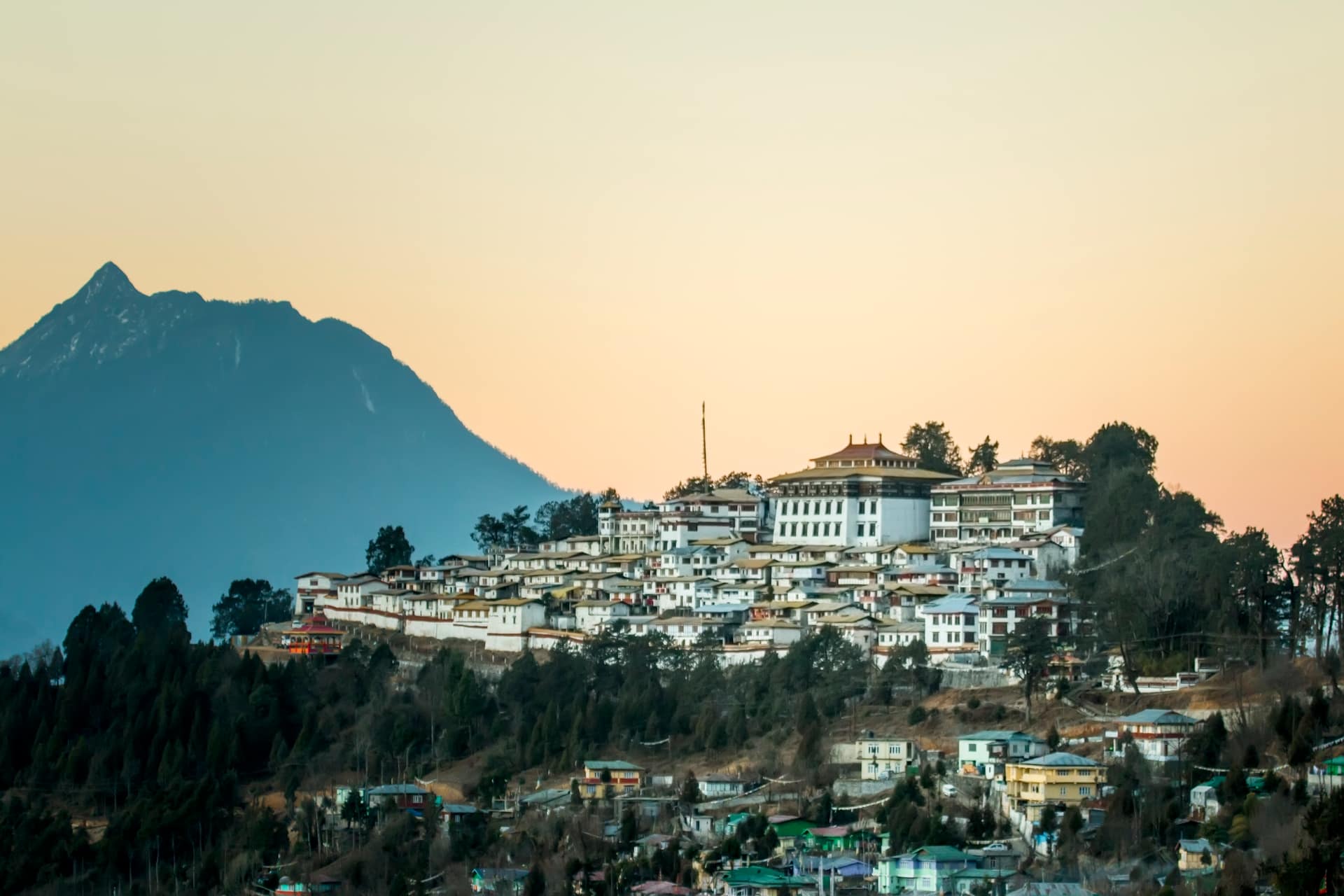
Temple in Tawang
Tawang Monastery
Tawang, Arunachal Pradesh
The largest Buddhist monastery in India and the second largest in the world, on a spur at about 10,000 ft with the valley dropping away on three sides. Founded in the 17th century, Gelug school, historically tied to Drepung in Lhasa.
Photo: Vikramjit Kakati — CC BY-SA 4.0, via Wikimedia Commons
Overview
Who it's to, and what's expected
Deity
Gelug lineage
Tradition
Buddhist temple
- Entry
All visitors are required to obtain an Inner Line Permit (ILP) to enter Arunachal Pradesh.
- Footwear
You must remove your shoes before entering the Dukhang (assembly hall). A wooden shoe rack is provided to the left of the door.
- Access
At altitude, and reached over the Sela Pass at about 13,700 ft — the drive is the hard part, not the monastery. Passes are needed for the area and the road closes in heavy snow.
Time your visit
The darshan clock
A single opening-hours line cannot express a midday closure or an evening ceremony.
7:00 AM
Opening hours
The monastery is open daily from 7:00 AM to 7:00 PM.
Rules, timings and fees change — confirm locally before you rely on this.
How long this takes
Ways in
The difference between a twenty-minute visit and a three-hour one.
Visiting hours
- Open to visitors roughly 7:00 AM to 7:00 PM; mornings hold the prayer sessions, and the courtyard is at its liveliest around them
- No entry fee
Torgya and Losar
- The festival days - the January mask dances and the new year - fill the courtyard with the Monpa community; visitors are welcome to watch from the edges
The road
- Not a queue but the real constraint: the Sela Pass crossing, which can close in snow and turns any day - plan buffer time on the ascent
At the gate
Before you go in
What gets refused, and what you cannot take past the door.
What to wear
Visitors should dress modestly by covering their shoulders and knees, avoiding tank tops, shorts above the knee, or tight and transparent clothing.
Phones and cameras
Photography is free in the courtyard and exterior, but inside the assembly hall, you must ask for permission first and flash is never allowed. Videography is strictly prohibited inside the hall, and photography of books in the library is forbidden.
Rules, timings and fees change — confirm locally before you rely on this.
When not to come — unless you mean to
Festival windows
These follow lunar calendars and move by weeks each year, so the windows are months, not dates.
Torgya
Losar
Saka Dawa
General guidance
Planning the visit
Customary practice and what Tawang's climate means for a barefoot visit — not rules posted at this temple. Anything specific to Tawang Monastery is above.
Walk clockwise, and mind the feet
Circumambulation is clockwise, and prayer wheels are turned the same way. Pointing your feet at an image of the Buddha — sitting with legs outstretched towards the shrine — is the commonest unintended offence, and sitting cross-legged or kneeling avoids it.
Come in winter and summer
Winter and summer is when Tawang is most comfortable to walk around, which matters here because a temple visit is done on foot and barefoot. Locally the window is given as march to june, and september to november.
Cold stone, early starts
Barefoot on stone at altitude before sunrise is colder than the air temperature suggests, and the first darshan of the day is usually the coldest hour. Socks are permitted almost everywhere shoes are not.
No airport here
Tawang has no airport of its own, so the last leg is by road or rail. Plan the return the same way — the last bus out is often earlier than visitors expect.
Outfit guide
What to wear at Tawang Monastery
Cover shoulders and knees — the rules above win over anything here.
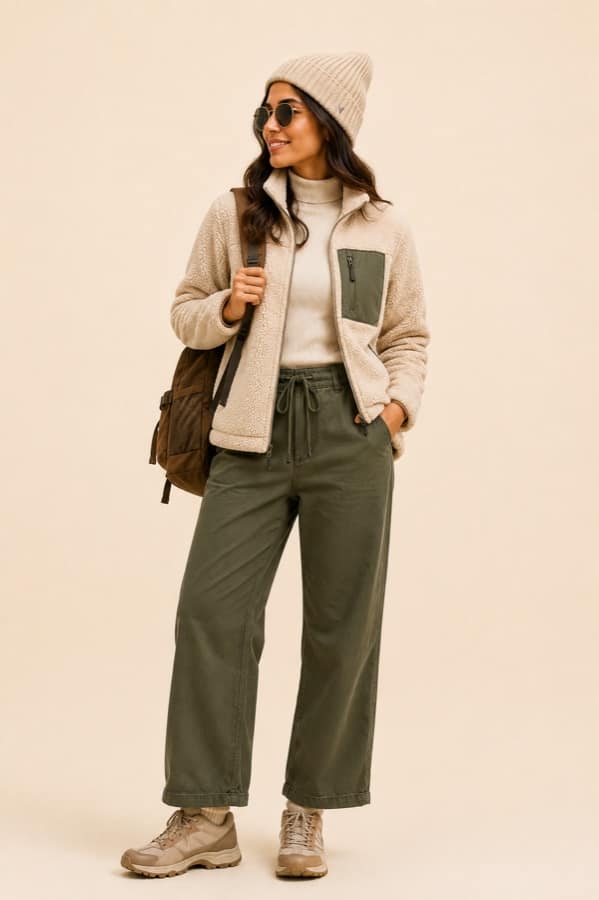
Trending wear for this spot
Modern, camera-ready looks picked for Tawang Monastery.
Traditional wear for this spot
Timeless, cultural outfits worn across Tawang.
Tawang Monastery, Arunachal Pradesh
The largest Buddhist monastery in India and the second largest in the world, on a spur at about 10,000 feet with the valley dropping away on three sides — founded in 1680-81, Gelug school, historically tied to Drepung in Lhasa.
🐎 The site the horse chose
The founding story is the monastery's favourite text: Merak Lama Lodre Gyatso, sent by the fifth Dalai Lama to establish a monastery in these hills, could not find the right place and retired to a cave to pray for guidance. Coming out, he found his horse missing — and found it grazing on the hilltop of Tana Mandekhang, which took as the answer it was. The monastery was raised there from 1680-81, with the fifth Dalai Lama's blessing and the local Monpa people's labour.
The name carries the story: Tawang is read as ta-wang — chosen by the horse. In Tibetan the monastery is Gaden Namgyal Lhatse, rendered as the divine paradise of complete victory.
🏯 The great dzong
The monastery is a fortress of the faith: three storeys rising over the Tawang Chu valley, enclosed by a compound wall hundreds of metres long, with 65 residential buildings inside housing around 450 monks. The stone-slab courtyard at the centre hosts the religious dances and ceremonies of the Monpa year, ringed by the assembly hall, the library and the kitchens.
The Dukhang, the assembly hall, holds the gilded statue of the Buddha about eight metres high, and the sandalwood image the fifth Dalai Lama is said to have given the founding. The second floor is the library — the Par-Khang — holding the Kangyur and Tengyur, the great collections of the Buddha's word and its commentaries, along with rarer Monpa texts, and a press that prints on paper made locally. Photography inside the hall needs permission, and of the library's books is forbidden outright.
🏫 The school of the hills
A monastery of this size is a small university. Around 450 monks live and study here — novices in the residential buildings, elders in the halls — and the education runs from scripture to philosophy to the monastery's own crafts: the printing press that works paper made locally, the butter sculptures, the music of the long horns used in the courtyard ceremonies.
Visitors see the scholarly side most directly at the debates: pairs of monks in the courtyard, one seated, one standing and clapping the argument home — theatrical, loud, and the living heart of Gelug education. Time a morning session and the monastery stops being a monument entirely.
🕯️ Living rhythm
The monastery's day runs from early morning prayers to evening, roughly 7:00 AM to 7:00 PM for visitors, with butter lamps lit in the halls and the monks' debates echoing in the courtyard. Nearby Tawang town serves the monastery as its market and base; a little beyond it, at Urgelling, stands the birthplace of the sixth Dalai Lama, Tsangyang Gyatso - the poet of the line - a small shrine that completes any monastery visit.
Permits are the traveller's arithmetic: an Inner Line Permit for domestic visitors and a protected-area permit for foreign nationals to enter Arunachal Pradesh — arranged online or at state counters, and checked on the road up.
🎭 Losar and Torgya — the mask dances
Losar, the Monpa and Tibetan new year, fills the monastery with families offering prayers and butter lamps. Torgya, held over three days in January, is the monastery's own great festival: the Cham mask dances in the courtyard and the unfurling of a giant thangka — a silk image of the deity several storeys tall — for the merit of all who see it. Choksar, when the lamas recite the scriptures, and Saka Dawa, the observance of the Buddha's enlightenment, fill out the calendar.
📍 The road in — Sela and the valley
The drive is the hard part, not the monastery: Tawang is reached over the Sela Pass at about 13,700 feet, with its high lake and its prayer flags, from Bomdila and Dirang on the Assam side — about 70 km from Bomdila, with Tezpur the railhead and Guwahati's airport roughly 450 km away in all. Dirang's hot springs and monastery make the standard first-night halt, and the ascent is its own journey through the Monpa country of apples, orchards and stone houses.
March to September is the open season; heavy snow closes the pass in the depths of winter, and the high passes can turn any day - carry warm layers in every month, because 10,000 feet does not negotiate. Build a night into Dirang or Bomdila on the way up — the altitude deserves it and the valleys reward it.
At the top of it all: the largest monastery in India, at 10,000 feet, with the whole country of the Monpas around it and the prayer flags reading into the wind.
Last verified: 2026. The 1680-81 founding by Merak Lama Lodre Gyatso under the fifth Dalai Lama's direction, the horse-chosen-site legend and the Tawang etymology, the Gaden Namgyal Lhatse name, the three-storey complex with 65 residential buildings and around 450 monks, the Kangyur-Tengyur library and local paper press, the gilded Buddha about eight metres high, the Losar-Torgya-Choksar calendar, the permit requirements, and the Sela Pass approach at about 13,700 feet are documented. Visitor hours and festival dates shift with the lunar calendar and the monastery's own notice is authoritative.
Questions
Tawang Monastery — FAQ
Who is Tawang Monastery dedicated to?
Tawang Monastery in Tawang is dedicated to Gelug lineage.
Who can enter Tawang Monastery?
All visitors are required to obtain an Inner Line Permit (ILP) to enter Arunachal Pradesh.
What is the dress code at Tawang Monastery?
Visitors should dress modestly by covering their shoulders and knees, avoiding tank tops, shorts above the knee, or tight and transparent clothing.
Do I have to take my shoes off at Tawang Monastery?
You must remove your shoes before entering the Dukhang (assembly hall). A wooden shoe rack is provided to the left of the door.
Can I take photos inside Tawang Monastery?
Photography is free in the courtyard and exterior, but inside the assembly hall, you must ask for permission first and flash is never allowed. Videography is strictly prohibited inside the hall, and photography of books in the library is forbidden.
Is Tawang Monastery wheelchair accessible?
At altitude, and reached over the Sela Pass at about 13,700 ft — the drive is the hard part, not the monastery. Passes are needed for the area and the road closes in heavy snow.
Checked, not remembered
Sources
Every rule and timing above traces back to one of these.