What to Wear in Ayutthaya
What works in Ayutthaya is set by two things: the weather you will actually be standing in, and how much of the day you spend around temples, monuments and markets, where covered shoulders and knees are expected. Ayutthaya is hot for most of the year and humid through a long rainy season, so breathable cotton and something that copes with a downpour matter more than warmth.
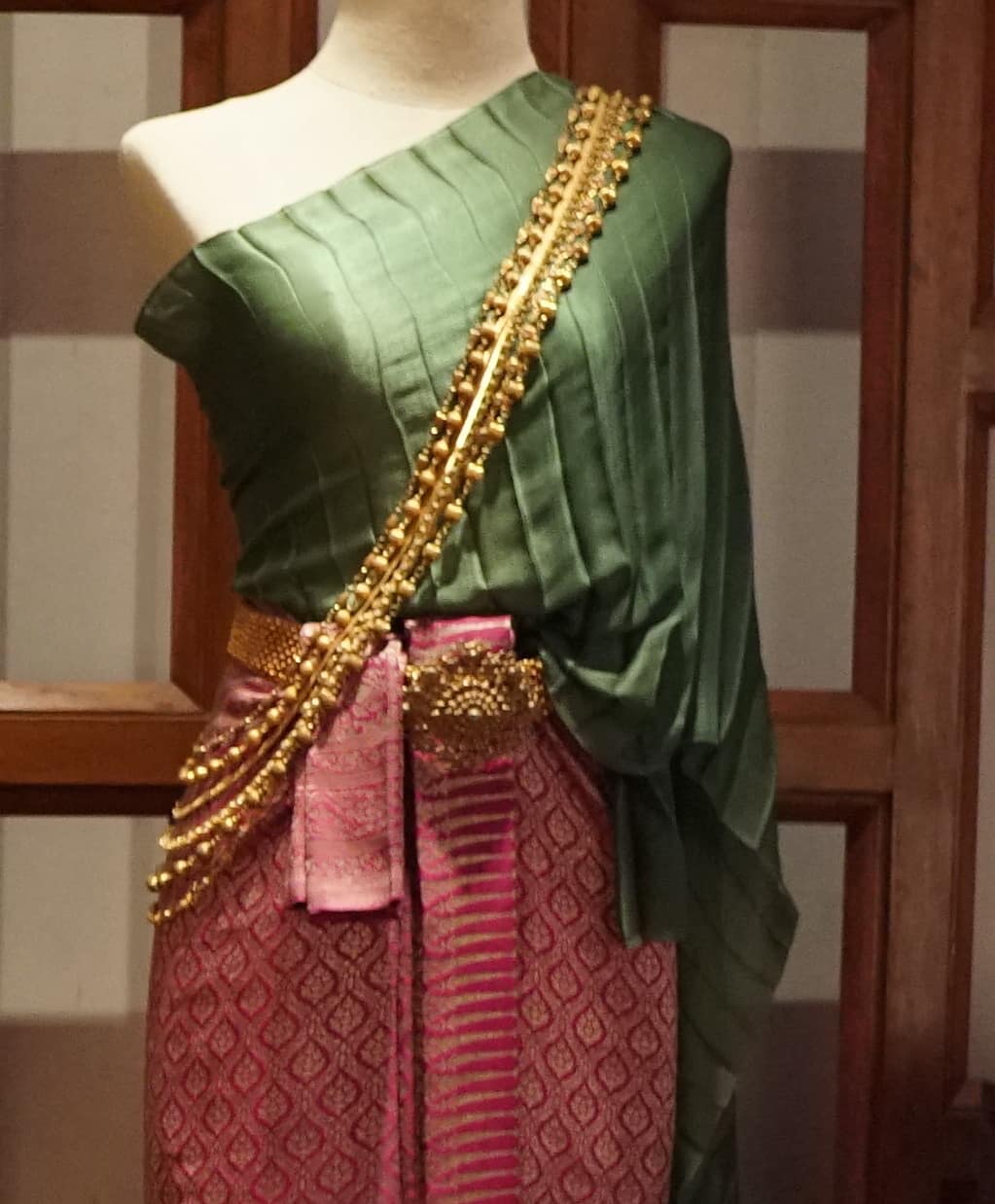
The traditional wear recorded for Ayutthaya is Chut thai, hired by the hour. This is the rare case where dressing up is not a foreign visitor's affectation — the costume-hire trade at Wat Chaiwatthanaram exists because Thai families do it, in large numbers, especially after a historical television drama sends everyone to the ruins in period dress. A visitor joining in is welcomed rather than tolerated. The two things that turn it from charming into offensive are posing in it with or on a Buddha image, and treating a working monastery as a studio. Chut thai is also genuinely varied by period and region, and what the shops rent is a specific Ayutthaya-court look rather than 'Thai traditional dress' in general.
Colours that photograph well here: White, Cream, Sand and Pale blue. For everyday looks the Dressed for unshaded brick and Something you can crouch in options are the easiest starting point.
On footwear — closed shoes with grip. This is loose brick, worn stairs and uneven ground, not a paved site. You will be taking shoes off at temples either way, so slip-ons save more time than they sound like they would.
Across the year: winter (Nov – Feb) — light, breathable clothes — a thin layer at most, for the air-conditioning · modest, covered dress, slip-off shoes (removed inside); summer (Mar – May) — light cottons, a hat & sunglasses · modest, covered dress, slip-off shoes (removed inside); monsoon (Jun – Oct) — a rain shell or umbrella + quick-dry clothes · modest, covered dress, waterproof, grippy shoes.
Trending wear
Modern, Instagram-friendly looks
Traditional wear
Local cultural outfits