
Photo spot in Ahmedabad
Sabarmati Ashram
Ahmedabad, Gujarat
Mahatma Gandhi's riverside ashram (1917–1930) and the starting point of the Dandi March, now a serene museum and memorial.
Best time
Morning, soon after opening, when the grounds are quiet and the light on the river is soft.
Best angle
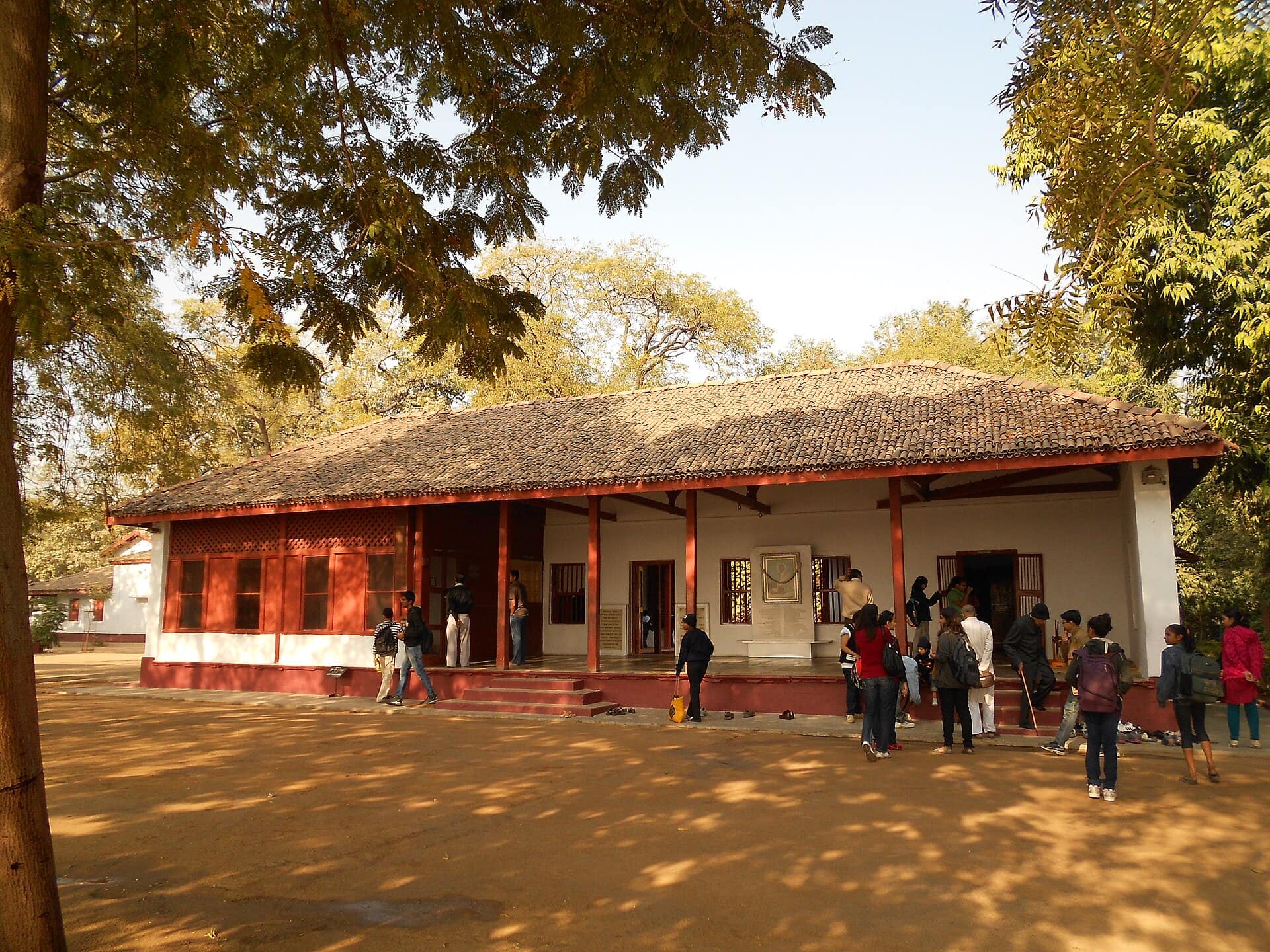
Stand in front of Hriday Kunj and take a straight-on photo of Gandhi's cottage and its veranda, with the trees around it.
Entry fee
Free
Opening hours
8:30 AM – 6:30 PM
Crowd level
Medium
Best outfit colors
Overview
Best time to visit Sabarmati Ashram
Morning, soon after opening, when the grounds are quiet and the light on the river is soft. Crowds here are typically medium. Arrive a little early to claim your angle and catch the softest light before the day tips over.
Poses & angles
Photo tips for Sabarmati Ashram
Stand in front of Hriday Kunj and take a straight-on photo of Gandhi's cottage and its veranda, with the trees around it. Work a few of the pose ideas below, shoot wide for context and tight for detail, and give yourself a couple of extra minutes to get the frame right.
Seated on the ashram steps
Walking the riverside path
Outfit guide
What to wear at Sabarmati Ashram
For photos at Sabarmati Ashram, white, khadi tones and earthy beige work beautifully — they stand out against the setting without fighting it. Pick one hero colour and keep the rest of the look calm so you stay the subject of the frame.
Best outfit colors for photos
Trending wear for this spot
Popular modern looks travellers are wearing across Ahmedabad.


Traditional wear for this spot
Timeless, cultural outfits worn across Ahmedabad.

Eat nearby
Food near Sabarmati Ashram
Hungry after the shoot? Search the Ahmedabad food guide by craving to find something good nearby.
Search food by craving
Good to know
Local tips
Keep your voice low, as the ashram is a place of quiet reflection.
Start at Hriday Kunj, the cottage where Gandhi lived from 1917 to 1930.
Leave time for the museum, which tells Gandhi's story through photos and letters.
Sit for a while at the Upasana Mandir, the open-air prayer ground.
Visit in the morning, before the heat builds.
Expect some routes, entrances and parking to change while the ashram is being redeveloped.
Look for the khadi shop nearby if you want hand-spun cloth as a souvenir.
About Sabarmati Ashram
Sabarmati Ashram, on the banks of the Sabarmati River, was Mahatma Gandhi's home from 1917 to 1930 and one of the main centres of India's freedom struggle. On 12 March 1930 he set out from here with 78 companions on the Dandi March, the long walk to the sea to protest against the British salt tax.
The heart of the ashram is Hriday Kunj, the simple cottage where Gandhi and Kasturba lived, with some of his belongings on display. Nearby are Magan Niwas, Vinoba-Mira Kutir, the open-air prayer ground and a museum designed by the architect Charles Correa and opened in 1963, which tells Gandhi's story through photos, letters and quotations. The ashram and its surroundings are being redeveloped into a much larger memorial, so some routes and buildings may change while the work goes on.
Questions
Sabarmati Ashram — FAQ
What is the best time to visit Sabarmati Ashram?
Morning, soon after opening, when the grounds are quiet and the light on the river is soft. Stand in front of Hriday Kunj and take a straight-on photo of Gandhi's cottage and its veranda, with the trees around it.
Is there an entry fee at Sabarmati Ashram?
Entry to Sabarmati Ashram is free.
What are the opening hours of Sabarmati Ashram?
Sabarmati Ashram is open 8:30 AM – 6:30 PM.
What should I wear at Sabarmati Ashram?
White, khadi tones and earthy beige photograph especially well here. Explore the trending and traditional outfit ideas on this page for full looks.
How crowded does Sabarmati Ashram get?
Crowd levels are typically medium. To miss the busiest window: morning, soon after opening, when the grounds are quiet and the light on the river is soft.
What is Sabarmati Ashram famous for?
It was Mahatma Gandhi's home from 1917 to 1930 and the starting point of the Dandi March on 12 March 1930. Today it is a museum and memorial to his life and ideas.
What can I see at Sabarmati Ashram?
The main sights are Hriday Kunj, Gandhi's cottage, along with Magan Niwas, Vinoba-Mira Kutir, the open-air prayer ground and the museum designed by Charles Correa, with photos, letters and quotations from Gandhi's life.
Is Sabarmati Ashram being redeveloped?
Yes. The state government is expanding the ashram into a much larger memorial, restoring the old buildings and adding new facilities. The ashram has generally stayed open during the work, but routes, entrances and parking may change, so check before you go.
How much time do I need at Sabarmati Ashram?
Allow 1–2 hours to see Hriday Kunj, walk the grounds and go round the museum. If you are interested in Gandhi's life, you could easily spend longer.