
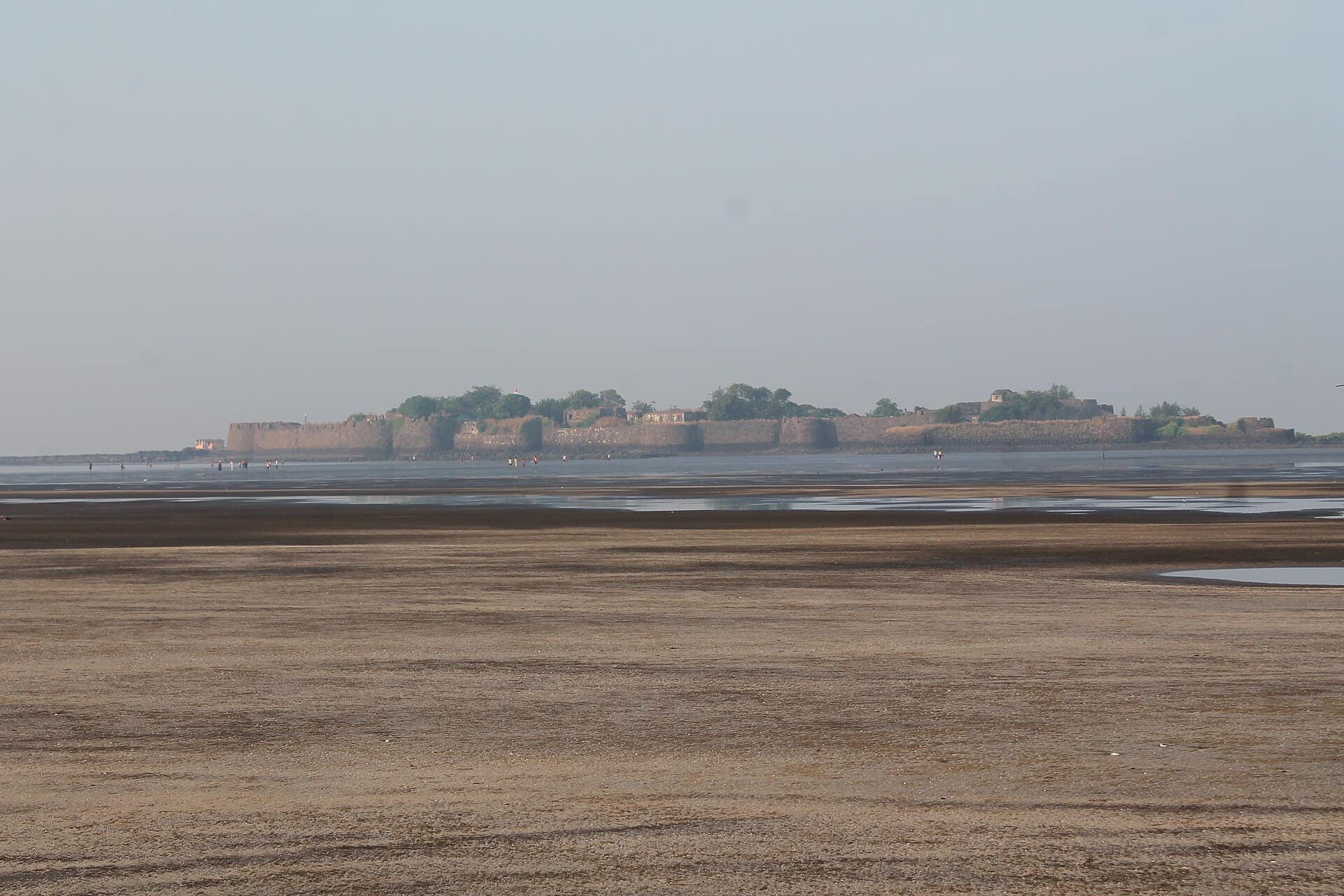
Photo spot in Alibaug
Kolaba Fort
Alibaug, Maharashtra
A 17th-century sea fort of Shivaji standing just offshore, reachable on foot at low tide — with old cannons, temples, freshwater wells and sea views.
Best time
Morning at low tide, for soft light on the walls and people walking across the sand; sunset from the beach, when the fort is a silhouette against the sky.
Best angle
Walk halfway across the sand at low tide and take a straight-on photo of the main gateway with the ramparts on either side.
Entry fee
Nominal
Opening hours
Low-tide access
Crowd level
Medium
Best outfit colors
Overview
Best time to visit Kolaba Fort
Morning at low tide, for soft light on the walls and people walking across the sand; sunset from the beach, when the fort is a silhouette against the sky. Crowds here are typically medium. Arrive a little early to claim your angle and catch the softest light before the day tips over.
Poses & angles
Photo tips for Kolaba Fort
Walk halfway across the sand at low tide and take a straight-on photo of the main gateway with the ramparts on either side. Work a few of the pose ideas below, shoot wide for context and tight for detail, and give yourself a couple of extra minutes to get the frame right.
At the fort gateway
On the sea ramparts
Outfit guide
What to wear at Kolaba Fort
For photos at Kolaba Fort, rust, white and aqua work beautifully — they stand out against the setting without fighting it. Pick one hero colour and keep the rest of the look calm so you stay the subject of the frame.
Best outfit colors for photos
Trending wear for this spot
Popular modern looks travellers are wearing across Alibaug.

Traditional wear for this spot
Timeless, cultural outfits worn across Alibaug.
Eat nearby
Food near Kolaba Fort
Round out the visit with something to eat. Look for sol kadhi nearby.
Special dishes to try

Search food by craving
Good to know
Local tips
Look up the tide table for your date before you plan the rest of your day.
Start back to the beach well before low tide ends, not at the last minute.
Wear strapped sandals or water shoes, as you may wade through water.
Keep your phone and wallet in a waterproof pouch for the crossing.
Carry water and a hat, because there is almost no shade inside the walls.
Visit the Siddhivinayak temple with shoulders and knees covered and shoes off.
Avoid the crossing in the monsoon, when the sea is rough and the rocks are slippery.
A fort in the sea
Kolaba Fort stands on a rocky outcrop a short way off Alibaug Beach. Work on it began in 1680 under Chhatrapati Shivaji Maharaj and finished in 1681 under Sambhaji. From 1713 it became the main base of Kanhoji Angre, admiral of the Maratha navy, who raided British ships from here until his death in 1729. It is a protected monument today.
Getting across
The fort is cut off twice a day by the tide. At low tide you walk across the sand and rock from the beach, usually in 15 to 20 minutes. The water can still be ankle to waist deep in places, depending on the day. Low tide comes roughly 50 minutes later each day, so check the table for your date and leave the fort in good time. Horse carts have also carried visitors across at low tide.
Inside the walls
The walls are about 25 feet high, with bastions and gateways facing the sea. Inside you find the Siddhivinayak Ganesh temple, built in 1759 by Raghoji Angre, and the dargah of Haji Kamaluddin Shah. There are freshwater wells, surprising for a fort surrounded by salt water. On the northern wall are two old English cannons marked with the name of the Low Moor Ironworks in Yorkshire.
Festivals
The Ganesh temple draws large crowds on sankashti days and at Maghi Ganesh Jayanti in January or February. On those days the path across the sand is busy with pilgrims.
Practical points
There is little shade inside, so carry water and a hat. Wear sandals that strap on. Leave the fort the moment you see the water rising on the path. Do not climb broken sections of the wall.
When to go
October to March, on a morning low tide, is best. In the monsoon the sea is rough and the crossing is risky.
Questions
Kolaba Fort — FAQ
What is the best time to visit Kolaba Fort?
Morning at low tide, for soft light on the walls and people walking across the sand; sunset from the beach, when the fort is a silhouette against the sky. Walk halfway across the sand at low tide and take a straight-on photo of the main gateway with the ramparts on either side.
Is there an entry fee at Kolaba Fort?
Entry to Kolaba Fort is nominal.
What are the opening hours of Kolaba Fort?
Kolaba Fort is open low-tide access.
What should I wear at Kolaba Fort?
Rust, white and aqua photograph especially well here. Explore the trending and traditional outfit ideas on this page for full looks.
How crowded does Kolaba Fort get?
Crowd levels are typically medium. To miss the busiest window: morning at low tide, for soft light on the walls and people walking across the sand; sunset from the beach, when the fort is a silhouette against the sky.
What food should I try near Kolaba Fort?
Try sol kadhi at spots close by.
Can I get stuck at Kolaba Fort at high tide?
Yes, if you stay too long. The path floods as the tide comes in. Leave as soon as the water starts rising, or you may have to wait hours or pay for a boat back.
Who built Kolaba Fort?
Work began in 1680 under Shivaji Maharaj and was completed in 1681 under Sambhaji. It later became the base of the Maratha admiral Kanhoji Angre.
Is there a temple inside Kolaba Fort?
Yes. The Siddhivinayak Ganesh temple was built in 1759 by Raghoji Angre. There is also a dargah of Haji Kamaluddin Shah inside the walls.
How deep is the water on the way to Kolaba Fort?
At a good low tide the path is mostly sand and rock. On other days you may wade through water up to your knees or waist, so check the tide height as well as the time.