
What to Wear in Bhuj
Bhuj is hot and dry for much of the year, but one set of clothes does not suit every trip. A winter day can be warm enough for short sleeves in town and cold enough for a jacket on the White Rann after dark, while summer afternoons are often close to 40 °C.
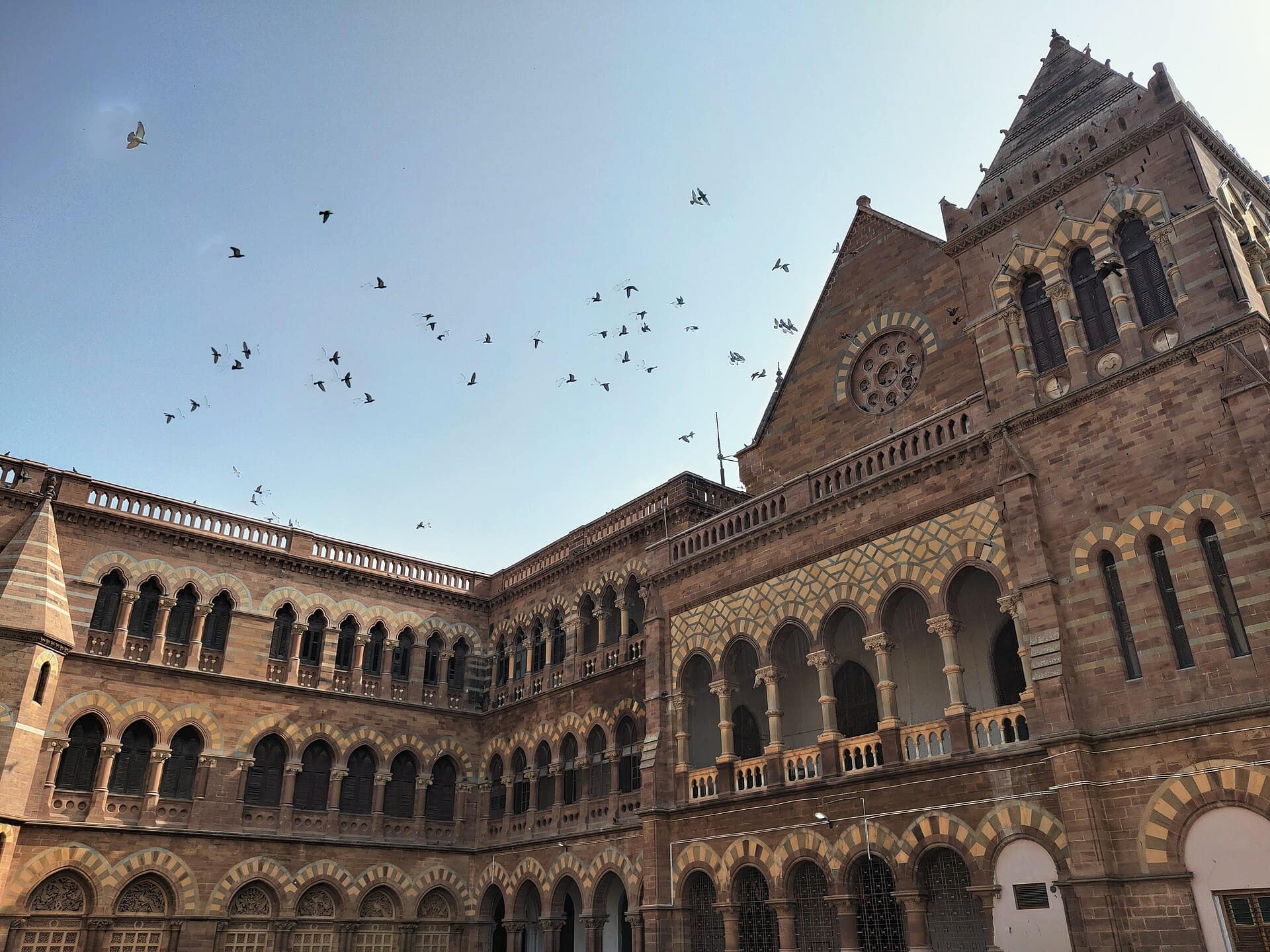
Light, loose cotton is the base of any Bhuj wardrobe. Add layers for winter nights, and keep your shoulders and knees covered in temples and villages, where people dress conservatively. For photos, bright colours and a touch of Kutchi mirror work stand out against the white salt and the old palaces.
Trending wear
Modern, Instagram-friendly looks
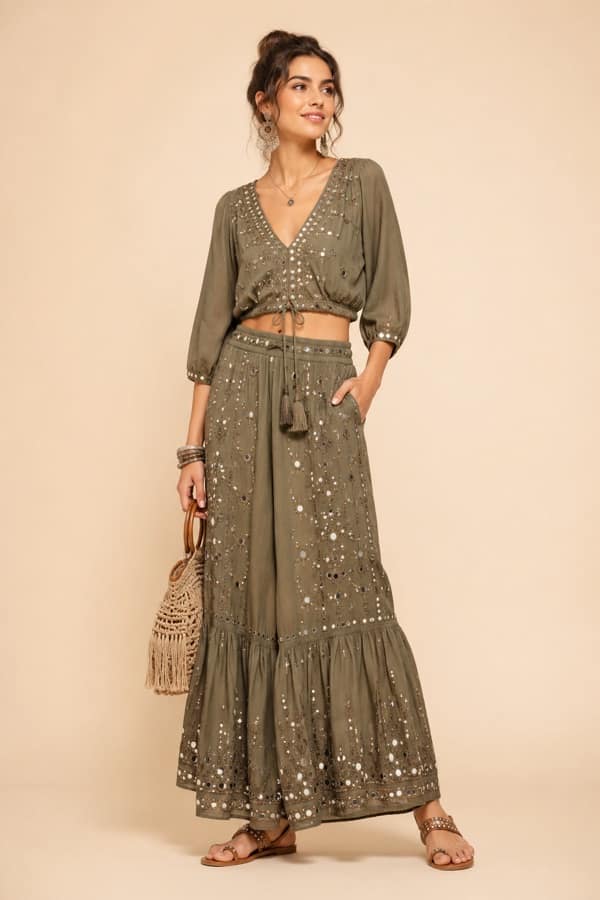
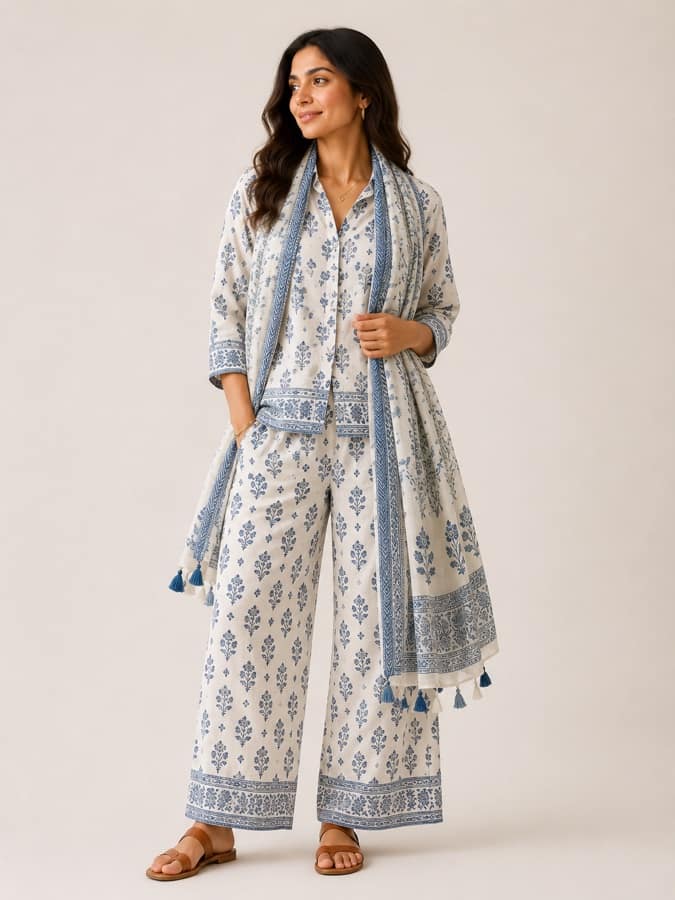
Traditional wear
Local cultural outfits
What to Wear in Bhuj During Winter
Winter (November to February) is the main travel season. Days are warm and sunny, usually in the high 20s °C, but mornings and nights are cool, and the open Rann can feel cold and windy after sunset, especially in December and January.
Best Winter Outfits for Bhuj
- Cotton shirts, kurtas or T-shirts for the daytime
- Jeans or comfortable trousers
- A warm jacket or fleece for evenings on the Rann
- A shawl or stole, such as a Kutchi handloom shawl
- A cap or scarf for the wind at Kalo Dungar
- Sunglasses for the glare off the salt
What to Wear in Bhuj During Summer
Summer (March to June) is hot and dry, and from April afternoons are often close to 40 °C. Dress for the sun, and plan outdoor sightseeing for the early morning and evening.
Best Summer Outfits for Bhuj
- Loose, light-coloured cotton or linen clothes
- Long, airy sleeves to keep the sun off your arms
- A wide-brimmed hat or cap
- Sunglasses and sunscreen
- A cotton scarf or dupatta to cover your head and neck
- Breathable sandals or shoes
What to Wear in Bhuj During the Monsoon
The monsoon (July to September) brings only light, patchy rain to Kutch, but the air turns warm and humid. The Rann is under water in these months, so most trips stay in and around town.
Best Monsoon Outfits for Bhuj
- Quick-drying tops and trousers
- A compact umbrella or a light rain jacket
- Sandals or shoes that cope with puddles and mud
Best Colours to Wear in Bhuj
On the White Rann, bright colours such as red, yellow, fuchsia and mustard stand out clearly against the salt and the pale sky. White works too if you want a soft, all-white look, but it blends into the background. In the palaces and craft villages, maroon, emerald, indigo and rust look good against old stone, mirrors and handloom textiles. A mirror-work jacket, dupatta or skirt is an easy way to add a Kutchi touch.
Footwear Tips for Bhuj
Comfortable walking shoes or sturdy sandals are fine in town. For the White Rann, choose shoes you can wash, as salt sticks to the soles and can damage leather. You will take your shoes off at temples, so slip-ons save time. Leave heels at home, as they are hard work on the salt and on the uneven lanes of the old town.
Questions
Bhuj — FAQ
What should I wear in Bhuj?
Light, loose cotton clothes that cover your shoulders and knees work best for most of the year. In winter, add a warm jacket or shawl for the evenings, and wear comfortable walking shoes for the old town and the Rann.
What should I wear to the White Rann?
Wear comfortable layers and shoes you can wash. The salt reflects a lot of sun, so bring sunglasses and a cap for the late afternoon, and a warm jacket for after sunset, when it gets cold and windy in winter.
Is it cold in Bhuj in winter?
Days are pleasant, usually in the high 20s °C, but nights can fall to around 10 °C in December and January, and it feels colder out on the open Rann. A jacket, a shawl and a warm layer for the evenings are enough for most people.
What should women wear in Kutch villages?
Loose clothes that cover the shoulders and knees are best, such as a kurta with trousers or a long skirt. Villages in Kutch are conservative, and modest clothes make it easier to talk to artisans and to enter temples. A scarf or dupatta is useful for covering your head in temples and in the sun.
What should I wear for photos in Bhuj?
Bright colours such as red, mustard, fuchsia and yellow look best against the white salt of the Rann. For the palaces and craft villages, try emerald, maroon or indigo. A Kutchi mirror-work top, jacket or dupatta, which you can buy in Bhuj or Bhujodi, adds a local touch.