
Photo spot in Cherrapunji
Double Decker Living Root Bridge
Cherrapunji, Meghalaya
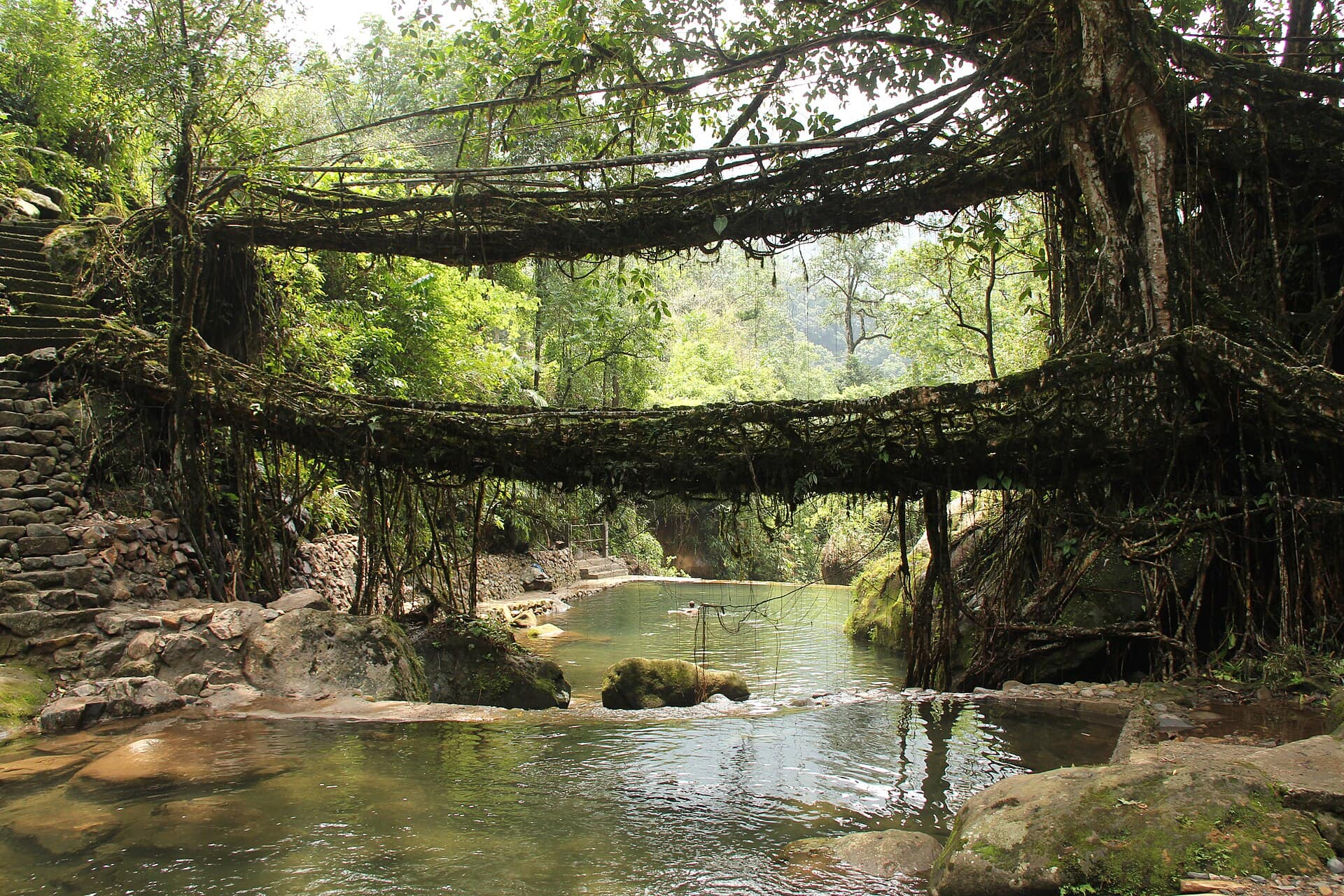
The famous two-tier bridge of living rubber-fig roots woven over a stream at Nongriat, reached by a steep ~3,500-step forest trek.
Best time
Early morning if you have stayed in Nongriat, before the day-trekkers arrive; late afternoon for soft, even light on the roots once the crowd has gone back up.
Best angle
Stand on the rocks downstream of the bridge and take a vertical photo that shows both tiers of roots with the stream pool in front.
Entry fee
Nominal
Opening hours
Daylight (trek)
Crowd level
Medium
Best outfit colors
Overview
Best time to visit Double Decker Living Root Bridge
Early morning if you have stayed in Nongriat, before the day-trekkers arrive; late afternoon for soft, even light on the roots once the crowd has gone back up. Crowds here are typically medium. Arrive a little early to claim your angle and catch the softest light before the day tips over.
Poses & angles
Photo tips for Double Decker Living Root Bridge
Stand on the rocks downstream of the bridge and take a vertical photo that shows both tiers of roots with the stream pool in front. Work a few of the pose ideas below, shoot wide for context and tight for detail, and give yourself a couple of extra minutes to get the frame right.
On the root bridge
By the stream pools
Outfit guide
What to wear at Double Decker Living Root Bridge
For photos at Double Decker Living Root Bridge, rust, white and forest green work beautifully — they stand out against the setting without fighting it. Pick one hero colour and keep the rest of the look calm so you stay the subject of the frame.
Best outfit colors for photos
Trending wear for this spot
Modern, camera-ready looks picked for Double Decker Living Root Bridge.
Traditional wear for this spot
Timeless, cultural outfits worn across Cherrapunji.
Eat nearby
Food near Double Decker Living Root Bridge
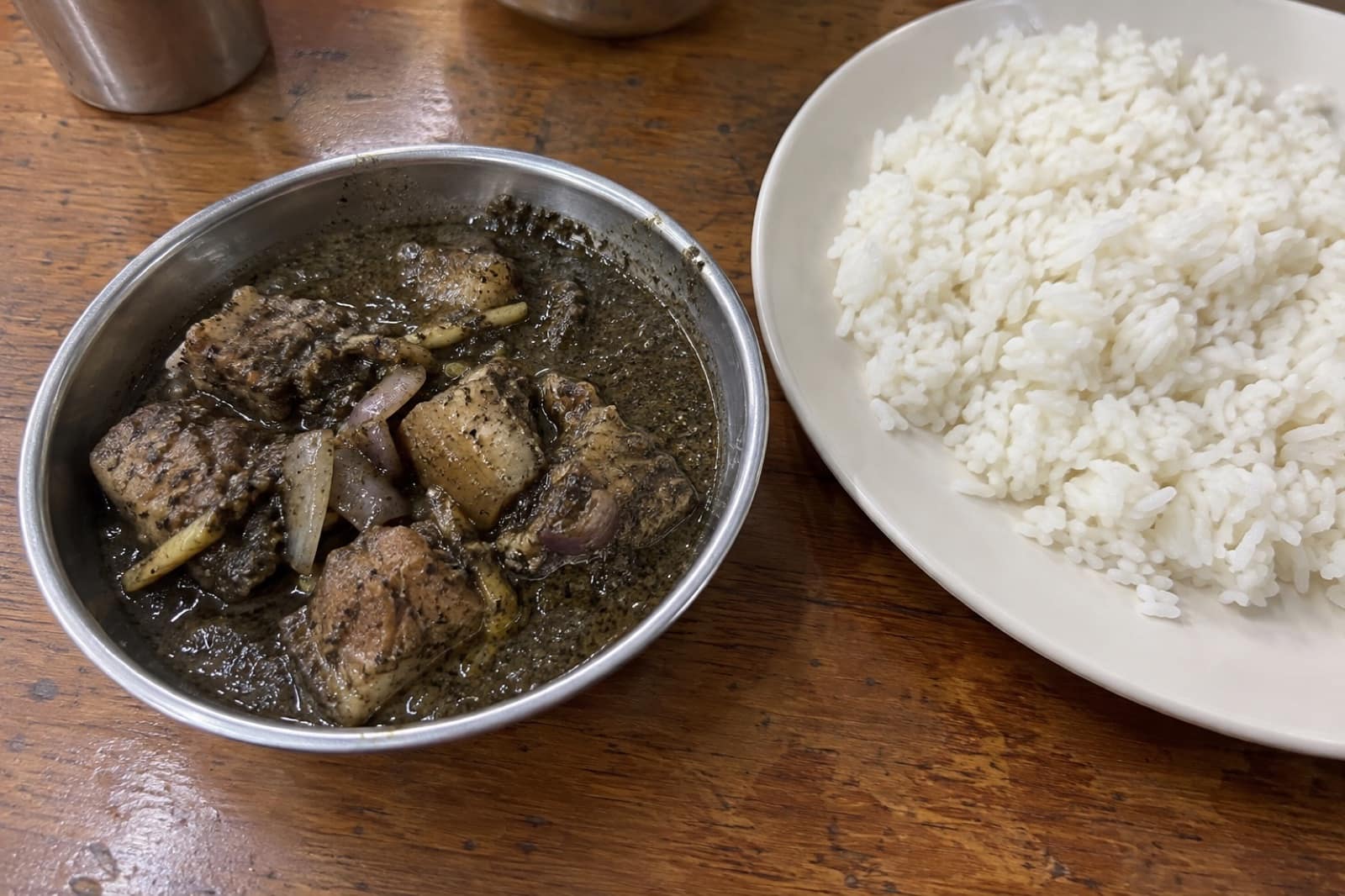
Round out the visit with something to eat. Look for doh-neiiong nearby, or settle in at one of the 1 restaurants close by.
Special dishes to try
Restaurants & food places nearby
Search food by craving
Good to know
Local tips
Start the walk down from Tyrna by 8 am if you plan to come back up the same day.
Carry at least two litres of water, although small shops on the way sell drinks.
Use a walking stick for the descent, as the steps are hard on the knees.
Cross the wire suspension bridges one or two at a time and hold the side cables.
Stay a night in Nongriat if you want Rainbow Falls or an empty bridge in the morning.
Do not swim in the pools after heavy rain, when the streams rise quickly.
Stay on the path and do not pull or climb on the roots, which the village looks after.
Two bridges of living roots
At Nongriat, in the valley below Sohra, two bridges made of living tree roots cross the same stream, one above the other. They were grown by the Khasi people from the aerial roots of rubber fig trees, which are guided across the water and left to thicken over many years. It can take 10 to 15 years before a new bridge can carry people, and a healthy bridge keeps getting stronger as the tree grows. This one, known locally as Jingkieng Nongriat, is thought to be around 200 years old. The villagers still use and repair it.
The trek from Tyrna
The walk starts at Tyrna village, a drive from Sohra. From there, roughly 3,000 to 3,500 stone steps lead down about 3 km to Nongriat. On the way you pass a single root bridge and cross rivers on narrow steel-wire suspension bridges that sway as you walk. Most people take about two hours down and longer to climb back up. The return climb is the hard part, so be honest about your knees and fitness.
Staying in Nongriat
Nongriat has simple homestays and guesthouses. Staying the night lets you take the climb in two halves and see the bridge early, before day-trekkers arrive. Rooms are basic, so bring a torch and cash.
Rainbow Falls
A further trail leads from the bridge to Rainbow Falls, taking roughly one to one and a half hours each way, with more climbing. Only try it if you start early or stay the night.
Water and weather
In the dry months, pools under the bridge are clear and good for a dip. In the monsoon the steps are slippery, the streams run fast and swimming is dangerous. The village charges a small fee to cross the bridge.
Questions
Double Decker Living Root Bridge — FAQ
What is the best time to visit Double Decker Living Root Bridge?
Early morning if you have stayed in Nongriat, before the day-trekkers arrive; late afternoon for soft, even light on the roots once the crowd has gone back up. Stand on the rocks downstream of the bridge and take a vertical photo that shows both tiers of roots with the stream pool in front.
Is there an entry fee at Double Decker Living Root Bridge?
Entry to Double Decker Living Root Bridge is nominal.
What are the opening hours of Double Decker Living Root Bridge?
Double Decker Living Root Bridge is open daylight (trek).
What should I wear at Double Decker Living Root Bridge?
Rust, white and forest green photograph especially well here. Explore the trending and traditional outfit ideas on this page for full looks.
How crowded does Double Decker Living Root Bridge get?
Crowd levels are typically medium. To miss the busiest window: early morning if you have stayed in Nongriat, before the day-trekkers arrive; late afternoon for soft, even light on the roots once the crowd has gone back up.
What food should I try near Double Decker Living Root Bridge?
Try doh-neiiong, available at nearby restaurants.
How many steps are there to the Double Decker root bridge?
Roughly 3,000 to 3,500 each way, from Tyrna village down to Nongriat. Counts vary because the path has several sections.
How long does the Double Decker trek take?
Plan on a full day. Most people take about two hours down and longer to climb back, plus time at the bridge.
Can I stay overnight in Nongriat?
Yes. The village has basic homestays and guesthouses, and staying splits the climb and lets you see the bridge early.
Is the root bridge trek hard?
It is demanding. The steps are steep and the climb back is long. Fit walkers manage it well, but anyone with knee or heart trouble should think carefully first.