
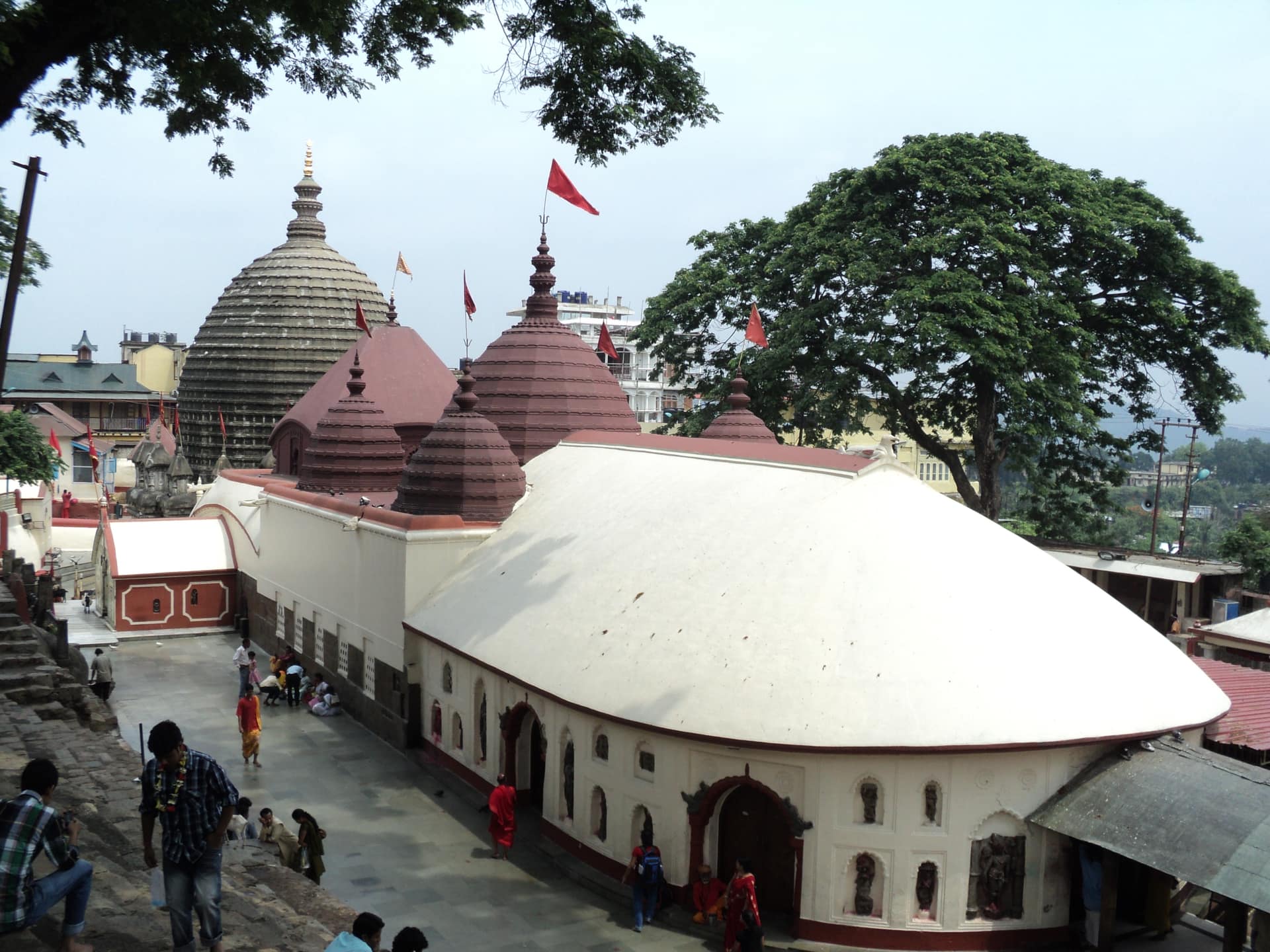
Temple in Guwahati
Kamakhya Temple
Guwahati, Assam
The foremost yoni Peetha on Nilachal Hill above Guwahati, a centre of tantric worship where there is no idol at all - the goddess is a spring-fed rock cleft in a cave sanctum, and the doors close for three days each June for Ambubachi.
Photo: Kunal Dalui — CC BY-SA 3.0, via Wikimedia Commons
Overview
Who it's to, and what's expected
Deity
Kamakhya
Tradition
Devi · Shakti temple
- Entry
The temple is closed to the public for three days during the Ambubachi Mela, with entry and worship permitted only starting on the fourth day.
- Footwear
Visitors must leave their footwear at designated camps on the approach road, as footwear is not permitted beyond the main entrance of the temple.
- Prasadam
Prasadam is distributed in two forms: Angodak, which is water from the temple spring, and Angabastra, a piece of red cloth used to cover the yoni rock fissure during the menstruation period.
How long this takes
Ways in
The difference between a twenty-minute visit and a three-hour one.
General queue
- Free, and the honest fact about visiting: from an hour to most of a day on ordinary days, because every devotee descends through the same narrow cave passage
- Join early in the morning session
- The temple publishes its own arrangements for those needing assistance on its official channels
Ambubachi Mela
- The doors close on the evening of about 22 June for three days and reopen on the fourth morning
- Lakhs of pilgrims and one of the world's largest tantric gatherings fill the hill - attendance is possible throughout, darshan is not, during the closed days
Festival days
- Navratri and the Durga Puja period bring the heaviest attendance outside Ambubachi, with the queue at its longest
At the gate
Before you go in
What gets refused, and what you cannot take past the door.
Phones and cameras
Photography is strictly prohibited inside any of the temples located on Kamakhya Hill.
Rules, timings and fees change — confirm locally before you rely on this.
When not to come — unless you mean to
Festival windows
These follow lunar calendars and move by weeks each year, so the windows are months, not dates.
Around 22–26 June
BusyAmbubachi Mela
The one closure on this site that is the point rather than an inconvenience: the temple shuts for three days to mark the goddess's menstruation, and reopens on the fourth to enormous queues. Hundreds of thousands of pilgrims and sadhus come for it. If you arrive in that window without knowing, you will find the doors shut.
Crowd levels are our reading of the notes above, not an official measure. Rules, timings and fees change — confirm locally before you rely on this.
Practicalities
The things that go wrong
Book through official channels, and treat anyone promising a guaranteed slot as a warning sign.
What to watch for
- Charging for entry
- The general queue is free; the temple publishes its own arrangements for assistance or shorter routes on its official channels, and nobody at the hill is authorised to sell them
- Offering a guided descent into the cave for a fee
- The passage is single and managed by the temple's own staff; no third party can accompany or expedite you
- Selling kumkum, red cloth or flowers at the approach at inflated prices
- Kumkum is given as prasad at the sanctum, and you are not required to bring an offering
- Claiming the temple is closed outside the Ambubachi days
- It closes only for the afternoon break daily and for the three Ambubachi days; check the temple's own notice
- Drivers quoting a fare only on arrival at the hill; agree the round trip from Guwahati before setting out
General guidance
Planning the visit
Customary practice and what Guwahati's climate means for a barefoot visit — not rules posted at this temple. Anything specific to Kamakhya Temple is above.
Offerings differ here
Shakta shrines often accept offerings that other temples do not, and a few remain associated with animal sacrifice on particular days. What is sold at the stalls outside is the honest signal of what is expected inside.
Come in winter
Winter is when Guwahati is most comfortable to walk around, which matters here because a temple visit is done on foot and barefoot. Locally the window is given as october to april.
Stone gets hot — go early
You will be barefoot from the shoe rack onwards, often across an open courtyard. Between late morning and mid-afternoon in the hot months that stone is genuinely painful to stand on. Socks help, and are permitted almost everywhere shoes are not.
Arriving by train
Guwahati has a railway station, and auto-rickshaws wait outside it. Agree the fare or use a meter before you set off, and expect to be dropped a short walk from the temple rather than at its door.
Outfit guide
What to wear at Kamakhya Temple
Cover shoulders and knees — the rules above win over anything here.
Trending wear for this spot
Popular modern looks travellers are wearing across Guwahati.

Traditional wear for this spot
Timeless, cultural looks that suit Kamakhya Temple.
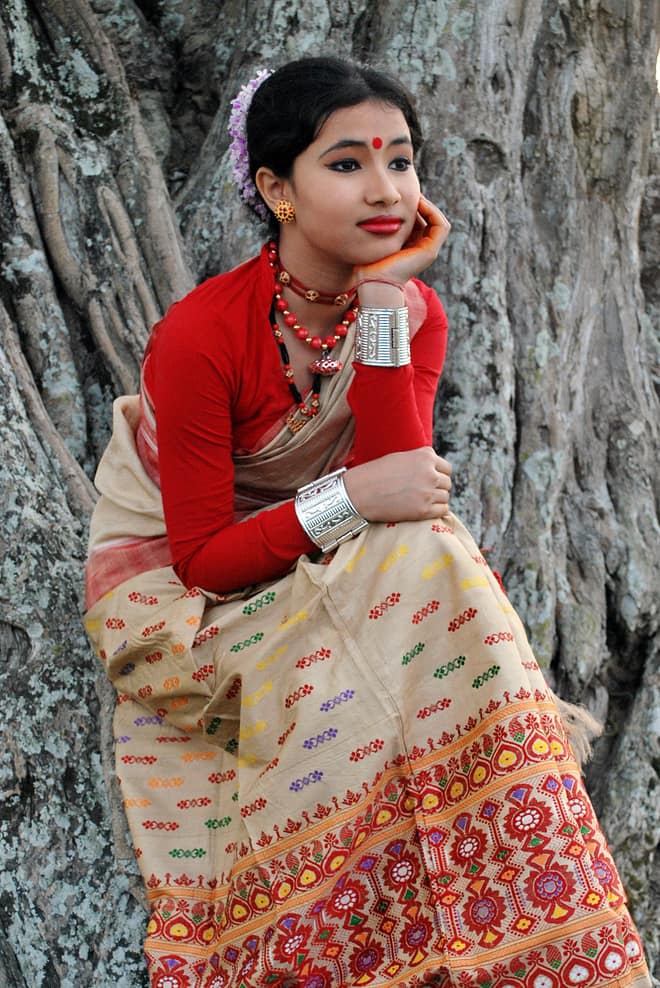
Kamakhya Temple, Guwahati
Kamakhya, on Nilachal Hill above Guwahati, is one of the oldest and most revered Shakti Peethas and a centre of tantric worship — and the goddess here is not an idol.
🌑 The sanctum with no image
There is no idol at Kamakhya. Worship centres on a natural rock cleft — the yoni peetha — inside a cave beneath the main sanctum, kept perpetually moist by an underground spring.
In Shakta and tantric tradition this natural formation is itself the living presence of the Goddess, which makes a carved image unnecessary — the site is the deity. The Shakti Peetha tradition holds that parts of Sati's body fell at the places that became her shrines, and Kamakhya is the foremost of them for the yoni, the symbol of the Goddess's power of creation.
The darshan is correspondingly physical: devotees queue, pass through a stone doorway and descend into the cave sanctum, where the spring-fed cleft is draped in red cloth and flowers and red powder — the kumkum — is given as prasad. It is dark, narrow and unlike the sanctum of any other major temple in India.
🏛️ The temple and its hill
The present stone temple was rebuilt in 1565 under the Koch king Naranarayan, and its Nilachal-style architecture — a bulbous hemispherical dome over the sanctum, with sculpted relief panels on the walls — is distinctive to this part of Assam. An earlier shrine on the hill goes back centuries further, and the site's importance long predates the present building.
Nilachal Hill is itself a sacred landscape, not just a pedestal for one temple: the hill carries the shrines of the ten Mahavidyas — the great wisdom goddesses of tantric tradition, among them Tara, Matangi, Kamala, Chinnamasta, Bagalamukhi and Bhuvaneshwari — a concentration found nowhere else in India. Devotees who come for Kamakhya traditionally visit the Mahavidya shrines as well, walking the paths between them.
From the top, the view runs over the Brahmaputra valley and the river itself — one of the great views of Guwahati, and reason enough to linger after darshan.
🌸 Ambubachi — the goddess's annual menstruation
Kamakhya's defining observance is the Ambubachi Mela, held over about four days in late June, when the Goddess is believed to menstruate.
The doors close on the evening of about 22 June and remain shut for three days — a closure with no ritual at all inside, which is itself the observance. The temple reopens on the fourth morning amid celebration, and the reopening is the climax.
Ambubachi draws one of the largest gatherings of tantric practitioners in the world — ascetics and householders alike — and lakhs of pilgrims camp on Nilachal Hill for it. For those three closed days the hill is at its fullest and the sanctum at its least accessible, which is worth understanding before planning a June visit: you can attend the mela without receiving darshan.
🕒 Timings and the queue
Open daily in two sessions, roughly 5:30 or 6:00 AM to 1:00 PM and 2:30 PM to 5:30 PM, with an afternoon closure.
The general queue is the honest fact about visiting Kamakhya: on ordinary days it runs from an hour to most of a day, because every devotee descends through the same narrow cave passage. Join early in the morning session if your time is limited. The temple publishes its own arrangements for those who need assistance or a shorter route to the sanctum — confirm those on the temple's official channels rather than with anyone at the hill.
Festival days multiply everything: Navratri and the Durga Puja period bring the longest queues outside Ambubachi.
🛕 Rules and etiquette
Modest dress; shoulders and knees covered. Footwear is deposited before the temple areas, and the descent into the cave involves steps and a narrow passage — carry nothing you cannot hold in one hand. Photography is not permitted in the sanctum areas. Silence is expected in the cave, where the queue moves slowly and devotees are at their most absorbed; the descent is made in single file and unhurried, and the spring and the red cloth are touched only as the temple's own staff direct.
Red is the temple's colour — the kumkum prasad, the cloth, the offerings — and devotees often wear it for the visit.
📍 Nilachal Hill and Guwahati
The temple sits on top of Nilachal Hill above the Brahmaputra, reached by road from Guwahati — autos and taxis climb to a point below the complex, with a walk at the top. The hilltop view over the Brahmaputra valley is itself worth the climb. Guwahati's other standard companions are the Umananda island temple in the river, reached by ferry, and the Mahavidya shrines on the hill's slopes.
Guwahati is the base for all of it — and for Kaziranga and Shillong beyond, which makes Kamakhya the first stop of most Assam itineraries.
Last verified: 2026. The yoni peetha cave sanctum with no idol, the spring-fed rock cleft, the kumkum prasad, the 1565 rebuilding under Naranarayan, the ten Mahavidya shrines on the hill, the Ambubachi closure from the evening of about 22 June for three days with the reopening on the fourth morning, the scale of the tantric gathering, and the two daily sessions are documented. Session opening is published as both about 5:30 and about 6:00 AM, and Ambubachi dates shift with the calendar - the temple's own notice is authoritative.
Questions
Kamakhya Temple — FAQ
Who is Kamakhya Temple dedicated to?
Kamakhya Temple in Guwahati is dedicated to Kamakhya.
Who can enter Kamakhya Temple?
The temple is closed to the public for three days during the Ambubachi Mela, with entry and worship permitted only starting on the fourth day.
Do I have to take my shoes off at Kamakhya Temple?
Visitors must leave their footwear at designated camps on the approach road, as footwear is not permitted beyond the main entrance of the temple.
Can I take photos inside Kamakhya Temple?
Photography is strictly prohibited inside any of the temples located on Kamakhya Hill.
What prasadam is offered at Kamakhya Temple?
Prasadam is distributed in two forms: Angodak, which is water from the temple spring, and Angabastra, a piece of red cloth used to cover the yoni rock fissure during the menstruation period.
Checked, not remembered
Sources
Every rule and timing above traces back to one of these.