
What to Wear in Guwahati
Dress for sticky air and sudden rain, and for temples where you walk barefoot. A light scarf and slip-on shoes will do more for you here than anything warm.
Trending wear
Modern, Instagram-friendly looks
Traditional wear
Local cultural outfits
Humidity first
Guwahati is humid for most of the year, not only in the monsoon. Loose cotton and linen dry faster than synthetics and feel far cooler in a queue. Pack an extra shirt for a long day: a morning at Kamakhya followed by a ferry leaves most people damp. In December and January, mornings and evenings are cool enough for a light sweater or shawl, and the ferry deck can be chilly after dark.
Temple dress
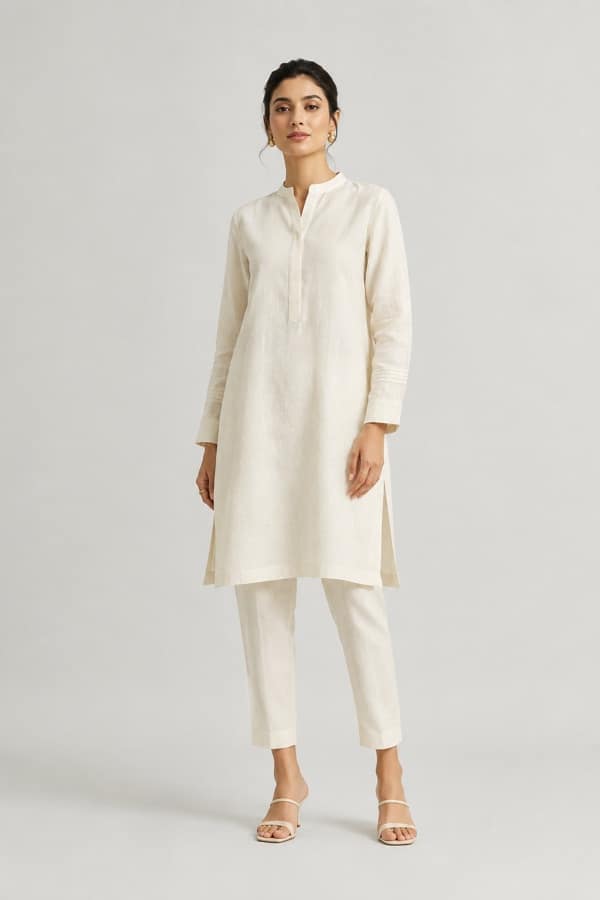
Kamakhya, Umananda and Navagraha are active places of worship. Cover your shoulders and knees; a long skirt, loose trousers or a kurta works well. Shoes come off before the temple, and at Kamakhya they are left at stalls on the approach, so wear something you can slip off and on quickly. The stone and tiled floors get hot by late morning, so go early. Leather belts and bags are best left behind for the sanctum.
Rain and river days
From May to September, carry a compact umbrella or a light rain jacket every day. Sandals with grip beat canvas shoes, which stay wet for hours. On the ferry to Umananda, bare feet or sandals are easier on the wet steps at Kachari Ghat. Choose quick-dry trousers over jeans.
The Assamese wardrobe
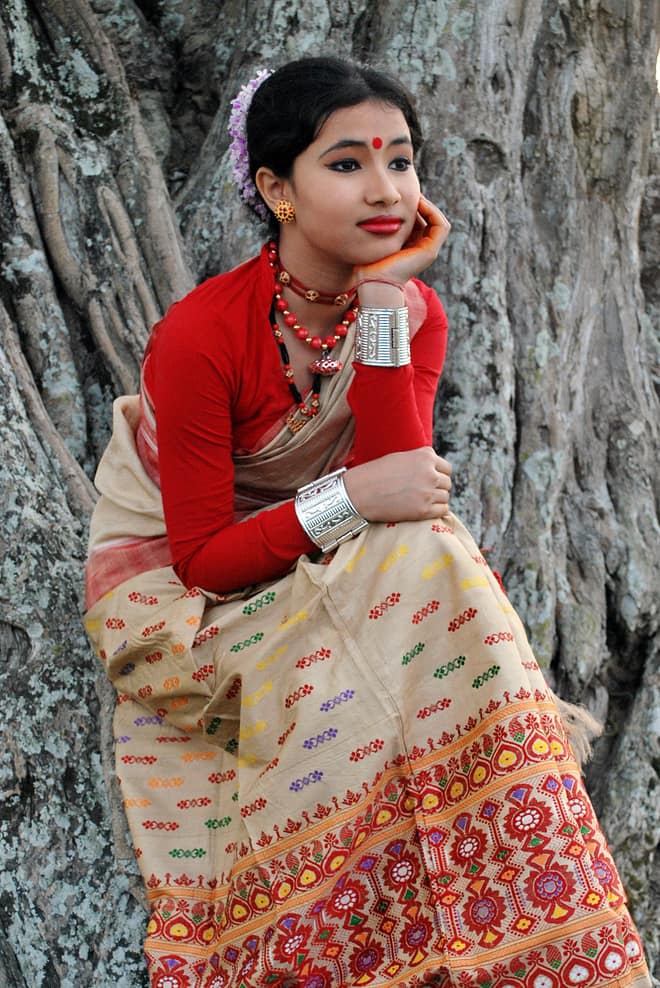
The mekhela chador is the traditional two-piece dress for women: a wrapped skirt (mekhela) and a draped upper cloth (chador). Muga silk has a natural golden sheen and is unique to Assam; Paat silk is off-white and softer. Both are expensive when genuine. Men often wear a kurta with a gamosa, the red-bordered white cotton cloth that Assamese people offer to guests as a mark of respect. Handle a gamosa with care; it is not a rag or a sweat towel.
Where to buy
Fancy Bazaar and Pan Bazar have ready-made mekhela chadors and gamosas at every price. For hand-woven silk, visit Sualkuchi, about 35 km west, or a government emporium in the city, and ask whether a piece is hand-loom or power-loom before you pay.
Questions
Guwahati — FAQ
Can I wear shorts in Guwahati?
Around the hotel and on a cruise, yes. For Kamakhya, Umananda or Navagraha, change into trousers or a long skirt. Most locals dress modestly in markets too, so knee-length or longer is the easy choice.
How can I tell real Muga silk from an imitation?
Genuine Muga has a natural golden sheen that gets brighter with washing and it is heavy and costly. Very cheap, very shiny golden fabric is usually a blend or a power-loom copy. Buy from Sualkuchi weavers or government emporiums and ask for the handloom mark.
Do I need warm clothes for Guwahati in winter?
Only light ones. Days in December and January are mild, but early mornings and the river after sunset feel cool. A sweater or shawl is enough unless you are continuing to Shillong or Tawang.
Is it respectful for visitors to wear a gamosa?
Yes. Visitors are often given one as a welcome, and wearing it around the neck or shoulders on a special occasion is appreciated. Just treat it with respect: do not wipe your feet or sit on it.