
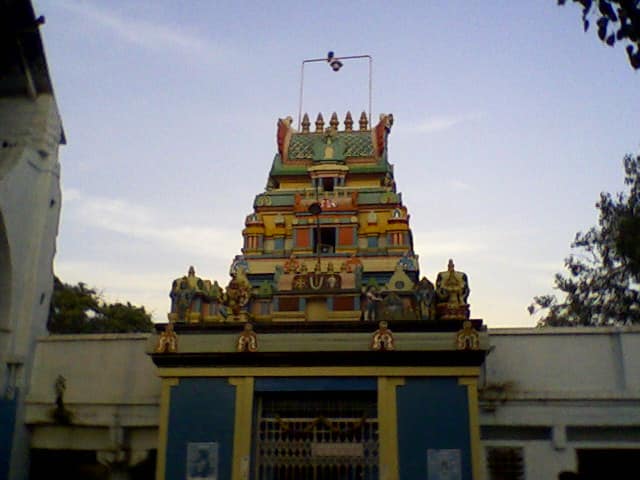
Temple in Hyderabad
Chilkur Balaji Temple
Hyderabad, Telangana
A Venkateswara temple on Osman Sagar lake near Hyderabad, remarkable for what it refuses: no donation box, no ticket counter, one line for everyone - and the practice of eleven pradakshinas for a wish, 108 in gratitude, that made it the Visa Temple.
Photo: Adityamadhav83 — CC BY-SA 3.0, via Wikimedia Commons
Overview
Who it's to, and what's expected
Deity
Venkateswara as Balaji
Tradition
Vishnu · Krishna temple
- Entry
Entry to the temple is free and open to all devotees.
Time your visit
The darshan clock
A single opening-hours line cannot express a midday closure or an evening ceremony.
4:00 AM
Opening hours
The temple is open daily from 4:00 AM to 8:00 PM (9:00 PM on Sundays). Daily rituals include Morning Aarti (5:30 AM–6:00 AM), Evening Aarti (7:30 PM–8:00 PM), and Friday Abhishekam (9:00 AM–9:45 AM), with specific hours for 108 Pradakshinams on weekdays.
Rules, timings and fees change — confirm locally before you rely on this.
How long this takes
Ways in
The difference between a twenty-minute visit and a three-hour one.
One line for everyone
- There is no separate line for anyone and no arrangement by which a visitor moves ahead of another - the temple treats that as its founding principle
- The line moves steadily and the visit is calm by the standards of major temples
Pradakshina
- The temple's practice: eleven circumambulations of the sanctum as an offering with a wish pending, and 108 in gratitude when it is granted
- Performed in the open, alongside the ordinary darshan line, with no priest required and nothing to pay
Weekends
- The busiest regular period; early morning and late evening are the calmer windows
At the gate
Before you go in
What gets refused, and what you cannot take past the door.
What to wear
Visitors should wear modest, decent clothing. While traditional attire is preferred, formal western wear is permitted, but shorts and revealing outfits should be avoided.
Phones and cameras
Mobile phones and cameras are strictly prohibited inside the inner temple, though photography is permitted outside the temple complex.
Rules, timings and fees change — confirm locally before you rely on this.
When not to come — unless you mean to
Festival windows
These follow lunar calendars and move by weeks each year, so the windows are months, not dates.
Vaikunta Ekadashi
Sri Venkateswara Brahmotsavam period
Weekends
Practicalities
The things that go wrong
Book through official channels, and treat anyone promising a guaranteed slot as a warning sign.
What to watch for
- Charging for anything at all
- The temple has no ticket counter, no donation box and no paid arrangement of any kind, so nobody at the approach is authorised to take money on its behalf
- Offering a shorter line or an assisted pradakshina
- There is one line for everyone, and the circuits are performed by the devotee in the open
- Selling garlands or offerings at the approach at inflated prices
- There is nothing to buy and no obligation to bring anything
- Drivers quoting a fare only on arrival from Hyderabad; agree the round trip before setting out
General guidance
Planning the visit
Customary practice and what Hyderabad's climate means for a barefoot visit — not rules posted at this temple. Anything specific to Chilkur Balaji Temple is above.
The queue is the ritual
Vaishnava temples in India are usually organised around a moving darshan queue rather than time spent in front of the deity. Expect to keep walking, and expect the view of the sanctum to be brief — that is the intended experience, not a rushed one.
Come in winter
Winter is when Hyderabad is most comfortable to walk around, which matters here because a temple visit is done on foot and barefoot. Locally the window is given as october to february.
Stone gets hot — go early
You will be barefoot from the shoe rack onwards, often across an open courtyard. Between late morning and mid-afternoon in the hot months that stone is genuinely painful to stand on. Socks help, and are permitted almost everywhere shoes are not.
Metro, then walk
Hyderabad has a metro, and it is usually the fastest way to get near a busy temple — the streets immediately around one are often closed to vehicles or jammed with them.
Outfit guide
What to wear at Chilkur Balaji Temple
Cover shoulders and knees — the rules above win over anything here.
Trending wear for this spot
Popular modern looks travellers are wearing across Hyderabad.

Traditional wear for this spot
Timeless, cultural outfits worn across Hyderabad.
Chilkur Balaji Temple (the Visa Temple), Hyderabad
Chilkur is remarkable for what it refuses. On the banks of Osman Sagar lake, about 25 km from Hyderabad, this temple of Lord Venkateswara has no donation box, no ticket counter and no separate line for anyone — and it publicises that arrangement as its whole identity: devotion without monetary expectation.
It is also, improbably, the temple that travellers visit for visas.
🛂 The Visa Balaji
The temple's modern fame began with a group of students who were struggling to obtain visas to study abroad. They came to Chilkur, prayed, and performed eleven pradakshinas — circumambulations of the sanctum — as their offering. Their visas came through. They returned and performed 108 pradakshinas in gratitude.
That is now the temple's practice, and it is why Chilkur is called the Visa God: devotees with a journey pending make the eleven circuits, and those whose wishes are granted return to make the 108. On any given day you will see students and professionals circling the sanctum with passports in mind, and the temple makes no apology for it — the ritual is the temple's own, and it is performed in the open, around the sanctum, by everyone alike.
You do not need a visa pending to visit. The temple is a working Venkateswara shrine first, and the circuits are simply its form of offering.
🙏 How the pradakshina works
The eleven circuits are walked clockwise around the sanctum, at a slow, even pace, traditionally with a recitation — the names of the deity, or a personal prayer repeated for the duration. There is no priest required, no form to fill, nothing to pay and nobody to ask permission of: you simply begin walking.
Eleven circuits take most people between thirty and forty-five minutes. The 108 of gratitude are a different order of commitment — three to four hours or more of continuous walking, often done in the early morning, and often by families together. Watching a 108 in progress is one of the distinctive sights of the temple — a devotee deep in a rhythm of their own, hours in, indifferent to the crowd.
Because the ritual is performed by the devotee directly, with no intermediary and no transaction, the temple's character follows from it. Chilkur's reputation for calm is not an accident of scale; it is the practice itself.
🕒 Timings
Open every day in two sessions, morning and evening. Published hours differ between sources — some give 6:00 AM to 12:30 PM and 4:00 to 6:30 PM, others 5:00 AM to 1:00 PM and 4:00 to 8:00 PM — so treat the edges as approximate and confirm locally, particularly if an early start matters.
Early morning and late evening are the calmer windows in a normal week, and the temple is busiest at weekends.
🛕 A temple that takes no money
There is no hundi — no donation box — anywhere in the temple. There is no ticket counter, and no arrangement by which anyone moves ahead of anyone else. Everyone stands in the same line and walks the same circuits, and the temple describes this as its founding principle rather than an administrative choice.
For a visitor this is genuinely restful. There is nothing to buy, nothing to queue for beyond the one line, and nobody with an offer. Chilkur is one of the few major temples in India where the visit is entirely free of transaction — you will not be asked for money at any point, by anyone, in any form.
🌊 Osman Sagar and the setting
The temple stands above Osman Sagar, the large reservoir also known as Gandipet lake, created in the early twentieth century when Hyderabad dammed the Musi. Local tradition places the temple's founding around five hundred years ago, and the deity is revered as self-manifested — not installed by consecration — which is central to how the temple understands itself.
The surroundings are open country rather than city: granite, scrub and water, with the lake in view. Hyderabad families treat a Chilkur trip as a half-day outing — temple, lake, the drive out — and the combination is a good one for a visitor too.
👣 Who you will meet
Because the ritual is self-performed and unpaid, the crowd at Chilkur mixes in a way city temples rarely manage. Students walking their eleven circuits with an admission or a journey in mind; young professionals on a weekend morning; families teaching children the practice; older devotees deep in a slow, hours-long 108. Everyone is doing the same thing in the same space, at their own pace, and nobody is hurried along.
That is the temple's real atmosphere, and the reason people return — not the visa story alone, but a major shrine where nothing at all is asked of you.
🙏 Etiquette and what to carry
Modest dress with shoulders and knees covered, as at any Hindu temple. Footwear is left at the stand before the temple areas, and the pradakshina path is walked barefoot — choose slip-on shoes and expect granite underfoot in the sun.
Carry nothing that needs managing: no offering is required, nothing is for sale, and water is the only thing worth bringing in the warmer months. Photography of the deity follows the usual restraint; the circuits themselves are personal, and devotees absorbed in them should not be photographed.
📍 Getting there
About 25 km from central Hyderabad, usually reached by road in under an hour outside peak traffic. There is no rail link at the lake; hire a car or take a ride out and back. Weekday mornings are the quietest time to have the circuits and the view nearly to yourself.
Last verified: 2026. The eleven-and-108 pradakshina practice, the student-visa origin account, the absence of a hundi or ticket counter, the equal single line, the self-manifested deity, the five-hundred-year founding tradition, and the two daily sessions are documented. Published session hours differ between sources and should be confirmed locally.
Questions
Chilkur Balaji Temple — FAQ
Who is Chilkur Balaji Temple dedicated to?
Chilkur Balaji Temple in Hyderabad is dedicated to Venkateswara as Balaji.
Who can enter Chilkur Balaji Temple?
Entry to the temple is free and open to all devotees.
What is the dress code at Chilkur Balaji Temple?
Visitors should wear modest, decent clothing. While traditional attire is preferred, formal western wear is permitted, but shorts and revealing outfits should be avoided.
Can I take photos inside Chilkur Balaji Temple?
Mobile phones and cameras are strictly prohibited inside the inner temple, though photography is permitted outside the temple complex.
Checked, not remembered
Sources
Every rule and timing above traces back to one of these.