
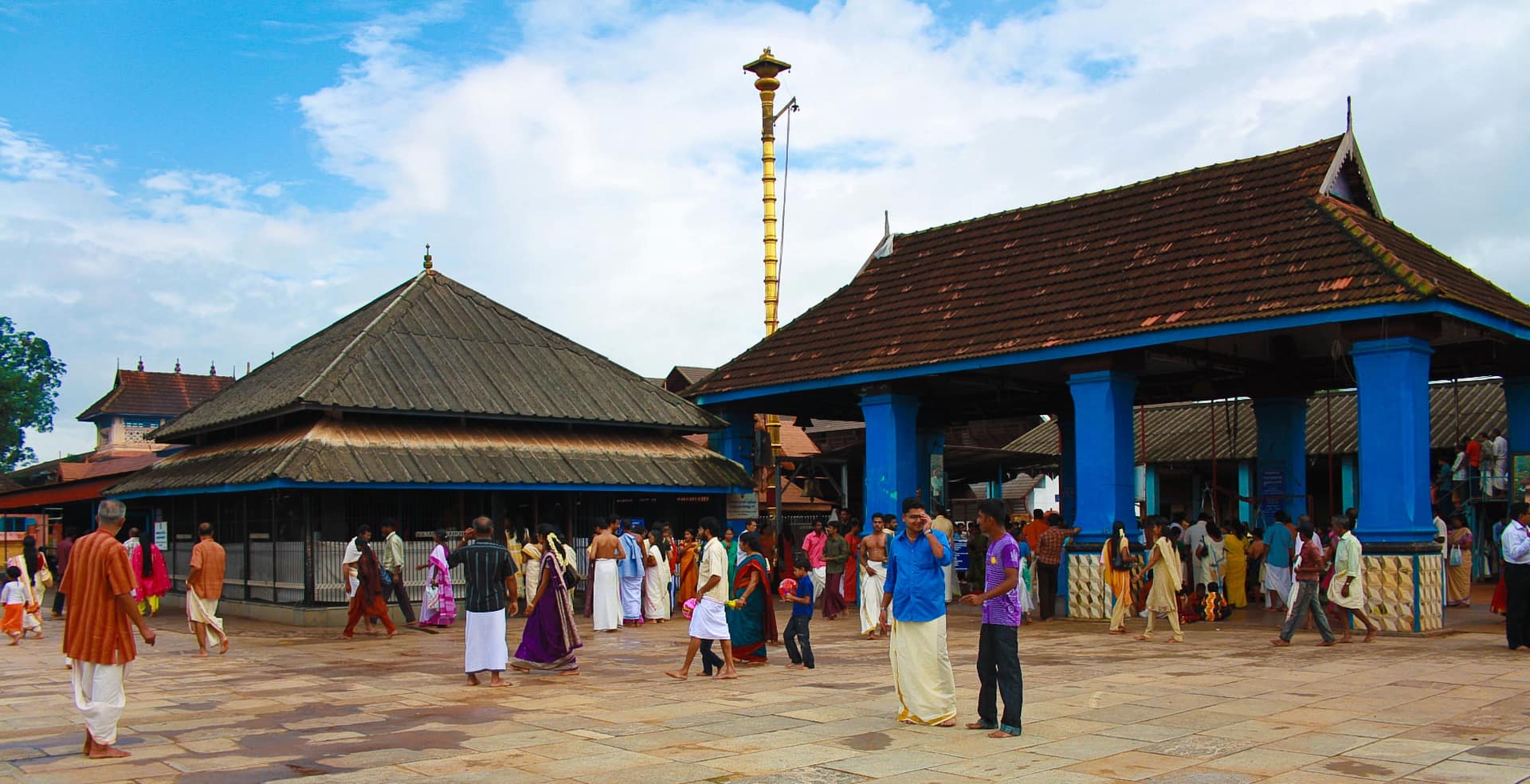
Temple in Kochi
Chottanikkara Bhagavathy Temple
Kochi, Kerala
Kerala's foremost Bhagavathy temple, about 20 km from Kochi, where the goddess is worshipped as Saraswati at dawn, Lakshmi at noon and Durga at dusk - and where the evening Guruthi at the Keezhkavu shrine draws devotees from across the state.
Photo: Roney Maxwell — CC BY 2.0, via Wikimedia Commons
Overview
Who it's to, and what's expected
Deity
Bhagavathy
Tradition
Devi · Shakti temple
- Entry
Visitors are required to wear modest and traditional attire, such as a dhoti for men and a saree, salwar kameez, or churidar for women.
- Prasadam
The temple offers various types of prasadam and payasam, including Ney Payasam, Paal Payasam, Vella Nivedyam, Appam, Ada, and Ottayappam, which are distributed at specific times throughout the day.
Time your visit
The darshan clock
A single opening-hours line cannot express a midday closure or an evening ceremony.
4:00 AM
Opening hours
The temple is open daily from 4:00 AM to 12:00 PM and from 4:00 PM to 8:30 PM. The Guruthi Pooja ritual is performed daily in the late evening.
Rules, timings and fees change — confirm locally before you rely on this.
How long this takes
Ways in
The difference between a twenty-minute visit and a three-hour one.
General darshan
- Free, in two sessions - 4:00 AM to noon and 4:00 PM to about 8:30 PM. Waits grow on Tuesdays, Fridays and Sundays and through the Mandalam season; early morning is the quietest
Guruthi evening
- The Keezhkavu Guruthi after the last pooja, around 8:45 PM, draws the day's biggest crowd - arrive before the evening Seeveli at 8:00 for a place
Makom Thozal
- The February or March festival week fills the precincts completely, with the Makam star day the fullest of all
At the gate
Before you go in
What gets refused, and what you cannot take past the door.
What to wear
Visitors are required to wear modest, traditional Indian attire, such as a dhoti for men and a saree or salwar kameez for women.
When not to come — unless you mean to
Festival windows
These follow lunar calendars and move by weeks each year, so the windows are months, not dates.
Makom Thozal
Navratri and Mandalam
Karkidaka and Thiruvathira
Practicalities
The things that go wrong
Book through official channels, and treat anyone promising a guaranteed slot as a warning sign.
What to watch for
- Charging for entry; darshan is free and no arrangement beyond it is sold at the approach - the temple publishes its own vazhipadu (offerings) counters inside
- Selling 'Guruthi booking' outside the temple; the offering is made at the shrine itself under the temple's own arrangements
- Vazhipadu or prasadam sellers at the gate quoting inflated prices; the temple's own counters inside are far cheaper
- Auto drivers from Kochi quoting a fare only on arrival, or waiting to add a return charge; agree the round trip before setting out
- Self-appointed guides at the bus stop offering to explain the three-forms worship for a fee settled afterwards; agree any fee beforehand
General guidance
Planning the visit
Customary practice and what Kochi's climate means for a barefoot visit — not rules posted at this temple. Anything specific to Chottanikkara Bhagavathy Temple is above.
Offerings differ here
Shakta shrines often accept offerings that other temples do not, and a few remain associated with animal sacrifice on particular days. What is sold at the stalls outside is the honest signal of what is expected inside.
Come in winter
Winter is when Kochi is most comfortable to walk around, which matters here because a temple visit is done on foot and barefoot. Locally the window is given as october to march.
Salt air and bare feet
Coastal temple courtyards stay damp and the stone can be slick underfoot, particularly near a tank or a sea-facing entrance. Take the steps slowly rather than the queue's pace.
Metro, then walk
Kochi has a metro, and it is usually the fastest way to get near a busy temple — the streets immediately around one are often closed to vehicles or jammed with them.
Outfit guide
What to wear at Chottanikkara Bhagavathy Temple
Cover shoulders and knees — the rules above win over anything here.
Trending wear for this spot
Popular modern looks travellers are wearing across Kochi.

Traditional wear for this spot
Timeless, cultural outfits worn across Kochi.
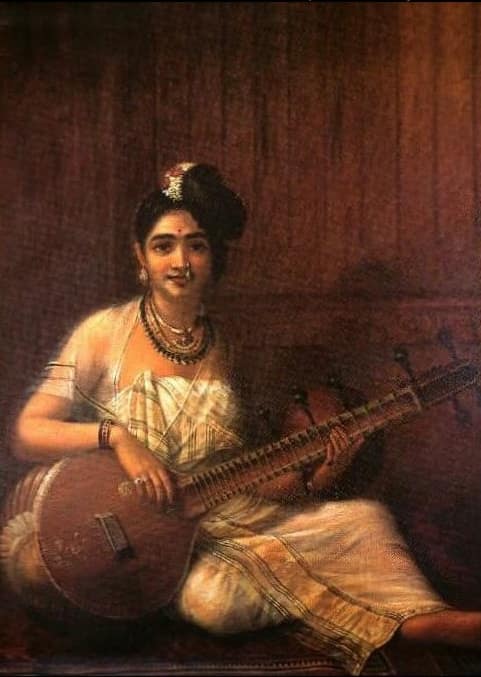
Chottanikkara Sree Bhagavathy Temple, near Kochi
About 20 km from Kochi stands the foremost Bhagavathy temple of the region — a goddess who is three goddesses in one day: Saraswati at dawn, Lakshmi at noon, Durga at dusk.
🌺 Three goddesses in one day
The Devi of Chottanikkara is worshipped as Rajarajeshwari, the sovereign goddess — and her single image is honoured in three forms across the day: as Saraswati, the goddess of learning, in the morning; as Lakshmi, the goddess of fortune, at midday; as Durga, the warrior goddess, in the evening.
Chottanikkara stands first among the region's shrines — the foremost of the hundreds of Bhagavathy temples spread across the three districts around Kochi — and its hold on Kerala's devotional life comes from exactly this completeness: one goddess, all her forms, one day.
This is not symbolism bolted on; it structures the whole temple day. The morning poojas carry Saraswati's association with learning — students come before examinations — the noon pooja is Lakshmi's, and the lamps of the evening belong to Durga. A devotee who attends all three has, in the temple's own understanding, worshipped the complete goddess.
🕉️ The self-revealed idol
The image of the goddess is of red laterite, and is believed to be svayambhu — self-revealed, not carved and installed. Adi Shankara, the great philosopher-saint of Kerala, is held to have worshipped here, and the tradition records Saraswati's promise to be present at Chottanikkara each morning — which is why, the temples say, the goddess at Mookambika in Karnataka is worshipped late: she is here first.
🐘 The precincts
The temple is really two shrines on one slope. Melukavu, the upper shrine, holds the self-revealed goddess in her main sanctum; Keezhkavu, below by the pond, holds Bhadrakali. Around them stand the sub-deities of the Kerala temple canon — Ganesha, Shiva, Brahma, Sastha and Subrahmanya — and the stone-flagged courtyard where the Seeveli processions pace their route with caparisoned elephants on festival days.
The geography matters: the day begins above, with the goddess, and ends below, at the pond shrine — a descent that every devotee walks and every visitor should too.
🕯️ Guruthi at Keezhkavu
The temple's second shrine, Keezhkavu, stands below by the pond, dedicated to Bhadrakali — and it is the evening Guruthi there that brings devotees from across Kerala. After the last pooja of the day, around 8:45 PM, the ritual offering is made at the Keezhkavu shrine, and it is for this that many travel: families come to invoke the goddess's protection and blessing, in a tradition the temple has kept for centuries.
The morning Guruthi offering around 7:30 AM is quieter; the evening one draws the day's biggest crowd. Visitors are welcome to stand at the back and watch; the crowd is dense and the mood absorbed, and the walk down to the pond shrine after the evening Seeveli is part of the experience.
🕒 Timings and the pooja day
The temple opens at 4:00 AM, closes at noon, and reopens from 4:00 PM to about 8:30 PM. The day runs: Nirmalyam at 4:00, Ethruthu Pooja around 5:30, morning Seeveli at 6:00, Pantheeradi Pooja at 7:45, Ucha Pooja at noon, then the evening opening, Deeparadhana — the lamp worship — around 6:15, Athazha Pooja at 7:30, evening Seeveli at 8:00, and the Guruthi at about 8:45.
Deeparadhana, the evening lighting of lamps, is the most beautiful single moment of an ordinary day — telecast live on the temple's own website, and worth being present for rather than watching. Tuesday, Friday and Sunday are the busy days; the Mandalam season and Makom days bring the fullest halls.
🍚 Prasadam
The temple's prasadam counter is famous in its own right: Ney Payasam — the ghee-and-jaggery sweet — Paal Payasam, Appam, Ada, Ottayappam and Vella Nivedyam, distributed at set times through the day, with the counter open roughly 1:00 to 3:00 PM. Buy the Ney Payasam; it travels well and is the taste most visitors take home.
👗 Dress
Traditional attire: a dhoti for men, a saree or salwar kameez for women. Modest western clothing covering shoulders and knees is accepted of visitors, but traditional dress is the temple's own preference and removes all friction.
🌸 Makom Thozal — the great festival
The temple's principal festival, Makom Thozal, falls in February or March: seven days in which the goddess is dressed in her fullest, elephant processions move through the precincts, and the Makam star day — with worship from 2:00 PM to 8:00 PM — is held to be the most auspicious of the year. A large number of weddings take place in the temple during the festival week.
📍 Getting there
Chottanikkara is about 20 km from Kochi, off the road east of the city — buses and taxis make the run in under an hour, and the Hill Palace museum at Tripunithura is the natural pairing on the way back. An evening visit timed for Deeparadhana, Seeveli and the Guruthi gives the complete Chottanikkara in three hours.
Last verified: 2026. The three-forms worship through the day, the self-revealed laterite idol and the Adi Shankara and Mookambika traditions, the Guruthi timings at Keezhkavu, the 4:00 AM to noon and 4:00 to about 8:30 PM sessions, the Deeparadhana telecast, the prasadam list, and the Makom Thozal festival are documented. Pooja times shift slightly and the temple's own schedule is authoritative.
Questions
Chottanikkara Bhagavathy Temple — FAQ
Who is Chottanikkara Bhagavathy Temple dedicated to?
Chottanikkara Bhagavathy Temple in Kochi is dedicated to Bhagavathy.
Who can enter Chottanikkara Bhagavathy Temple?
Visitors are required to wear modest and traditional attire, such as a dhoti for men and a saree, salwar kameez, or churidar for women.
What is the dress code at Chottanikkara Bhagavathy Temple?
Visitors are required to wear modest, traditional Indian attire, such as a dhoti for men and a saree or salwar kameez for women.
What prasadam is offered at Chottanikkara Bhagavathy Temple?
The temple offers various types of prasadam and payasam, including Ney Payasam, Paal Payasam, Vella Nivedyam, Appam, Ada, and Ottayappam, which are distributed at specific times throughout the day.
Checked, not remembered
Sources
Every rule and timing above traces back to one of these.