
What to Wear in Mandu
Knowing what to wear in Mandu is mostly about the season. The plateau is hot and dry from April to June, green and wet from July to September, and pleasant from October to March, with cool mornings and evenings in December and January.
You will spend much of the day walking over uneven ruins and climbing steps, so choose light, comfortable clothes. Outfits that cover your shoulders and knees also suit the mosque, the tombs and the temples. For photos, a Maheshwari handloom saree, woven in Maheshwar about 40 km away, stands out well against the sandstone palaces.
Trending wear
Modern, Instagram-friendly looks
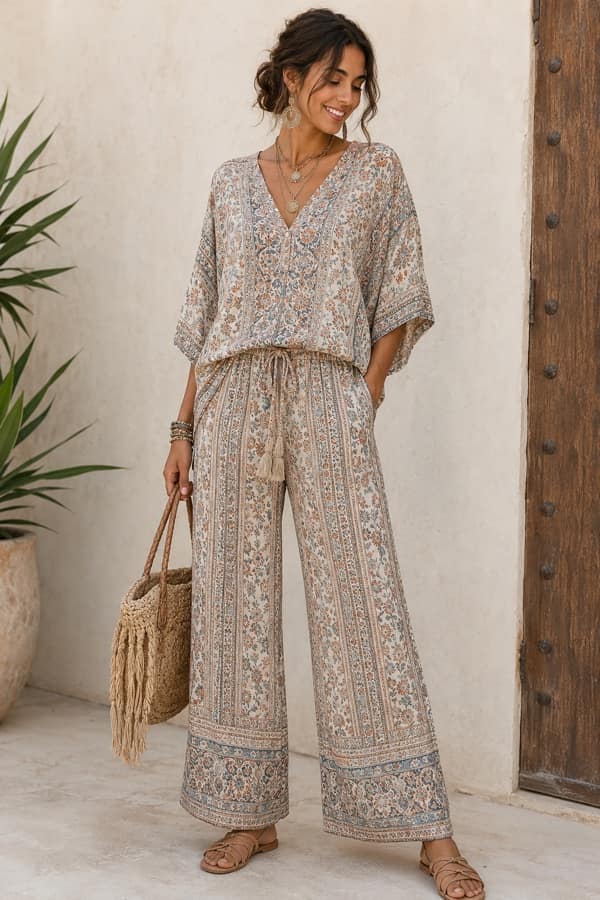
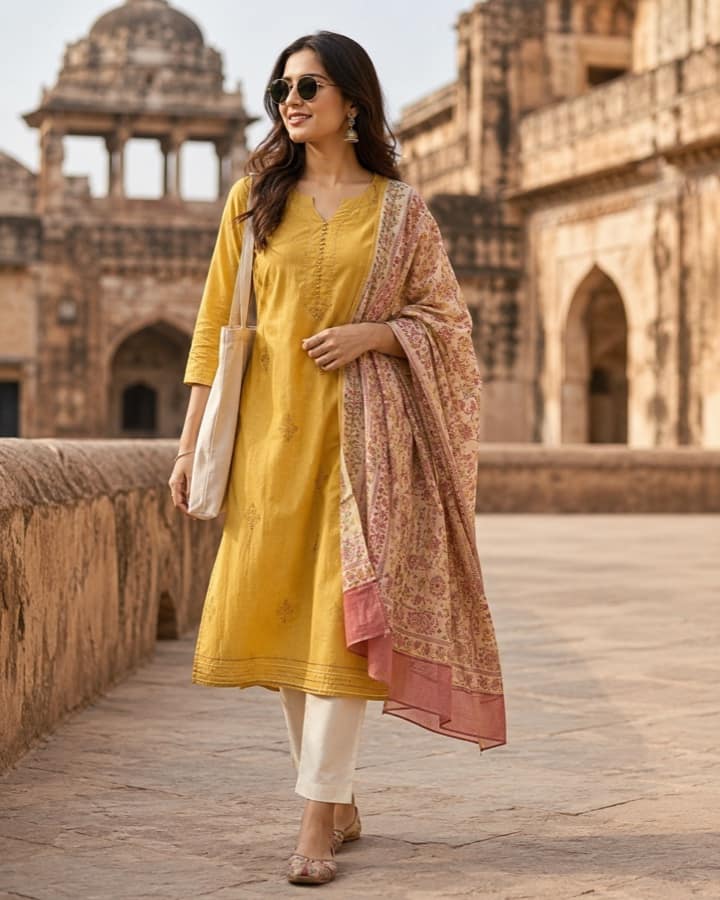
Traditional wear
Local cultural outfits
What to Wear in Mandu During the Monsoon
The monsoon (July to September) is warm and humid, with heavy showers that come and go. Choose light, quick-drying clothes and be ready for wet, slippery stone.
Best Monsoon Outfits for Mandu
- Quick-drying cotton or synthetic tops
- Light trousers, or a knee-length kurta with leggings
- A compact umbrella or a light rain jacket
- A small towel and a spare top
- Sandals or shoes with a good grip
What to Wear in Mandu During Winter
Winter (October to March) is the most comfortable season. Days are warm and sunny, but nights in December and January can drop to around 10 °C, so carry a warm layer.
Best Winter Outfits for Mandu
- T-shirts, shirts or kurtas for the day
- Jeans, chinos or comfortable trousers
- A sweater, shawl or light jacket for mornings and evenings
- A cap and sunglasses for the midday sun
- Comfortable walking shoes
What to Wear in Mandu During Summer
Summer (April to June) is very hot, with days often close to 40 °C. Wear loose, light-coloured cotton and cover up against the sun.
Best Summer Outfits for Mandu
- Loose cotton shirts, kurtas or dresses with sleeves
- Light, full-length trousers or skirts
- A wide-brimmed hat or cap and sunglasses
- A cotton scarf or dupatta to shade your neck
- Breathable shoes or sturdy sandals
Best Colours to Wear in Mandu
Warm, earthy shades such as rust, mustard and maroon match the sandstone palaces, while white, cream and indigo look calm against the marble of Hoshang Shah's Tomb. In the monsoon, teal, saffron or a bright red stands out well against the green plateau and grey skies.
Footwear Tips for Mandu
Mandu's monuments are spread out, with uneven stone floors, long flights of steps and rough paths between the ruins. Wear comfortable walking shoes or sturdy sandals with a good grip, especially in the monsoon, when wet stone and moss get slippery. Choose shoes that are easy to slip off at the temples, and avoid heels and smooth soles.
Questions
Mandu — FAQ
What should I wear in Mandu?
Light, breathable clothes that cover your shoulders and knees work best, with comfortable shoes for the uneven ruins. Add a warm layer from November to February and rain gear from July to September.
What should I wear in Mandu during the monsoon?
Choose quick-drying clothes, a light rain jacket or an umbrella, and shoes or sandals with a good grip, as the stone paths and steps get slippery.
Do I need warm clothes for Mandu?
Only in winter. From December to February, mornings and nights can drop to around 10 °C, so pack a sweater, shawl or light jacket. For the rest of the year, light cotton is enough.
What should I wear to the Jami Masjid and temples in Mandu?
Wear modest clothes that cover your shoulders and knees, and carry a scarf in case you are asked to cover your head. Wear shoes you can slip off easily at the temples.
What should I wear for photos in Mandu?
Earthy shades like rust, mustard and maroon match the sandstone palaces, while white, cream or indigo suit Hoshang Shah's marble tomb. A Maheshwari saree or a bright kurta stands out well against the green monsoon landscape.