
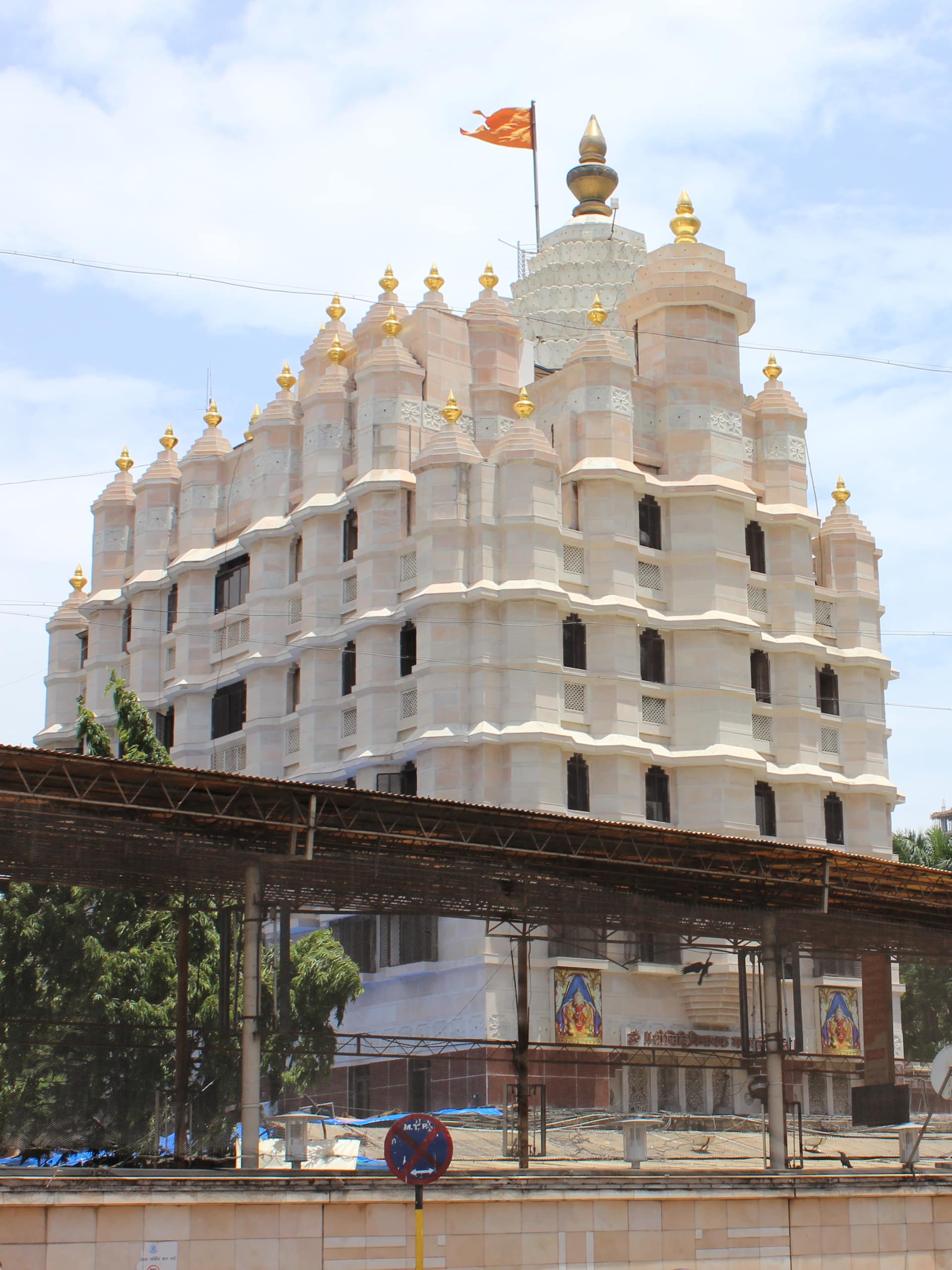
Temple in Mumbai
Shree Siddhivinayak Temple
Mumbai, Maharashtra
The most visited temple in Mumbai, in Prabhadevi - small, modern and permanently busy. What decides your visit is not the hour but the day of the week: Tuesdays draw over 200,000 devotees and the temple opens at 3:15 AM for them.
Photo: Darwininan — CC BY-SA 3.0, via Wikimedia Commons
Overview
Who it's to, and what's expected
Deity
Ganesha
Tradition
Ganesha temple
- Entry
The temple welcomes non-Hindus and visitors from all backgrounds. Devotees are required to dress modestly, with a preference for traditional Indian clothing, and should avoid modern attire like shorts, mini-skirts, torn jeans, or sleeveless tops.
- Prasadam
The temple kitchen prepares the Maha Naivedya, which is the sacred food offering for the deity.
Time your visit
The darshan clock
A single opening-hours line cannot express a midday closure or an evening ceremony.
3:15 AM
Opening hours
The temple is open from 6 AM to 10 PM on most days, with extended hours on Tuesdays from 3:15 AM to 11:30 PM.
Rules, timings and fees change — confirm locally before you rely on this.
How long this takes
Ways in
The difference between a twenty-minute visit and a three-hour one.
General darshan
- Free and continuous through the day
- On ordinary weekday mornings the wait is modest; the temple's own darshan arrangements beyond general entry are published on its official channels
Tuesday
- Ganesha's day and one of the largest weekly gatherings in India - commonly more than 200,000 devotees and waits of two to five hours, with the temple opening at 3:15 AM and darshan running past midnight
- The barricaded route through the surrounding streets is managed by stewards and volunteers
- Arrive before 4:00 AM or accept the wait
Angarki Chaturthi and Ganeshotsav
- The heaviest days of the year - the Sankashti Chaturthi falling on a Tuesday, and Ganesh Chaturthi, when Mumbai's Ganesh worship peaks
- Many devotees fast until moonrise
At the gate
Before you go in
What gets refused, and what you cannot take past the door.
What to wear
Visitors are expected to wear modest, traditional Indian clothing. Men should wear a dhoti or pajama with an upper garment, or formal trousers and shirts, while women should wear a saree, half saree, or chudidhars; avoid modern items like shorts, mini-skirts, torn jeans, or sleeveless tops.
When not to come — unless you mean to
Festival windows
These follow lunar calendars and move by weeks each year, so the windows are months, not dates.
Ganesh Chaturthi / Ganeshotsav
Angarki Chaturthi
Every Tuesday
Practicalities
The things that go wrong
Book through official channels, and treat anyone promising a guaranteed slot as a warning sign.
What to watch for
- Charging for entry or for a darshan arrangement
- Entry is free; anything beyond general darshan is published only on the temple's own official channels, and anyone selling access at the gate is not authorised
- Selling garlands, coconuts or modaks at the approach at inflated prices
- Offerings are inexpensive locally, and you are not required to bring one
- Anyone claiming a shorter route in on Tuesdays
- The queue is the queue - arrive before 4:00 AM or accept the wait
- Guides attaching themselves at Prabhadevi and producing a fee afterwards; the temple needs none
- Auto and taxi drivers quoting a fare only on arrival; agree it before travelling
General guidance
Planning the visit
Customary practice and what Mumbai's climate means for a barefoot visit — not rules posted at this temple. Anything specific to Shree Siddhivinayak Temple is above.
Busiest on Tuesdays and Chaturthi
Ganesha shrines fill on Tuesdays and on Sankashti Chaturthi each lunar month, and overwhelmingly during Ganesh Chaturthi. A weekday morning outside those is the calm version of the same temple.
Come in winter
Winter is when Mumbai is most comfortable to walk around, which matters here because a temple visit is done on foot and barefoot. Locally the window is given as november to february.
Salt air and bare feet
Coastal temple courtyards stay damp and the stone can be slick underfoot, particularly near a tank or a sea-facing entrance. Take the steps slowly rather than the queue's pace.
Metro, then walk
Mumbai has a metro, and it is usually the fastest way to get near a busy temple — the streets immediately around one are often closed to vehicles or jammed with them.
Outfit guide
What to wear at Shree Siddhivinayak Temple
Cover shoulders and knees — the rules above win over anything here.
Trending wear for this spot
Popular modern looks travellers are wearing across Mumbai.


Traditional wear for this spot
Timeless, cultural outfits worn across Mumbai.
Shree Siddhivinayak Temple, Mumbai
The most visited temple in Mumbai, in Prabhadevi — small, modern and permanently busy. What decides your visit is not the hour but the day of the week.
🐘 The wish-fulfilling Ganesha
Built on 19 November 1801, the temple was constructed by Laxman Vithu and funded by Deubai Patil, a childless Agri woman who wished that Ganesha would bless women who prayed here with children. That founding intention — a shrine for the childless — set the temple's character as a wish-fulfilling shrine, Siddhi Vinayaka, where devotees believe heartfelt prayers are answered.
The idol is carved from a single black stone, with its trunk turned to the right — a rare and especially auspicious form, flanked by Riddhi and Siddhi, the goddesses of prosperity and fulfilment. It was originally worshipped in a tiny 3.6 m × 3.6 m shrine; the present structure grew around it as the devotion did.
From film actors to political leaders, public figures visit before major undertakings, which has made the temple part of Mumbai's public life rather than only its religious life. A prayer here before a new beginning — a film release, an election, a business launch, a journey — is a Mumbai habit, and on Tuesdays you will see it in action.
🕒 Timings — and the Tuesday rule
- Wednesday to Monday: 5:30 AM to 9:50 PM
- Tuesday: opens 3:15 AM, and darshan runs past midnight
Tuesday is Ganesha's day, and Siddhivinayak's Tuesday is one of the largest weekly gatherings in India — commonly more than 200,000 devotees, with queue waits of two to five hours. The temple opens before dawn specifically for it.
If Tuesday is your only option, arrive before 4:00 AM or accept the wait. If it is not, any other weekday morning is a different temple entirely.
Aartis: Kakad aarti 5:30–6:00 AM, evening aarti around 7:30 PM, Shejaarti around 9:50 PM. Hours extend on festival days.
🌅 What a Tuesday actually looks like
From about 2:00 AM the streets around Prabhadevi fill — devotees walking from the station, flower sellers opening in the dark, tea and snack stalls lit early. The barricaded queue route runs through the surrounding streets and the temple compound, managed by stewards and volunteers, and it moves steadily all day.
People come prepared: water, something to eat, phones charged, footwear that slips off easily. Families with small children and elderly members should treat a Tuesday visit as a half-day commitment, not a quick stop. Many devotees complete a darshan and then sit in the compound for the aarti, letting the queue shorten before they leave.
The mood through the night is the point — the temple stays lit and full past midnight, and the atmosphere is closer to a festival than a weekly observance.
🪔 The aartis
The Kakad aarti, 5:30 to 6:00 AM, is the temple's most beautiful half hour — the early-morning waking of the deity, sung before the day's crowds build, when the hall is at its calmest. The evening aarti around 7:30 PM and the Shejaarti around 9:50 PM — the putting of the deity to rest — close the day.
Attending an aarti is different from standing in the darshan line: devotees sit in the hall and let the observance come to them, and on ordinary weekdays you can walk in shortly before and find a place. On Tuesdays the aartis are the fixed points around which the whole long day organises itself, and many devotees plan their visit around one of them rather than the queue alone.
🌸 The other crowded days
- Angarki Chaturthi — the Sankashti Chaturthi falling on a Tuesday, the heaviest single day outside Ganeshotsav, with devotees fasting until moonrise
- Ganeshotsav / Ganesh Chaturthi — when Mumbai's Ganesh worship peaks and the temple is its centre, with the surrounding streets transformed for the festival
Sankashti Chaturthi on every other weekday is gentler — a fasting day broken at moonrise, busy but manageable.
🛕 Rules, dress and offerings
Entry is free, and the temple welcomes visitors of all backgrounds. Modest, traditional clothing is preferred — men a dhoti or pyjama with an upper garment or formal trousers and shirt; women a saree, half-saree or churidar. Shorts, mini-skirts, torn jeans and sleeveless tops should be avoided.
Footwear is deposited before entering, and queues move faster in slip-on shoes. Photography inside the sanctum areas is not permitted; phones are best left in a pocket through the darshan line.
Offerings are the classic Ganesha set: modaks, durva grass, red hibiscus flowers, coconuts and bananas — all sold in the streets around the temple, where the flower market spills out from dawn. The temple kitchen prepares the Maha Naivedya, the sacred food offering to the deity, and prasadam is distributed to devotees.
📍 Getting there and pairing the visit
Prabhadevi, central Mumbai — the temple sits between Dadar and Worli, with Dadar station a short ride away on both the Western and Central lines, and Mahalaxmi and Elphinstone stations also close.
A natural Mumbai morning: darshan at Siddhivinayak, then the Dadar flower market, then Shivaji Park and the sea face at Worli — all within a few kilometres of each other. The temple is also the customary first stop of many Mumbai itineraries, a city habit worth copying.
Last verified: 2026. The 1801 founding by Deubai Patil, the right-trunked single-stone idol, the 3:15 AM Tuesday opening with darshan past midnight, the 5:30 AM-9:50 PM hours on other days, and the Tuesday crowds of over 200,000 are documented; timings shift on festival days and the temple's own schedule is authoritative.
Questions
Shree Siddhivinayak Temple — FAQ
Who is Shree Siddhivinayak Temple dedicated to?
Shree Siddhivinayak Temple in Mumbai is dedicated to Ganesha.
Who can enter Shree Siddhivinayak Temple?
The temple welcomes non-Hindus and visitors from all backgrounds. Devotees are required to dress modestly, with a preference for traditional Indian clothing, and should avoid modern attire like shorts, mini-skirts, torn jeans, or sleeveless tops.
What is the dress code at Shree Siddhivinayak Temple?
Visitors are expected to wear modest, traditional Indian clothing. Men should wear a dhoti or pajama with an upper garment, or formal trousers and shirts, while women should wear a saree, half saree, or chudidhars; avoid modern items like shorts, mini-skirts, torn jeans, or sleeveless tops.
What prasadam is offered at Shree Siddhivinayak Temple?
The temple kitchen prepares the Maha Naivedya, which is the sacred food offering for the deity.
Checked, not remembered
Sources
Every rule and timing above traces back to one of these.