
Best Photo Spots in Nalanda
Nalanda's ruins open at 9 am and shut at 5 pm, so you cannot catch sunrise or sunset inside. Plan for the first hour after opening and the last hour before closing, when the brick turns warm and the shadows show its shape.
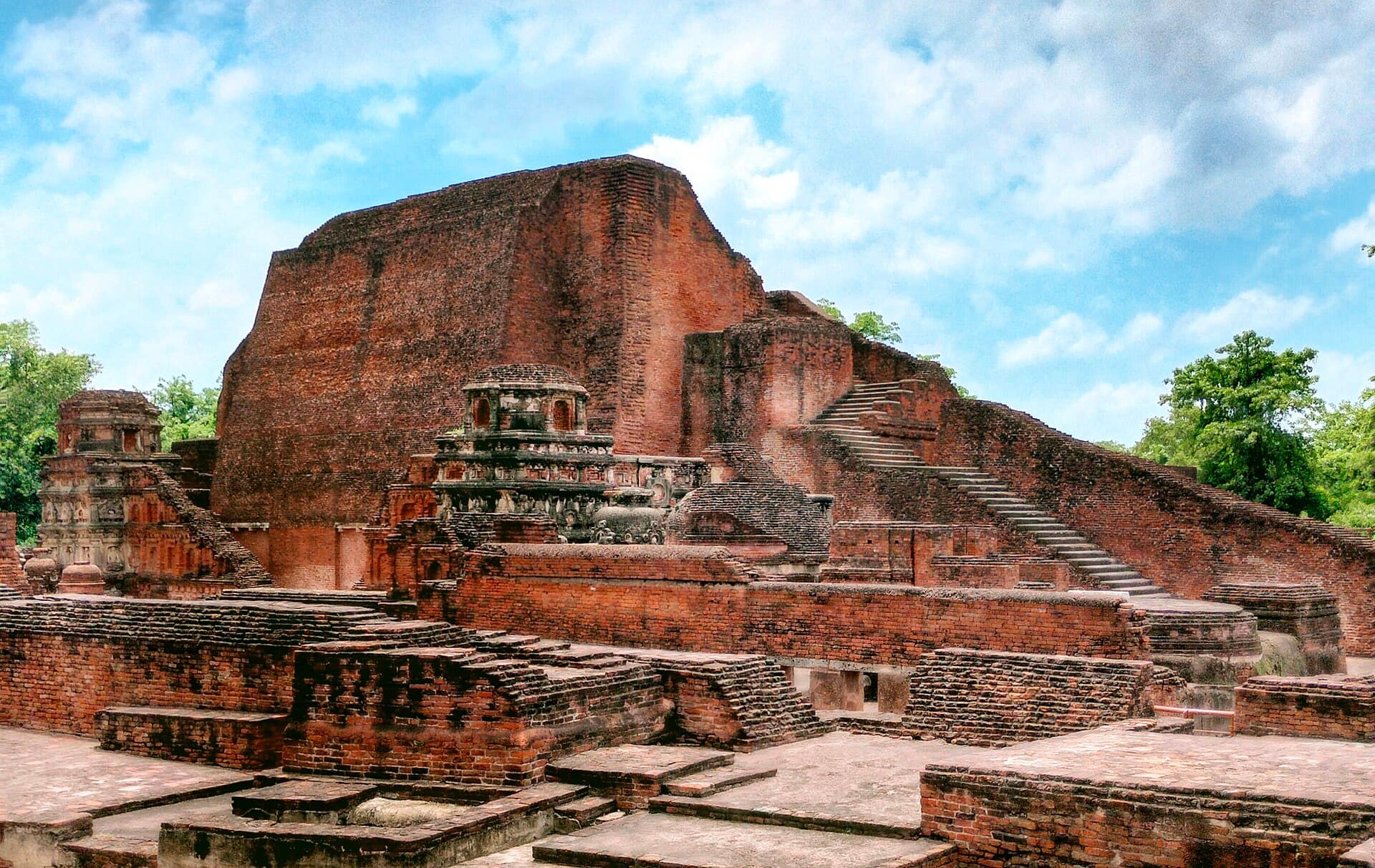 Low crowd
Entry Nominal
Nalanda Archaeological Museum
- Best timeLate morning, after the ruins, for bright even light on the museum front and garden; indoors, any time the galleries allow photos.
- ColorsOchreCreamMaroon
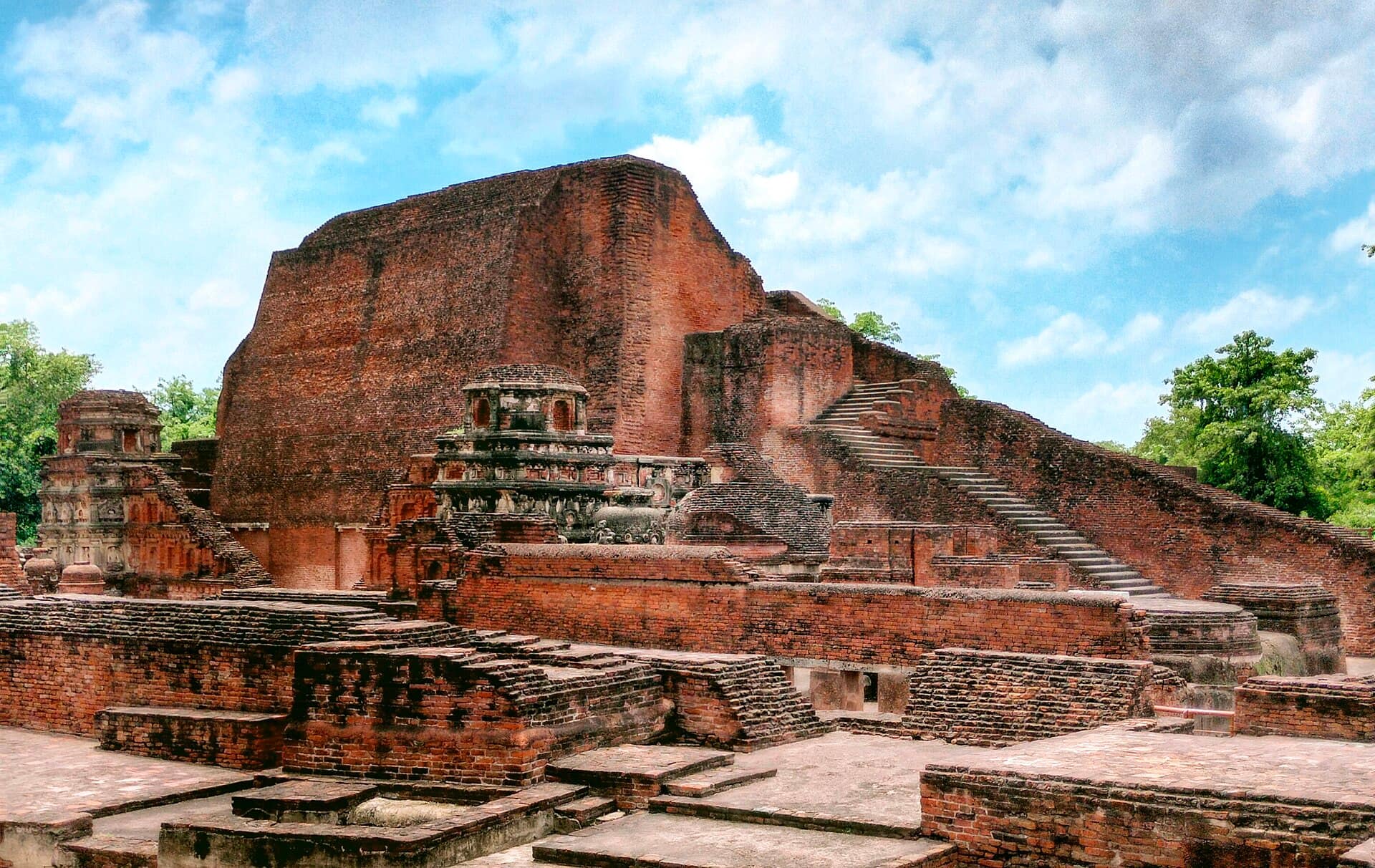 Medium crowd
Entry Ticketed (ASI)
Nalanda University Ruins
- Best timeMorning, right after the 9 am opening, for low light across the courtyards and empty paths; late afternoon before closing for warm colour on the brick.
- ColorsOchreCreamMaroon
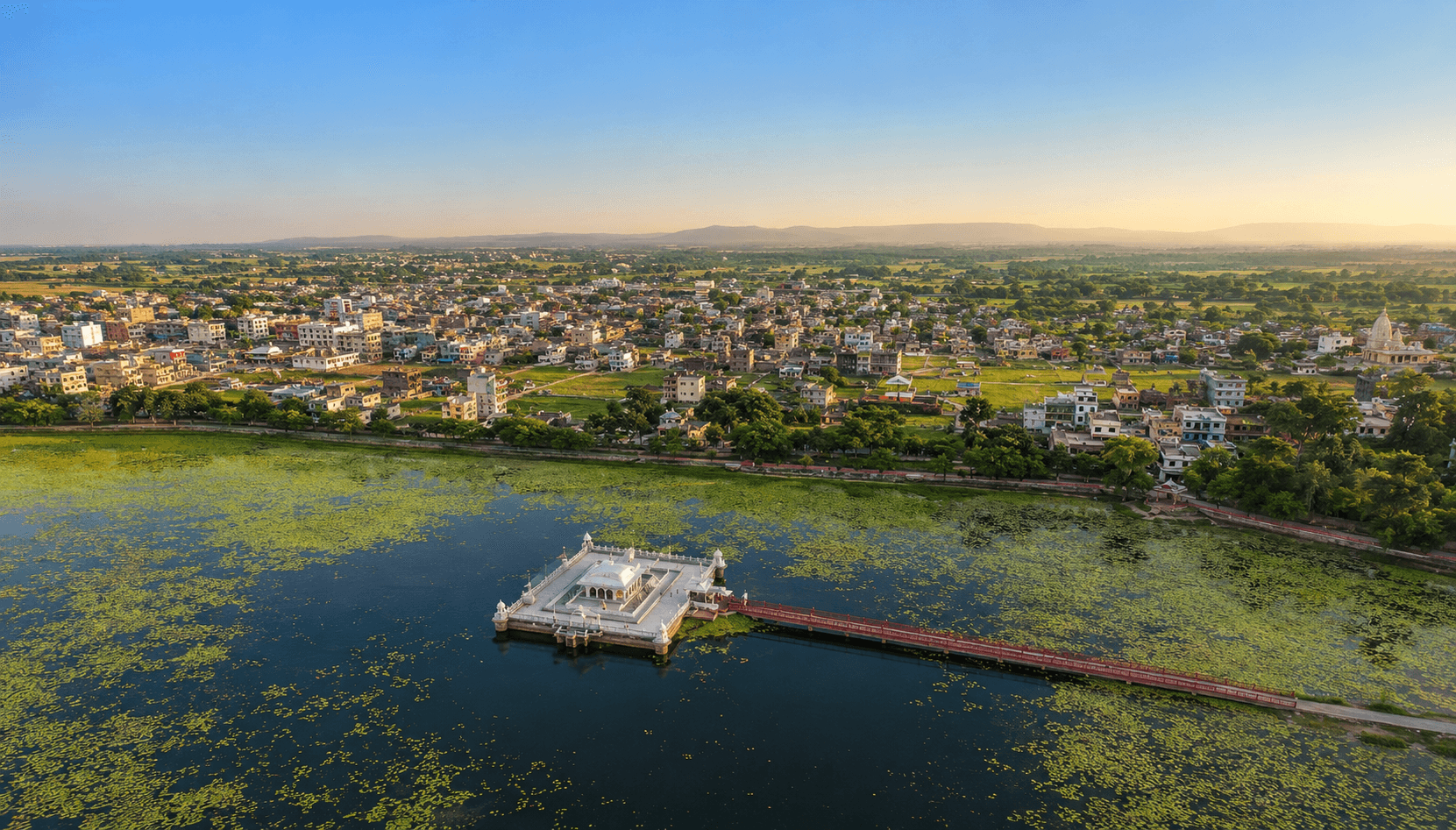 Medium crowd
Entry Free
Pawapuri Jal Mandir
- Best timeEarly morning for still water and clear reflections with few people; evening for soft, warm light on the white marble.
- ColorsWhiteSaffronCream
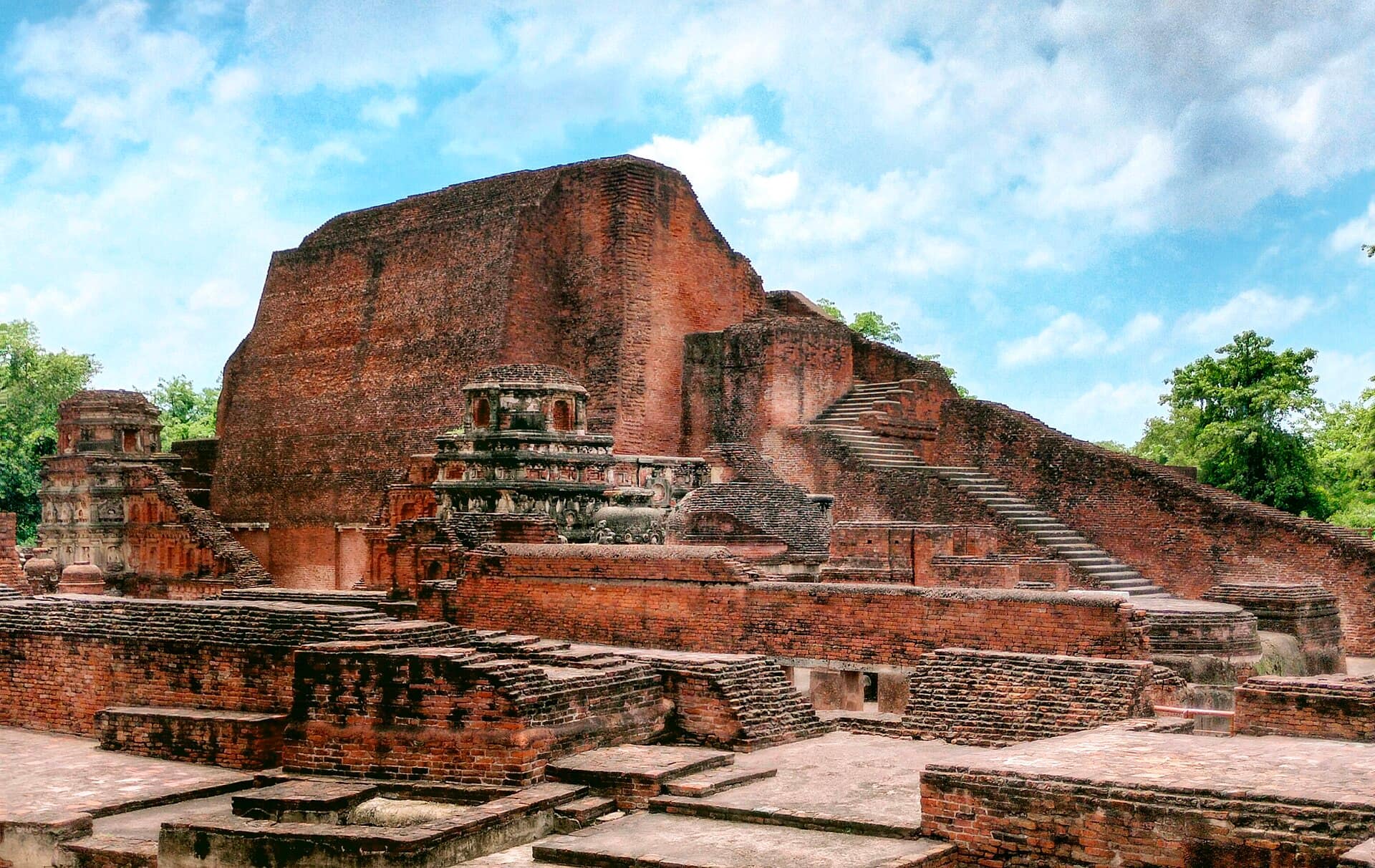 Medium crowd
Entry Ruins ticket
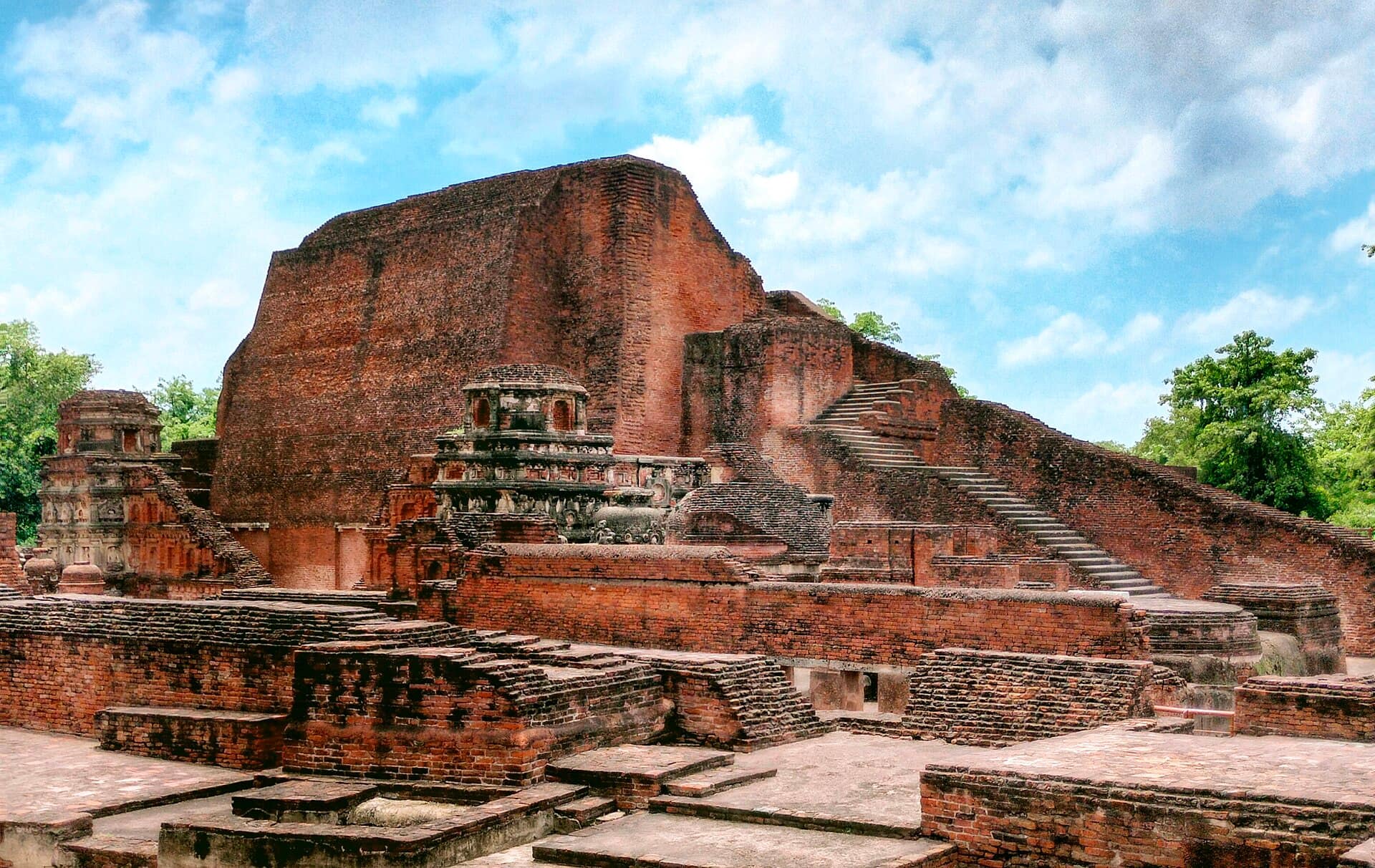
Sariputta Stupa
- Best timeLate afternoon, in the hour before the 5 pm closing, for warm side light on the stairway; morning for fewer people but flatter light on the north face.
- ColorsOchreMaroonCream
 Low crowd
Entry Nominal
Xuanzang Memorial Hall
- Best timeMorning for soft light on the red and gold front and a still pond; late afternoon for warm colour on the curved roof.
- ColorsCreamMaroonGold
The monastery rows
The Nalanda ruins are made of the same thin red bricks laid in long, straight lines. That repetition is the photograph. Walk down the path between the monastery blocks and shoot along the rows of cells, so the walls lead the eye into the frame. Early light falls low across the courtyards and picks out every course of brick. By noon everything flattens into one orange colour.
The great stupa
The Sariputta Stupa is the tallest structure on the site and the one on every postcard. You can no longer climb it, so the best view is from the small raised mound to its east, or from the path in front where the stairway rises straight ahead. Late afternoon, just before closing, warms the brick and shows off the small votive stupas on its corners.
The memorial hall
The Xuanzang Memorial Hall is a Chinese-style building with a curved roof, set in a quiet garden by a pond. It is usually empty, so you can take your time. Shoot the front of the hall from the garden path, and step inside for the statue of Xuanzang and the painted panels of his journey.
Pawapuri
The white marble Jal Mandir at Pawapuri, about 25–30 km away, sits in the middle of a lotus pond. The classic frame is from the bank, with the long causeway leading to the temple and its reflection below. Evening light is softest, and on the Diwali new-moon night the pond is lit with lamps.
Rules worth knowing
The ruins are an ASI site: do not climb on walls, and ask before using a tripod. Drones need official permission. Photography inside the museum is often not allowed, so ask at the entrance and keep your camera for the lawn outside. At the Black Buddha shrine and the Jain temples, ask before photographing worshippers.
When the light is best
October to March gives the clearest days. December and January mornings can be foggy on the Bihar plains, which softens the ruins but can hide the stupa for the first hour.
Questions
Nalanda — FAQ
Can I photograph sunrise or sunset at the Nalanda ruins?
Not inside. The site usually opens at 9 am and closes at 5 pm. In winter the sun sets soon after closing, so the last hour gives the warmest light you can get.
Where is the best viewpoint over the Nalanda ruins?
Climbing the stupa is not allowed now. The small mound east of the great stupa gives the best raised view, and the main path gives long views down the monastery rows.
Can I fly a drone at Nalanda?
Not without official permission. Nalanda is a protected ASI monument and a World Heritage Site, and drone use needs prior clearance.
Is Pawapuri better in the morning or evening for photos?
Both work. Morning is quieter; evening gives warm light on the white marble and a calm pond for reflections.