
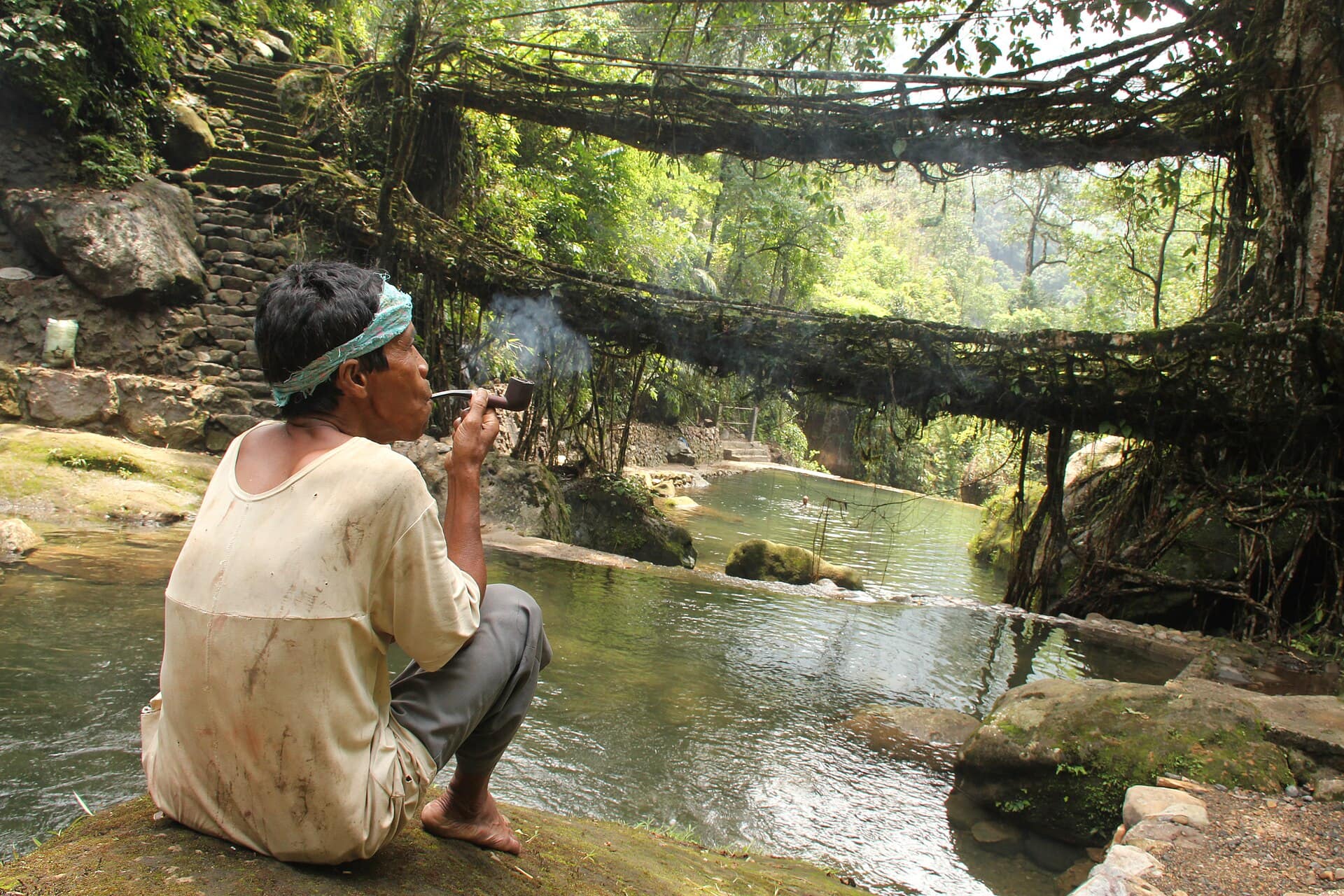
Photo spot in Nongriat
Umshiang Double Decker Root Bridge
Nongriat, Meghalaya
The iconic two-tiered living root bridge of Nongriat, grown over generations by weaving rubber-fig roots across a stream in two stacked spans — one of the world's most extraordinary pieces of living architecture.
Best time
Early morning, before the day walkers from Tyrna arrive, for an empty bridge in soft light; early afternoon for sun on the pool below.
Best angle
Stand on the flat rocks downstream and take a wide, straight-on photo with both spans stacked above the pool.
Entry fee
The village charges a small entry fee at the double-decker bridge, and sometimes a separate camera fee. Pay at the bridge — carry small notes.
Opening hours
Daylight hours
Crowd level
Medium
Best outfit colors
Overview
Best time to visit Umshiang Double Decker Root Bridge
Early morning, before the day walkers from Tyrna arrive, for an empty bridge in soft light; early afternoon for sun on the pool below. Crowds here are typically medium. Arrive a little early to claim your angle and catch the softest light before the day tips over.
Poses & angles
Photo tips for Umshiang Double Decker Root Bridge
Stand on the flat rocks downstream and take a wide, straight-on photo with both spans stacked above the pool. Work a few of the pose ideas below, shoot wide for context and tight for detail, and give yourself a couple of extra minutes to get the frame right.
On the double-decker bridge
By the stacked root spans
Outfit guide
What to wear at Umshiang Double Decker Root Bridge
For photos at Umshiang Double Decker Root Bridge, forest green, rust and cream work beautifully — they stand out against the setting without fighting it. Pick one hero colour and keep the rest of the look calm so you stay the subject of the frame.
Best outfit colors for photos
Trending wear for this spot
Modern, camera-ready looks picked for Umshiang Double Decker Root Bridge.
Traditional wear for this spot
Timeless, cultural outfits worn across Nongriat.

Eat nearby
Food near Umshiang Double Decker Root Bridge
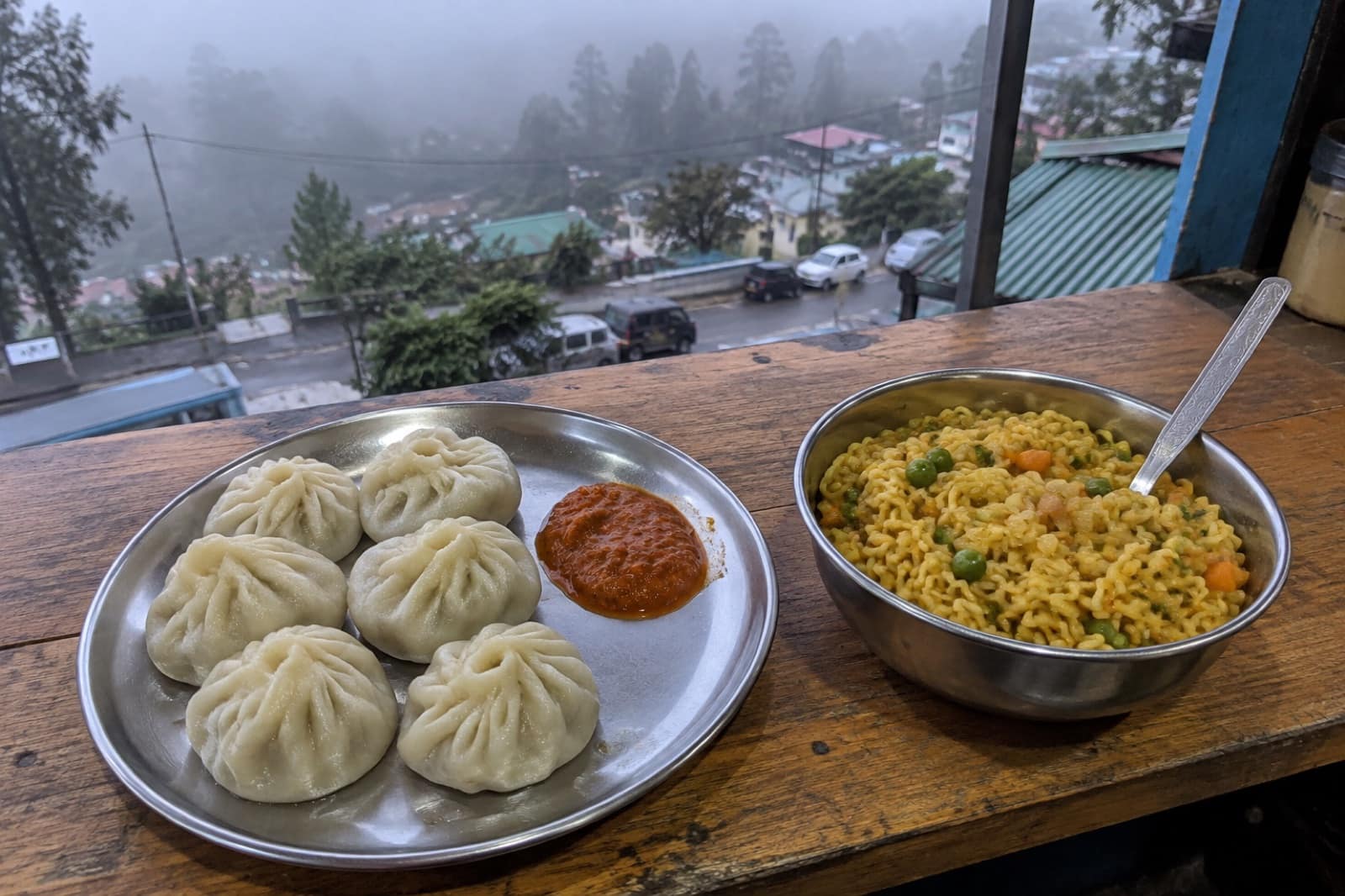
Round out the visit with something to eat. Look for momos & maggi nearby, or settle in at one of the 1 restaurants close by.
Special dishes to try
Restaurants & food places nearby

Search food by craving
Good to know
Local tips
Start the descent from Tyrna by about 8 am if you are coming back the same day.
Sleep in the village and walk to the bridge before 8 am to have it nearly to yourself.
Carry small cash for the entry fee and any camera charge.
Ask in Sohra the day before whether the bridge is open if you plan a Sunday visit.
Cross the upper span first, then photograph it from the rocks downstream.
Hold the side roots lightly for balance, but do not hang your weight on them.
Leave at least three hours of daylight for the climb back to Tyrna.
Two bridges, one tree line
The Umshiang double-decker root bridge crosses a stream in Nongriat on two levels, one span above the other. Both are made from the living roots of rubber-fig trees (Ficus elastica) on the banks. Over generations, villagers guided the young aerial roots across the water, let them thicken, and wove in more until they could carry people. The bridge is often estimated at around 200 years old, and it is still growing. Stones pressed into the roots make the walking surface.
Why it matters
Khasi and War villages across Meghalaya have grown around a hundred living root bridges, but a stacked, two-level bridge is rare. In 2022 the living root bridge landscapes of Meghalaya, known in Khasi as Jingkieng Jri, went on India's UNESCO tentative list. The root bridges are part of a working village path, not a museum piece, and villagers still cross them daily.
Getting there
The bridge is the reward for the long descent from Tyrna: about 3,000 to 3,500 stone steps down, with two steel-wire suspension bridges on the way. Allow one and a half to two hours down and more to come back. See the main Nongriat guide for how to plan it.
At the bridge
There is a small entry fee, collected by the village, and often a camera charge. The village has closed the bridge to visitors on Sundays at times, so check in Sohra first. Walk across both levels slowly, and keep to the middle of each span. Below the bridge, the stream forms the natural pools where many walkers cool off before the climb back.
Care for it
The roots are alive. Do not climb on the handrail roots, pull at hanging roots or carve anything. Do not wash with soap in the water below. The village depends on the bridge, and on visitors treating it gently.
Questions
Umshiang Double Decker Root Bridge — FAQ
What is the best time to visit Umshiang Double Decker Root Bridge?
Early morning, before the day walkers from Tyrna arrive, for an empty bridge in soft light; early afternoon for sun on the pool below. Stand on the flat rocks downstream and take a wide, straight-on photo with both spans stacked above the pool.
Is there an entry fee at Umshiang Double Decker Root Bridge?
The village charges a small entry fee at the double-decker bridge, and sometimes a separate camera fee. Pay at the bridge — carry small notes.
What are the opening hours of Umshiang Double Decker Root Bridge?
Umshiang Double Decker Root Bridge keeps daylight hours.
What should I wear at Umshiang Double Decker Root Bridge?
Forest green, rust and cream photograph especially well here. Explore the trending and traditional outfit ideas on this page for full looks.
How crowded does Umshiang Double Decker Root Bridge get?
Crowd levels are typically medium. To miss the busiest window: early morning, before the day walkers from Tyrna arrive, for an empty bridge in soft light; early afternoon for sun on the pool below.
What food should I try near Umshiang Double Decker Root Bridge?
Try momos & maggi, available at nearby restaurants.
How old is the double-decker root bridge?
It is often estimated at around 200 years old. The roots are still growing, so the bridge keeps strengthening as long as the trees live.
Can I walk on both levels of the bridge?
Yes. Both spans are used by walkers. Move slowly, keep to the middle and let people coming the other way pass.
Is the double-decker root bridge a UNESCO site?
Not yet. Meghalaya's living root bridge landscapes were added to India's UNESCO tentative list in 2022 and have since been nominated, but no decision has been made.
How is a living root bridge made?
Villagers guide the young aerial roots of rubber-fig trees across a stream, often along bamboo or betel-nut trunks, and let them grow and fuse. A usable bridge takes many years.