
Photo spot in Nubra Valley
Diskit Monastery
Nubra Valley, Ladakh
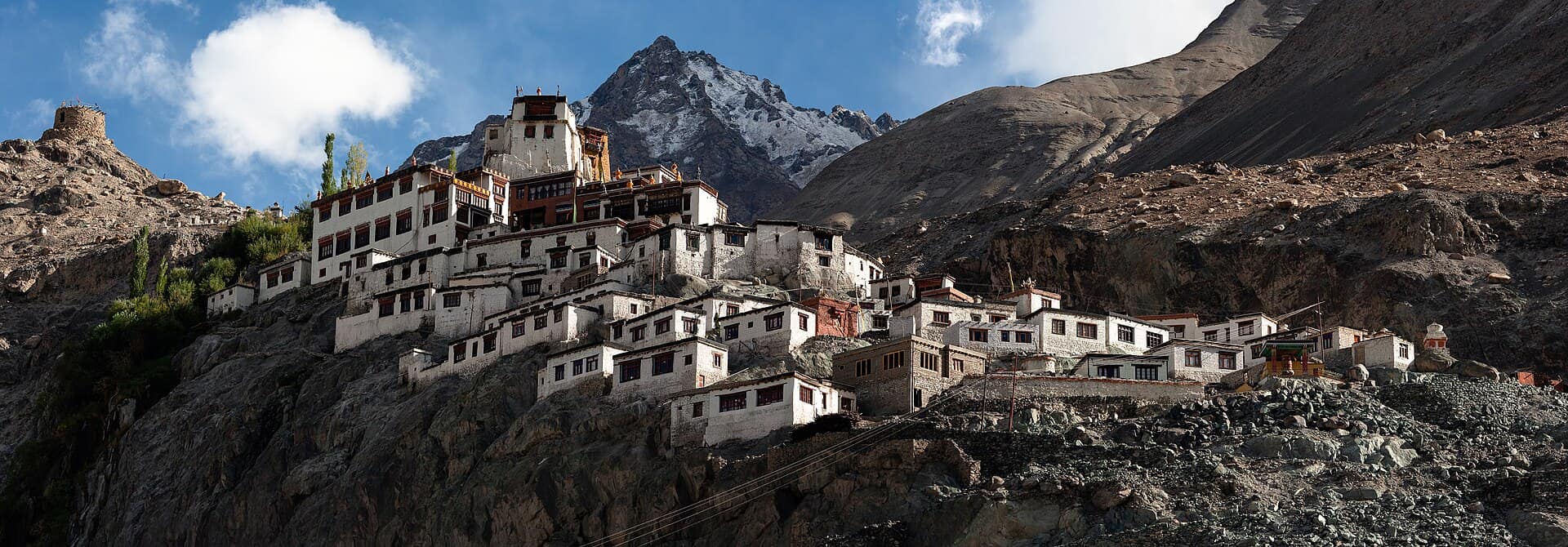
The oldest and largest monastery in Nubra, a 14th-century Gelugpa gompa on a hill above the valley, crowned by a giant 32-m statue of the Maitreya (future) Buddha gazing over the Shyok.
Best time
Late afternoon, when the sun comes round onto the Maitreya's face and the valley below turns gold; early morning for quiet courtyards and soft light on the whitewashed gompa.
Best angle
Stand at the foot of the statue's platform and shoot upwards to fit the whole Maitreya against the sky, then turn round for a wide photo of the Shyok valley it looks over.
Entry fee
Nominal
Opening hours
7:00 AM – 6:00 PM
Crowd level
Medium
Best outfit colors
Overview
Best time to visit Diskit Monastery
Late afternoon, when the sun comes round onto the Maitreya's face and the valley below turns gold; early morning for quiet courtyards and soft light on the whitewashed gompa. Crowds here are typically medium. Arrive a little early to claim your angle and catch the softest light before the day tips over.
Poses & angles
Photo tips for Diskit Monastery
Stand at the foot of the statue's platform and shoot upwards to fit the whole Maitreya against the sky, then turn round for a wide photo of the Shyok valley it looks over. Work a few of the pose ideas below, shoot wide for context and tight for detail, and give yourself a couple of extra minutes to get the frame right.
Below the Maitreya statue
At the monastery viewpoint
Outfit guide
What to wear at Diskit Monastery
For photos at Diskit Monastery, maroon, saffron and cream work beautifully — they stand out against the setting without fighting it. Pick one hero colour and keep the rest of the look calm so you stay the subject of the frame.
Best outfit colors for photos
Trending wear for this spot
Popular modern looks travellers are wearing across Nubra Valley.
Traditional wear for this spot
Timeless, cultural looks that suit Diskit Monastery.
Eat nearby
Food near Diskit Monastery
Round out the visit with something to eat. Look for momos nearby, or settle in at one of the 1 restaurants close by.
Special dishes to try

Restaurants & food places nearby

Search food by craving
Good to know
Local tips
Visit the old gompa and the Maitreya as two separate stops, since each has its own approach.
Arrive early in the morning if you want to hear the monks at prayer in the main hall.
Take your shoes off before the prayer hall and wear thick socks, because the floor is cold.
Ask a monk before taking photos inside the prayer halls, as the rules differ from room to room.
Climb the steps slowly and stop to rest; even acclimatised visitors get breathless here.
Go to the Maitreya terrace in the late afternoon, when the statue's face catches the sun.
Drop a small note in the donation box if you wish, but no one will ask you to.
The oldest gompa in Nubra
Diskit Monastery climbs a rocky ridge above Diskit village, at about 3,140 metres. It was founded in the 14th century by Changzem Tserab Zangpo and belongs to the Gelug school of Tibetan Buddhism. It is the oldest and largest monastery in the valley. The prayer hall holds an image of Maitreya and a huge drum. On the floor above are images of fierce guardian deities, and a painting in the cupola shows Tashilhunpo Monastery in Tibet.
The Maitreya statue
Below the old buildings, on a hill of its own, sits a seated Maitreya about 32 metres tall. The Dalai Lama consecrated it in July 2010. It looks west down the Shyok towards Pakistan, and it is meant to protect Diskit village, prevent further war and stand for peace. A road runs up to the statue, and the terrace around it gives the widest view of the valley.
Visiting
Come early to hear the monks at prayer, or later in the afternoon when the statue is in good light. Take off your shoes and hat before entering the prayer hall, walk clockwise, and ask before taking photos inside. The steps between the buildings are steep, and you will feel the altitude on them. Allow about two hours for the gompa and the statue together.
Festival
Dosmoche, with masked cham dances in the courtyard, is usually held here in February.
From the terrace you can see the Hunder dunes, which are less than 10 km away and the natural next stop.
Questions
Diskit Monastery — FAQ
What is the best time to visit Diskit Monastery?
Late afternoon, when the sun comes round onto the Maitreya's face and the valley below turns gold; early morning for quiet courtyards and soft light on the whitewashed gompa. Stand at the foot of the statue's platform and shoot upwards to fit the whole Maitreya against the sky, then turn round for a wide photo of the Shyok valley it looks over.
Is there an entry fee at Diskit Monastery?
Entry to Diskit Monastery is nominal.
What are the opening hours of Diskit Monastery?
Diskit Monastery is open 7:00 AM – 6:00 PM.
What should I wear at Diskit Monastery?
Maroon, saffron and cream photograph especially well here. Explore the trending and traditional outfit ideas on this page for full looks.
How crowded does Diskit Monastery get?
Crowd levels are typically medium. To miss the busiest window: late afternoon, when the sun comes round onto the Maitreya's face and the valley below turns gold; early morning for quiet courtyards and soft light on the whitewashed gompa.
What food should I try near Diskit Monastery?
Try momos, available at nearby restaurants.
Who founded Diskit Monastery?
Changzem Tserab Zangpo founded it in the 14th century. It belongs to the Gelug school, the same tradition as the Dalai Lama.
Is the big Buddha part of Diskit Monastery?
Yes. The 32-metre Maitreya stands on its own hill just below the old gompa and belongs to the monastery. The Dalai Lama consecrated it in 2010.
Why does the Diskit Maitreya face Pakistan?
It looks down the Shyok valley towards Pakistan. It is meant to protect Diskit village, prevent further war and stand for peace.
How far is Diskit Monastery from the Hunder dunes?
Less than 10 km. Most people see the monastery first and then drive to the dunes for the late-afternoon light.