
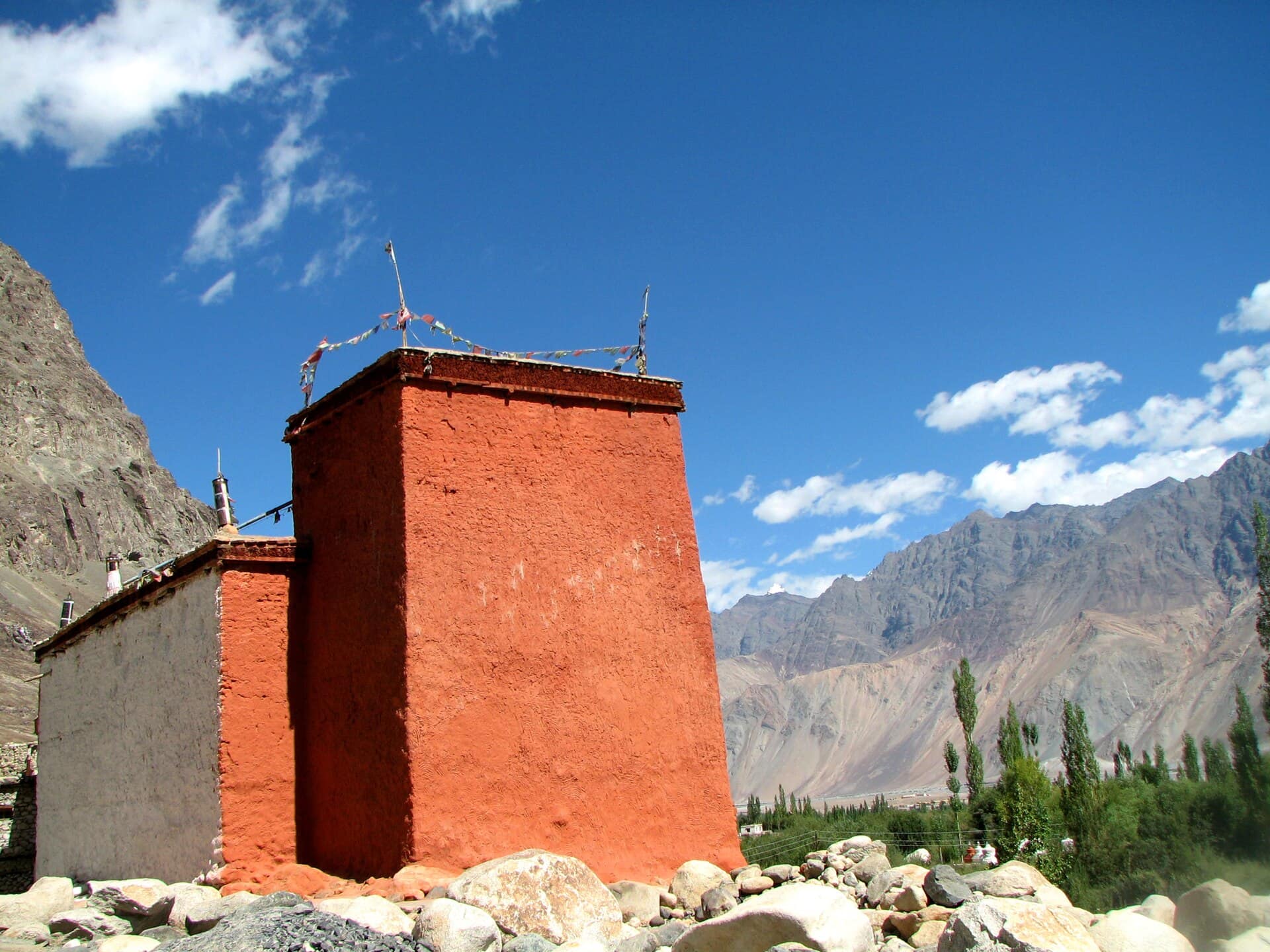
Photo spot in Nubra Valley
Hunder Sand Dunes
Nubra Valley, Ladakh
Silvery cold-desert sand dunes where the Shyok widens near Hunder, famous for rides on the rare double-humped Bactrian camels — a surreal desert amid snow peaks.
Best time
Late afternoon into sunset, when low light carves the ripples and the camels are out for their second shift; early morning for clean sand and no crowds.
Best angle
Walk up a high dune away from the camel stand and shoot the camel line in profile, with the grey sand in front and the snow peaks behind.
Entry fee
Free (camel ride extra)
Opening hours
Daylight hours
Crowd level
High
Best outfit colors
Overview
Best time to visit Hunder Sand Dunes
Late afternoon into sunset, when low light carves the ripples and the camels are out for their second shift; early morning for clean sand and no crowds. Crowds here are typically high. Arrive a little early to claim your angle and catch the softest light before the day tips over.
Poses & angles
Photo tips for Hunder Sand Dunes
Walk up a high dune away from the camel stand and shoot the camel line in profile, with the grey sand in front and the snow peaks behind. Work a few of the pose ideas below, shoot wide for context and tight for detail, and give yourself a couple of extra minutes to get the frame right.
On a Bactrian camel
On the dunes at golden hour
Outfit guide
What to wear at Hunder Sand Dunes
For photos at Hunder Sand Dunes, cream, rust and cobalt work beautifully — they stand out against the setting without fighting it. Pick one hero colour and keep the rest of the look calm so you stay the subject of the frame.
Best outfit colors for photos
Trending wear for this spot
Modern, camera-ready looks picked for Hunder Sand Dunes.
Traditional wear for this spot
Timeless, cultural outfits worn across Nubra Valley.
Eat nearby
Food near Hunder Sand Dunes
Round out the visit with something to eat. There are good local spots a short walk away, or settle in at one of the 2 restaurants close by.
Restaurants & food places nearby

Search food by craving
Good to know
Local tips
Book the afternoon camel shift and stay on after it for the sunset light.
Ask the ride rate and length before you mount, not afterwards.
Walk a few minutes away from the camel stand to find sand without footprints.
Wear closed shoes, because the sand gets into sandals and heats up in the afternoon.
Keep your camera in a bag between shots, as the fine dust gets everywhere.
Do not feed or tease the camels, and keep children away from their back legs.
Take a walk through Hunder village to see the palace ruins and the small monastery.
Dunes at 3,000 metres
Between Hunder and Diskit, the Shyok spreads out across a wide, flat valley, and the wind has piled its sand into dunes. They are pale grey rather than golden, with thorny bushes, small streams and snow-capped ridges on every side. It is one of the odder sights in Ladakh: a desert with glaciers above it.
The Bactrian camels
The double-humped camels are what bring most people here. They are generally said to descend from animals used on the old caravan routes between Ladakh and Central Asia. Rides are short, run by local operators, and usually take place in a morning shift and an afternoon shift, with the camels resting through the middle of the day. Ask the rate before you get on. The late-afternoon shift is the busiest and the best for light.
Hunder village
Walk into Hunder itself if you have time. It was once the capital of the Nubra kingdom. There are ruins of the old palace, a fort called Gula on the hill above, and a small monastery with a white temple and a red temple. Most of Nubra's tented camps are around the village, among willows and fields.
Getting the photograph
The camel stand gets crowded, and the sand around it is covered in footprints. Walk five or ten minutes away and climb a higher dune. From there you can shoot the camel line in profile with the mountains behind, or the ripples lit sideways at sunset. Protect your camera from the fine sand. See more Nubra photo spots, or start the day at Diskit Monastery.
Questions
Hunder Sand Dunes — FAQ
What is the best time to visit Hunder Sand Dunes?
Late afternoon into sunset, when low light carves the ripples and the camels are out for their second shift; early morning for clean sand and no crowds. Walk up a high dune away from the camel stand and shoot the camel line in profile, with the grey sand in front and the snow peaks behind.
Is there an entry fee at Hunder Sand Dunes?
Entry to Hunder Sand Dunes is free (camel ride extra).
What are the opening hours of Hunder Sand Dunes?
Hunder Sand Dunes keeps daylight hours.
What should I wear at Hunder Sand Dunes?
Cream, rust and cobalt photograph especially well here. Explore the trending and traditional outfit ideas on this page for full looks.
How crowded does Hunder Sand Dunes get?
Crowd levels are typically high. To miss the busiest window: late afternoon into sunset, when low light carves the ripples and the camels are out for their second shift; early morning for clean sand and no crowds.
Are the Hunder camels one-humped or two-humped?
Two-humped. They are Bactrian camels, rare in India, and are generally said to descend from animals used on the old caravan routes to Central Asia.
How long is a camel ride at Hunder?
Rides are short, usually 15 to 30 minutes along a set loop on the dunes. Operators offer set lengths, so ask about the options before you choose.
Can children ride the camels at Hunder?
Yes, usually with an adult alongside and a handler leading the camel. The camels kneel to let you on and off, which is the lurching part, so hold on.
Is there anything to see at Hunder besides the dunes?
Yes. Hunder was once the capital of the Nubra kingdom, and the village has palace ruins, a hilltop fort and a small monastery with two temples.