
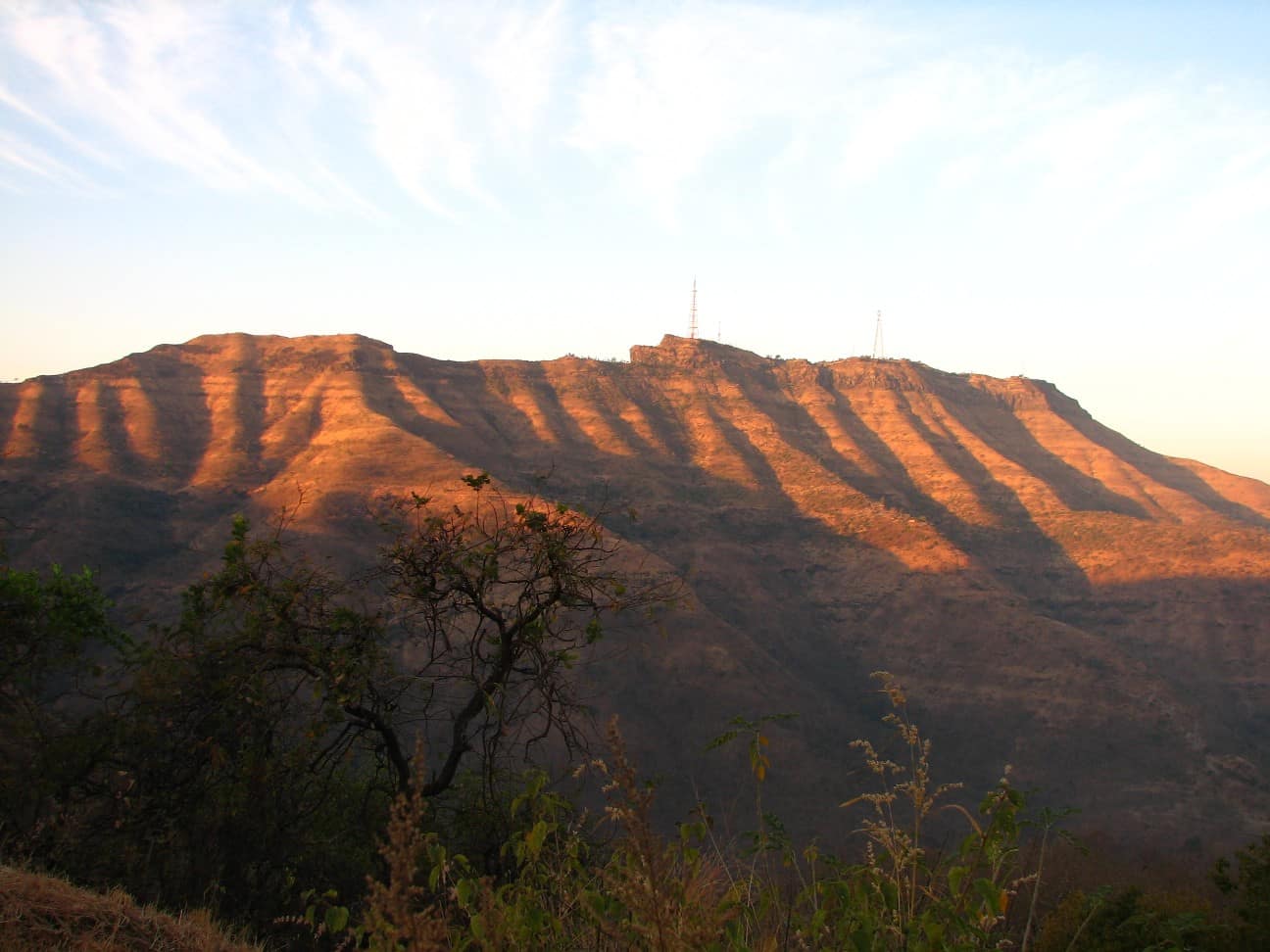
Photo spot in Pune
Sinhagad Fort
Pune, Maharashtra
A rugged hill fort ~35 km from the city, famed for its Maratha history, monsoon-green ramparts and pithla-bhakri stalls.
Best time
Early morning, before the day-trippers arrive, when mist hangs in the valleys; late afternoon on a clear winter day for long views and warm light on the ramparts.
Best angle
Stand on a safe, level stretch of rampart and take a wide photo along the wall as it curves away, with the valley and clouds behind.
Entry fee
Free (parking charges)
Opening hours
Open all day (daylight best)
Crowd level
High
Best outfit colors
Overview
Best time to visit Sinhagad Fort
Early morning, before the day-trippers arrive, when mist hangs in the valleys; late afternoon on a clear winter day for long views and warm light on the ramparts. Crowds here are typically high. Arrive a little early to claim your angle and catch the softest light before the day tips over.
Poses & angles
Photo tips for Sinhagad Fort
Stand on a safe, level stretch of rampart and take a wide photo along the wall as it curves away, with the valley and clouds behind. Work a few of the pose ideas below, shoot wide for context and tight for detail, and give yourself a couple of extra minutes to get the frame right.
On the misty ramparts
At the fort gateway
Outfit guide
What to wear at Sinhagad Fort
For photos at Sinhagad Fort, forest green, white and rust work beautifully — they stand out against the setting without fighting it. Pick one hero colour and keep the rest of the look calm so you stay the subject of the frame.
Best outfit colors for photos
Trending wear for this spot
Popular modern looks travellers are wearing across Pune.


Traditional wear for this spot
Timeless, cultural outfits worn across Pune.
Eat nearby
Food near Sinhagad Fort
Round out the visit with something to eat. Look for vada pav nearby.
Special dishes to try

Search food by craving
Good to know
Local tips
Start before 7 am at weekends, because parking and the ghat road fill up fast.
Go on a weekday if you can; it is far quieter than a Sunday.
Check the Forest Department's current entry rules before you set out, as caps and registration are being introduced.
Wear shoes with a firm grip, as the rock steps get slippery when wet.
Carry a windproof layer, because the top is much windier and cooler than Pune.
Keep well back from unfenced edges, especially in fog or strong wind.
Try the pithla-bhakri and clay-pot curd at the stalls after the climb.
The lion's fort
Sinhagad stands about 30 km south-west of Pune, on a ridge about 1,317 metres above sea level. It was once called Kondhana. In 1670, Shivaji's general Tanaji Malusare led a night attack up its cliffs and took it from the Mughal garrison, but he died in the fight. Shivaji is said to have mourned, "The fort is won, but the lion is lost", and the fort was renamed Sinhagad, the lion's fort. Legend says Tanaji's men used a tame monitor lizard named Yashwanti to help climb the rock.
What to see
You enter by the Pune Darwaza on the north-east side or the Kalyan Darwaza on the south-east. On top are Tanaji's memorial, the samadhi of Chhatrapati Rajaram, old water tanks and long stretches of rampart. A television tower, built in 1973, stands on the plateau. On a clear day you can see the Khadakwasla reservoir and ridges of the Sahyadris in every direction.
Getting up
Most people drive or take a cab up the ghat road to the parking area near the top. Walkers start from Atkarwadi at the base. The trail is about 2.7 km one way with roughly 600 metres of climbing, and most people take one and a half to two hours to reach the top.
Crowds and new rules
Sinhagad is very popular at weekends, and parking fills early on Sundays. The Forest Department manages the fort, charges an entry fee and a parking fee, and in 2026 announced plans to cap visitor numbers, with possible advance registration. Check the current rules before you go.
Monsoon visits
The fort is at its most atmospheric from July to September, but the paths get muddy, rocks can fall and heavy rain can trigger landslides on the road. Some edges have no railing, and wind can be strong. Stay away from the drops and follow any closures.
Food at the top
The stalls on top serve pithla-bhakri, kanda bhaji and curd set in clay pots, and there is buttermilk on hot days.
Questions
Sinhagad Fort — FAQ
What is the best time to visit Sinhagad Fort?
Early morning, before the day-trippers arrive, when mist hangs in the valleys; late afternoon on a clear winter day for long views and warm light on the ramparts. Stand on a safe, level stretch of rampart and take a wide photo along the wall as it curves away, with the valley and clouds behind.
Is there an entry fee at Sinhagad Fort?
Entry to Sinhagad Fort is free (parking charges).
What are the opening hours of Sinhagad Fort?
Sinhagad Fort is open all day (daylight best).
What should I wear at Sinhagad Fort?
Forest green, white and rust photograph especially well here. Explore the trending and traditional outfit ideas on this page for full looks.
How crowded does Sinhagad Fort get?
Crowd levels are typically high. To miss the busiest window: early morning, before the day-trippers arrive, when mist hangs in the valleys; late afternoon on a clear winter day for long views and warm light on the ramparts.
What food should I try near Sinhagad Fort?
Try vada pav at spots close by.
Can you drive to the top of Sinhagad Fort?
Yes. A ghat road leads to a parking area near the top, with a short walk from there. The Forest Department charges entry and parking fees and may limit numbers at busy times.
How long is the Sinhagad trek?
The trail from Atkarwadi is about 2.7 km one way with about 600 metres of climbing. Most people take one and a half to two hours to go up.
Why is it called Sinhagad?
After Tanaji Malusare died capturing it in 1670, Shivaji is said to have compared him to a lion. The fort, earlier called Kondhana, was renamed Sinhagad, the lion's fort.
Is Sinhagad safe in the monsoon?
It is open, but paths are slippery, rocks can fall and the road can be hit by landslides after heavy rain. Go in daylight, stay away from the edges and follow any closure notices.