
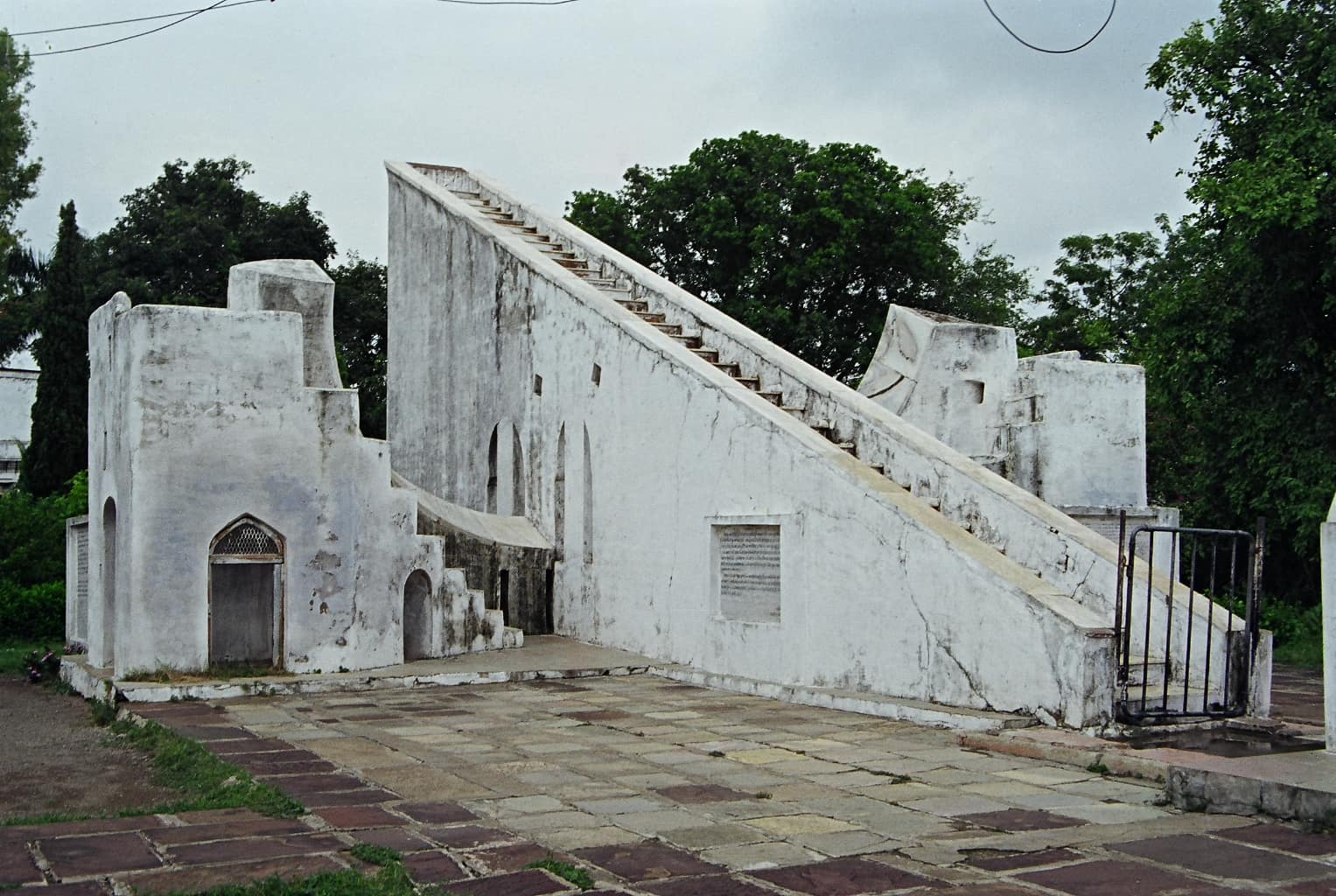
Photo spot in Ujjain
Vedh Shala (Jantar Mantar)
Ujjain, Madhya Pradesh
Ujjain's 18th-century Jai Singh observatory, still used to compute the panchang, standing on the historic prime meridian of Hindu astronomy.
Best time
Morning or late afternoon, when the low sun throws sharp shadows across the instruments.
Best angle
Crouch low beside the large sundial and take an upward photo of its sloping wall against the open sky.
Entry fee
Nominal
Opening hours
8:00 AM – 6:00 PM
Crowd level
Medium
Best outfit colors
Overview
Best time to visit Vedh Shala (Jantar Mantar)
Morning or late afternoon, when the low sun throws sharp shadows across the instruments. Crowds here are typically medium. Arrive a little early to claim your angle and catch the softest light before the day tips over.
Poses & angles
Photo tips for Vedh Shala (Jantar Mantar)
Crouch low beside the large sundial and take an upward photo of its sloping wall against the open sky. Work a few of the pose ideas below, shoot wide for context and tight for detail, and give yourself a couple of extra minutes to get the frame right.
By the giant sundial
Among the instruments
Outfit guide
What to wear at Vedh Shala (Jantar Mantar)
For photos at Vedh Shala (Jantar Mantar), rust, cream and indigo work beautifully — they stand out against the setting without fighting it. Pick one hero colour and keep the rest of the look calm so you stay the subject of the frame.
Best outfit colors for photos
Trending wear for this spot
Popular modern looks travellers are wearing across Ujjain.


Traditional wear for this spot
Timeless, cultural outfits worn across Ujjain.
Eat nearby
Food near Vedh Shala (Jantar Mantar)
Round out the visit with something to eat. Look for bhutte ka kees nearby.
Special dishes to try
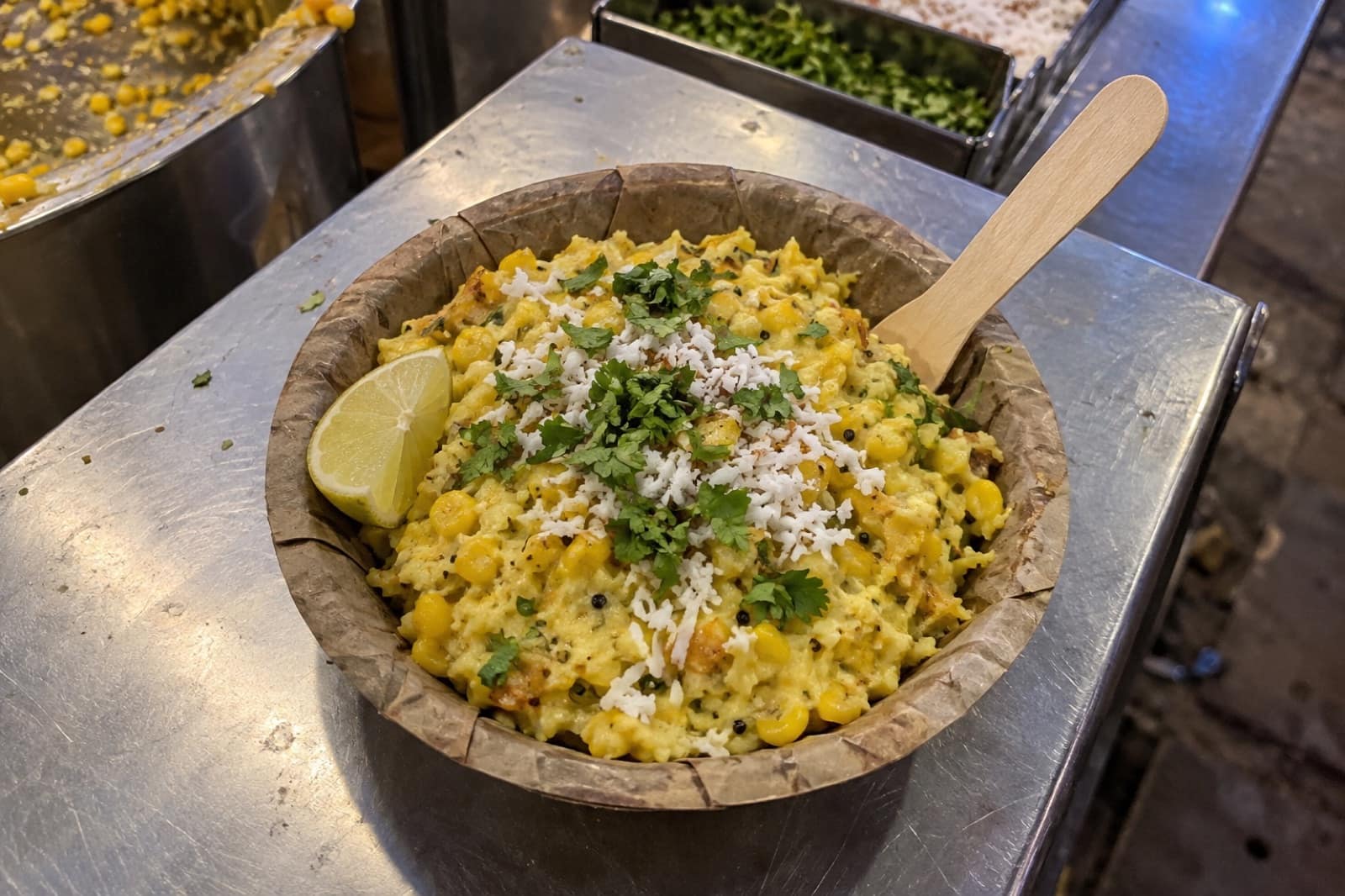
Search food by craving
Good to know
Local tips
Visit in the morning or late afternoon, when the low sun casts sharp shadows on the instruments.
Avoid the middle of the day in summer, as the site is open and has little shade.
Read up on the instruments before you go, as they make more sense when you know what each one measured.
Watch the shadow on the big sundial to see how the observatory tells local time.
Wear a hat and carry water from April to June.
Treat the instruments with care, as they are historic and still in use.
Combine your visit with the Mahakaleshwar Temple, a short auto-rickshaw ride away.
About the Vedh Shala
The Vedh Shala, also called the Jantar Mantar, is an open-air observatory built in the early 18th century by Maharaja Jai Singh II of Jaipur, who was then the governor of Malwa. It is one of five observatories he built, and its large masonry instruments were designed to measure local time, track the positions of the sun, stars and planets, and work out eclipses. The main instruments are a large sundial known as the Samrat Yantra, the Nadivalaya, the Digansha and a transit instrument.
Ujjain has been a centre of Indian astronomy for centuries. Indian astronomers used it as their prime meridian, the starting line for longitude, and the city lies close to the Tropic of Cancer. The observatory is still in use: it was restored by Maharaja Madhav Rao Scindia, and it has published an annual ephemeris, or panchang, since 1942. It is a quiet, open site where you can walk between the instruments and watch their shadows move.
Questions
Vedh Shala (Jantar Mantar) — FAQ
What is the best time to visit Vedh Shala (Jantar Mantar)?
Morning or late afternoon, when the low sun throws sharp shadows across the instruments. Crouch low beside the large sundial and take an upward photo of its sloping wall against the open sky.
Is there an entry fee at Vedh Shala (Jantar Mantar)?
Entry to Vedh Shala (Jantar Mantar) is nominal.
What are the opening hours of Vedh Shala (Jantar Mantar)?
Vedh Shala (Jantar Mantar) is open 8:00 AM – 6:00 PM.
What should I wear at Vedh Shala (Jantar Mantar)?
Rust, cream and indigo photograph especially well here. Explore the trending and traditional outfit ideas on this page for full looks.
How crowded does Vedh Shala (Jantar Mantar) get?
Crowd levels are typically medium. To miss the busiest window: morning or late afternoon, when the low sun throws sharp shadows across the instruments.
What food should I try near Vedh Shala (Jantar Mantar)?
Try bhutte ka kees at spots close by.
What is the Vedh Shala famous for?
The Vedh Shala is an 18th-century observatory built by Maharaja Jai Singh II, known for its large masonry instruments for measuring time and tracking the sun and stars. It reflects Ujjain's long history as a centre of Indian astronomy.
Who built the Vedh Shala in Ujjain?
It was built by Maharaja Jai Singh II of Jaipur in the early 18th century, while he was governor of Malwa. He also built observatories in Delhi, Jaipur, Varanasi and Mathura.
Is the Vedh Shala still in use?
Yes. The observatory still records the weather and publishes an annual ephemeris, or panchang, which it has done since 1942. A modern telescope was added in 2004.
How much time do I need at the Vedh Shala?
About 30–45 minutes is enough to walk around the instruments and take photos. Allow longer if you want to read about how each one works.