
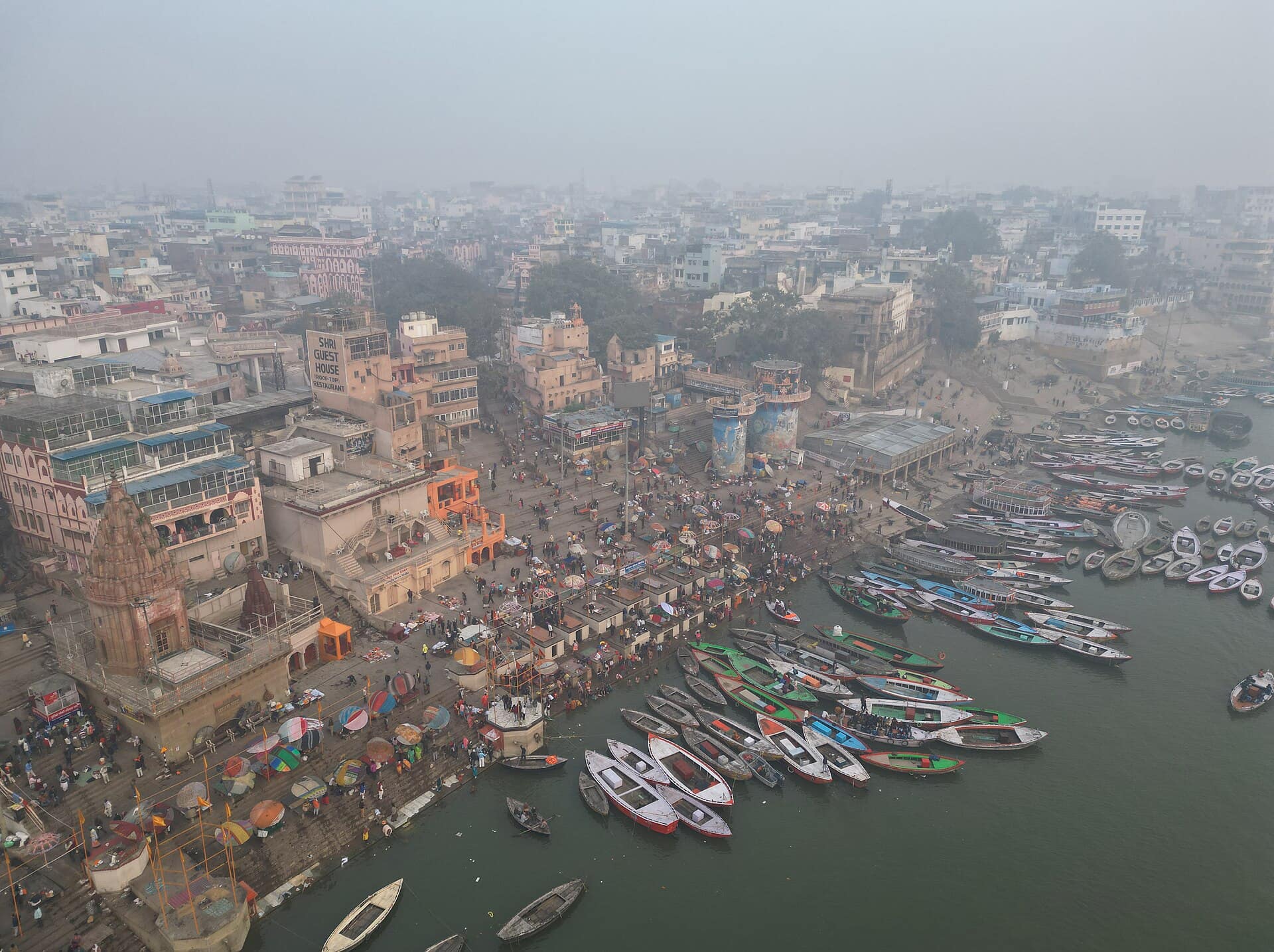
Photo spot in Varanasi
Dashashwamedh Ghat
Varanasi, Uttar Pradesh
The grandest ghat on the Ganges, where a choreographed Ganga Aarti with fire and chants unfolds every evening.
Best time
Sunrise from a boat, when the light falls straight onto the steps; just after sunset for the lamps of the aarti.
Best angle
Take a boat, moor about 20 metres out in front of the platforms and photograph the priests lifting their lamps with the ghat lit up behind them.
Entry fee
Free (boat ride extra)
Opening hours
Open all day; aarti ~6:45 PM
Crowd level
High
Best outfit colors
Overview
Best time to visit Dashashwamedh Ghat
Sunrise from a boat, when the light falls straight onto the steps; just after sunset for the lamps of the aarti. Crowds here are typically high. Arrive a little early to claim your angle and catch the softest light before the day tips over.
Poses & angles
Photo tips for Dashashwamedh Ghat
Take a boat, moor about 20 metres out in front of the platforms and photograph the priests lifting their lamps with the ghat lit up behind them. Work a few of the pose ideas below, shoot wide for context and tight for detail, and give yourself a couple of extra minutes to get the frame right.
On the ghat steps at dawn
Boat silhouette at aarti
Outfit guide
What to wear at Dashashwamedh Ghat
For photos at Dashashwamedh Ghat, saffron, white and marigold yellow work beautifully — they stand out against the setting without fighting it. Pick one hero colour and keep the rest of the look calm so you stay the subject of the frame.
Best outfit colors for photos
Trending wear for this spot
Modern, camera-ready looks picked for Dashashwamedh Ghat.

Traditional wear for this spot
Timeless, cultural looks that suit Dashashwamedh Ghat.
Eat nearby
Food near Dashashwamedh Ghat
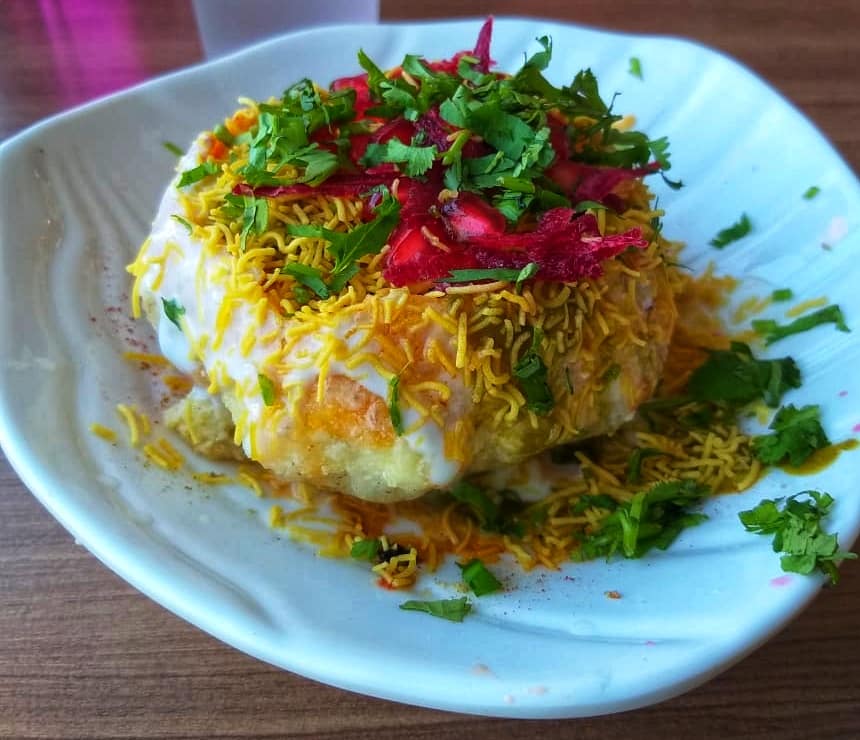
Round out the visit with something to eat. Look for kachori sabzi nearby.
Special dishes to try
Search food by craving
Good to know
Local tips
Reach the ghat an hour before sunset if you want a place on the steps for the aarti.
Take a boat and moor in front of the priests for a face-on view of the lamps.
Agree the full boat fare and the ride's length before you step in, not after.
Keep your phone and wallet in a zipped inside pocket, as the aarti crowd attracts pickpockets.
Politely refuse anyone who ties a thread on your wrist or offers a blessing and then asks for money.
Walk the last stretch from Godowlia, since traffic is often stopped well before the ghat.
Come back at sunrise to see the same steps full of bathers instead of spectators.
The main ghat
Dashashwamedh is the busiest ghat in Varanasi and the one most visitors reach first, at the bottom of the road down from Godowlia. Its name refers to a legend that Brahma performed ten horse sacrifices here. The steps were rebuilt in 1748 by the Peshwa Balaji Baji Rao and again in 1774 by Ahilyabai Holkar of Indore. By day it is a jumble of priests under bamboo umbrellas, flower sellers, boatmen and bathers.
The evening aarti
Every evening after sunset, a row of young priests perform the Ganga aarti on raised platforms at the edge of the steps. They swing large brass lamps, incense and yak-tail fans in unison while bells ring and the crowd sings. It lasts about 45 minutes and starts around 6 pm in winter and closer to 7 pm in summer. The next ghat along, Rajendra Prasad Ghat, holds its own aarti at the same time.
Where to watch
The steps fill an hour before the start. From there you see the priests in profile or from behind. For a face-on view, take a boat and moor in front of the platforms, or pay a small amount for a seat on one of the raised side terraces. Pickpockets work the crowd, so zip your pockets.
Morning on the ghat
At sunrise the ghat belongs to bathers and pilgrims. Most boat rides start here and head south to Assi or north past Manikarnika. Agree the price, the route and the time before you step in.
In the monsoon
From about July to September the river rises over the lower steps. When it passes the warning level the police suspend boats, as they did in August 2026, and the aarti moves to higher ground or nearby rooftops. Check before you plan an evening around it.
Questions
Dashashwamedh Ghat — FAQ
What is the best time to visit Dashashwamedh Ghat?
Sunrise from a boat, when the light falls straight onto the steps; just after sunset for the lamps of the aarti. Take a boat, moor about 20 metres out in front of the platforms and photograph the priests lifting their lamps with the ghat lit up behind them.
Is there an entry fee at Dashashwamedh Ghat?
Entry to Dashashwamedh Ghat is free (boat ride extra).
What are the opening hours of Dashashwamedh Ghat?
Dashashwamedh Ghat is open all day; aarti ~6:45 PM.
What should I wear at Dashashwamedh Ghat?
Saffron, white and marigold yellow photograph especially well here. Explore the trending and traditional outfit ideas on this page for full looks.
How crowded does Dashashwamedh Ghat get?
Crowd levels are typically high. To miss the busiest window: sunrise from a boat, when the light falls straight onto the steps; just after sunset for the lamps of the aarti.
What food should I try near Dashashwamedh Ghat?
Try kachori sabzi at spots close by.
What time does the Ganga aarti start at Dashashwamedh Ghat?
Just after sunset, usually around 6 pm in winter and close to 7 pm in summer. It lasts about 45 minutes. Timings change through the year, so ask at your hotel on the day.
Does the aarti happen every day?
Yes, every evening. When the river floods the ghat in the monsoon, it is held on higher steps or on nearby rooftops instead.
Is it better to watch the aarti from a boat?
For the view, yes: you face the priests directly. The steps give you the sound and the crowd but a partial view. A boat also avoids the crush when everyone leaves at once.
How far is Dashashwamedh Ghat from Kashi Vishwanath?
A few minutes on foot. The lanes up from the ghat lead to the temple gates, and the corridor links the temple to the river a little further north.