
Photo spot in Varanasi
Sarnath
Varanasi, Uttar Pradesh
Where the Buddha gave his first sermon — a tranquil complex of the Dhamek Stupa, monastery ruins and a museum, 10 km from the city.
Best time
Early morning, when low sun picks out the carving on the stupa; late afternoon for warm light on the brick ruins.
Best angle
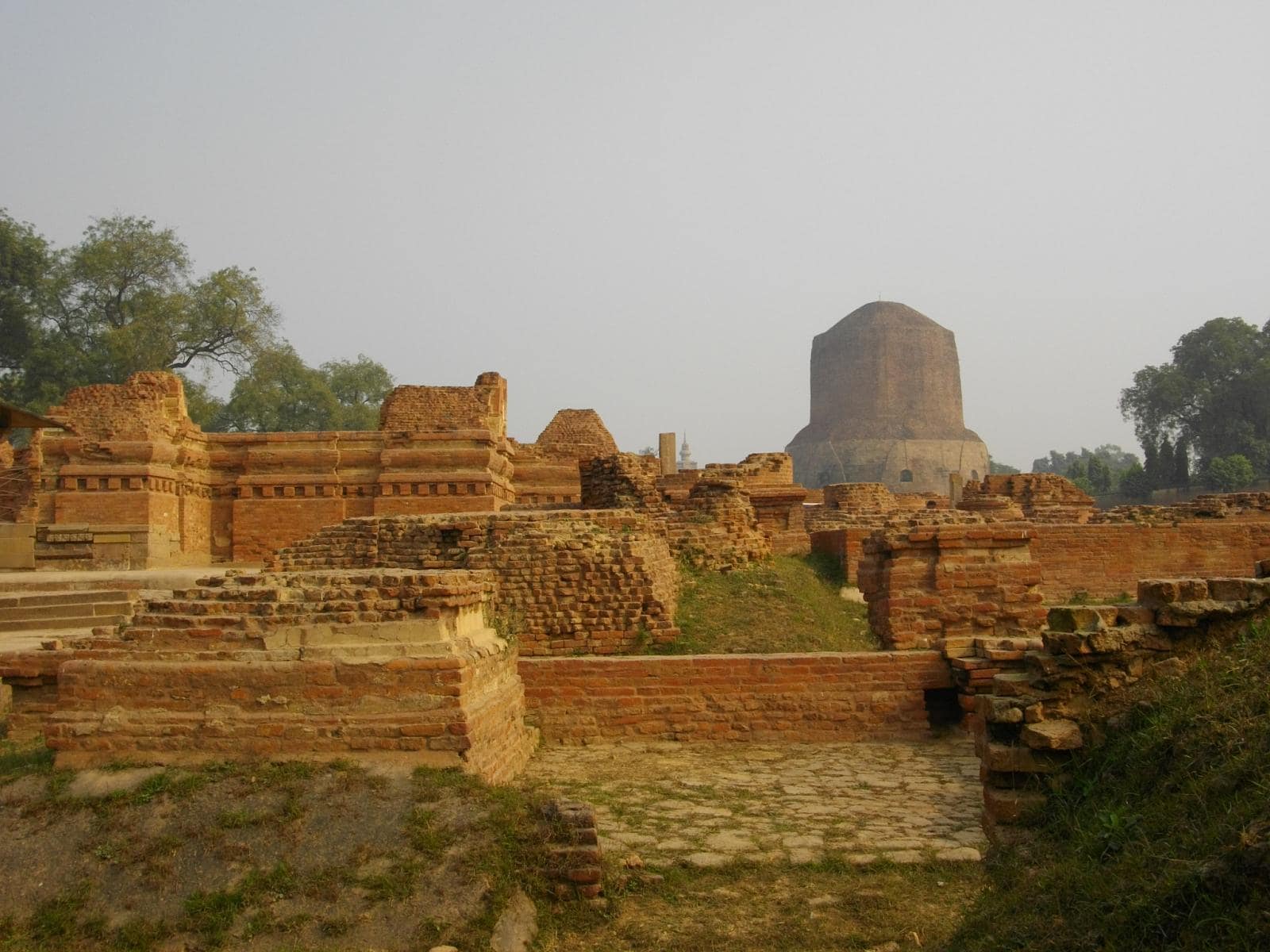
Stand among the monastery ruins south of the stupa and take a low, wide photo with the brick foundations in front and the Dhamek Stupa rising behind.
Entry fee
₹25 (Indian) / ₹300 (foreign)
Opening hours
Sunrise – sunset (museum closed Fridays)
Crowd level
Low
Best outfit colors
Overview
Best time to visit Sarnath
Early morning, when low sun picks out the carving on the stupa; late afternoon for warm light on the brick ruins. Crowds here are typically low. Arrive a little early to claim your angle and catch the softest light before the day tips over.
Poses & angles
Photo tips for Sarnath
Stand among the monastery ruins south of the stupa and take a low, wide photo with the brick foundations in front and the Dhamek Stupa rising behind. Work a few of the pose ideas below, shoot wide for context and tight for detail, and give yourself a couple of extra minutes to get the frame right.
Beside the Dhamek Stupa
Among the monastery ruins
Outfit guide
What to wear at Sarnath
For photos at Sarnath, ochre, maroon and cream work beautifully — they stand out against the setting without fighting it. Pick one hero colour and keep the rest of the look calm so you stay the subject of the frame.
Best outfit colors for photos
Trending wear for this spot
Popular modern looks travellers are wearing across Varanasi.


Traditional wear for this spot
Timeless, cultural outfits worn across Varanasi.
Eat nearby
Food near Sarnath
Hungry after the shoot? Search the Varanasi food guide by craving to find something good nearby.
Search food by craving
Good to know
Local tips
Start at the Dhamek Stupa early, before the flat, open site gets hot.
Plan your visit for a day other than Friday, when the museum is usually closed.
Stop at the Chaukhandi Stupa on the way in, as it is on the road from Varanasi.
Walk clockwise around the stupa, the way pilgrims do, and keep your voice down.
Take off your shoes before entering the Mulagandha Kuti Vihar to see the murals.
Carry water and a hat, as there is little shade among the ruins.
Visit on Buddha Purnima for processions, but expect far bigger crowds.
Where the Buddha first taught
Sarnath lies about 10 km north-east of the old city. After his enlightenment at Bodh Gaya, the Buddha came here and gave his first sermon to five companions in the deer park. It is one of the four main Buddhist pilgrimage sites, and it feels very different from the ghats: flat, green and quiet.
The Dhamek Stupa
The ruins are an ASI-protected, ticketed site. Its centre is the Dhamek Stupa, a solid cylinder of stone and brick about 39 metres tall and 28 metres across. A band of carved flowers and geometric patterns circles its lower half. Around it lie the foundations of monasteries and the base of the Dharmarajika Stupa, with the broken stump of an Ashokan pillar under a shelter. Pilgrims walk clockwise around the stupa and press gold leaf on its stones.
The museum
The Sarnath Archaeological Museum, across the road, holds the Lion Capital of Ashoka, the four lions that became India's national emblem, and a fine seated Buddha from the Gupta period. It is usually closed on Fridays, and bags and phones may need to be left at the counter, so check at the gate.
Temples
The Mulagandha Kuti Vihar, opened in 1931, has murals of the Buddha's life painted by the Japanese artist Kosetsu Nosu. Thai, Tibetan, Japanese, Chinese and other Buddhist temples stand along the nearby roads, and the Thai temple has a very tall standing Buddha. The Chaukhandi Stupa, a brick mound topped by an octagonal Mughal tower, is on the approach road.
Planning
Give Sarnath half a day. Go early, see the stupa before the heat, then the museum and one or two temples. An auto or taxi from the ghats takes about 30 to 45 minutes depending on traffic.
Questions
Sarnath — FAQ
What is the best time to visit Sarnath?
Early morning, when low sun picks out the carving on the stupa; late afternoon for warm light on the brick ruins. Stand among the monastery ruins south of the stupa and take a low, wide photo with the brick foundations in front and the Dhamek Stupa rising behind.
Is there an entry fee at Sarnath?
Entry to Sarnath costs ₹25 (Indian) / ₹300 (foreign). Prices change, so treat that as a guide and confirm at the counter.
What are the opening hours of Sarnath?
Sarnath is open sunrise – sunset (museum closed Fridays).
What should I wear at Sarnath?
Ochre, maroon and cream photograph especially well here. Explore the trending and traditional outfit ideas on this page for full looks.
How crowded does Sarnath get?
Crowd levels are typically low. To miss the busiest window: early morning, when low sun picks out the carving on the stupa; late afternoon for warm light on the brick ruins.
How far is Sarnath from Varanasi?
About 10 km north-east of the old city. An auto or taxi from the ghats usually takes 30 to 45 minutes.
Is the Sarnath museum open every day?
No. It is usually closed on Fridays. The stupa site itself is open daily, so on a Friday you can still see the ruins.
Where is the Ashoka Lion Capital?
In the Sarnath Archaeological Museum, across the road from the stupa site. It was found at Sarnath and is the original of India's national emblem.
How long should I spend at Sarnath?
Half a day is enough for the stupa, the museum and a couple of temples. Add an hour if you want to see the Thai temple and the Chaukhandi Stupa.