
Must-try lunch in Madrid
Cocido madrileño
Madrid, Comunidad de Madrid
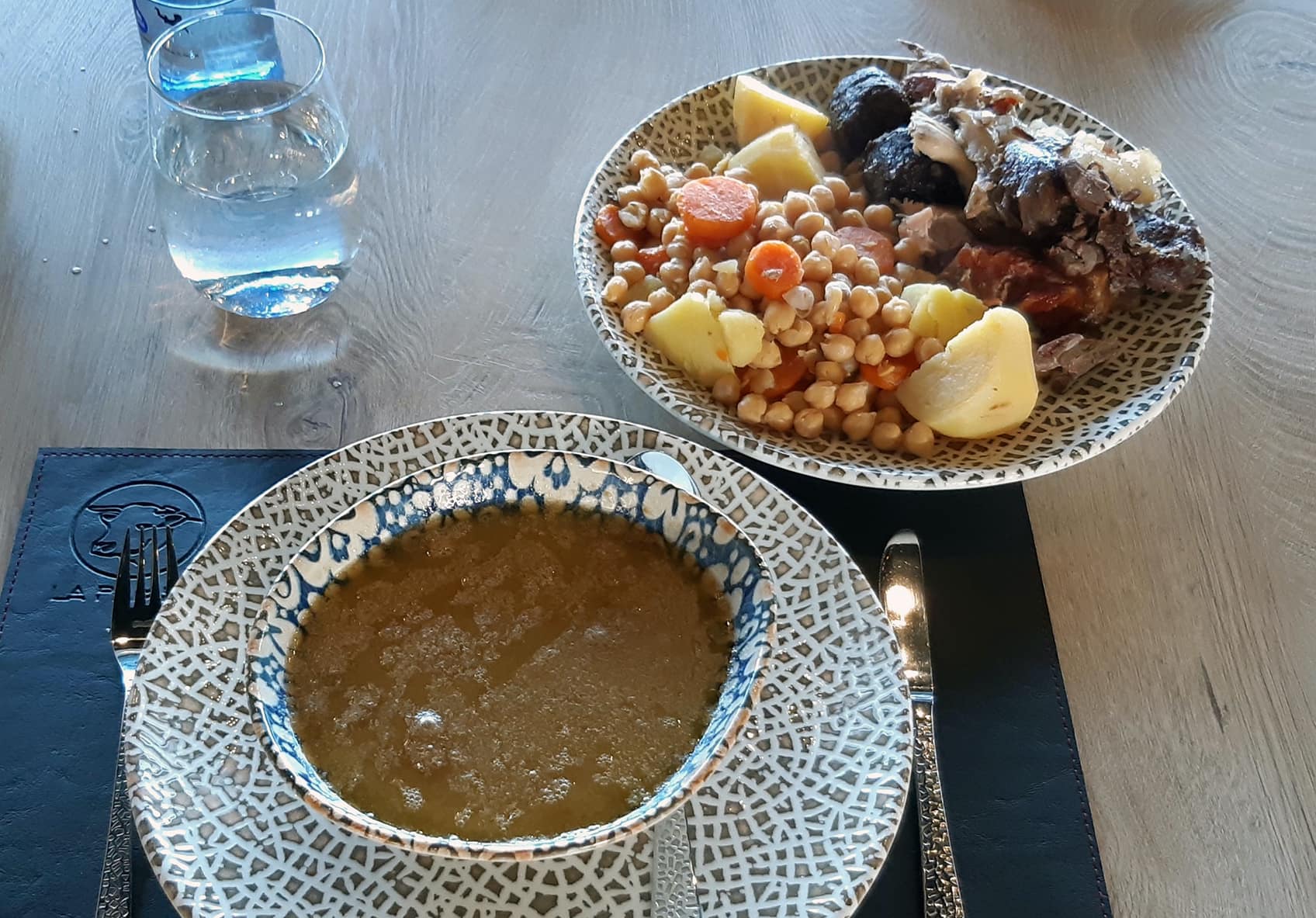
Chickpeas, vegetables and several cuts of pork and beef simmered together for hours, then served as three separate courses from one pot — the broth with noodles first, then the chickpeas and vegetables, then the meats.
Taste
Deep, slow, brothy
Spice level
Not spicy
Best time to eat
Lunch, and only in the cold half of the year
Price range
€20–35
Food type & tags
Best paired with
Chaas or lassi
The dish
What is Cocido madrileño?
Expect it to be deep, slow, brothy, with a not spicy kick.
The story
Why is Cocido madrileño famous in Madrid?
Madrid's defining winter dish and a genuine ritual: the three courses are called vuelcos, 'tippings', because the pot is emptied three times. Many restaurants serve it on one fixed day a week and nothing else that day.
When to go
Best time to eat it
Cocido madrileño is best enjoyed at lunch, and only in the cold half of the year, ideally with chaas (spiced buttermilk) or a sweet lassi. Many spots make fresh batches through the day, so it’s easy to fit into your plan.
Where to eat
Best places to try Cocido madrileño
Trusted Madrid spots — hours and directions.
Open Lunch and dinner daily, in the Spanish sittings
Cocido madrileño available here
DirectionsPerfect pairing
What to eat with Cocido madrileño
Cocido madrileño pairs best with chaas (spiced buttermilk) or a sweet lassi. It’s a non-vegetarian lunch, so keep the rest of the plate light and let the dish be the star.
Make a morning of it
Pair it with a photo spot
Eat well, then shoot nearby in Madrid.
Azotea del Círculo de Bellas Artes
The hour before sunset, when the light turns gold on the Metrópolis dome and runs the length of Gran Vía below
Fuel up on Cocido madrileño, then shoot Azotea del Círculo de Bellas Artes.
See photo spotGran Vía
Dusk into the blue hour, when the Schweppes sign and the cinema marquees light up while the sky is still blue rather than black
Fuel up on Cocido madrileño, then shoot Gran Vía.
See photo spotMercado de San Miguel
Late morning, soon after it opens, before the evening crush fills the hall and the ironwork disappears behind the crowd
Fuel up on Cocido madrileño, then shoot Mercado de San Miguel.
See photo spotWant something else?
Search Madrid food by craving
Cocido madrileño in Madrid
On the lunch plate in Madrid, Cocido madrileño holds its place - deep, slow, brothy, non-vegetarian, and exactly the kind of thing worth crossing town for.
The short version: Chickpeas, vegetables and several cuts of pork and beef simmered together for hours, then served as three separate courses from one pot — the broth with noodles first, then the chickpeas and vegetables, then the meats
🍛 What it is
Chickpeas, vegetables and several cuts of pork and beef simmered together for hours, then served as three separate courses from one pot — the broth with noodles first, then the chickpeas and vegetables, then the meats - that is the whole idea of it, and everything else on this page follows from there.
It sits in the city's food life as a midday meal - eaten at lunch, and only in the cold half of the year, served the way the locality serves it, and priced the way the locality prices it.
Locally it is filed under: madrid-specific, winter, slow-cooked - which is the vocabulary to use when asking for it.
📜 Where it comes from
In Madrid, madrid's defining winter dish and a genuine ritual: the three courses are called vuelcos, 'tippings', because the pot is emptied three times. Many restaurants serve it on one fixed day a week and nothing else that day.
Dishes like this travel badly and reproduce badly - the version in Madrid is the reference version, made for the local palate at local prices.
👅 The taste, honestly
Ask what it tastes like and the answer is deep, slow, brothy; anything more specific you should taste rather than read.
There is no chilli heat in it at all.
The shape of the eating: it leads the plate. Plan the rest of the meal around that.
🕐 When to eat it
The local answer to when is simple: lunch, and only in the cold half of the year. Follow it and you get the dish at its best; ignore it and you may not get it at all.
Eat it when the room is full - not for atmosphere, but because a full room is what keeps the pans hot and the batches moving.
🥣 Ordering it well
The Spanish way with food like this is unhurried but specific - order at the bar, eat where you land, and let the kitchen set the pace.
💰 What it costs
The local range is €20–35 in Madrid - within it you are paying the local price; far above it, you are paying for something else.
It sits in the comfortable middle of a food budget - not the cheapest thing on the street, and nowhere near the top.
🤝 Eating it like a local
Order it, then let the room teach you - the locals at the next table are doing this correctly and visibly, and nobody minds being copied.
And the pairing instinct: keep the rest of the order simple and let one dish carry the meal.
Questions
Cocido madrileño — FAQ
What is Cocido madrileño?
Chickpeas, vegetables and several cuts of pork and beef simmered together for hours, then served as three separate courses from one pot — the broth with noodles first, then the chickpeas and vegetables, then the meats.
Is Cocido madrileño veg or non-veg?
Cocido madrileño is non-vegetarian. Spice level: not spicy.
Where can I try the best Cocido madrileño in Madrid?
Try Sobrino de Botín. See the "Best places to try it" section above for hours and directions.
What should I eat with Cocido madrileño?
Pair it with chaas (spiced buttermilk) or a sweet lassi.
When is the best time to eat Cocido madrileño?
Cocido madrileño is usually eaten at lunch, and only in the cold half of the year.