
Photo spot in Udon Thani
Ban Chiang
Udon Thani, Udon Thani Province
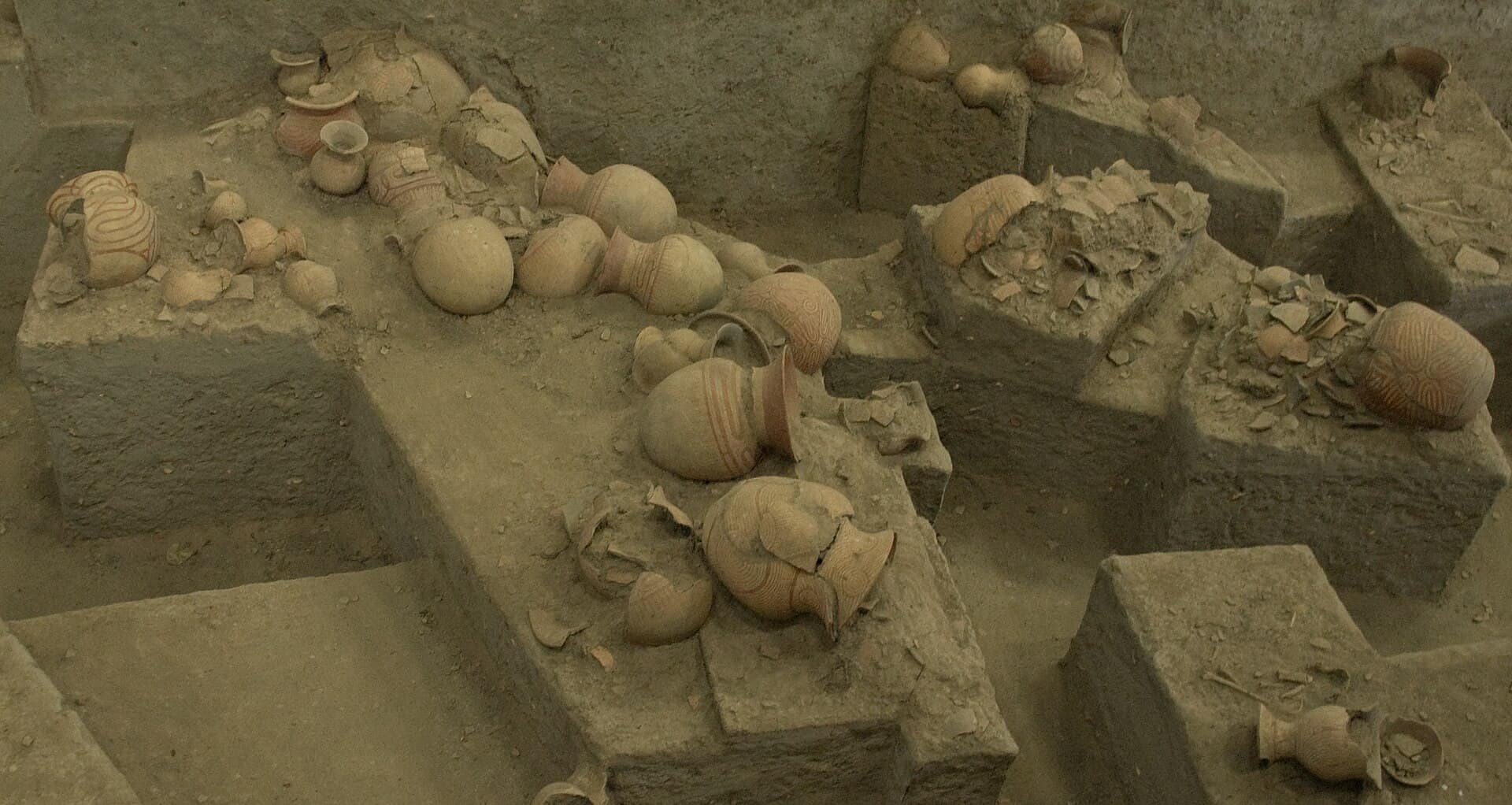
The Bronze Age village whose discovery in 1966 rewrote Southeast Asian prehistory — a national museum of red-spiral painted pottery, bronze and burials, and an open excavation pit at Wat Pho Si Nai where the skeletons and the pots have been left in the ground exactly as they were found.
Best time
Late morning at the open pit at Wat Pho Si Nai, when the sun is high enough to reach into the excavation — the museum interior is lit for objects rather than for cameras
Best angle
Down into the excavation pit along its length so the pots and burials recede, rather than a single skeleton; in the museum, the painted pottery against its dark case
Entry fee
Around ฿150 for foreign visitors and ฿30 for Thai nationals
Opening hours
Typically 9:00 AM – 4:00 PM daily
Crowd level
Low
Best outfit colors
Overview
Best time to visit Ban Chiang
The best time to photograph Ban Chiang is late morning at the open pit at Wat Pho Si Nai, when the sun is high enough to reach into the excavation — the museum interior is lit for objects rather than for cameras, when crowds are typically low. Arrive a little early to claim your angle and catch the softest light before the day tips over.
Outfit guide
What to wear at Ban Chiang
For photos at Ban Chiang, cream, terracotta, olive and charcoal work beautifully — they stand out against the setting without fighting it. Pick one hero colour and keep the rest of the look calm so you stay the subject of the frame.
Best outfit colors for photos
Trending wear for this spot
Popular modern looks travellers are wearing across Udon Thani.
Dawn on the water, in January
฿600–2,000
Layers for a plateau winter
฿1,000–3,500
Two World Heritage sites, one of them a scramble
฿800–2,500
Traditional wear for this spot
Timeless, cultural outfits worn across Udon Thani.
Eat nearby
Food near Ban Chiang
Hungry after the shoot? Search the Udon Thani food guide by craving to find something good nearby.
Search food by craving
Good to know
Local tips
It is two sites and most visitors do one. The museum is in the village; the open excavation pit is at Wat Pho Si Nai a few minutes away, and it is the more affecting half — burials and pots left in the earth under a roof.
A local man tripped over a tree root here in 1966, found pot rims sticking out of the path, and the excavation that followed pushed the region's Bronze Age back by millennia and started an argument about early metallurgy in Asia that is not settled.
The painted pottery — red spirals on buff — is what the site is famous for, and it is late in the sequence rather than early. The museum lays the chronology out properly, which is why it repays an hour rather than twenty minutes.
It is about 50 km east of Udon and there is no useful public transport. Car or driver, and combine it with nothing else in the same direction, because there is nothing else in the same direction.
Ban Chiang
Photographers come to Udon Thani for Ban Chiang - here is the working plan, from arrival to the last frame. Budget for entry (around ฿150 for foreign visitors and ฿30 for Thai nationals); the posted hours are typically 9:00 AM – 4:00 PM daily.
📸 The shot
Museums are indoor-light problems - check the photography policy at the desk first, and raise ISO rather than using flash.
Start from the recommended angle (down into the excavation pit along its length so the pots and burials recede, rather than a single skeleton; in the museum, the painted pottery against its dark case) and work outward; it is the composition the spot rewards.
🕐 Light and timing
The light window is the short version in the timing row: late morning at the open pit at Wat Pho Si Nai, when the sun is high enough to reach into the excavation — the museum interior is lit for objects rather than for cameras. Build the visit around it rather than around the clock.
It is a quiet spot by the standards of the category - the frame waits for you rather than the other way round.
🧵 Colour and clothing
The colours that work here do so for a reason - cream photographs softer than white and suits heritage backdrops; and terracotta sits in the same family as the stone - layer it with cream for contrast. Keep a person in at least one frame - scale is what makes architecture and landscape read.
💡 Before you go
It is two sites and most visitors do one. The museum is in the village; the open excavation pit is at Wat Pho Si Nai a few minutes away, and it is the more affecting half — burials and pots left in the earth under a roof.
Questions
Ban Chiang — FAQ
What is the best time to visit Ban Chiang?
At Ban Chiang, aim for late morning at the open pit at Wat Pho Si Nai, when the sun is high enough to reach into the excavation — the museum interior is lit for objects rather than for cameras. For the best composition, try down into the excavation pit along its length so the pots and burials recede, rather than a single skeleton; in the museum, the painted pottery against its dark case.
Is there an entry fee at Ban Chiang?
The fee at Ban Chiang is around ฿150 for foreign visitors and ฿30 for Thai nationals. Prices change, so treat that as a guide and confirm at the counter.
What are the opening hours of Ban Chiang?
Ban Chiang is open typically 9:00 AM – 4:00 PM daily.
What should I wear at Ban Chiang?
Cream, terracotta, olive and charcoal photograph especially well here. Explore the trending and traditional outfit ideas on this page for full looks.
How crowded does Ban Chiang get?
Crowd levels are typically low. Visiting late morning at the open pit at Wat Pho Si Nai, when the sun is high enough to reach into the excavation — the museum interior is lit for objects rather than for cameras helps you avoid the busiest window.