
Temples in Aurangabad
Aurangabad's sacred sites span four faiths within an hour's drive. One is a living Jyotirlinga with strict rules; the rest are cave shrines and Sufi dargahs you visit as monuments.
On Ajanta Caves
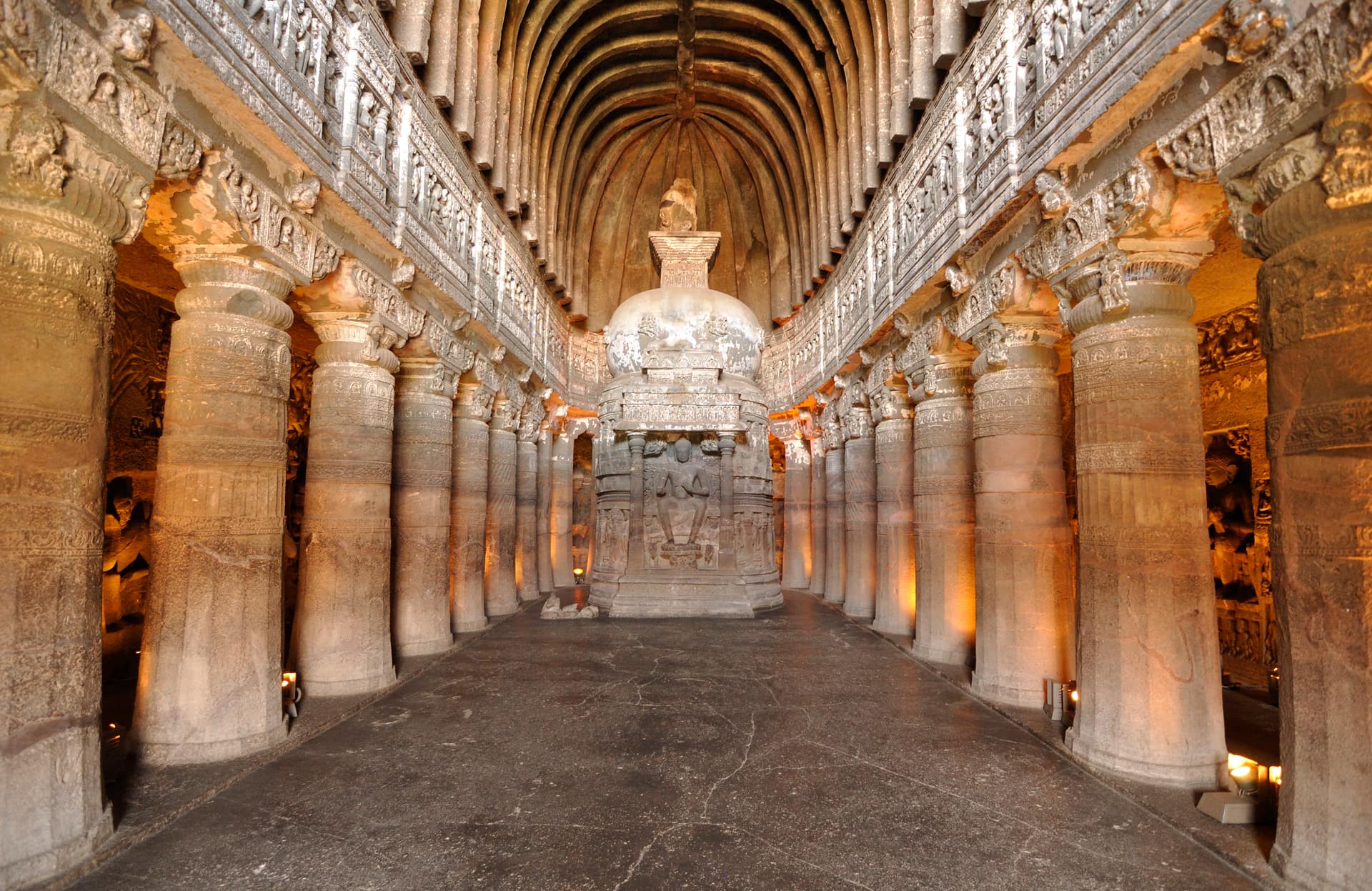
A temple within Ajanta Caves, with its own deity and its own rules.
Grishneshwar, the living temple
Grishneshwar, at Verul village about 1.5 km from the Ellora caves, is one of the twelve Jyotirlinga temples of Shiva. The present building dates from the 18th century and is credited to the Holkar rulers of Indore, usually named as Ahilyabai Holkar. It is an active pilgrimage temple with daily worship and long queues on festival days.
The rules matter here. Men who want to enter the inner sanctum are expected to remove their shirts. Phones and cameras are generally not allowed inside, and lockers are available near the footwear stand. Dress modestly, leave leather goods behind if you can, and expect the biggest crowds on Mondays in the month of Shravan (July–August) and at Mahashivratri (February or March).
Cave temples at Ellora
Ellora has Buddhist, Hindu and Jain caves side by side, cut between about the 6th and 10th centuries. Cave 16, Kailasa, is a Shiva temple carved downward out of a single rock. These are protected monuments, not places of worship, so the rules are ASI rules: shoes off where marked, no flash, and quiet in the halls. The Ellora guide covers the caves one by one.
Ajanta's Buddhist halls
The caves at Ajanta are Buddhist monasteries and prayer halls, some with painted walls well over a thousand years old. Buddhist visitors do pray here. Keep your voice down, do not touch the paintings, and never use flash. See the Ajanta guide.
The Aurangabad Caves
On the hill behind Bibi Ka Maqbara are twelve small Buddhist caves from roughly the 6th and 7th centuries, with carved Bodhisattvas and figures of goddesses. They are quiet and rarely crowded.
Dargahs and Khuldabad
Panchakki, in the city, is part of the dargah of the Sufi saint Baba Shah Musafir. Khuldabad, on the road to Ellora, is a town of Sufi shrines and also holds the simple grave of the emperor Aurangzeb. Security around Aurangzeb's grave was tightened in 2025 and direct entry has been restricted at times, so ask locally before planning a stop. At all dargahs, cover your head, take off your shoes and dress conservatively.
Questions
Aurangabad — FAQ
Can non-Hindus visit Grishneshwar temple?
The temple does not have a posted ban on non-Hindu visitors, and many tourists visit after Ellora. Follow the dress code, leave your phone at a locker, and ask staff if you are unsure about entering the sanctum.
Is Ellora a working temple?
No. The caves are protected monuments run by the ASI. Kailasa is a Shiva temple in form, but regular worship does not take place there. Grishneshwar, next door, is the working temple.
What is the best time to visit Grishneshwar to avoid queues?
Early morning on a weekday outside Shravan and festival days. Mondays in Shravan and Mahashivratri bring very long queues.
Can I visit Aurangzeb's grave at Khuldabad?
Security there was tightened in 2025 and access has been restricted at times. Check locally before you go, and be respectful and brief if you do visit.