
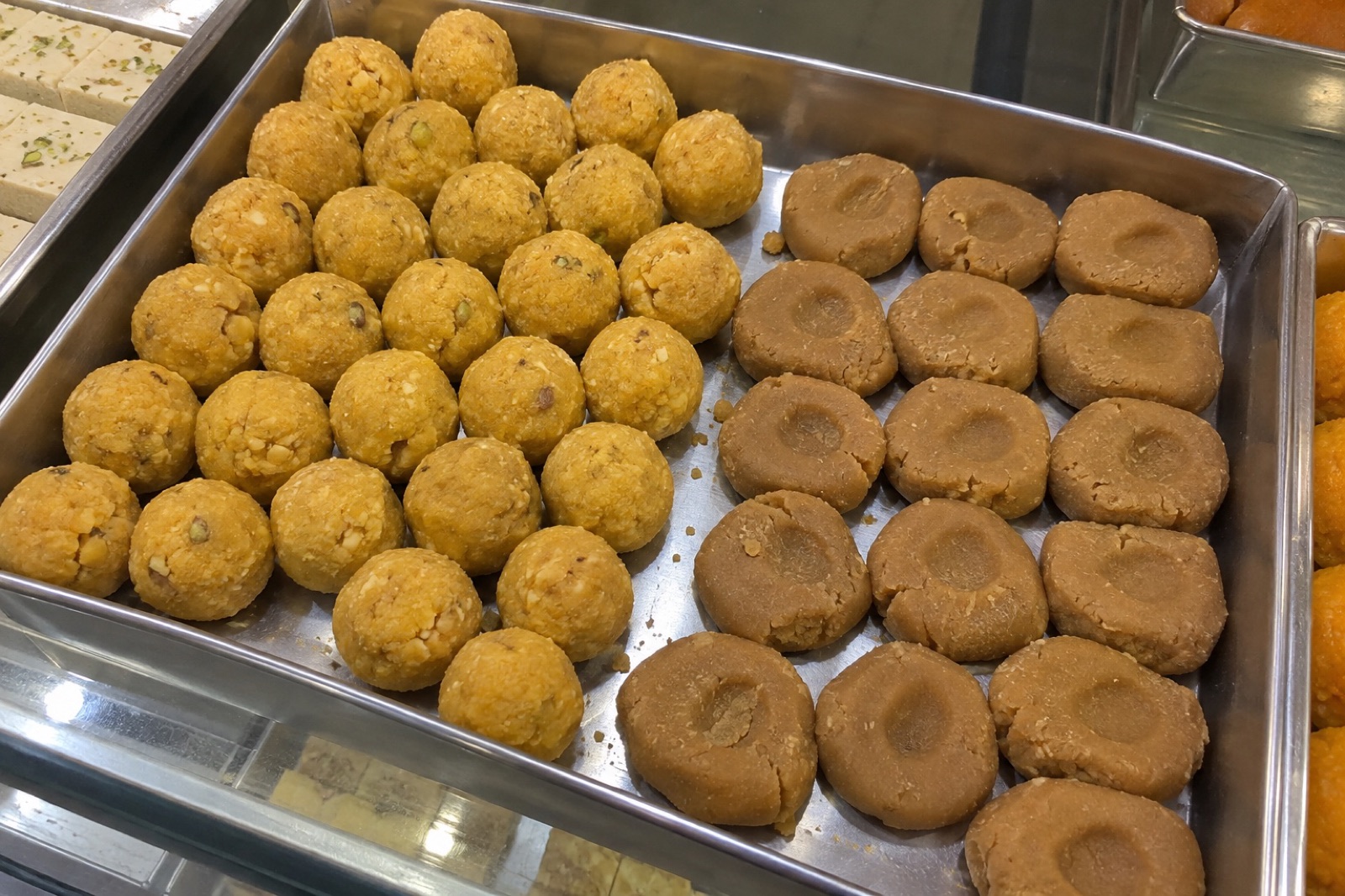
Besan Laddoo & Peda
VegBesan laddoo and khoya peda — the temple prasad and sweet-shop staples of Ayodhya, offered at Hanuman Garhi.
₹200–400 / kg
Eat in Ayodhya
Search Ayodhya dishes by craving — besan laddoo & peda, kachori with aloo sabzi, lassi and more.
Ayodhya eats simple, vegetarian food, much of it cooked without onion or garlic. Think fried breakfasts, plain thalis and a lot of sweets made for the temples.
Popular cravings
Diet
Best for
5 Ayodhya dishes found
Besan laddoo and khoya peda — the temple prasad and sweet-shop staples of Ayodhya, offered at Hanuman Garhi.
₹200–400 / kg
 Medium spice
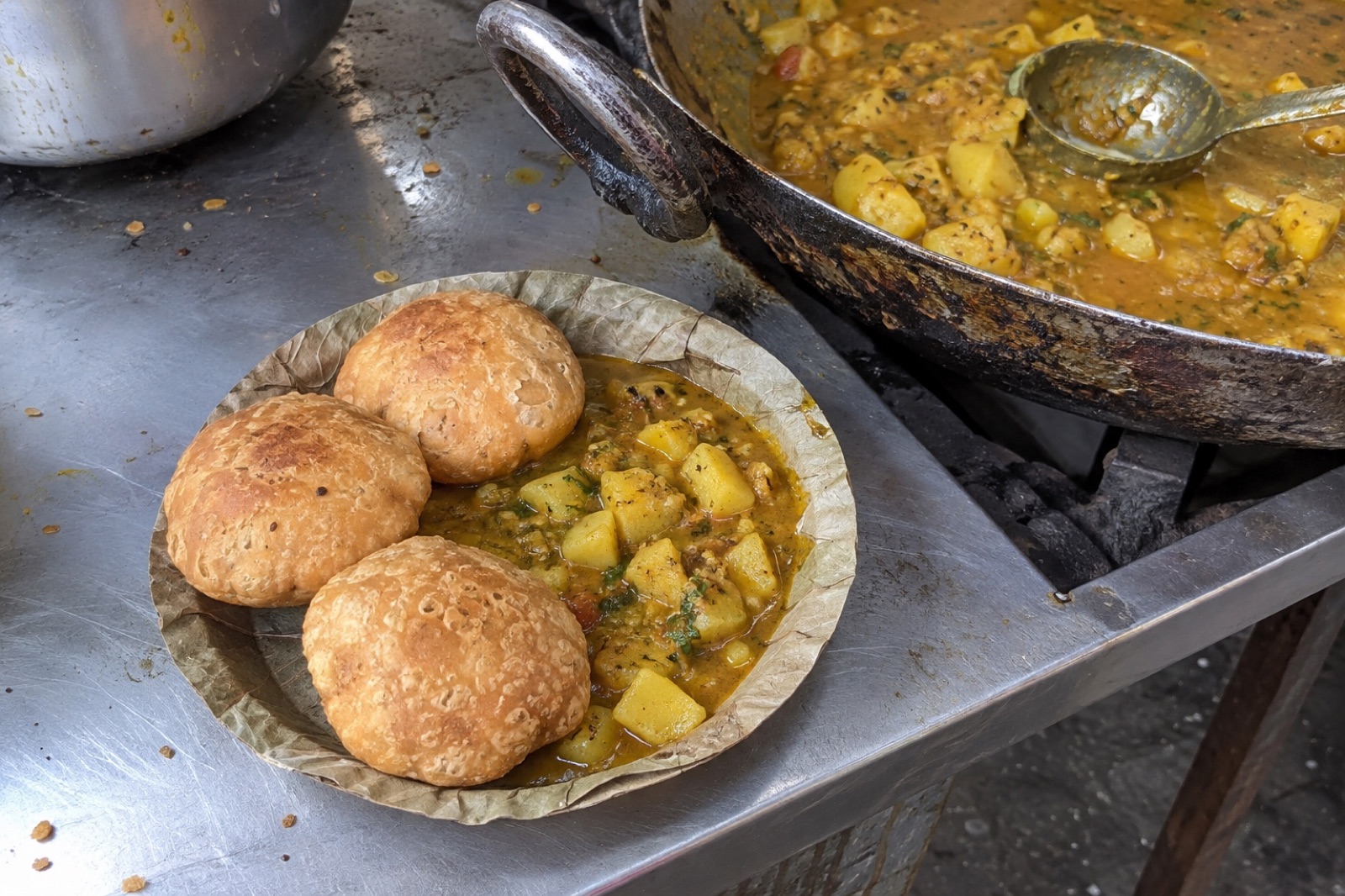
Crisp, flaky kachoris with a spiced potato sabzi — the classic Awadhi-Purvanchali pilgrim breakfast.
₹40–90
Best around: Faizabad (Ayodhya) and Ayodhya
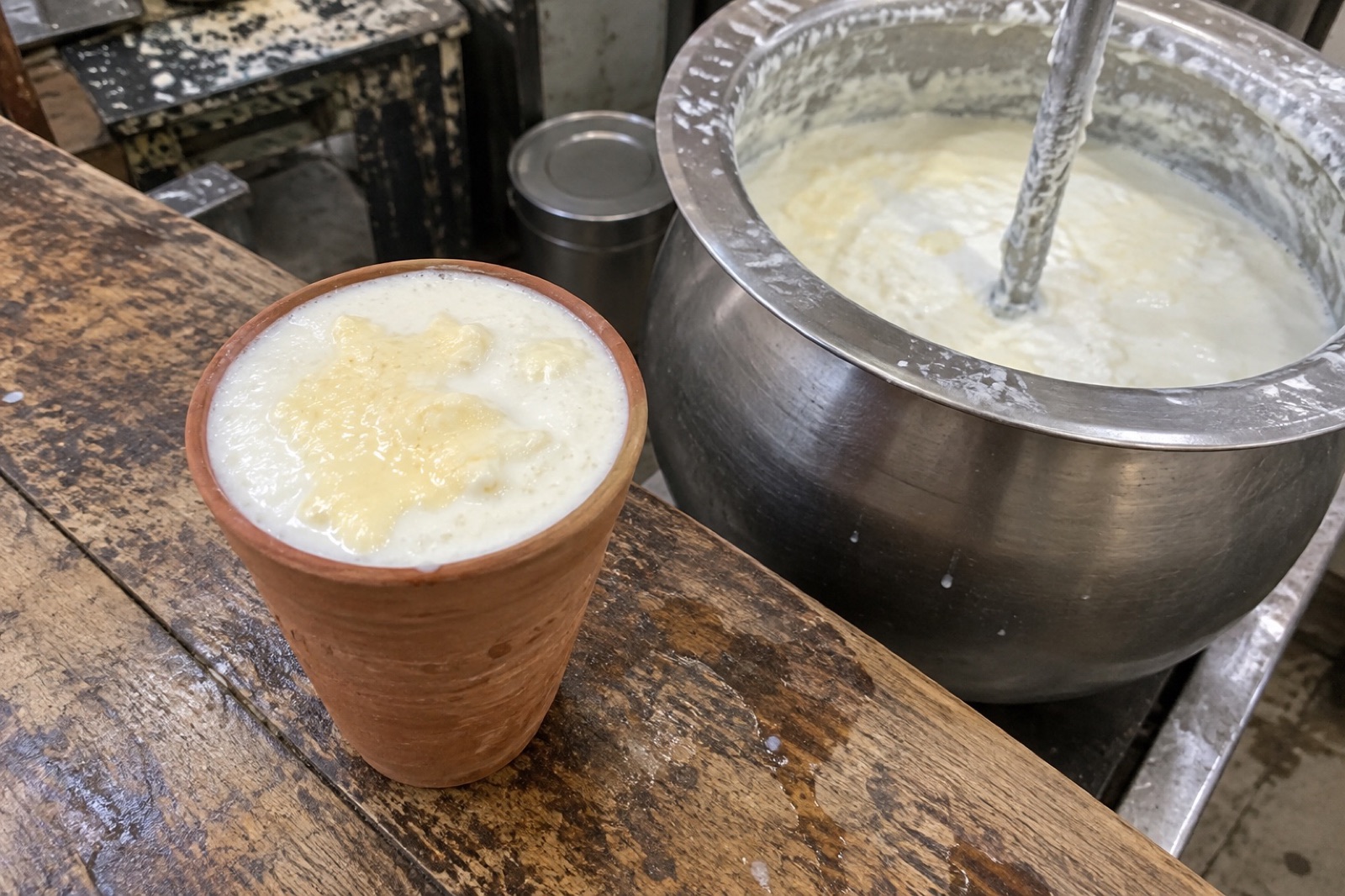
Thick, malai-topped sweet lassi in a clay cup — cooling refreshment between darshans.
₹40–100
Best around: Faizabad (Ayodhya)
 Medium spice
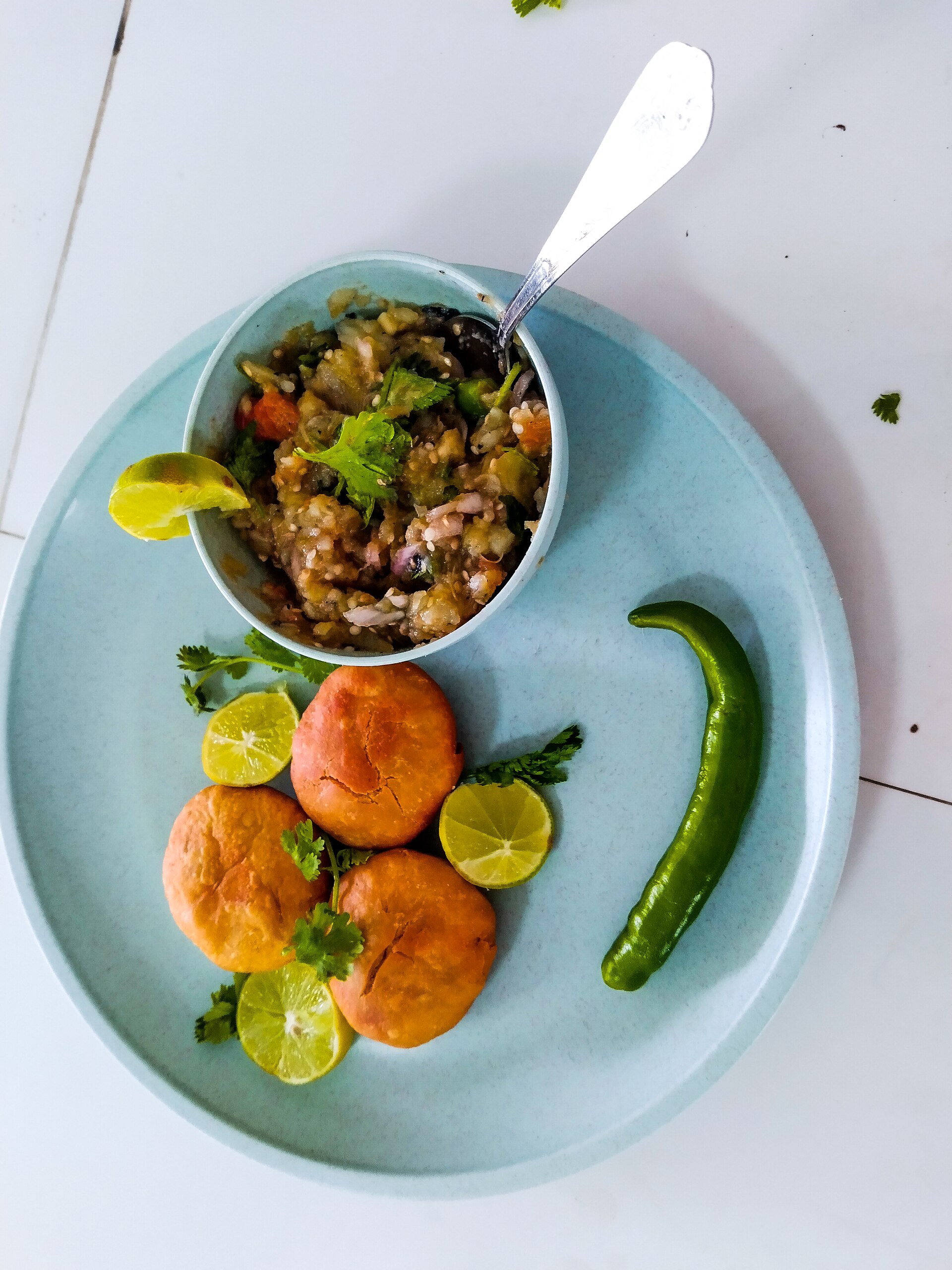
Roasted sattu-stuffed wheat balls with mashed roasted-vegetable chokha and ghee — hearty Purvanchali fare.
₹60–150
Best around: Near Ram Path
 Mild
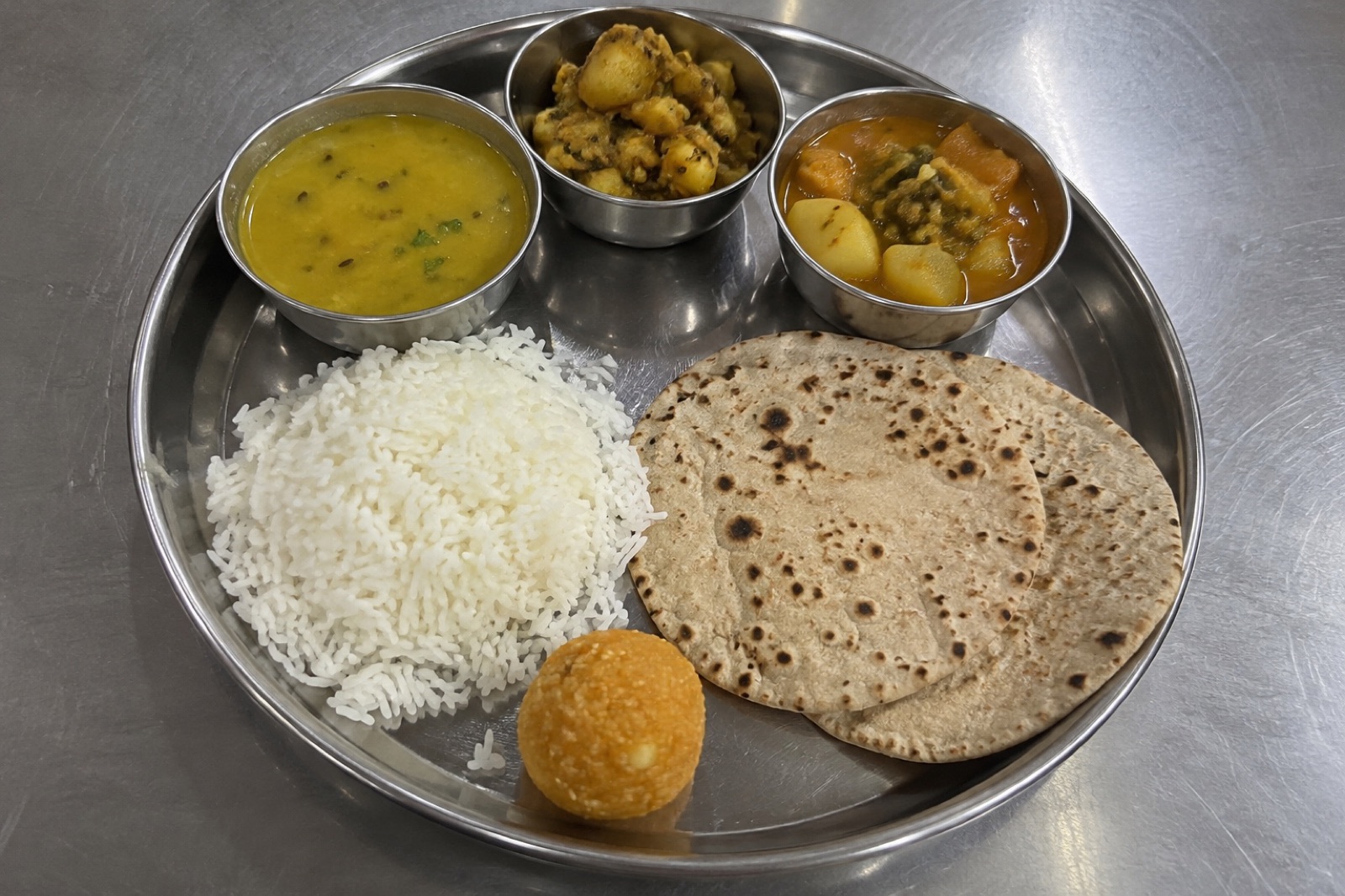
A simple pure-veg (satvik) thali of dal, seasonal sabzi, rice, roti and a sweet — the pilgrim's meal of Ayodhya.
₹100–250
Best around: Near Ram Path and Ayodhya
Mornings in Ayodhya start with kachori and aloo sabzi: flaky fried bread served with a spiced potato curry, usually in a leaf bowl. The stalls around Hanuman Garhi fry them from early morning, and the best batches go by mid-morning. Eat them before a temple queue rather than after; the queues are long.
Lunch is usually a satvik thali, meaning it is cooked without onion, garlic, meat or eggs. Expect dal, one or two seasonal vegetables, rice, roti and a small sweet. It is plain food, meant to be easy on a long day of walking. Bhojnalayas, simple dining halls, serve it near Kanak Bhawan and along Ram Path, and some community kitchens hand out a free meal at lunchtime.
Litti chokha comes from the Purvanchal and Bihar side of the region: balls of wheat dough stuffed with sattu, roasted gram flour, and baked, served with a smoky mash of roasted aubergine, tomato and potato, and a spoon of ghee. It is filling and not very spicy. A tall lassi in a clay cup, topped with a thick layer of cream, is the drink between temples in the warm months.
Besan laddoo, a round sweet of roasted gram flour, ghee and sugar, is the offering at Hanuman Garhi. Pilgrims buy a box at the foot of the steps, offer it at the shrine and take the rest home. Khoya peda, made from milk, is the other staple. Sweet shops pack both for travel.
Meat and alcohol are off the menu around the temples. The civic body has banned their sale along Ram Path and the parikrama roads, and hotels in the pilgrim area have been told not to serve them. See where to eat for places that cook these dishes well.
Questions
Vegetarian food cooked without onion, garlic, meat or eggs, and usually with mild spicing. It is the standard in temple kitchens and many bhojnalayas in Ayodhya.
You buy it to offer at the shrine, and most of the box comes back to you as prasad. Pilgrims eat some and share the rest with family at home.
Yes. The filling is sattu, roasted gram flour, and the chokha is a mash of roasted vegetables. It is served with ghee, not meat.
Yes, at most restaurants, but not at temple kitchens and some bhojnalayas. Ask when you order if you want your food without them.