
What to Wear in Bishnupur
Bishnupur is a day of walking between brick temples in the open, with little shade in between. Dress for the sun first, then for the photos, and leave room in your bag for a saree.
Trending wear
Modern, Instagram-friendly looks
Traditional wear
Local cultural outfits
Dress for open ground
The temples stand on lawns and laterite paths, and you spend most of the visit outside. Loose cotton or linen in pale colours keeps you cooler than anything synthetic, and a hat or umbrella helps between sites. The laterite is uneven and gritty, so wear sandals or shoes that grip rather than thin slippers. Carry a scarf or stole for the working temples.
At the temples
Most of the ticketed monuments are viewed from outside and around the plinth, but modest dress still fits the setting. At Madan Mohan and the Mrinmoyee temple, where worship continues, cover your shoulders and knees and take off your shoes before the shrine. Slip-on shoes save time when you do this several times a day.
Colours that suit the brick
The terracotta is red and rust, so off-white, cream, mustard, teal and deep green stand out against it. Head-to-toe red tends to vanish into the walls. A block-printed or handloom kurta also looks at home here.
The Baluchari saree
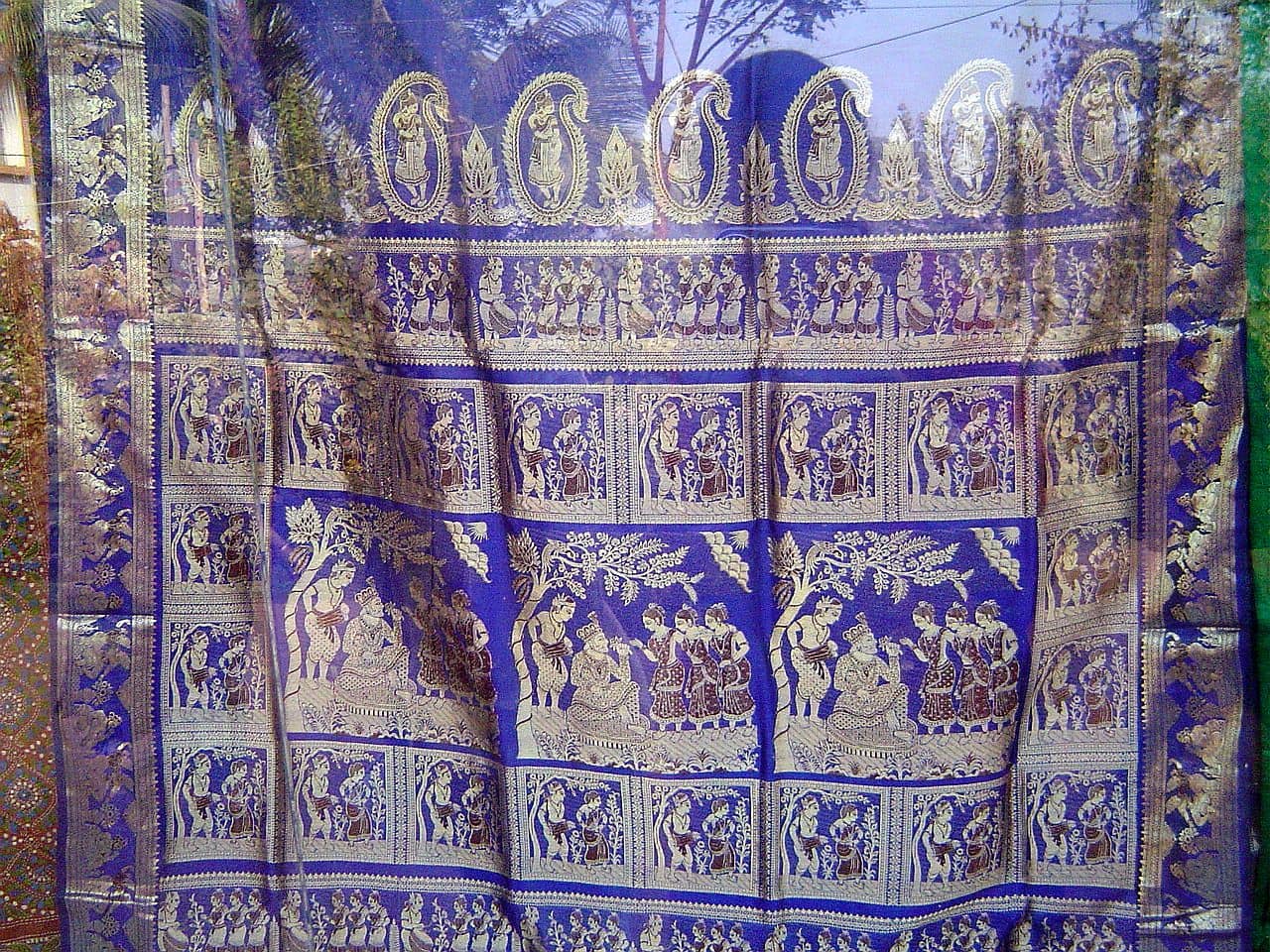
The Baluchari is a silk saree whose pallu is woven with whole scenes from the Ramayana and Mahabharata. It began in Baluchar in Murshidabad district, but authentic Baluchari saris are now produced only in and around Bishnupur. The craft was revived in the early twentieth century and is woven on jacquard looms, with one saree often taking about a week. The Swarnachari is the richest version, woven with gold- or silver-coloured zari. The Baluchari received a Geographical Indication tag in 2011.
Buying one
Visit a weaver's workshop in town if you can, and ask to see a saree on the loom. Look at the pallu closely: good pieces show clear figures and neat borders. Prices vary widely with silk quality and zari, so compare a few shops before you buy.
Through the year
From November to February, mornings and nights are cool, so pack a light jacket or shawl. From April to June it is very hot; cover up against the sun rather than stripping down. In the monsoon, quick-dry clothes and shoes with grip help on wet laterite. The best time to visit page has the seasons in detail.
Questions
Bishnupur — FAQ
What is a Swarnachari saree?
It is the richest form of the Baluchari, woven with gold- or silver-coloured zari thread instead of plain silk for the figures. It costs more and is usually worn for weddings and festivals.
How long does it take to weave a Baluchari saree?
On a jacquard loom a saree usually takes around a week, often with two weavers working in shifts. Intricate pallus and zari work can take longer.
Do I need to cover up at the Bishnupur temples?
At the working temples, such as Madan Mohan and Mrinmoyee, yes: cover your shoulders and knees and remove your shoes. The ticketed monuments are more relaxed, but modest clothing still suits them.