
Temples in Dwarka
Dwarka is one of the Char Dham, the four holiest pilgrimage sites in Hinduism, and one of the seven sacred cities of the Sapta Puri. For devotees of Krishna, it is the kingdom he ruled after leaving Mathura, and almost every temple in and around the town is tied to his story, from his own Jagat Mandir to the temple of his queen, Rukmini.
These are working places of worship, not museums. The Dwarkadhish Temple bans phones inside and asks visitors to dress modestly, most temples close for a few hours in the afternoon, and festival days bring long queues. Follow the rules posted at each entrance.
On Bet Dwarka
A temple within Bet Dwarka, with its own deity and its own rules.
Elsewhere in Dwarka

Famous Temples in Dwarka
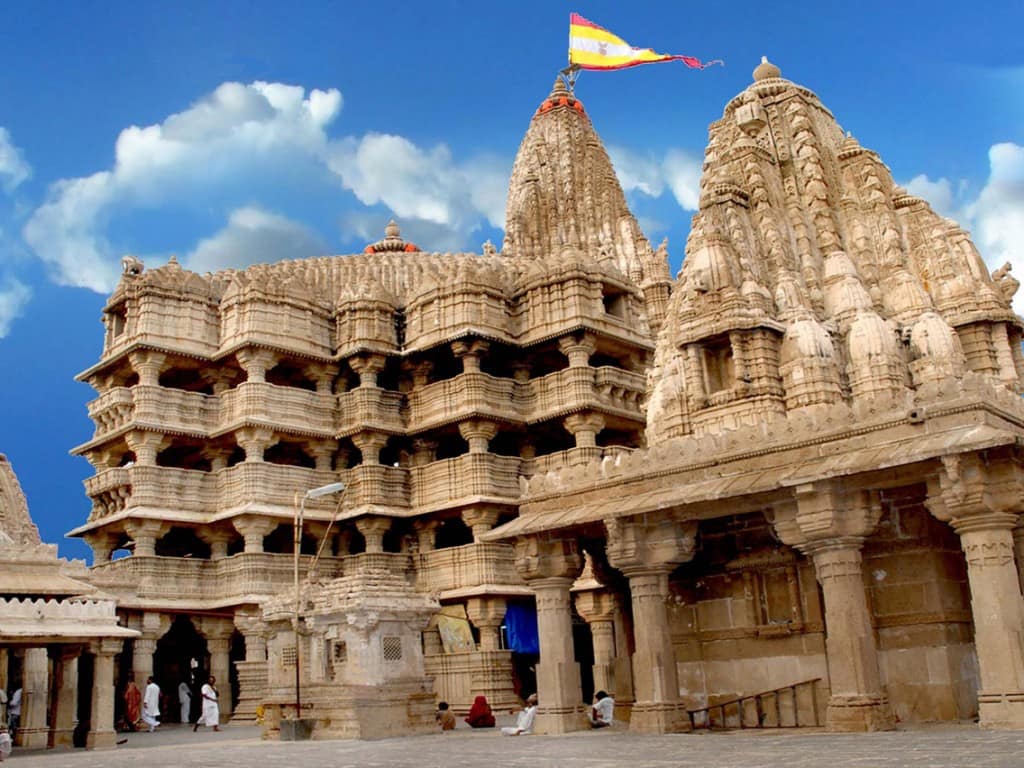
Dwarkadhish Temple, also called the Jagat Mandir, is the heart of the town. The five-storey temple of carved stone stands on 72 pillars above Gomti Ghat, and the long flag on its spire is changed several times a day. Pilgrims climb 56 steps from the river to enter through the Swarga Dwar and leave through the Moksha Dwar into the market.
Rukmini Devi Temple, about 2 km outside town, is dedicated to Krishna's chief queen. Its walls are covered in carved gods, human figures and elephants, and a legend about the sage Durvasa's curse explains why Rukmini's temple stands apart from Krishna's.
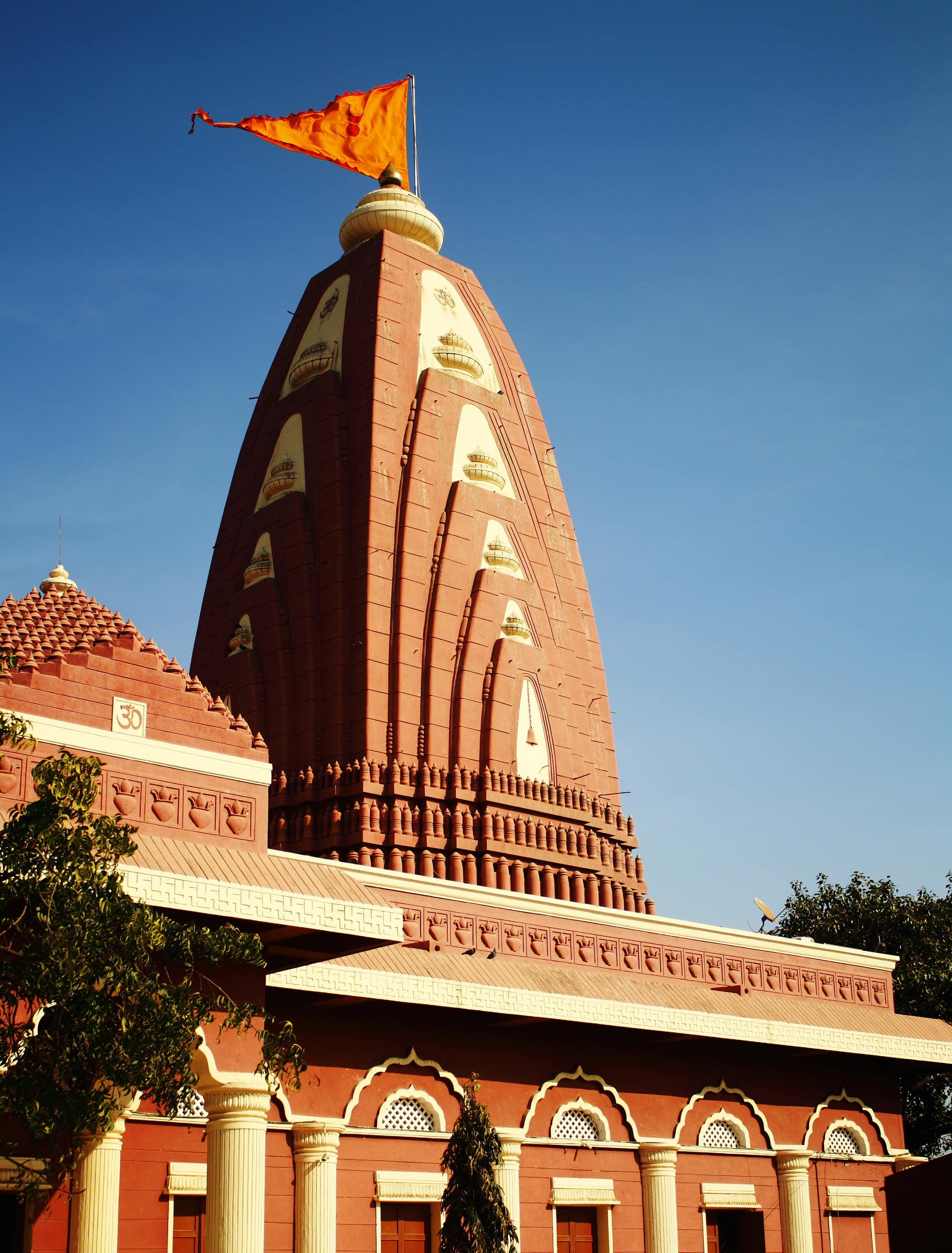
Nageshwar Jyotirlinga, about 16 km away on the road to Okha, is one of the twelve Jyotirlingas of Shiva. A giant seated Shiva statue, about 25 m tall, rises over the temple grounds.
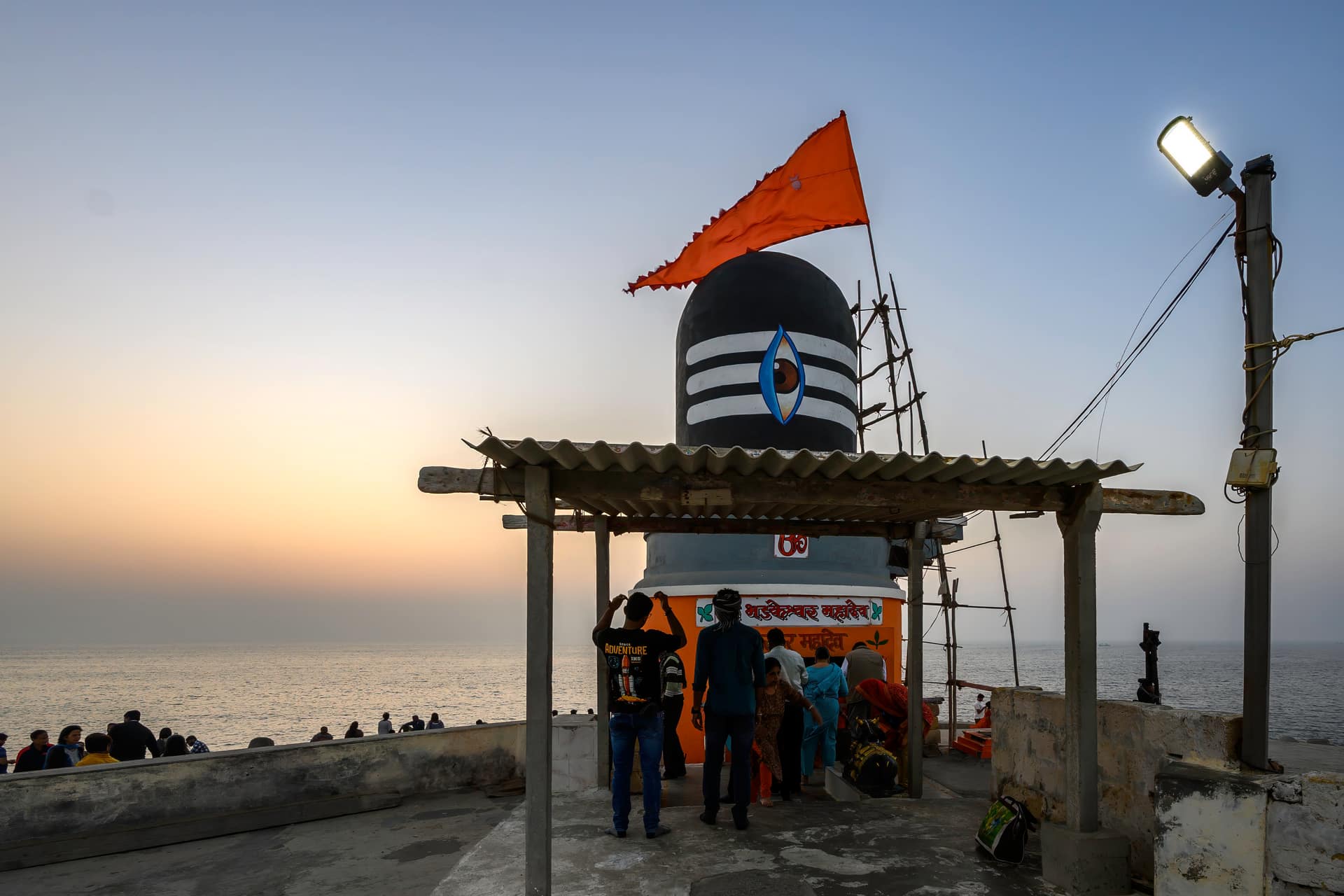
Bhadkeshwar Mahadev Temple is a small Shiva shrine on a rocky outcrop in the sea, about 1 km from the Dwarkadhish Temple. At high tide the water surrounds the rock, and the shore nearby is a popular place to watch the sunset. It is busiest at Mahashivratri.
Bet Dwarka, the island believed to have been Krishna's home, has its own Dwarkadhish temple and the Shri Keshavraiji Temple close together, and Hanuman Dandi, one of the few temples where Hanuman is worshipped with his son, Makardhwaja. The island is now reached by road over the Sudarshan Setu.
Tips for Visiting Temples in Dwarka
- Leave your phone and camera at the deposit counters before you enter the Dwarkadhish Temple; the police enforce the ban.
- Wear modest clothes that cover your shoulders and knees. The Dwarkadhish Temple asks visitors not to wear shorts, mini skirts or ripped jeans.
- The Dwarkadhish Temple is usually open from 6:30 am to 1 pm and from 5 pm to 9:30 pm, and its doors close for short spells during the day for rituals.
- Visit Bet Dwarka in the morning, as its temples close for a few hours in the afternoon.
- Leave your shoes at the counters outside, and go early, before the stone floors heat up.
- If you want to sponsor a flag at the Dwarkadhish Temple, book it only through the temple's official channels.
- Timings change on festival days, especially at Janmashtami, so check before you go.
Questions
Dwarka — FAQ
What are the famous temples in Dwarka?
The best-known temples are the Dwarkadhish Temple, the Rukmini Devi Temple, Nageshwar Jyotirlinga and Bhadkeshwar Mahadev, along with the Krishna temples and Hanuman Dandi on Bet Dwarka.
What is not allowed inside the Dwarkadhish Temple?
Phones and cameras are banned inside, and the police enforce the rule, so leave them at the deposit counters with your shoes. The temple also asks visitors not to wear shorts, mini skirts, sleeveless tops or ripped jeans. Leather belts and bags may be refused too.
Do temples in Dwarka close in the afternoon?
Yes. The Dwarkadhish Temple usually closes from 1 pm to 5 pm, and the Rukmini Devi Temple and the temples on Bet Dwarka also close for a few hours in the afternoon. Plan darshan for the morning or evening, and check timings on festival days.
What is Bhadkeshwar Mahadev Temple known for?
It is a small Shiva temple on a rocky outcrop in the sea, about 1 km from the Dwarkadhish Temple. At high tide the water surrounds the rock, and the shore beside it is a popular place for sunset. It draws its biggest crowds at Mahashivratri.