
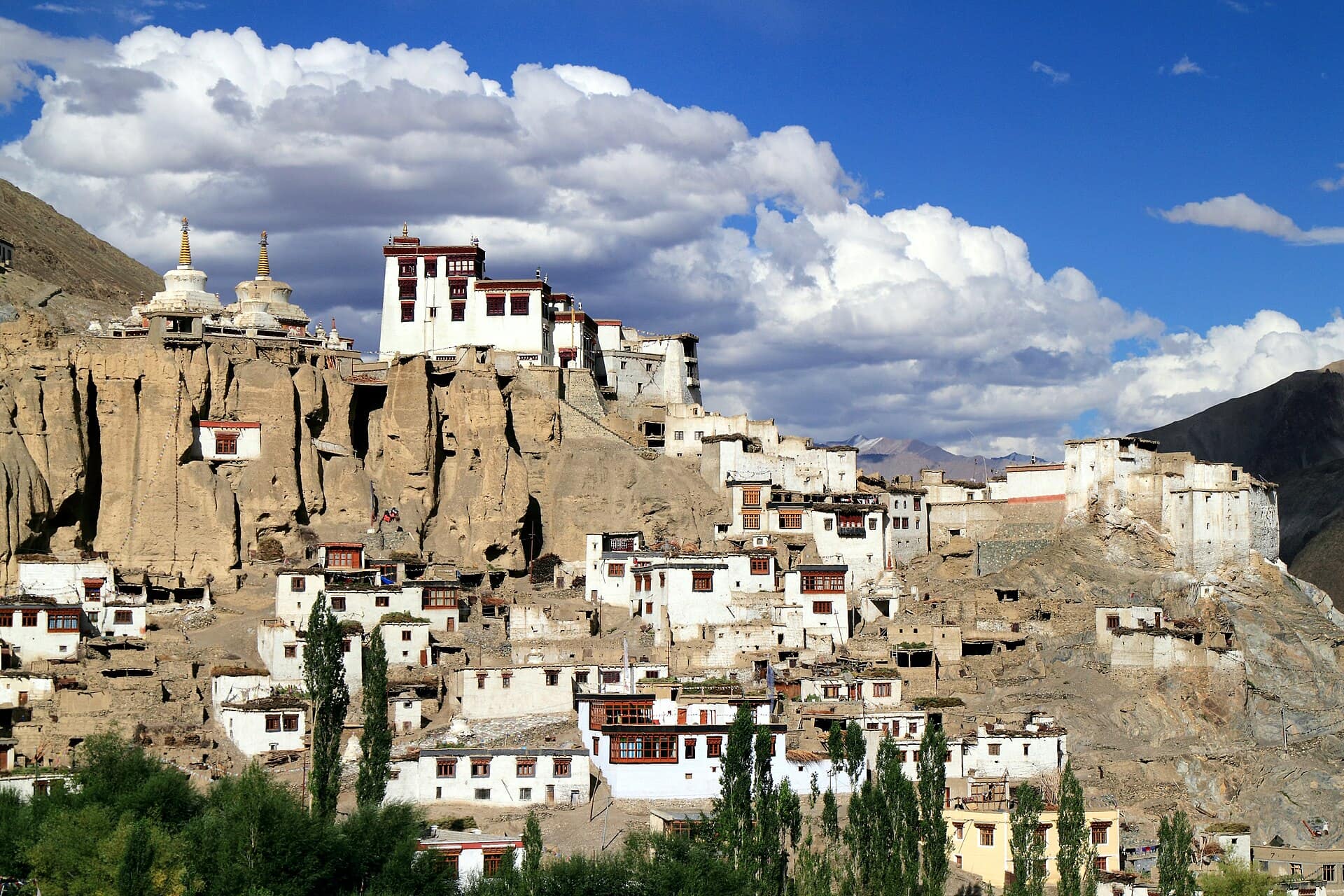
Photo spot in Lamayuru
Lamayuru Village
Lamayuru, Ladakh
The small farming village below the monastery, with barley terraces, mud-brick houses and homestays clinging to the slopes amid the moonland — a peaceful base steeped in Ladakhi rural life.
Best time
Late afternoon, when warm light falls across the houses and fields; early morning for smoke from kitchen fires and quiet lanes.
Best angle
Walk to the lanes below the monastery and take a photo looking up over the flat-roofed houses, with the gompa on its crag at the top of the frame.
Entry fee
Free
Opening hours
Open access
Crowd level
Low
Best outfit colors
Overview
Best time to visit Lamayuru Village
Late afternoon, when warm light falls across the houses and fields; early morning for smoke from kitchen fires and quiet lanes. Crowds here are typically low. Arrive a little early to claim your angle and catch the softest light before the day tips over.
Poses & angles
Photo tips for Lamayuru Village
Walk to the lanes below the monastery and take a photo looking up over the flat-roofed houses, with the gompa on its crag at the top of the frame. Work a few of the pose ideas below, shoot wide for context and tight for detail, and give yourself a couple of extra minutes to get the frame right.
In the barley terraces
On the village lanes
Outfit guide
What to wear at Lamayuru Village
For photos at Lamayuru Village, rust, cream and forest green work beautifully — they stand out against the setting without fighting it. Pick one hero colour and keep the rest of the look calm so you stay the subject of the frame.
Best outfit colors for photos
Trending wear for this spot
Popular modern looks travellers are wearing across Lamayuru.
Traditional wear for this spot
Timeless, cultural looks that suit Lamayuru Village.
Eat nearby
Food near Lamayuru Village
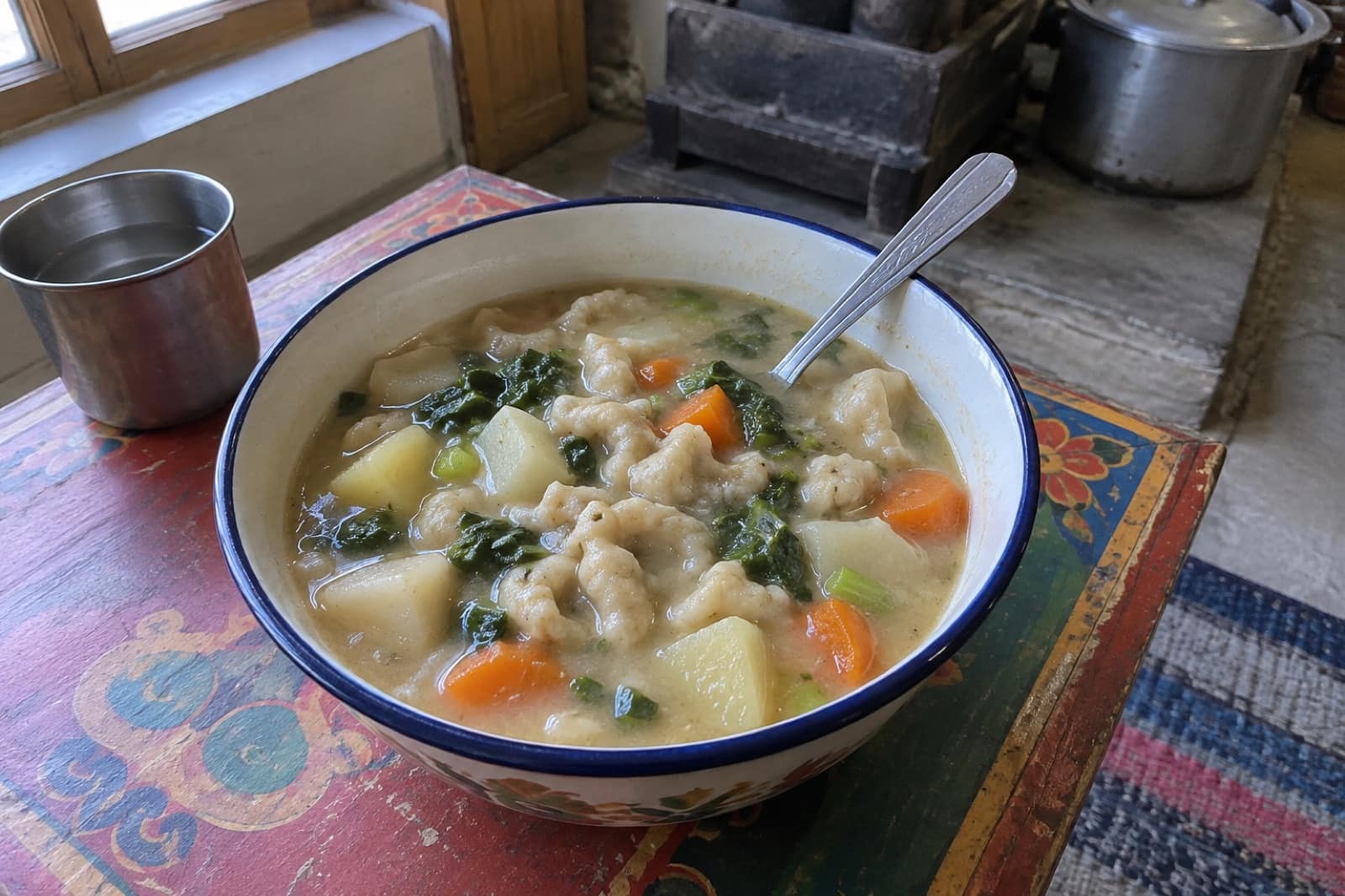
Round out the visit with something to eat. Look for skyu nearby, or settle in at one of the 1 restaurants close by.
Special dishes to try
Restaurants & food places nearby
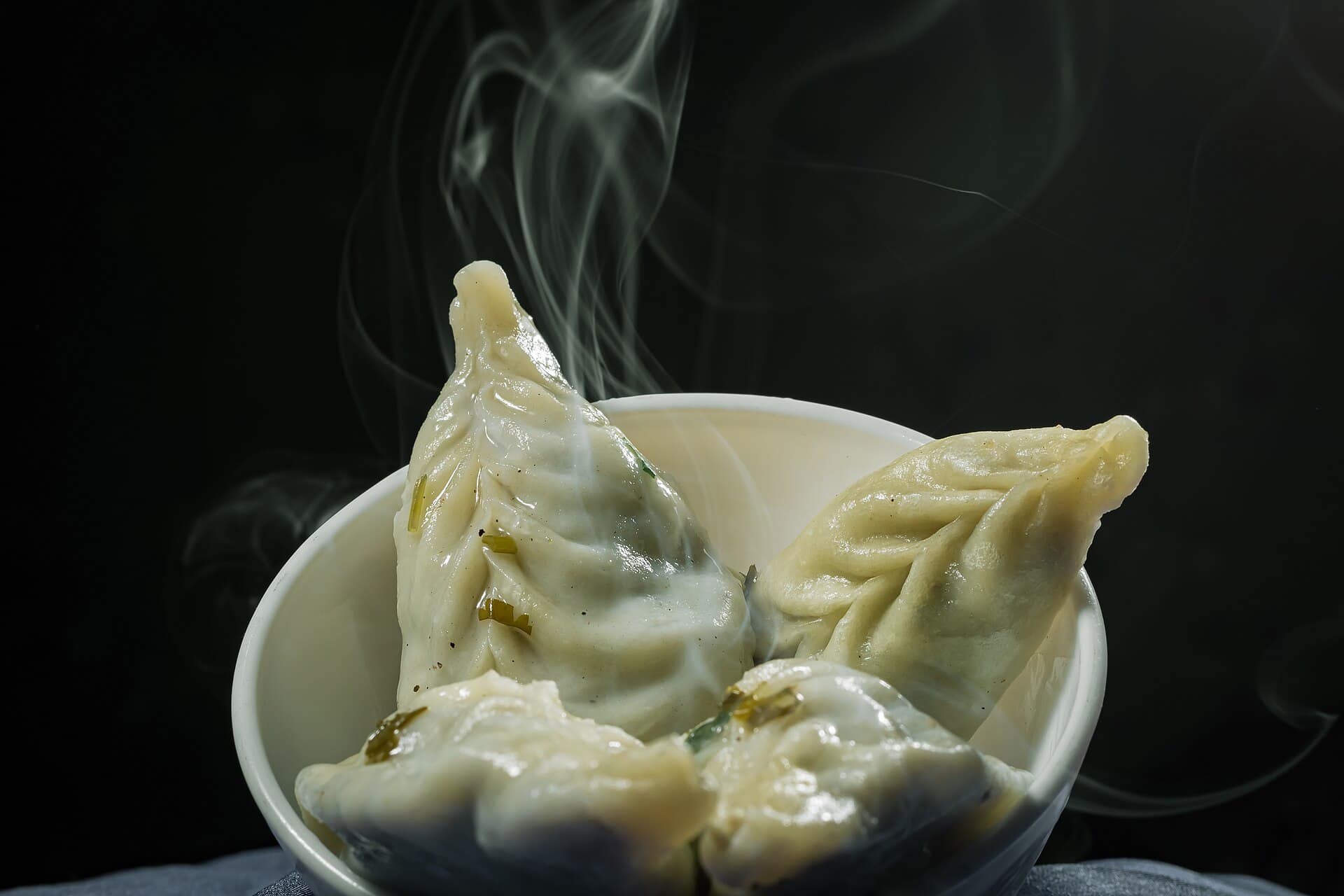
Search food by craving
Good to know
Local tips
Stay a night in a homestay, which lets you see the monastery at dawn and dusk.
Pass chortens and mani walls with them on your right, walking clockwise.
Ask before photographing villagers, and do not point your camera into open doorways.
Keep to the edges of fields and never walk through crops, especially at harvest time.
Carry cash in small notes, as cards and mobile payments are unreliable here.
Bring a torch, since lanes are unlit at night and power cuts happen.
Refill a water bottle with boiled or filtered water at your homestay instead of buying plastic.
Life below the gompa
Lamayuru village clings to the slope beneath the monastery. It is small, with flat-roofed houses of mud brick and stone, walls stacked with firewood and dried dung for winter fuel, and narrow lanes that twist uphill. Barley and a few vegetables grow on terraces where water can reach them. In the day you will see farmers, children and monks crossing between houses.
The farming year
The fields change the look of the place. From June they are green; by late August and into September they turn gold, and the village is busy with cutting and threshing. Winter empties the fields and many families move indoors to the warm kitchen. Livestock matters too: yak-cow crosses, goats and sheep that graze the higher slopes.
Staying here
Homestays and guesthouses are the reason to spend a night. You sleep in a family home, eat what the kitchen makes and wake early enough to catch the monastery at dawn. Rooms are simple. Hot water may come in a bucket, and power can be patchy. Book ahead around Yuru Kabgyat in June. Treks south towards Zanskar and east towards the Sham valley start here, so you may meet trekkers.
Walking the lanes
There are no sights to tick off in the village, and that is the point. Walk up and down the lanes, pass the chortens and mani walls with them on your right, and follow the path to the edge of the moonland. Ask before photographing people and never walk into a courtyard or a field uninvited. Keep your voice down near houses early and late.
Questions
Lamayuru Village — FAQ
What is the best time to visit Lamayuru Village?
Late afternoon, when warm light falls across the houses and fields; early morning for smoke from kitchen fires and quiet lanes. Walk to the lanes below the monastery and take a photo looking up over the flat-roofed houses, with the gompa on its crag at the top of the frame.
Is there an entry fee at Lamayuru Village?
Entry to Lamayuru Village is free.
What are the opening hours of Lamayuru Village?
Lamayuru Village is open access.
What should I wear at Lamayuru Village?
Rust, cream and forest green photograph especially well here. Explore the trending and traditional outfit ideas on this page for full looks.
How crowded does Lamayuru Village get?
Crowd levels are typically low. To miss the busiest window: late afternoon, when warm light falls across the houses and fields; early morning for smoke from kitchen fires and quiet lanes.
What food should I try near Lamayuru Village?
Try skyu, available at nearby restaurants.
Are there homestays in Lamayuru village?
Yes, several families take guests, alongside a few guesthouses. Rooms are simple and meals are usually included or offered.
When are the barley fields golden?
Usually from late August into September, just before and during the harvest.
Is there an ATM in Lamayuru?
Do not count on one. Carry enough cash from Leh or Kargil for rooms, food and monastery fees.
Can I start a trek from Lamayuru?
Yes. Several routes start here, including treks towards Zanskar and the Sham valley. Arrange guides and ponies in Leh or in the village.