
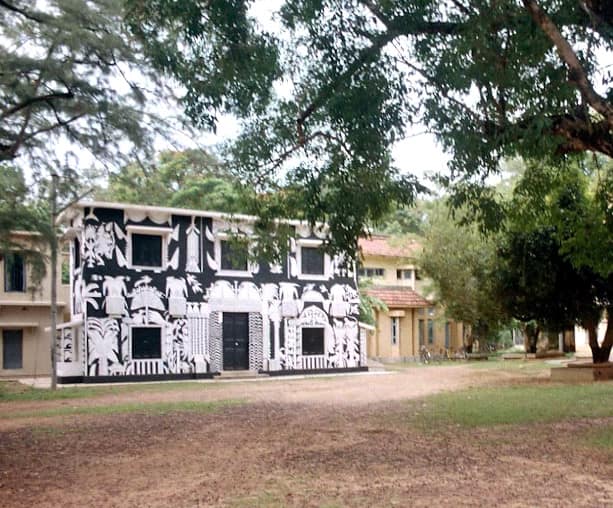
Photo spot in Shantiniketan
Kala Bhavana
Shantiniketan, West Bengal
The renowned art school of Visva-Bharati, dotted with open-air murals, frescoes and sculptures by Nandalal Bose, Ramkinkar Baij and other masters.
Best time
Late afternoon, when low sun picks out the rough texture of Ramkinkar's sculptures; early morning for soft light and empty lanes.
Best angle
Stand low and a few metres back from a sculpture, and take the photo upwards so the figure stands against the trees and sky.
Entry fee
Free (galleries vary)
Opening hours
Campus hours
Crowd level
Medium
Best outfit colors
Overview
Best time to visit Kala Bhavana
Late afternoon, when low sun picks out the rough texture of Ramkinkar's sculptures; early morning for soft light and empty lanes. Crowds here are typically medium. Arrive a little early to claim your angle and catch the softest light before the day tips over.
Poses & angles
Photo tips for Kala Bhavana
Stand low and a few metres back from a sculpture, and take the photo upwards so the figure stands against the trees and sky. Work a few of the pose ideas below, shoot wide for context and tight for detail, and give yourself a couple of extra minutes to get the frame right.
By the campus murals
Near the open-air sculptures
Outfit guide
What to wear at Kala Bhavana
For photos at Kala Bhavana, rust, cream and indigo work beautifully — they stand out against the setting without fighting it. Pick one hero colour and keep the rest of the look calm so you stay the subject of the frame.
Best outfit colors for photos
Trending wear for this spot
Popular modern looks travellers are wearing across Shantiniketan.
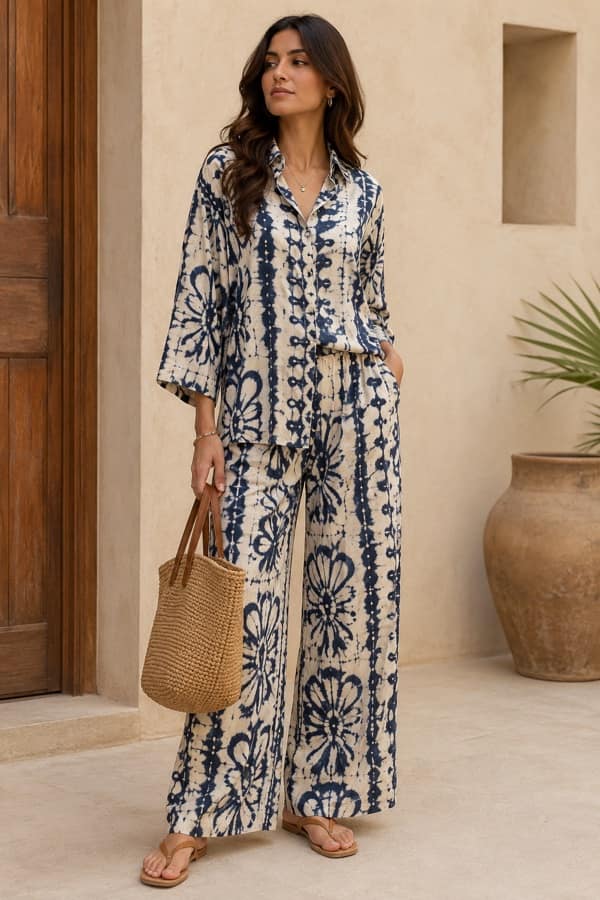
Traditional wear for this spot
Timeless, cultural looks that suit Kala Bhavana.
Eat nearby
Food near Kala Bhavana
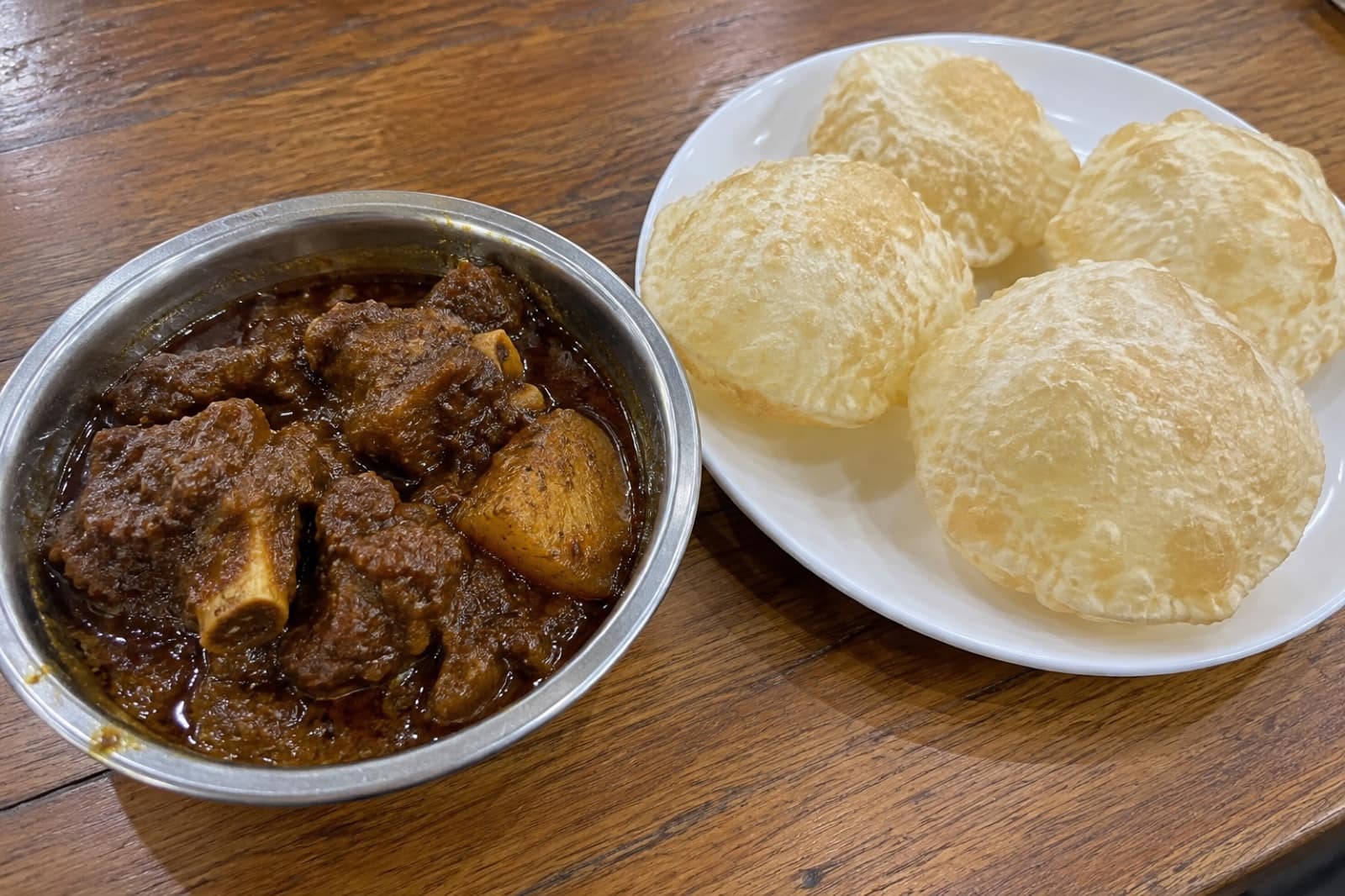
Round out the visit with something to eat. Look for kosha mangsho nearby.
Special dishes to try
Search food by craving
Good to know
Local tips
Ask at the gate which parts are open to visitors that day before you walk in.
Look for Ramkinkar Baij's Santal family group, which stands in the open among trees.
Stay out of the studios and classrooms unless a student or teacher invites you in.
Go on 1 or 2 December for Nandan Mela if you want to buy art straight from students.
Check the Nandan gallery's current exhibition and hours before planning around it.
Carry cash for Nandan Mela, as many student stalls do not take cards.
Combine the visit with Alcha Café in nearby Ratanpalli for a coffee afterwards.
India's art school in the open air
Tagore founded Kala Bhavana in 1919 as the fine arts faculty of Visva-Bharati. Nandalal Bose became its first principal in 1923, and with Benode Behari Mukherjee and the sculptor Ramkinkar Baij he shaped a style of Indian modern art rooted in village life and local materials. Artists from Kala Bhavana later illustrated the original manuscript of the Constitution of India.
Sculptures and murals
The school's great gift to visitors is that much of its art stands outdoors. Ramkinkar Baij's large cement figures show Santal workers as he saw them around Shantiniketan: a family walking with their dog, labourers hurrying to the mill at the call of the siren, a woman in a long stride. They are rough-surfaced and full of movement, and trees have grown up around them. Kalo Bari, the Black House, is a mud building coated in coal tar and covered in relief panels made by students. Inside the buildings, the walls carry frescoes and murals by Nandalal Bose and Benode Behari Mukherjee.
The Nandan gallery
Nandan, the college museum, holds a large collection of works by Indian and East Asian masters and changes its displays through the year. Check what is on show and when it is open before you go.
Visiting a working college
Kala Bhavana is a busy art school, not a museum. Students work in the courtyards and studios, and some areas are off limits to casual visitors. Several of Ramkinkar's sculptures stand beside campus roads and can be seen from there. Ask at the gate about what is open to visitors on the day, and don't walk into studios.
Nandan Mela
The best time to see the school at its liveliest is Nandan Mela on 1 and 2 December, Nandalal Bose's birth anniversary, when students show and sell their work. For more of Tagore's world, walk on to Uttarayan or book the Visva-Bharati heritage walk.
Questions
Kala Bhavana — FAQ
What is the best time to visit Kala Bhavana?
Late afternoon, when low sun picks out the rough texture of Ramkinkar's sculptures; early morning for soft light and empty lanes. Stand low and a few metres back from a sculpture, and take the photo upwards so the figure stands against the trees and sky.
Is there an entry fee at Kala Bhavana?
Entry to Kala Bhavana is free (galleries vary).
What are the opening hours of Kala Bhavana?
Kala Bhavana keeps campus hours.
What should I wear at Kala Bhavana?
Rust, cream and indigo photograph especially well here. Explore the trending and traditional outfit ideas on this page for full looks.
How crowded does Kala Bhavana get?
Crowd levels are typically medium. To miss the busiest window: late afternoon, when low sun picks out the rough texture of Ramkinkar's sculptures; early morning for soft light and empty lanes.
What food should I try near Kala Bhavana?
Try kosha mangsho at spots close by.
Who was Ramkinkar Baij?
A sculptor and painter who taught at Kala Bhavana and is seen as one of the founders of modern Indian sculpture. His large outdoor figures of Santal people are the best-known works on campus.
What is Kalo Bari?
The Black House, a mud building finished with coal tar and decorated with relief panels by Kala Bhavana students. It is one of the most unusual buildings in Shantiniketan.
Can visitors buy art at Kala Bhavana?
Yes, at Nandan Mela on 1 and 2 December, when students sell paintings, prints, ceramics and textiles.
When was Kala Bhavana founded?
In 1919, by Rabindranath Tagore. Nandalal Bose became its first principal in 1923.