
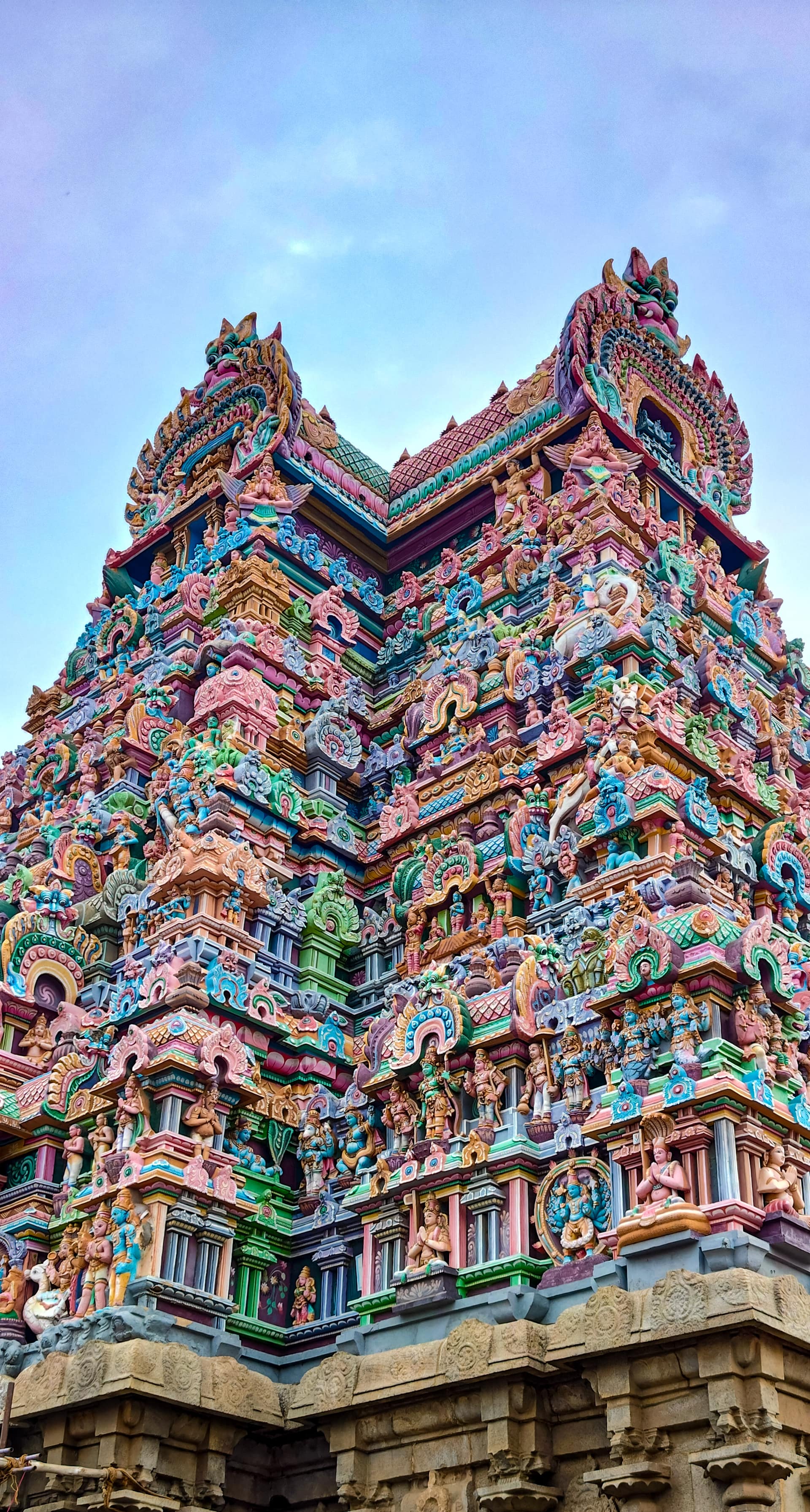
Temple in Tiruchirappalli
Sri Ranganathaswamy Temple, Srirangam
Tiruchirappalli, Tamil Nadu
The largest functioning Hindu temple in the world — seven concentric walls enclosing about 600 acres, with 21 gopurams and a working town living inside the outer enclosures. You do not visit this temple so much as walk into it and keep going.
Photo: Saimohan311 — CC BY 4.0, via Wikimedia Commons
Overview
Who it's to, and what's expected
Deity
Vishnu as Ranganatha
Tradition
Vishnu · Krishna temple
- Entry
Visitors must wear traditional attire, such as a dhoti or pyjama with a shirt for men, and a saree or salwar kameez for women. Photography is strictly prohibited inside the temple, and visitors must maintain silence near the sanctum.
- Footwear
Footwear must be left outside the temple premises.
- Access
The temple provides wheelchair support and designated resting spots in the outer corridors for senior citizens and those needing assistance.
- Prasadam
Simple prasadam counters are available for visitors just outside the temple streets.
Usually visited with
Time your visit
The darshan clock
A single opening-hours line cannot express a midday closure or an evening ceremony.
6:00 AM
Opening hours
The temple is open daily from 6:00 AM to 9:00 PM, with specific rituals including Suprabhatam at 6:00 AM, Vishwaroopa Darshan at 6:30 AM, Sayaratchai at 6:00 PM, and Ardha Jama Pooja at 8:30 PM. Darshan is temporarily paused during midday pooja from 12:00 PM to 1:15 PM.
Rules, timings and fees change — confirm locally before you rely on this.
How long this takes
Ways in
The difference between a twenty-minute visit and a three-hour one.
General darshan
- Free, running through the morning and evening sessions around the temple's ritual pauses
- The queue lengthens on festival days and at Vaikunta Ekadasi, when it is among the largest in South India
- Because the complex is seven concentric enclosures with over six miles of wall, the walking distance matters more than the queue
Vaikunta Ekadasi
- The Paramapada Vasal, the Gate of Heaven, opens at about 3:00 AM and Namperumal is carried through with hundreds of thousands of devotees following
- The overnight queue begins in the middle of the night, the town is at absolute capacity, and accommodation is booked out far in advance
Pagal Pathu and Ira Pathu
- The ten daytime and ten nighttime halves of the Vaikunta Ekadasi festival, together spanning about twenty-one days, with the first day of the night half being Vaikunta Ekadasi itself
- Processions run daily through the prakarams
At the gate
Before you go in
What gets refused, and what you cannot take past the door.
What to wear
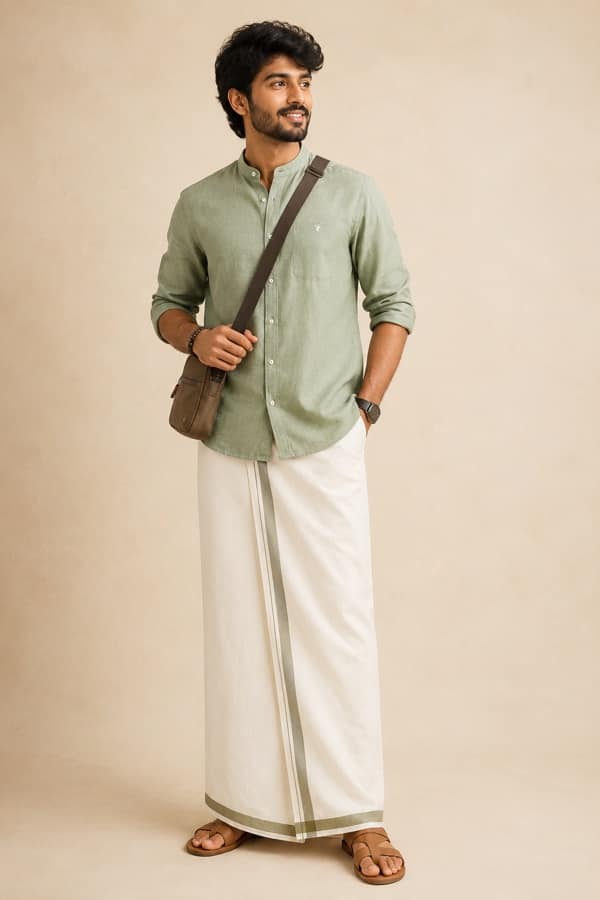
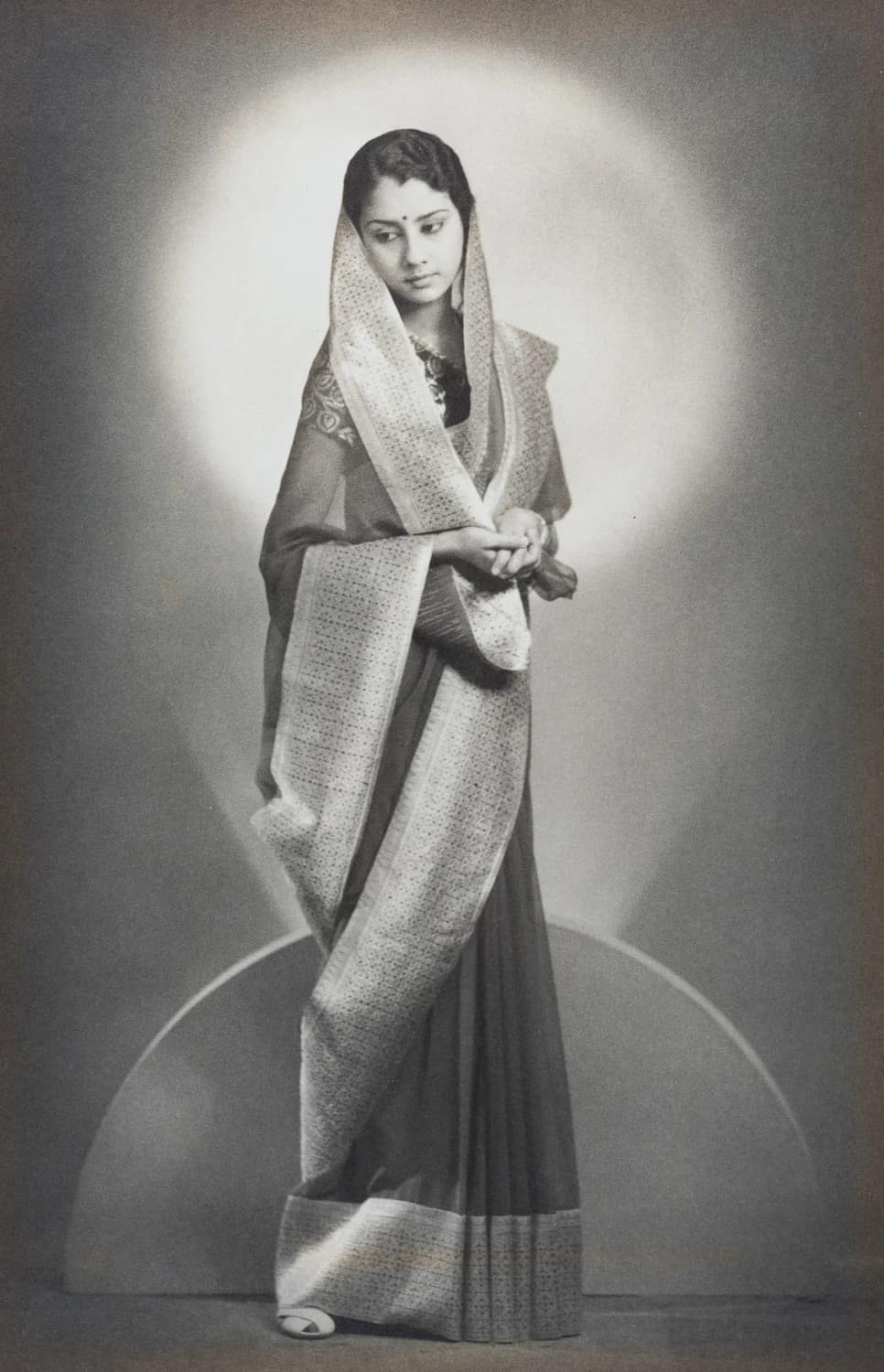
Visitors are expected to wear traditional clothing, such as a dhoti or pyjama with a shirt for men, and a saree or salwar kameez for women, while avoiding western casuals, shorts, and jeans.
Phones and cameras
Small purses and mobile phones are permitted, but photography is strictly forbidden inside the temple.
Rules, timings and fees change — confirm locally before you rely on this.
When not to come — unless you mean to
Festival windows
These follow lunar calendars and move by weeks each year, so the windows are months, not dates.
Vaikunta Ekadasi
Pagal Pathu and Ira Pathu
Temple car festival (Ther)
Jyeshtabishekam and Panguni Uttiram
Practicalities
The things that go wrong
Book through official channels, and treat anyone promising a guaranteed slot as a warning sign.
What to watch for
- Charging for entry, or selling a ticket for the thousand-pillar hall or any of the inner prakarams
- Darshan at Srirangam is free and the complex's principal spaces are part of the general visit
- Guides attaching themselves at a gopuram and producing a fee deep inside the complex
- Seven enclosures and over six miles of wall genuinely reward a knowledgeable guide, so arrange one in advance through your hotel at an agreed price rather than accepting whoever appears - and note that much of what you walk through is an inhabited town, not a monument
- Offering to take you through the Paramapada Vasal outside Vaikunta Ekadasi
- The Gate of Heaven is opened once a year, at about 3:00 AM on Vaikunta Ekadasi in December or January, and at no other time; no payment opens it
- Anyone offering paid photography inside the temple
- Photography is strictly prohibited, though small purses and mobile phones may be carried - carrying a phone does not mean using it, and no fee permits it
- Claims that shorts or jeans will be allowed with a wrap or a payment
- Traditional attire is required at a temple of Srirangam's standing, with a dhoti or pyjama and shirt for men and a saree or salwar kameez for women
- Prasadam sellers inside the temple streets inflating prices
- Prasadam counters are available just outside the temple streets, in the town that occupies the outer enclosures, at ordinary local rates
- Auto and taxi drivers quoting a fare only on arrival from Trichy
- Srirangam is about 12 km from the city centre on the island between the Kaveri and Kollidam, usually combined with Jambukeswarar at Thiruvanaikovil - agree a rate for both before travelling
General guidance
Planning the visit
Customary practice and what Tiruchirappalli's climate means for a barefoot visit — not rules posted at this temple. Anything specific to Sri Ranganathaswamy Temple, Srirangam is above.
The queue is the ritual
Vaishnava temples in India are usually organised around a moving darshan queue rather than time spent in front of the deity. Expect to keep walking, and expect the view of the sanctum to be brief — that is the intended experience, not a rushed one.
Come in winter
Winter is when Tiruchirappalli is most comfortable to walk around, which matters here because a temple visit is done on foot and barefoot. Locally the window is given as november to february.
Stone gets hot — go early
You will be barefoot from the shoe rack onwards, often across an open courtyard. Between late morning and mid-afternoon in the hot months that stone is genuinely painful to stand on. Socks help, and are permitted almost everywhere shoes are not.
Arriving by train
Tiruchirappalli has a railway station, and auto-rickshaws wait outside it. Agree the fare or use a meter before you set off, and expect to be dropped a short walk from the temple rather than at its door.
Outfit guide
What to wear at Sri Ranganathaswamy Temple, Srirangam
Cover shoulders and knees — the rules above win over anything here.
Trending wear for this spot
Modern, camera-ready looks picked for Sri Ranganathaswamy Temple, Srirangam.
Traditional wear for this spot
Timeless, cultural looks that suit Sri Ranganathaswamy Temple, Srirangam.
Sri Ranganathaswamy Temple, Srirangam
Srirangam is the largest functioning Hindu temple in the world. Seven concentric walls enclose the complex, twenty-one gopurams rise across it, and a working town lives inside the outer enclosures — houses, shops, schools and streets, all within the temple's walls.
You do not visit this temple so much as walk into it and keep going. That is the honest description of the experience, and it is what makes Srirangam unlike any other temple in India: it is a city that is also a shrine.
🐍 Ranganatha, facing south
The deity is Vishnu as Ranganatha, reclining on Adisesha, the coiled serpent — the same iconography as the reclining Vishnu at the Shore Temple in Mahabalipuram and in the Padmanabhaswamy temple at Thiruvananthapuram, but on a scale and with a ritual life that neither matches.
The deity faces south, which is unusual and has a specific reason. The temple's account: Vibhishana, the brother of Ravana who had sided with Rama, received the image and was carrying it south to Lanka. He paused at Srirangam to rest and set it down during a festival; when he tried to lift it again it was rooted to the earth. Ranganatha declared that he wished to remain at Srirangam, and promised Vibhishana that he would eternally cast his gaze south toward Lanka to bless him.
To this day the main deity faces directly south. That orientation is the physical record of a promise, and it is worth standing in the sanctum knowing it.
Inside the sanctum with Ranganatha are images of Vibhishana, Brahma, Hanuman and Garuda, along with the conch and the discus — Vishnu's symbols. The Ranganayaki shrine to the goddess stands in the second precinct.
📐 Seven walls, and what the numbers mean
The complex is enclosed by seven concentric rectangular walls called prakarams, traditionally read as representing the seven centres of the soul. Walking inward through them is the temple's spatial theology: each wall is a stage, and the sanctum is the seventh.
The published figures:
- Seven prakarams, twenty-one gopurams
- About 156 acres within the walls, with a perimeter of roughly 4,116 metres
- The seven walls together run to about 32,592 feet — over six miles
- Thirty-nine pavilions, some fifty shrines, an Ayiram Kaal Mandapam (hall of a thousand pillars), and several water bodies inside the complex
- The rajagopuram, the principal southern tower, rises about 72 metres, making it among the tallest temple towers anywhere
A note on scale, because the figures circulate inconsistently: some accounts describe Srirangam as covering several hundred acres. The figure that refers to the temple complex within the seven walls is about 156 acres; the larger numbers generally describe the whole of Srirangam island, of which the temple occupies the centre. Both are used loosely, which is why the temple seems to be described at two different sizes.
The Ranga Vimana — the shrine over the sanctum — is shaped like the omkara, the Om symbol, and is plated with gold. It is the focal point of the complex and the reason the temple is also called Thiruvaranga Tirupati.
🏘️ A town inside a temple
Srirangam is an island between the Kaveri and the Kollidam rivers, and the temple occupies its heart. The outer prakarams contain a living town — residential streets, shops, schools and markets — so the boundary between "temple" and "town" is genuinely unclear from inside.
That is the single most distinctive thing about visiting. You enter through a monumental gopuram and find yourself on an ordinary street with houses on it, then pass through another wall into a temple courtyard, then onto another street. The third, fourth and fifth prakarams are where this is most disorienting and most interesting.
It also means the temple is not a set-piece visit. Allow three to four hours and expect to be walking a long way, much of it through inhabited streets rather than temple corridors.
🕒 Timings
Open around 6:00 AM to 1:00 PM and 2:00 PM to 8:30 PM or 9:00 PM, with the afternoon closure and shorter ritual pauses in between. Published accounts differ on the exact evening close and on the length of the midday break, so plan around the morning session and confirm locally if an evening visit matters.
🚫 Photography, silence, and what you may carry
Photography is strictly prohibited inside the temple. Small purses and mobile phones may be carried, which is a more permissive arrangement than at most South Indian temples of this rank — but photography itself is forbidden, so carrying a phone does not mean using it.
Visitors are expected to maintain silence near the sanctum.
Footwear must be left outside the temple premises.
👔 Dress
Traditional attire is required: a dhoti or pyjama with a shirt for men, a saree or salwar kameez for women, while western casuals, shorts and jeans are to be avoided.
This is enforced at a temple of Srirangam's standing, so dress for it deliberately rather than relying on being waved through.
🌌 Vaikunta Ekadasi and the Paramapada Vasal
The temple's great festival is Vaikunta Ekadasi, in the Tamil month of Margazhi (December–January), and it is among the largest religious gatherings in South India.
Its centrepiece is the Paramapada Vasal — the Gate of Heaven — a gateway that is opened only once a year. It opens at around 3:00 AM on Vaikunta Ekadasi, and the processional deity, Namperumal, is carried through it, with hundreds of thousands of devotees following to pass through behind him. Passing through the Paramapada Vasal is believed to grant liberation, which is why the queue begins in the middle of the night and why the occasion draws the numbers it does.
The festival spans about twenty-one days, structured as Pagal Pathu (ten days of daytime observance) and Ira Pathu or Ra Pathu (ten days of nighttime observance), with the first day of the night half being Vaikunta Ekadasi itself.
If you come to Srirangam once, come for Vaikunta Ekadasi — and understand that the town is at absolute capacity, accommodation is booked out far in advance, and the overnight queue is the price of the gateway.
🛕 A Divya Desam, and the first of them
Srirangam is counted as the foremost of the 108 Divya Desams — the Vishnu temples celebrated in the hymns of the Alvar poet-saints — and holds the position of primacy among them, which is why it is described as the king of the Divya Desams. It is also on UNESCO's tentative list for World Heritage inscription, reflecting both its scale and its continuity of use.
Its ritual and philosophical significance is as large as its physical scale: Srirangam was a centre of Sri Vaishnava thought, associated with Ramanuja, whose teaching shaped the tradition across South India.
♿ Access
The temple provides wheelchair support and designated resting spots in the outer corridors for senior citizens and visitors needing assistance — a real provision, and necessary given the distances involved.
The main constraint is scale rather than structure: seven concentric enclosures, over six miles of wall, and three to four hours of walking, much of it on stone. Resting points exist for that reason. Go in the morning, carry water, and do not attempt the whole complex in the afternoon heat.
🍛 Prasad
Prasadam counters are available just outside the temple streets, consistent with the town-inside-the-temple arrangement — the food culture here is the town's rather than a temple canteen's.
📍 Trichy around it
Srirangam sits about 12 km from Tiruchirappalli (Trichy) city centre, and the standard pairing is with Jambukeswarar Temple at Thiruvanaikovil — one of the five elemental Shiva temples, representing water, on the same island — and the Rockfort in the city.
Jambukeswarar and Srirangam together are the natural half-day, being close on the same island and representing the two great traditions side by side: the elemental Shiva temple of water, and the foremost of the Vaishnava Divya Desams.
⚠️ Practical notes
- Allow three to four hours and expect long walking distances.
- Go in the morning. The complex is exposed and the stone is punishing by midday.
- Dress traditionally. Shorts and jeans are refused at a temple of this standing.
- No photography inside, though you may carry a phone.
- Walk the prakarams inward, and notice when you are on a residential street rather than in a temple.
- Come for Vaikunta Ekadasi if you can — the Paramapada Vasal opens once a year and nothing else at Srirangam compares.
- Pair with Jambukeswarar on the same island.
Last verified: 2026. The seven prakarams, twenty-one gopurams, ~156 acres within the walls with a ~4,116 m perimeter, the ~32,592 feet of concentric wall, the ~72 m rajagopuram, the gold-plated omkara-shaped Ranga Vimana, the south-facing deity and the Vibhishana account, the contents of the sanctum, the Paramapada Vasal opening at about 3:00 AM on Vaikunta Ekadasi with a ~21-day Pagal Pathu and Ira Pathu festival, and the UNESCO tentative-list status are all documented. Published area figures conflict because some describe the temple and others the whole island; opening hours differ slightly on the evening close.
Questions
Sri Ranganathaswamy Temple, Srirangam — FAQ
Who is Sri Ranganathaswamy Temple, Srirangam dedicated to?
Sri Ranganathaswamy Temple, Srirangam in Tiruchirappalli is dedicated to Vishnu as Ranganatha.
Who can enter Sri Ranganathaswamy Temple, Srirangam?
Visitors must wear traditional attire, such as a dhoti or pyjama with a shirt for men, and a saree or salwar kameez for women. Photography is strictly prohibited inside the temple, and visitors must maintain silence near the sanctum.
What is the dress code at Sri Ranganathaswamy Temple, Srirangam?
Visitors are expected to wear traditional clothing, such as a dhoti or pyjama with a shirt for men, and a saree or salwar kameez for women, while avoiding western casuals, shorts, and jeans.
Do I have to take my shoes off at Sri Ranganathaswamy Temple, Srirangam?
Footwear must be left outside the temple premises.
Can I take photos inside Sri Ranganathaswamy Temple, Srirangam?
Small purses and mobile phones are permitted, but photography is strictly forbidden inside the temple.
What prasadam is offered at Sri Ranganathaswamy Temple, Srirangam?
Simple prasadam counters are available for visitors just outside the temple streets.
Is Sri Ranganathaswamy Temple, Srirangam wheelchair accessible?
The temple provides wheelchair support and designated resting spots in the outer corridors for senior citizens and those needing assistance.
Checked, not remembered
Sources
Every rule and timing above traces back to one of these.