
Best Photo Spots in Ajanta
At Ajanta you shoot two very different things: dim, painted interiors where flash is banned, and a wide gorge in bright Deccan sun. Plan for both, and come early, before the coach groups fill the terrace.
 High crowd
Entry Ticketed
Ajanta Caves
- Best timeEarly morning, right after opening, before the tour buses fill the terrace; mid-afternoon for the whole cliff in even light from the viewpoint.
- ColorsRustOchreCream
Entry Free
Ajanta Viewpoint
- Best timeAfternoon, when the sun is behind you and lights the whole cave cliff; the weeks just after the monsoon for green slopes and water in the river.
- ColorsRustWhiteForest green
 High crowd
Entry Included
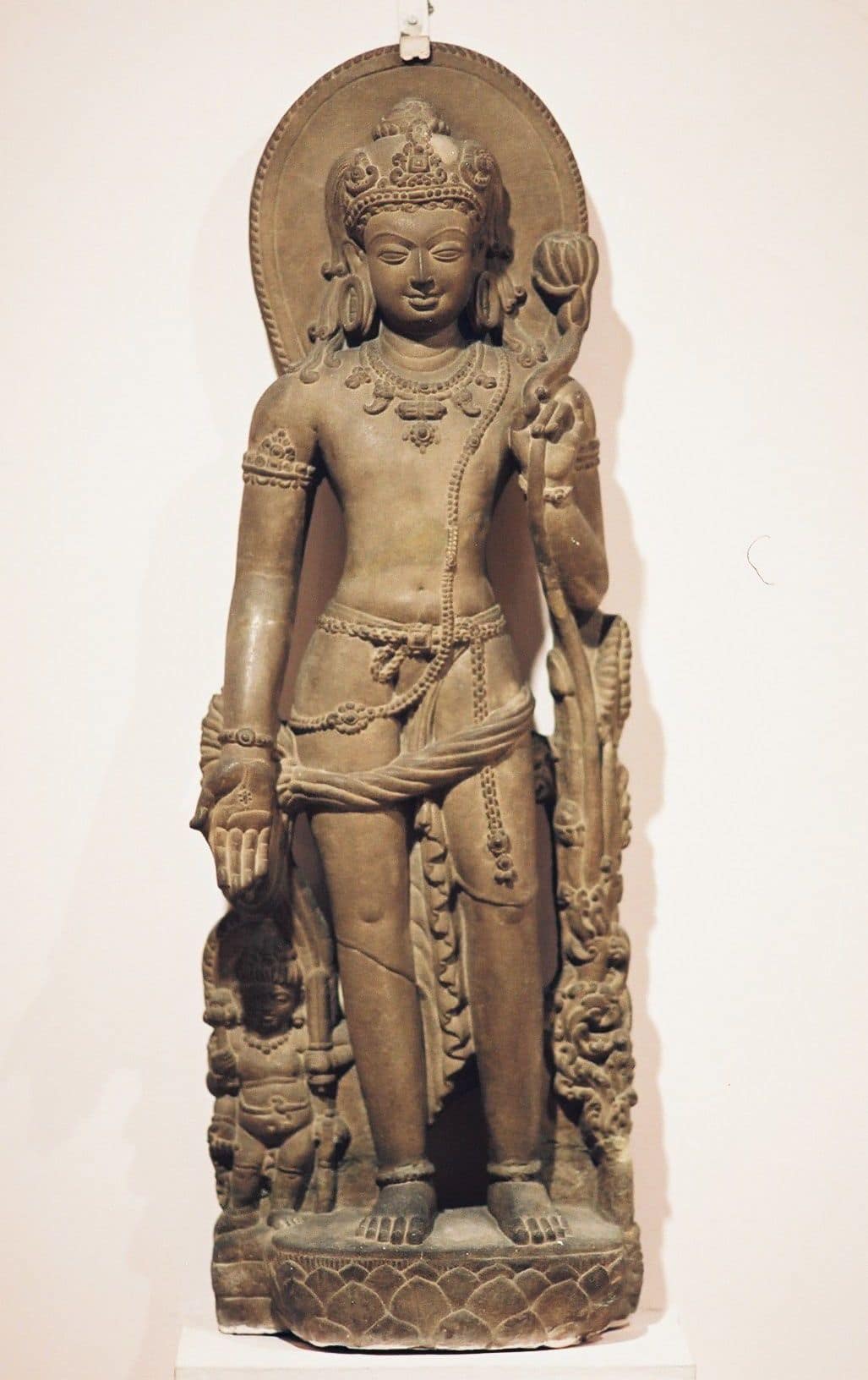
Cave 1 (Padmapani Murals)
- Best timeRight after opening, when few people are inside and you can take your time; the light is from low lamps all day, so the crowd matters more than the hour.
- ColorsSaffronOchreCream
 High crowd
Entry Included
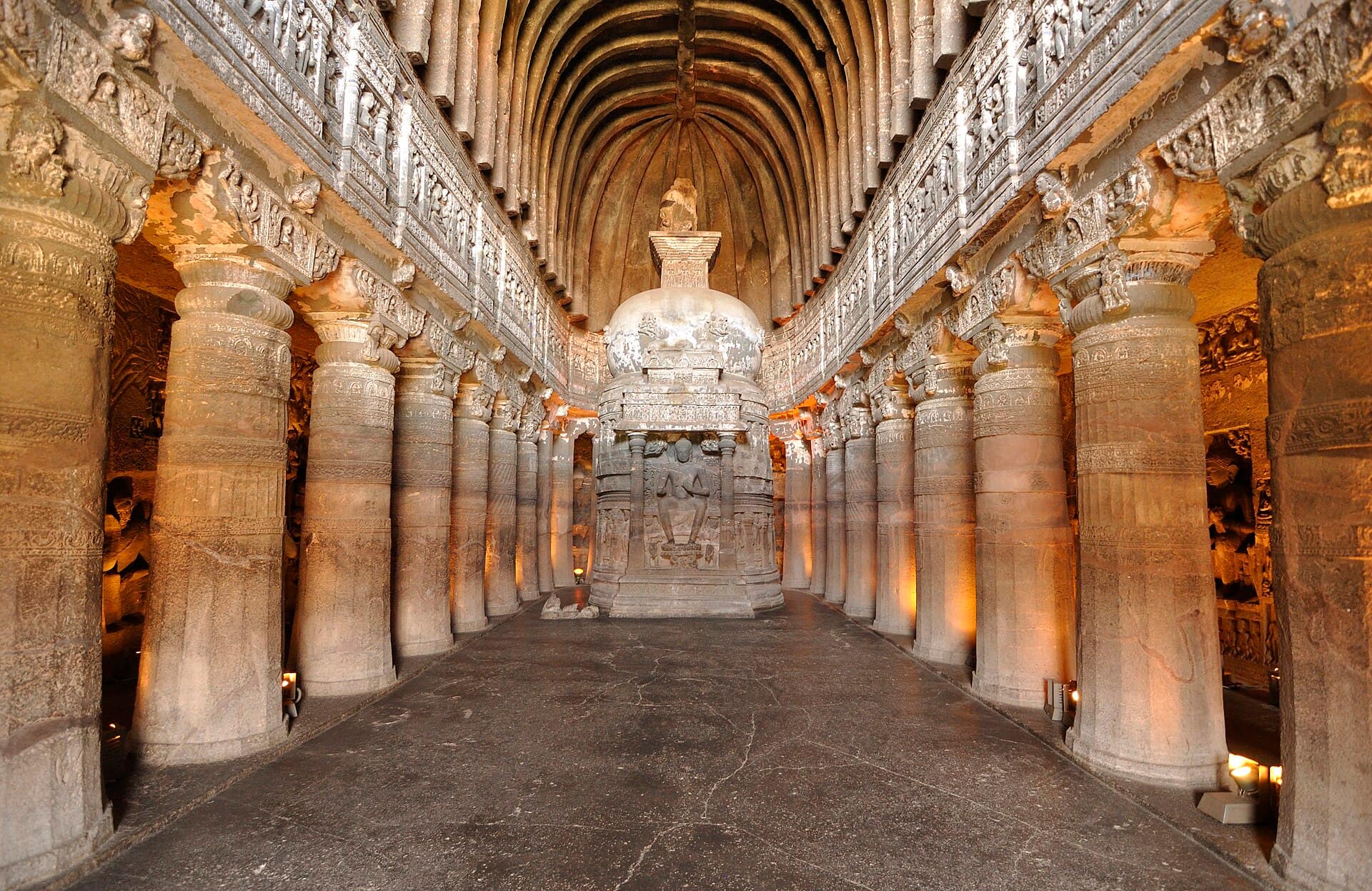
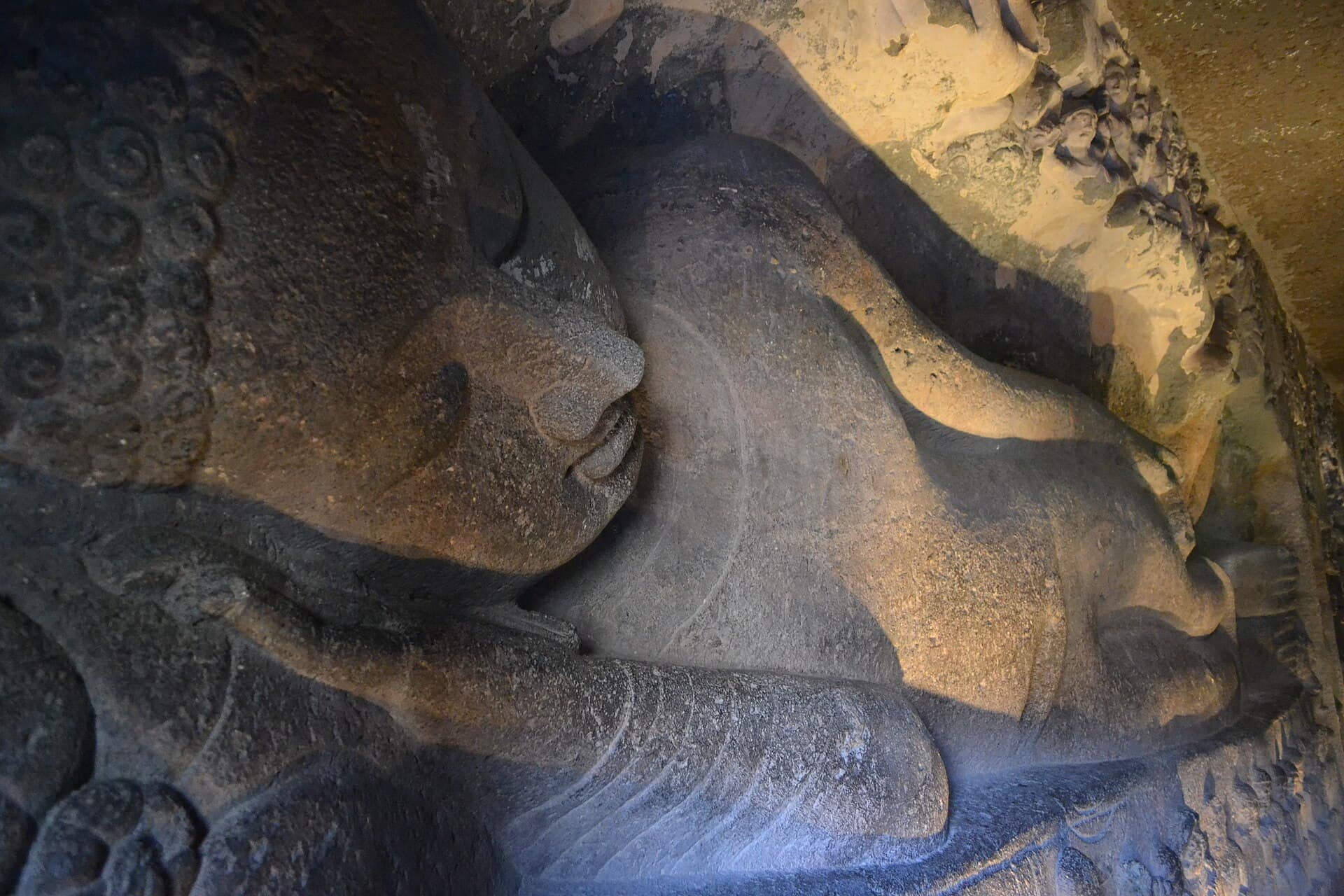
Cave 26 (Reclining Buddha)
- Best timeMorning, when daylight through the door and the arched window lights the stupa; later in the day the hall fills with visitors.
- ColorsSaffronOchreMaroon
Entry Free
Waghur River Gorge
- Best timeMorning, when the gorge floor is still in soft shade and the air is clear; the weeks from July to October, when the river and the waterfall are running.
- ColorsRustWhiteForest green
Inside the painted caves
The murals are lit by low, soft lamps, and flash is not allowed. A phone in night mode or a camera at a high ISO handles it well. Brace your elbows against your body rather than asking for a tripod, which needs special permission. In Cave 1 the Padmapani and Vajrapani figures flank the shrine at the back, so step to one side to avoid the glare of the lamps on the wall. Staff keep people moving in the most popular caves, so frame your shot before you reach the front.
Sculpture and stone
The later caves are about carving. Cave 26 has the reclining Buddha along its left aisle and a carved stupa at the far end of the hall. Daylight from the entrance and the big arched window above it falls on the stupa, so shoot from inside looking in, not back towards the bright door. Cave 19 next door has one of the finest carved facades on the site.
The whole horseshoe
The picture everyone wants is the full curve of caves above the river. You get it from the viewpoint on the opposite side of the gorge. Cross the river below the caves and climb, or drive round to the upper viewpoint from the plateau. The sun sits behind you there for much of the day, which lights the cliff evenly.
The river and the waterfall
The Waghur gorge is dry for much of the year. From about July to October, after good rains, the river runs and a stepped waterfall pours down at the head of the gorge. That is when the basalt turns dark and the slopes turn green.
Be kind to the site
Keep drones at home: this is a protected monument. Don't lean on painted walls or touch carvings for a pose. Ask before you photograph monks, pilgrims or families.
Questions
Ajanta — FAQ
Can I take photos of the Ajanta murals?
Yes, without flash. Flash is banned inside the caves because it fades the pigments. Phones and cameras are fine for personal photos.
Are tripods and drones allowed at Ajanta?
Not without permission. Tripods need clearance from the Archaeological Survey of India, and drones are not flown over protected monuments without official approval.
Where do I get the classic photo of all the caves?
From the viewpoint on the far side of the gorge. You can walk to it by crossing the river below the caves, or reach the upper viewpoint by road from the plateau above.
What camera settings work in the dark caves?
Use a high ISO or night mode, open the aperture wide and hold very still. Let your eyes adjust for a minute first so you can see which parts of the wall are worth the frame.