
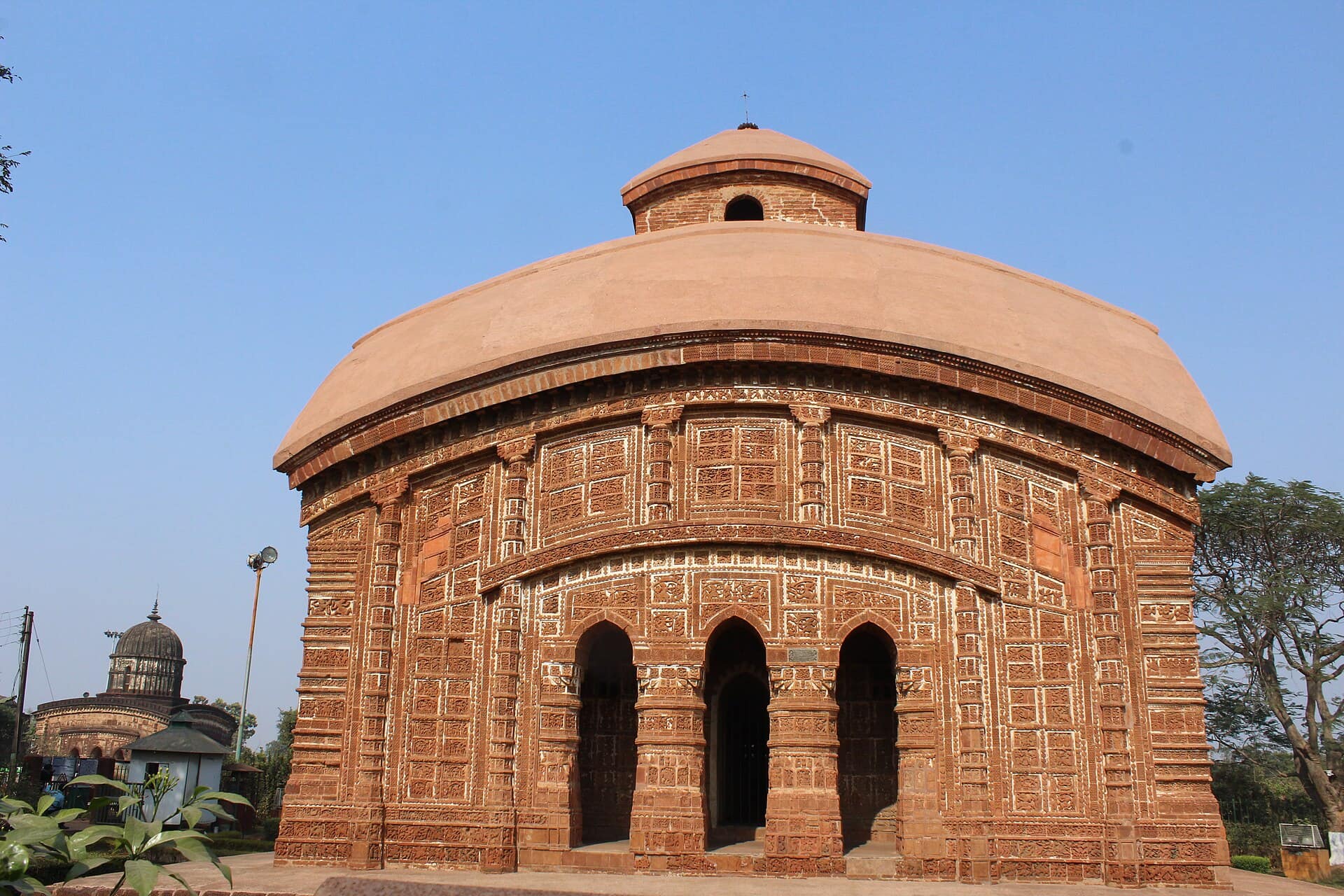
Photo spot in Bishnupur
Jor Bangla Temple
Bishnupur, West Bengal
A 1655 twin-hut ('jor-bangla') style terracotta temple, its walls a masterpiece of clay panels depicting epics, hunts and court scenes.
Best time
Morning, when soft side light brings out the depth of the panels; the last hour before sunset for a deep rust colour on the brick.
Best angle
Stand back on the lawn at a slight angle and take a photo of both curved roofs and the tower, then walk close to shoot single panels on the front arches.
Entry fee
Ticketed (combo)
Opening hours
8:00 AM – 6:00 PM
Crowd level
Medium
Best outfit colors
Overview
Best time to visit Jor Bangla Temple
Morning, when soft side light brings out the depth of the panels; the last hour before sunset for a deep rust colour on the brick. Crowds here are typically medium. Arrive a little early to claim your angle and catch the softest light before the day tips over.
Poses & angles
Photo tips for Jor Bangla Temple
Stand back on the lawn at a slight angle and take a photo of both curved roofs and the tower, then walk close to shoot single panels on the front arches. Work a few of the pose ideas below, shoot wide for context and tight for detail, and give yourself a couple of extra minutes to get the frame right.
Before the terracotta facade
By the carved panels
Outfit guide
What to wear at Jor Bangla Temple
For photos at Jor Bangla Temple, rust, ochre and maroon work beautifully — they stand out against the setting without fighting it. Pick one hero colour and keep the rest of the look calm so you stay the subject of the frame.
Best outfit colors for photos
Trending wear for this spot
Modern, camera-ready looks picked for Jor Bangla Temple.
Traditional wear for this spot
Timeless, cultural outfits worn across Bishnupur.
Eat nearby
Food near Jor Bangla Temple
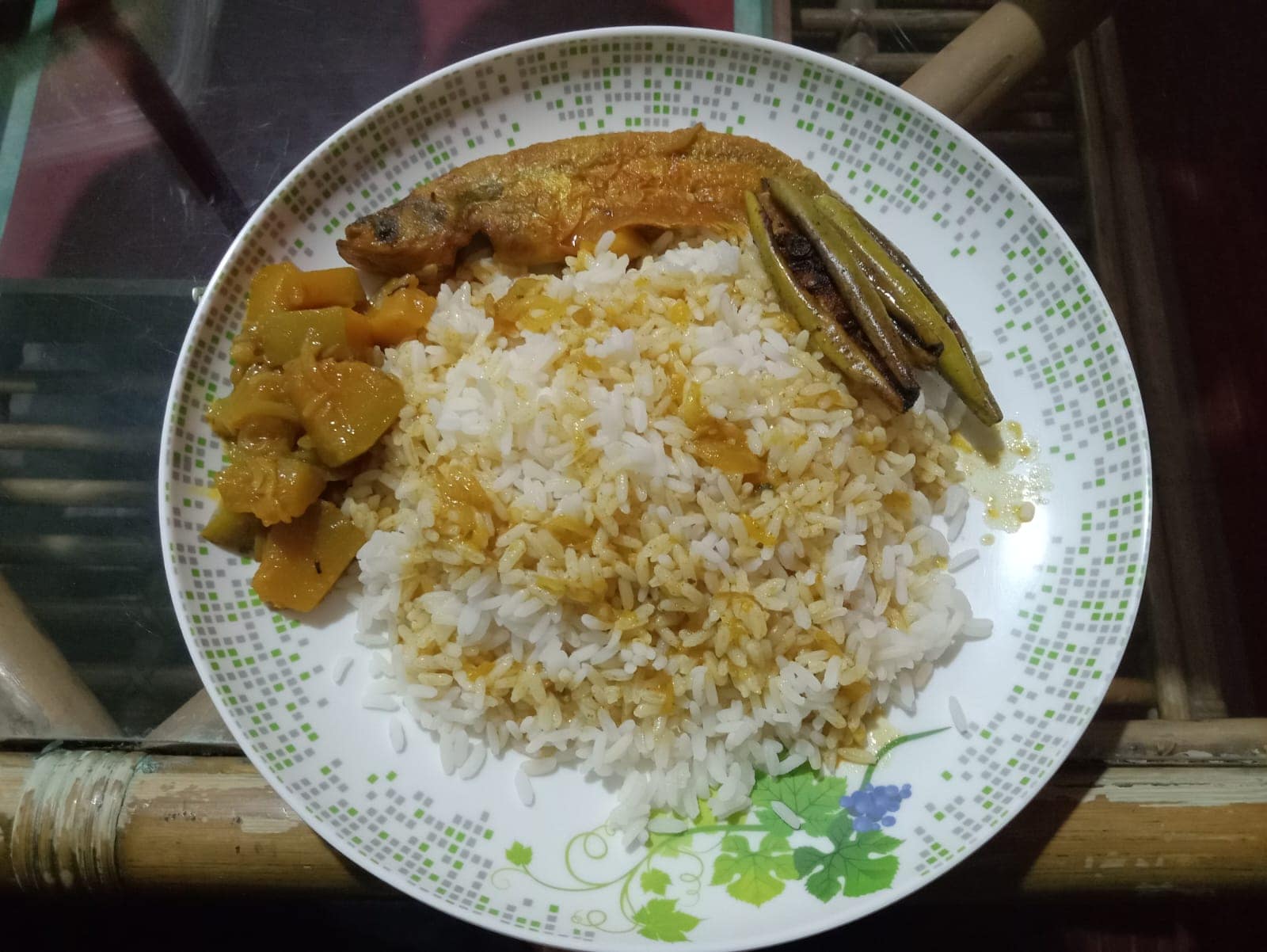
Round out the visit with something to eat. Look for macher jhol nearby, or settle in at one of the 1 restaurants close by.
Special dishes to try
Restaurants & food places nearby
Search food by craving
Good to know
Local tips
Keep the combined ticket bought at Rasmancha with you, as it is checked at the gate here.
Walk all the way around the temple, because the side and rear walls carry panels many visitors miss.
Use the zoom on your phone to read the upper bands of panels without climbing on the plinth.
Do not touch the terracotta, which is fragile and already worn on the lower courses.
Come in the morning, when the front of the temple is in softer light and there are fewer day-trippers.
Pair this visit with Shyam Rai, which is close by and covered by the same ticket.
Carry water, as there is little shade on the lawns and the brick gets hot by late morning.
Two huts under one tower
Jor Bangla, also known as the Keshta Rai temple, was built in 1655 under King Raghunath Singha. Its form comes from the Bengali village hut with a curved, two-sided thatched roof, called a do-chala. Here two such huts are rendered in brick and joined side by side, and a small tower with a four-sided roof sits on top. The front hut works as a porch and the rear one as the shrine. The name simply means the joined Bangla.
The terracotta
This is the temple most people come to Bishnupur to see. Almost every surface is covered in carved and fired clay panels. There are scenes from the Ramayana and Mahabharata, royal hunts, musicians and dancers, processions and everyday court life. The panels are arranged in bands and frames, so a single wall reads like a long illustrated book. Some of the lower panels are worn, but the arches and upper bands are well preserved.
Visiting
Jor Bangla is an ASI-protected monument and is covered by the combined ticket sold at Rasmancha, about 1 km away. It usually opens from sunrise to sunset. It is no longer a place of daily worship. Give yourself time here: most visitors spend longer at Jor Bangla than at any other temple in town. Shyam Rai is close enough to combine in one stop.
Looking closely
Start at the front arches, where the panels are densest, and then walk all the way around. Look for battle scenes with chariots and archers, and for small animals and boats in the borders. A zoom lens or your phone's zoom helps you read the upper bands from the ground.
Questions
Jor Bangla Temple — FAQ
What is the best time to visit Jor Bangla Temple?
Morning, when soft side light brings out the depth of the panels; the last hour before sunset for a deep rust colour on the brick. Stand back on the lawn at a slight angle and take a photo of both curved roofs and the tower, then walk close to shoot single panels on the front arches.
Is there an entry fee at Jor Bangla Temple?
Entry to Jor Bangla Temple is ticketed (combo).
What are the opening hours of Jor Bangla Temple?
Jor Bangla Temple is open 8:00 AM – 6:00 PM.
What should I wear at Jor Bangla Temple?
Rust, ochre and maroon photograph especially well here. Explore the trending and traditional outfit ideas on this page for full looks.
How crowded does Jor Bangla Temple get?
Crowd levels are typically medium. To miss the busiest window: morning, when soft side light brings out the depth of the panels; the last hour before sunset for a deep rust colour on the brick.
What food should I try near Jor Bangla Temple?
Try macher jhol, available at nearby restaurants.
Why is it called Jor Bangla?
Jor means joined, and bangla refers to the curved-roof Bengali hut. The temple is two hut-shaped structures joined together under one small tower.
Who built the Jor Bangla temple?
It was built in 1655 under King Raghunath Singha of the Malla dynasty, and is dedicated to Krishna as Keshta Rai.
What do the terracotta panels show?
Scenes from the Ramayana and Mahabharata, royal hunts, musicians, dancers and court life, arranged in bands across the walls and arches.
How long should I spend at Jor Bangla?
Allow 45 minutes to an hour. The panels reward slow looking, and most visitors spend longer here than at any other Bishnupur temple.