
Photo spot in Jaipur
Jantar Mantar
Jaipur, Rajasthan
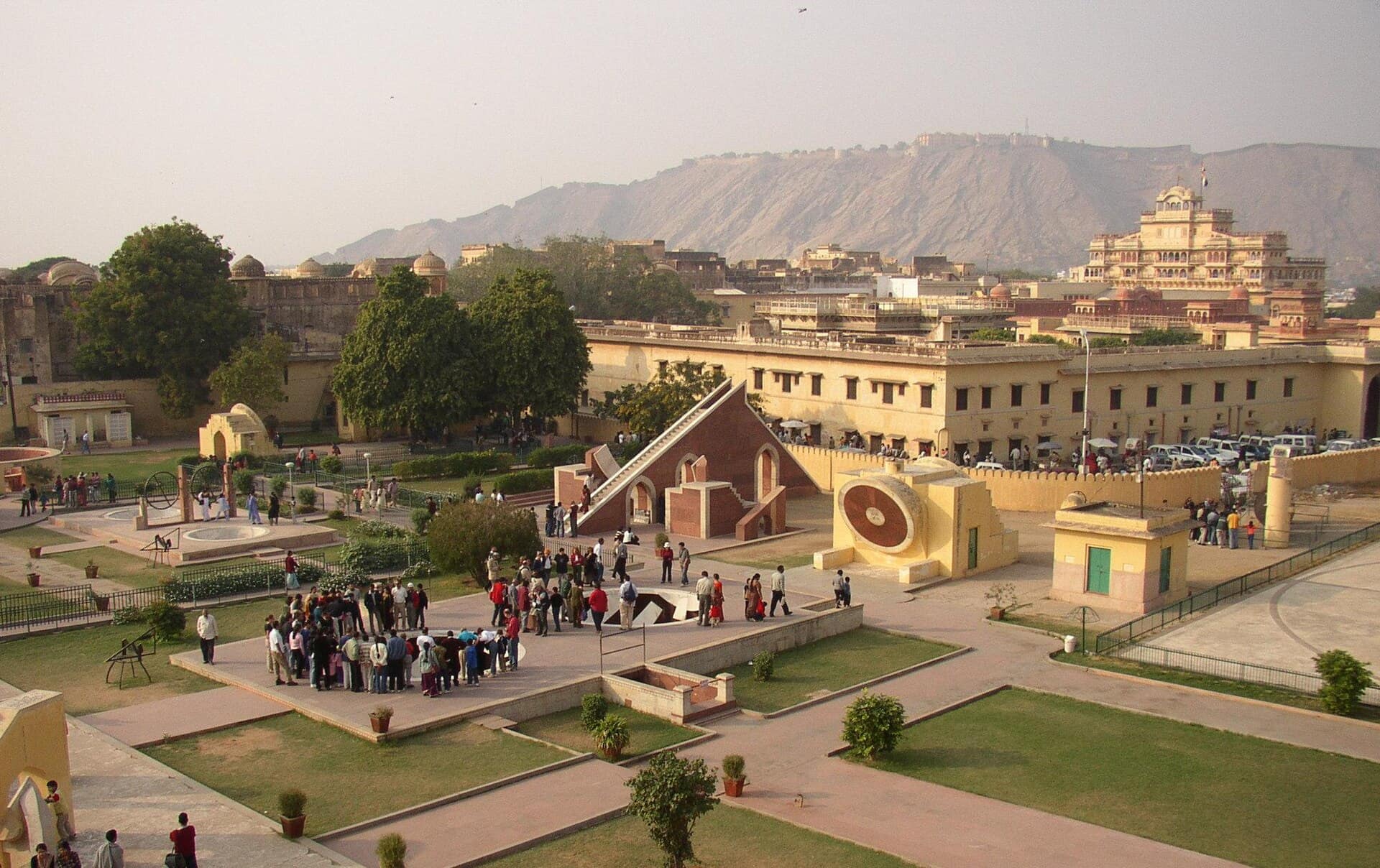
A UNESCO World Heritage collection of nineteen giant masonry astronomical instruments built by Maharaja Jai Singh II — including the world's largest stone sundial.
Best time
Late morning, when the sun casts sharp shadows across the curves and steps of the instruments.
Best angle
Crouch low at the base of the Samrat Yantra and take an upward photo along its staircase to show its size against the sky.
Entry fee
₹100 (Indian) / ₹600 (foreign)
Opening hours
9:00 AM – 4:30 PM
Crowd level
Medium
Best outfit colors
Overview
Best time to visit Jantar Mantar
Best times to shoot
9:00 – 10:30 AM
Low sun throws hard shadows from the gnomons and the giant sundial scales read clearly. Midday flattens everything into pale sandstone.
Late afternoon
Warm side-light on the masonry, and the site empties out — you can get the Samrat Yantra, the world's largest sundial, without people in the frame.
Poses & angles
Photo tips for Jantar Mantar
Crouch low at the base of the Samrat Yantra and take an upward photo along its staircase to show its size against the sky. Work a few of the pose ideas below, shoot wide for context and tight for detail, and give yourself a couple of extra minutes to get the frame right.
Dwarfed beside the giant sundial for scale
Walking between the geometric instruments
Outfit guide
What to wear at Jantar Mantar
For photos at Jantar Mantar, solid brights, cobalt and white work beautifully — they stand out against the setting without fighting it. Pick one hero colour and keep the rest of the look calm so you stay the subject of the frame.
Best outfit colors for photos
Trending wear for this spot
Modern, camera-ready looks picked for Jantar Mantar.

Traditional wear for this spot
Timeless, cultural looks that suit Jantar Mantar.

Eat nearby
Food near Jantar Mantar
Round out the visit with something to eat. Look for rajasthani thali nearby, or settle in at one of the 1 restaurants close by.
Special dishes to try

Restaurants & food places nearby

Good to know
Local tips
Hire a guide or take the audio guide, as the instruments make more sense when you know what they measure.
Watch the shadow move on the Samrat Yantra to see how the sundial tells time.
Visit in the morning, as there is almost no shade in the afternoon.
Do not climb on the instruments, as they are protected.
Combine your visit with the City Palace next door.
Use the composite ticket if you plan to visit Amber Fort and Hawa Mahal too.
Carry water and a hat, as the stone courtyard gets very hot.
About Jantar Mantar
Jantar Mantar is an open-air observatory built by Maharaja Sawai Jai Singh II in the 1720s and 1730s, next to the City Palace. It holds nineteen large instruments made of stone and brick, used to track the sun, moon and stars, measure time and predict eclipses. It became a UNESCO World Heritage Site in 2010.
The largest instrument, the Samrat Yantra, is a giant sundial about 27 m tall, often described as the largest stone sundial in the world. Its shadow moves across the scale fast enough to watch. The shapes of the ramps, curves and bowls look almost modern, which makes the site interesting to photograph even if astronomy is not your thing.
Questions
Jantar Mantar — FAQ
What is the best time to visit Jantar Mantar?
Jantar Mantar is worth two different windows. 9:00 – 10:30 AM — low sun throws hard shadows from the gnomons and the giant sundial scales read clearly. Midday flattens everything into pale sandstone. Late afternoon — warm side-light on the masonry, and the site empties out — you can get the Samrat Yantra, the world's largest sundial, without people in the frame. Crouch low at the base of the Samrat Yantra and take an upward photo along its staircase to show its size against the sky.
Is there an entry fee at Jantar Mantar?
Entry to Jantar Mantar costs ₹100 (Indian) / ₹600 (foreign). Prices change, so treat that as a guide and confirm at the counter.
What are the opening hours of Jantar Mantar?
Jantar Mantar is open 9:00 AM – 4:30 PM.
What should I wear at Jantar Mantar?
Solid brights, cobalt and white photograph especially well here. Explore the trending and traditional outfit ideas on this page for full looks.
How crowded does Jantar Mantar get?
Crowd levels are typically medium. To miss the busiest window: late morning, when the sun casts sharp shadows across the curves and steps of the instruments.
What food should I try near Jantar Mantar?
Try rajasthani thali, available at nearby restaurants.
What is Jantar Mantar in Jaipur famous for?
Jantar Mantar is famous for its giant stone astronomical instruments, including the Samrat Yantra, often called the world's largest stone sundial. It is a UNESCO World Heritage Site.
Who built Jantar Mantar in Jaipur?
Maharaja Sawai Jai Singh II, the founder of Jaipur, built it in the early 18th century. He built similar observatories in Delhi, Ujjain, Varanasi and Mathura, and Jaipur's is the largest.
Do I need a guide at Jantar Mantar?
It helps. Without a guide or audio guide, the instruments can look like abstract sculptures. A guide explains how each one measures time or tracks the stars.
How much time do I need at Jantar Mantar?
Allow 45 minutes to 1 hour, or longer with a guide.