
Temples in Kanchipuram
Kanchipuram is known as the city of a thousand temples, and it is held sacred by devotees of both Shiva and Vishnu. The Pallava kings, who ruled from here, built some of the earliest stone temples in South India, and later dynasties added the towering gopurams you see today.
These are active places of worship, not museums. Most temples open early, close for a few hours in the middle of the day and reopen in the late afternoon, and several now ask you to leave your phone at the gate. Dress modestly and follow the rules posted at each entrance.


Famous Temples in Kanchipuram
Ekambareswarar Temple is the largest temple in the town and one of the Pancha Bhoota Sthalams, the five great Shiva temples linked to the elements, where Shiva is worshipped as earth. Its southern gopuram is about 59 m high, and a sacred mango tree, said to be thousands of years old, stands beside the main shrine.
Kamakshi Amman Temple is one of India's most important goddess temples, with a gold-plated tower over the sanctum. By tradition, none of Kanchipuram's Shiva temples has a separate shrine for the goddess, because Kamakshi is seen as the goddess of the whole town.
Kumara Kottam, between Ekambareswarar and Kamakshi Amman, is dedicated to Murugan. Its place between the temples of his father and mother reflects the Somaskanda form of Shiva, Parvati and their son, and the Tamil Kandapuranam is said to have been written here.
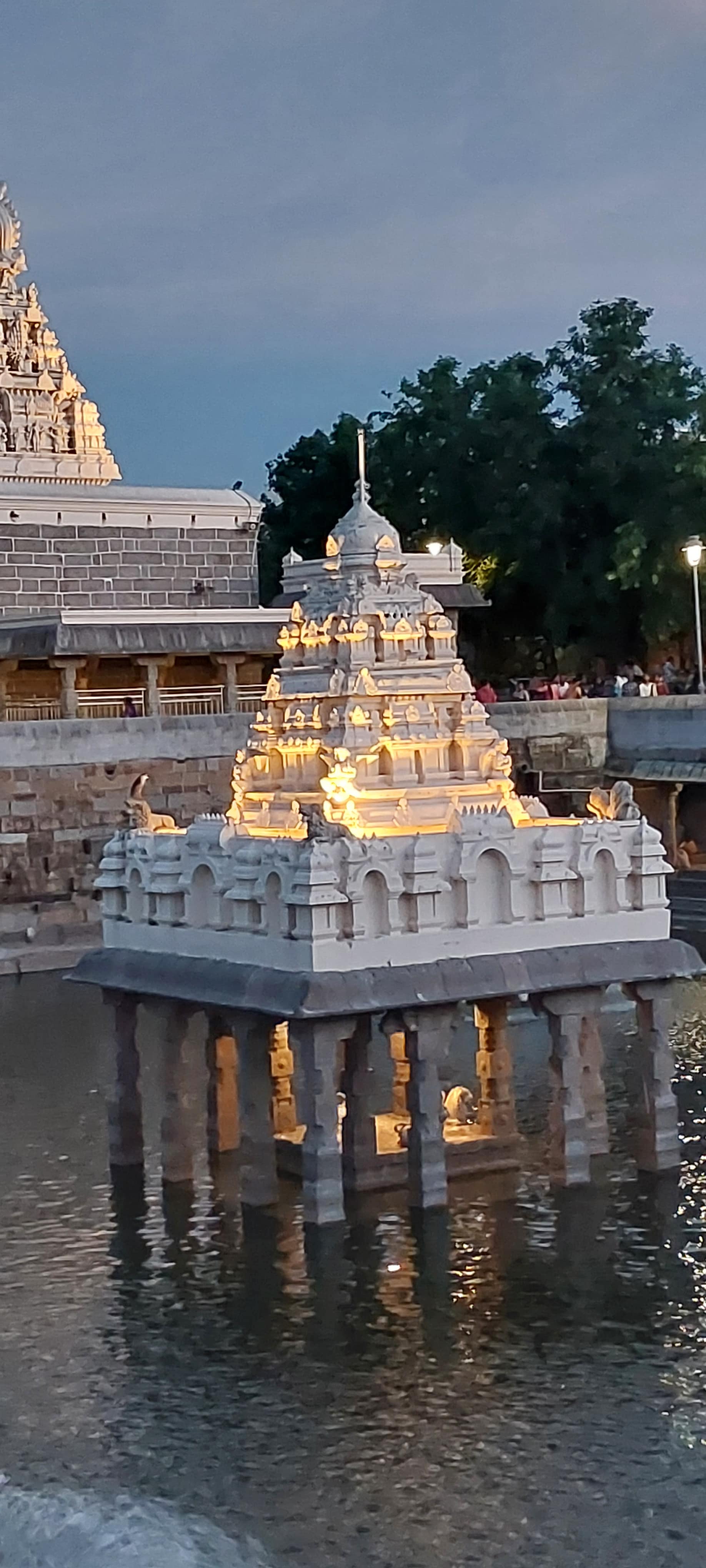
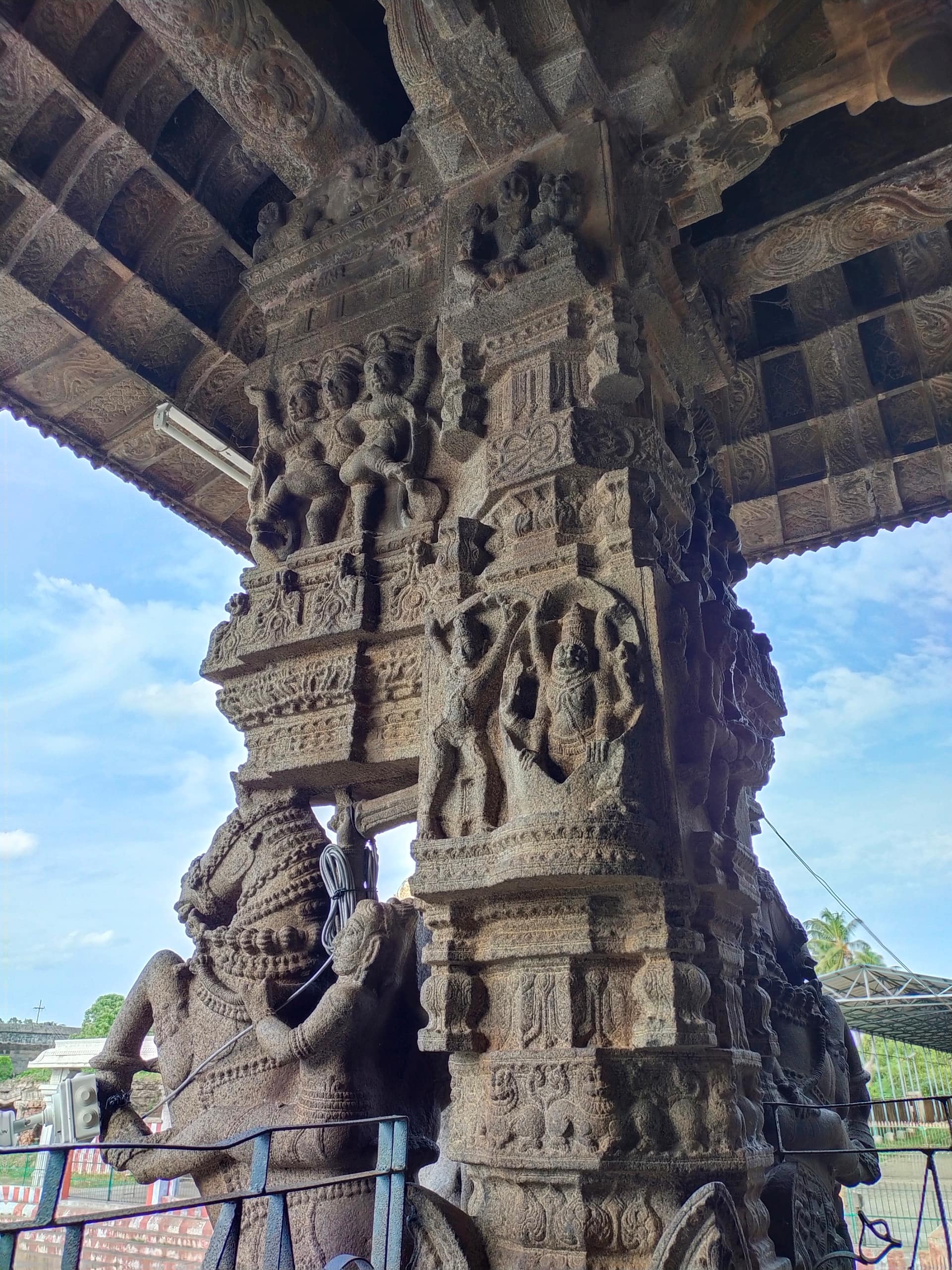
Varadaraja Perumal Temple, in the Vishnu Kanchi part of town, is one of the 108 Divya Desams, the holiest temples of Vishnu. It is known for its 100-pillared hall, a chain carved from a single block of stone, and the golden and silver lizards on a ceiling that devotees touch for blessings. Its fig-wood idol of Athi Varadar is kept under the temple tank and brought out only once every 40 years, most recently in 2019.
Kailasanathar Temple, built around 700 CE by the Pallava king Rajasimha, is the oldest temple in the town. Its sandstone courtyard is lined with 58 small shrines and carvings of Shiva, and it is protected by the Archaeological Survey of India.
Tips for Visiting Temples in Kanchipuram
- Start early. Most temples open around 6 am and close from roughly noon to 4 pm.
- Wear modest clothes that cover your shoulders and knees.
- Leave your footwear at the counters outside, and visit before the stone floors heat up.
- Expect to deposit your phone at Ekambareswarar, Kamakshi Amman and Varadaraja Perumal, where camera phones are no longer allowed inside.
- Some temples do not allow non-Hindus into the inner sanctum. Follow the signs and ask temple staff if you are unsure.
- Fridays are especially busy at Kamakshi Amman, and festival days are busy everywhere.
- Timings change on festival days, so check locally before you plan your day.
Questions
Kanchipuram — FAQ
What are the famous temples in Kanchipuram?
The best-known temples are Ekambareswarar, Kamakshi Amman, Varadaraja Perumal, Kailasanathar and Kumara Kottam. The first three are the town's busiest pilgrim temples, while Kailasanathar is the oldest and best for carved stone.
Why is Kanchipuram called the city of a thousand temples?
Kanchipuram has been a centre of Hindu worship for well over a thousand years, and hundreds of temples, large and small, stand across the town and its surroundings. The name describes that density of temples rather than an exact count.
Can non-Hindus visit temples in Kanchipuram?
Non-Hindus often visit the temple courtyards and halls, but some temples do not allow them into the inner sanctum. Rules can differ between temples and can change, so look for signs at the entrance and ask the temple staff.
What is Athi Varadar?
Athi Varadar is an ancient idol of Vishnu carved from fig wood, kept in a chamber under the Anantha Saras tank at the Varadaraja Perumal Temple. It is brought out for public viewing for 48 days only once every 40 years. The last time was in 2019, and the next is expected in 2059.