
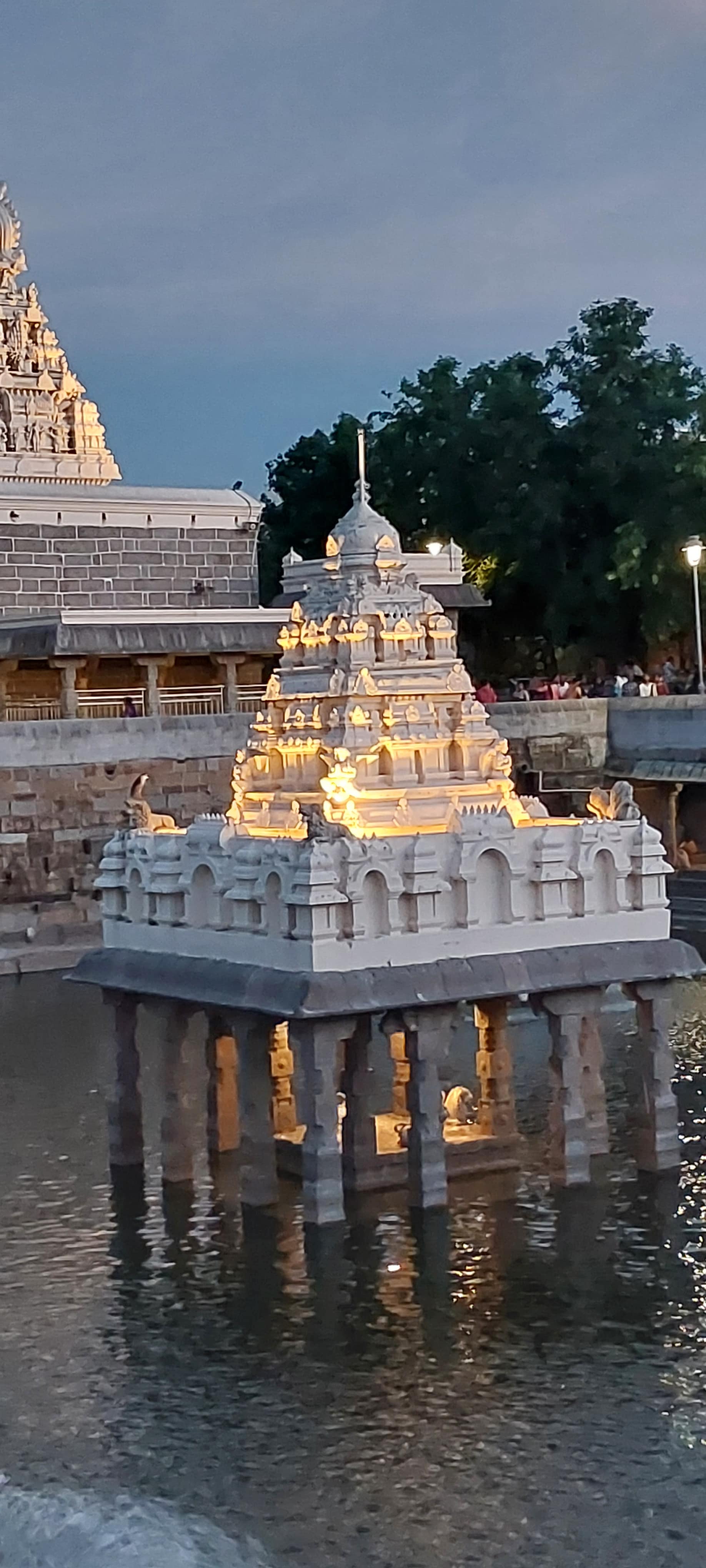
Temple in Kanchipuram
Kamakshi Amman Temple
Kanchipuram, Tamil Nadu
The Shakti Peetha at the centre of Kanchipuram and the third point of the town's triangle with Ekambareswarar and Varadaraja. Pallava in origin, extended under the Cholas and Vijayanagara.
Photo: Pinakpani — CC BY 4.0, via Wikimedia Commons
Overview
Who it's to, and what's expected
Deity
Kamakshi
Tradition
Devi · Shakti temple
- Entry
Free entry, open to visitors of all faiths, with no ticket or registration required for general darshan. The temple publishes its own darshan arrangements - confirm current options and timings at the temple office rather than relying on a third party. It opens around 5:30 AM and follows Kanchipuram's shared midday closure, so plan a morning session to about 12:00 or 12:30 PM, or an evening session from about 4:00 PM.
- Footwear
Remove all footwear before entering the temple premises. Kanchipuram's stone courtyards become very hot outside the cooler months, so a morning or post-4:00 PM visit is considerably more comfortable underfoot than midday, and carrying something to stand on helps if you are visiting in summer.
- Access
The temple provides wheelchair access to its main areas and offers assistance for elderly and disabled visitors.
- Prasadam
The temple offers sacred kumkum, panchamrit from the abhishek ritual, and packets of temple sweets.
Usually visited with
Time your visit
The darshan clock
A single opening-hours line cannot express a midday closure or an evening ceremony.
5:30 AM
Opening hours
The temple is open from 5:30 AM to 12:30 PM and 3:45 PM to 9:00 PM, with daily pujas including Go Puja at 5:30 AM, Kalasandhi at 5:45 AM, Uchikala at 10:30 AM, Sayaratchai at 4:30 PM, and Arthajama at 8:30 PM.
Rules, timings and fees change — confirm locally before you rely on this.
At the gate
Before you go in
What gets refused, and what you cannot take past the door.
What to wear
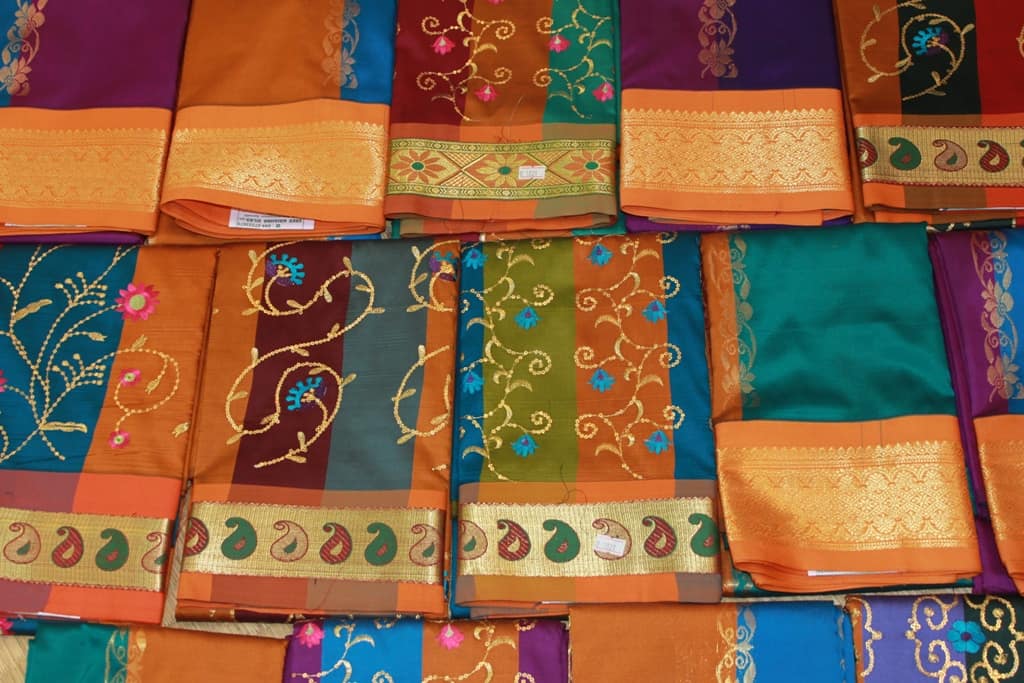
Visitors are expected to wear modest clothing, with a preference for traditional South Indian attire such as sarees for women and dhotis or formal wear for men.
Phones and cameras
Photography is prohibited inside the sanctum. The outer courtyards, gopurams and pillared halls - which carry the Vijayanagara work most visitors come to photograph - are generally acceptable, but follow posted signage and the attendants rather than assuming, and do not photograph devotees at prayer at close range.
Rules, timings and fees change — confirm locally before you rely on this.
When not to come — unless you mean to
Festival windows
These follow lunar calendars and move by weeks each year, so the windows are months, not dates.
Navratri
Brahmotsavam
Panguni Uthiram
Aadi Pooram
Vaikasi Visakam
Practicalities
The things that go wrong
Book through official channels, and treat anyone promising a guaranteed slot as a warning sign.
What to watch for
- Charging for kumkum prasad, which the temple offers along with panchamrit and packets of temple sweets
- Only the sweet packets carry a small legitimate fee
- Guides attaching themselves at the entrance and producing a fee after explaining the gopurams
- The temple is well signed; ask at the office if you want context
- Claims that the sanctum can be photographed for a fee
- Photography is prohibited inside the sanctum and no payment lifts that
- Being told the temple is open through the middle of the day
- Kanchipuram's temples share a midday closure of roughly 12:00 or 12:30 to 4:00 PM
One place, many temples
Other temples in Kanchipuram
General guidance
Planning the visit
Customary practice and what Kanchipuram's climate means for a barefoot visit — not rules posted at this temple. Anything specific to Kamakshi Amman Temple is above.
Offerings differ here
Shakta shrines often accept offerings that other temples do not, and a few remain associated with animal sacrifice on particular days. What is sold at the stalls outside is the honest signal of what is expected inside.
Come in winter
Winter is when Kanchipuram is most comfortable to walk around, which matters here because a temple visit is done on foot and barefoot. Locally the window is given as december to february.
Stone gets hot — go early
You will be barefoot from the shoe rack onwards, often across an open courtyard. Between late morning and mid-afternoon in the hot months that stone is genuinely painful to stand on. Socks help, and are permitted almost everywhere shoes are not.
Arriving by train
Kanchipuram has a railway station, and auto-rickshaws wait outside it. Agree the fare or use a meter before you set off, and expect to be dropped a short walk from the temple rather than at its door.
No airport here
Kanchipuram has no airport of its own, so the last leg is by road or rail. Plan the return the same way — the last bus out is often earlier than visitors expect.
Outfit guide
What to wear at Kamakshi Amman Temple
Cover shoulders and knees — the rules above win over anything here.
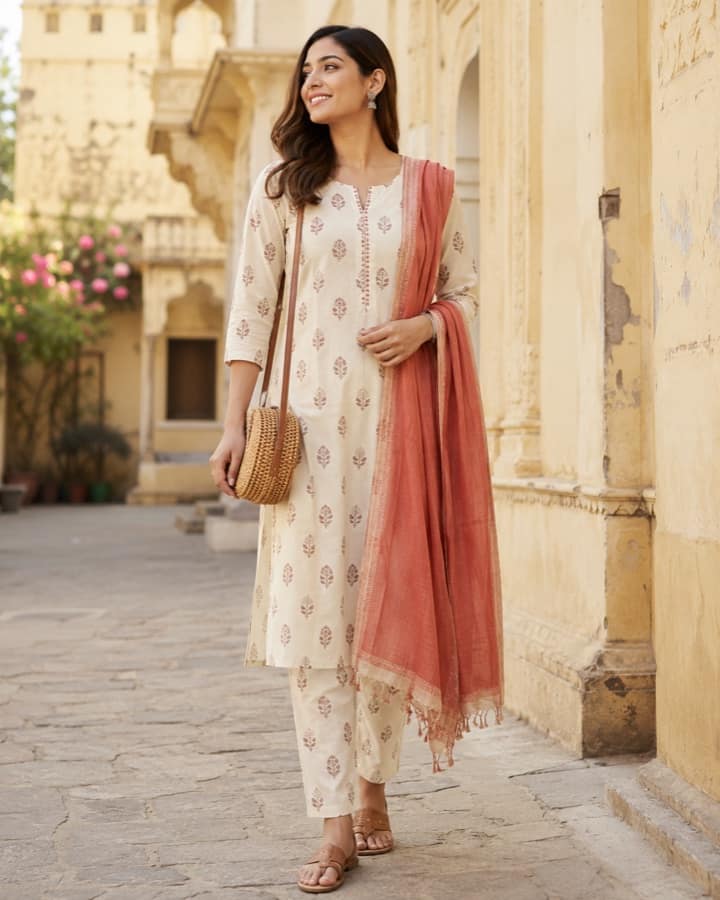
Trending wear for this spot
Popular modern looks travellers are wearing across Kanchipuram.
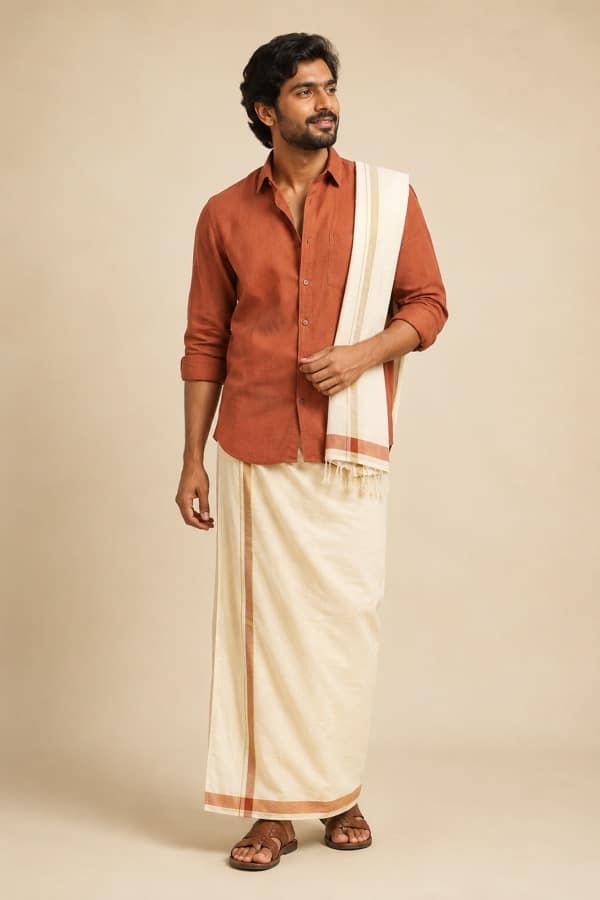
Traditional wear for this spot
Timeless, cultural looks that suit Kamakshi Amman Temple.
Kamakshi Amman Temple
Kamakshi Amman is the Shakti Peetha at the centre of Kanchipuram, and the third point of the town's triangle with Ekambareswarar and Varadaraja Perumal. Between them the three cover the Hindu trinity's three registers in a single town — Shiva, Vishnu and Shakti — within walking distance of one another, which is unusual even by South Indian temple-town standards.
The goddess Kamakshi is a form of Parvati, and the temple is Pallava in origin, extended under the Cholas and later the Vijayanagara empire — so the fabric you walk through is a stratigraphy of three South Indian powers rather than one period's work.
🛕 A Shakti Peetha, and what that means
Kanchipuram's Kamakshi is counted among the Shakti Peethas, the network of sites where parts of Sati's body are held to have fallen when Shiva carried her corpse and it was dismembered. The Peetha status is what makes this a pilgrimage destination rather than a large local temple, and it puts Kanchipuram in the same category as Kalighat in Kolkata and Harsiddhi in Ujjain.
The name Kamakshi means "she of the loving eyes" — kama, desire or love, and akshi, eyes. The goddess is worshipped here in a form associated with desire and its fulfilment, which is why marriage and fertility petitions are common at this temple.
🏛️ Three dynasties in one building
Pallava in origin, extended under the Cholas and the Vijayanagara rulers. That sequence matters for what you are looking at:
- The Pallava phase gives Kanchipuram its oldest structural temple architecture — the same period that produced Kailasanathar nearby.
- Chola additions bring the scale and the ritual elaboration the Cholas were known for.
- Vijayanagara work adds the great gopurams, pillared halls and the ornamental richness that most visitors actually photograph.
The result is a temple with a Dravidian plan and visibly different hands across its parts. It is worth walking slowly enough to notice that the sculptural quality changes as you move through.
🕒 Timings, and the two darshan options
Opening around 5:30 AM, the temple follows the Kanchipuram pattern of a morning session to about 12:00 or 12:30 PM and an evening session from about 4:00 PM to 8:30 PM, with a midday closure.
Two darshan options operate, and this is one of the few Kanchipuram temples where the priority rate is published:
- General Darshan — free, with a wait of roughly 20 to 60 minutes.
🌺 Prasad — kumkum and panchamrit
The temple offers sacred kumkum, panchamrit from the abhishek ritual, and packets of temple sweets.
The kumkum is the distinctive item here — vermilion distributed as prasad from a Devi temple, used by devotees in the forehead marking associated with the Goddess. Panchamrit is the five-ingredient ritual bath (typically milk, curd, ghee, honey and sugar) poured over the deity during abhishekam and then distributed.
🛕 Rules
Modest clothing is expected, with a preference for traditional South Indian attire — sarees for women and dhotis or formal wear for men.
Photography is prohibited inside the sanctum. As at the town's other temples, outer courtyards and halls are generally photographable.
Footwear must be removed before entering the temple premises.
♿ Access
The temple provides wheelchair access to its main areas and offers assistance for elderly and disabled visitors — a notable provision, and better than most large Dravidian complexes where the inner courtyards involve steps and thresholds.
🌸 Festivals
Navratri is the great Devi festival and the temple's peak, observed twice yearly with the autumn Sharad Navratri (September–October) at its largest. Beyond it:
- The temple's Brahmotsavam, its principal annual festival, with the goddess taken in procession around the town
- Panguni Uthiram (March–April), the major Tamil month observance across Kanchipuram's temples
- Vaikasi Visakam (May–June)
- Aadi Pooram (July–August), significant for Devi temples in Tamil Nadu
- Maha Shivaratri is observed, though it is Shiva's night rather than the Goddess's
📍 Fitting it into Kanchipuram
Kamakshi sits at the centre of the town, which is why it is the easiest of the three triangle temples to reach and the natural one to visit twice — morning for darshan, evening for the lamps.
The three-temple triangle is the standard Kanchipuram day: Ekambareswarar (the Earth lingam and the 3,500-year-old mango tree), Kamakshi Amman (this Shakti Peetha), and Varadaraja Perumal (the Divya Desam with the forty-year Athi Varadar). Add Kailasanathar for the Pallava architecture.
Because all of them close through the middle of the day, split the circuit — one or two temples in the morning session, lunch, then the rest in the evening session. Trying to do four in sequence will put you at a locked gate around 1:00 PM.
⚠️ Practical notes
- Come in the morning or after 4:00 PM; the midday closure is real and shared across Kanchipuram.
- October to March is the comfortable season.
- Take the kumkum prasad — it is the temple's distinctive offering and costs nothing.
- Ask about the abhishekam timing if you want to see panchamrit poured rather than only receive it afterwards.
Last verified: 2026. Timings, entry arrangements and any charges are published by the temple itself and do change - confirm them with the temple's own official website or counter before travelling rather than relying on any third-party listing.
Questions
Kamakshi Amman Temple — FAQ
Who is Kamakshi Amman Temple dedicated to?
Kamakshi Amman Temple in Kanchipuram is dedicated to Kamakshi.
Who can enter Kamakshi Amman Temple?
Free entry, open to visitors of all faiths, with no ticket or registration required for general darshan. The temple publishes its own darshan arrangements - confirm current options and timings at the temple office rather than relying on a third party. It opens around 5:30 AM and follows Kanchipuram's shared midday closure, so plan a morning session to about 12:00 or 12:30 PM, or an evening session from about 4:00 PM.
What is the dress code at Kamakshi Amman Temple?
Visitors are expected to wear modest clothing, with a preference for traditional South Indian attire such as sarees for women and dhotis or formal wear for men.
Do I have to take my shoes off at Kamakshi Amman Temple?
Remove all footwear before entering the temple premises. Kanchipuram's stone courtyards become very hot outside the cooler months, so a morning or post-4:00 PM visit is considerably more comfortable underfoot than midday, and carrying something to stand on helps if you are visiting in summer.
Can I take photos inside Kamakshi Amman Temple?
Photography is prohibited inside the sanctum. The outer courtyards, gopurams and pillared halls - which carry the Vijayanagara work most visitors come to photograph - are generally acceptable, but follow posted signage and the attendants rather than assuming, and do not photograph devotees at prayer at close range.
What prasadam is offered at Kamakshi Amman Temple?
The temple offers sacred kumkum, panchamrit from the abhishek ritual, and packets of temple sweets.
Is Kamakshi Amman Temple wheelchair accessible?
The temple provides wheelchair access to its main areas and offers assistance for elderly and disabled visitors.
Checked, not remembered
Sources
Every rule and timing above traces back to one of these.