
Temples in Khajuraho
Khajuraho's temples were built by the Chandela kings in the 10th and 11th centuries, and today they form a UNESCO World Heritage Site. Most are Hindu temples dedicated to Shiva, Vishnu, the goddess or the sun god Surya, and a smaller group belongs to the Jain faith. They are known for sculpture that covers the walls with gods, celestial women, musicians, animals and daily life, including the erotic panels.
Most of the old temples are now protected monuments rather than places of worship. The exceptions are Matangeshwara, where Shiva is still worshipped every day, and the Jain temples of the Eastern Group. At every temple, dress modestly, take your shoes off before you enter and follow the local rules.
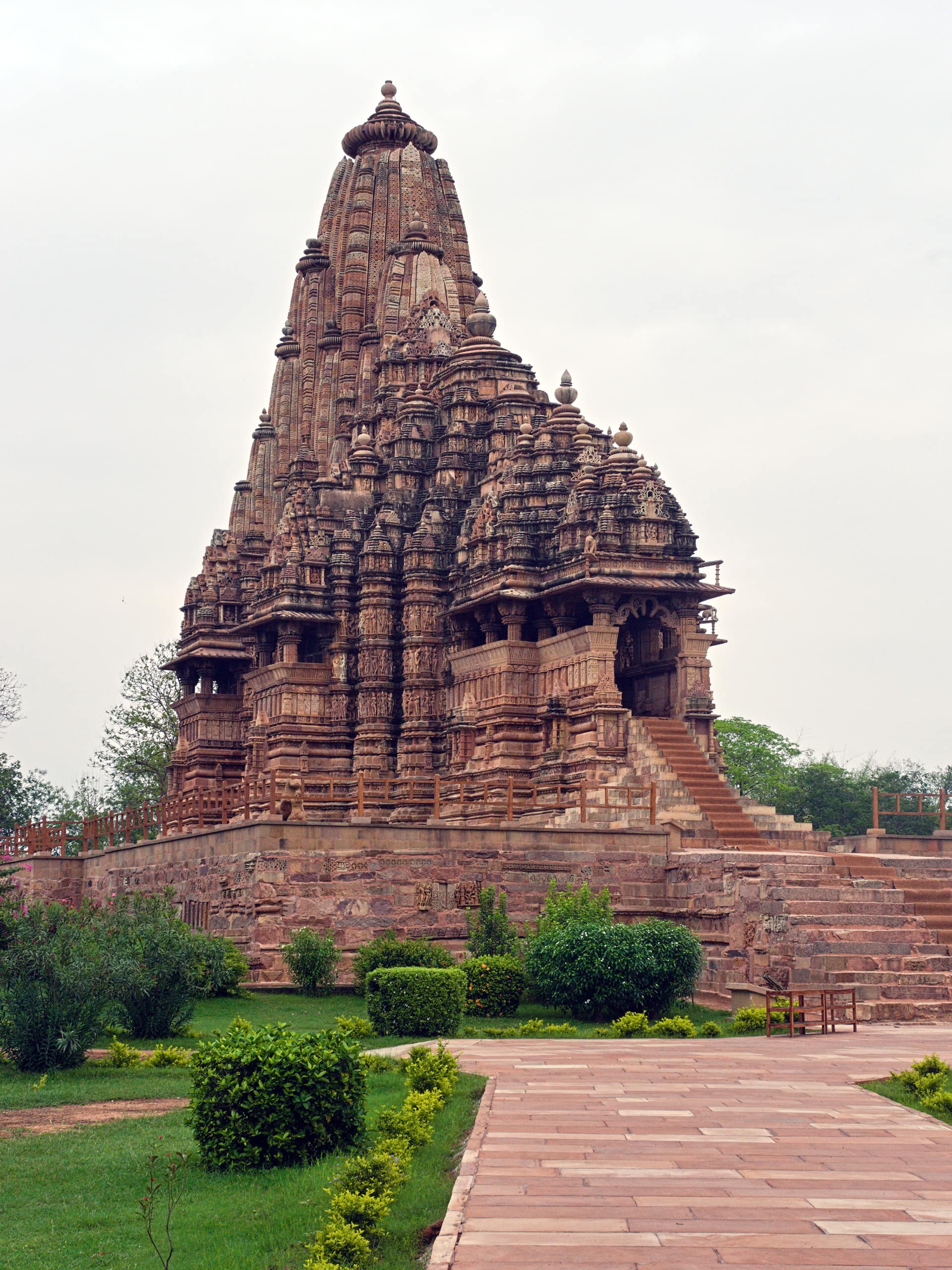
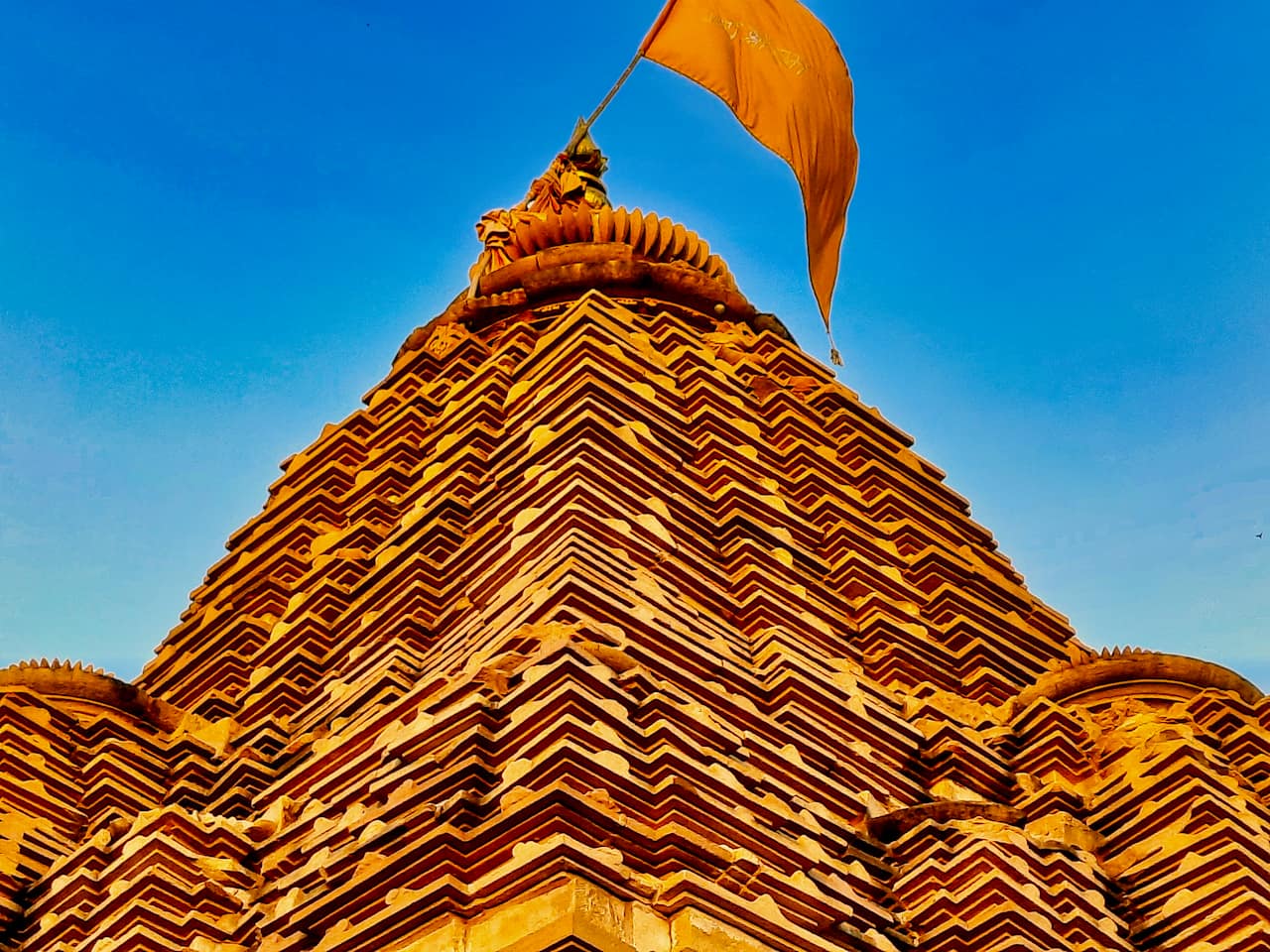
Famous Temples in Khajuraho
Kandariya Mahadeva Temple is the largest temple at Khajuraho, built in the first half of the 11th century and dedicated to Shiva. Its tower rises about 31 m above a high platform, and more than 870 figures are carved on its walls.
Lakshmana Temple, built in the mid-10th century, is dedicated to Vishnu. It is one of the best preserved temples here, with a small shrine at each corner of its platform and a long frieze of soldiers, hunters, elephants and daily life around the base.
Devi Jagadambi Temple shares a platform with Kandariya Mahadeva. It was originally dedicated to Vishnu but is now named after the image of the goddess in its sanctum, and three bands of fine sculpture wrap around its walls.
Chitragupta Temple, a short walk north of Devi Jagadambi, is dedicated to Surya, the sun god. Chausath Yogini, built of rough granite around 885, is the oldest surviving temple at Khajuraho.
Matangeshwara Temple, just outside the Western Group next to Lakshmana, is the only one of the old Hindu temples still in daily worship. Its plain walls hold a Shiva lingam about 2.5 m high.
Parsvanath Temple is the largest of the Jain temples in the Eastern Group, known for its fine figure sculpture. It stands in a walled complex with the Adinath and Shantinath temples, where Jain worship continues today.
The Southern Group, a short ride south of the town, includes Duladeo and Chaturbhuj. Chaturbhuj is the only temple at Khajuraho that faces west, towards the sunset.
Tips for Visiting Temples in Khajuraho
- Wear modest clothing that covers your shoulders and knees.
- Take your shoes off before entering each temple; slip-on footwear makes this easier.
- Start at the Western Group when it opens at sunrise, before the heat and the tour groups.
- Hire a guide at the Western Group entrance to understand what the carvings show.
- Do not touch, climb on or lean against the sculptures.
- At Matangeshwara and the Jain temples, keep quiet, do not photograph people at prayer and ask before taking photos inside.
- Carry water and a hat, as there is little shade between the temples.
For clothes and footwear by season, see what to wear in Khajuraho.
Questions
Khajuraho — FAQ
What are the famous temples in Khajuraho?
The best-known temples are Kandariya Mahadeva, Lakshmana, Devi Jagadambi and Chitragupta in the Western Group, Matangeshwara next to it, and Parsvanath with the other Jain temples in the Eastern Group.
Which temples in Khajuraho are still used for worship?
Matangeshwara Temple is the only one of the old Hindu temples still in daily worship, and it draws large crowds at Mahashivratri. The Jain temples of the Eastern Group, including Parsvanath and Shantinath, are also active places of worship.
Can non-Hindus visit the temples in Khajuraho?
Yes. The Western, Eastern and Southern Groups are protected monuments open to everyone. Matangeshwara and the Jain temples are working places of worship that tourists commonly visit; dress modestly and follow the rules at each entrance.
What should I wear to temples in Khajuraho?
Wear modest clothing that covers your shoulders and knees, and footwear you can slip off easily, as shoes come off before you enter each temple. In summer, visit early, as the stone floors get hot by midday.