
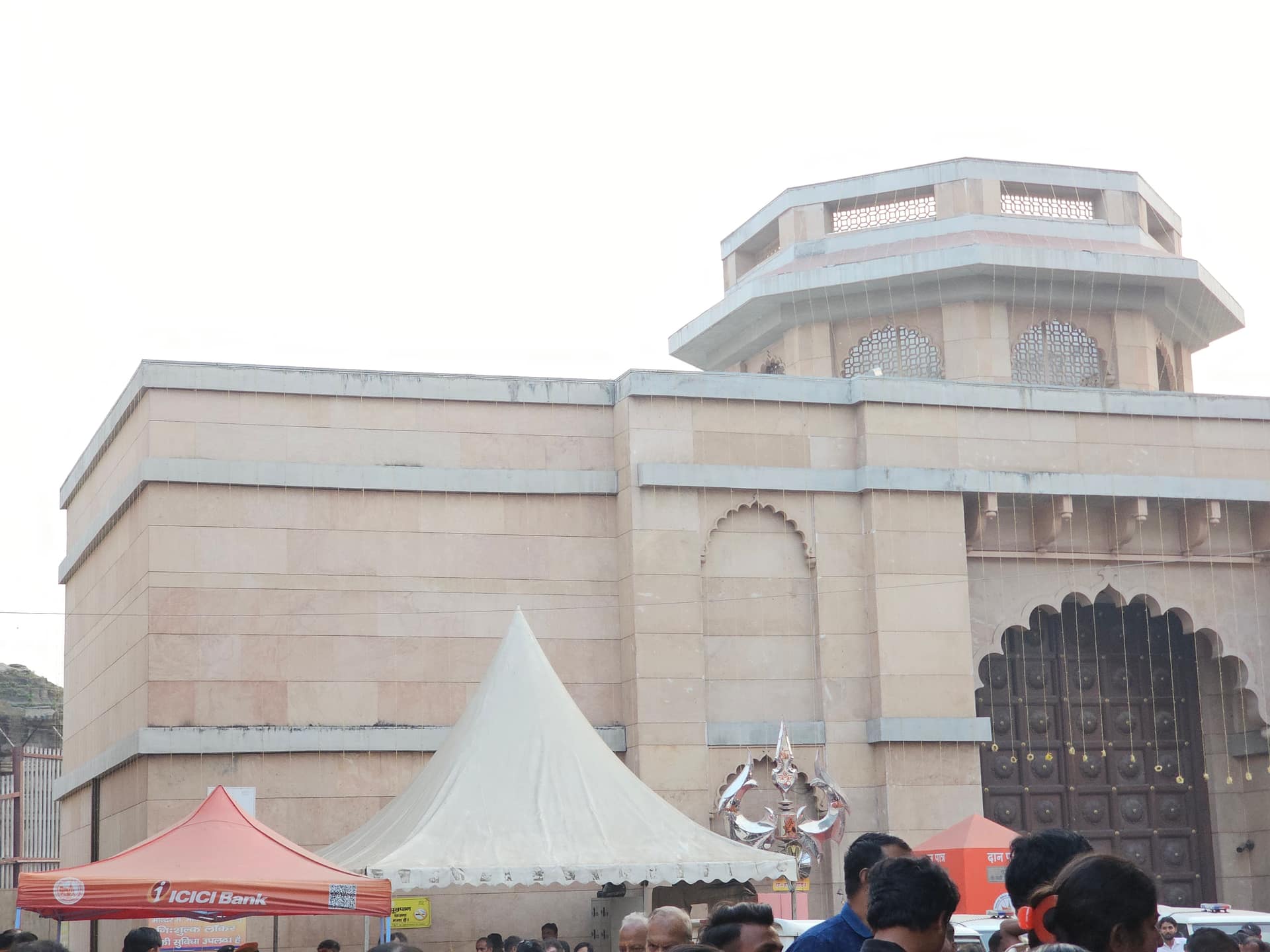
Temple in Varanasi
Shri Kashi Vishwanath Temple
Varanasi, Uttar Pradesh
The Jyotirlinga at the centre of Kashi, and the reason most pilgrims are in the city. The temple runs an unusually long day — it opens around 2:30am and does not close until roughly 11pm — so the question is less whether you can get in than which of the five aartis you want to be there for.
Photo: Gannu03 — CC BY-SA 4.0, via Wikimedia Commons
Overview
Who it's to, and what's expected
Deity
Shiva as Vishwanath
Tradition
Shiva temple
- Entry
The temple offers a live online darshan facility for the sanctum sanctorum, which is accessible to all devotees globally regardless of physical barriers.
- Footwear
Footwear is removed before entry and must be left at the designated counters - keep the token, since this is one of the busiest temples in India and unattended footwear goes missing. Leather items are commonly asked to be deposited alongside footwear, which catches out travellers wearing leather belts or carrying leather bags.
- Access
The Kashi Vishwanath Corridor approach is broad, paved and largely flat, which has improved access considerably compared with the old route through the lanes. The real obstacle is crowding: the sanctum involves close pressing in a moving queue, and aarti times are heaviest. Visitors with mobility limitations should contact the temple office in advance about the assistance it provides, and should prefer the quieter early-morning or late-evening windows over the heaviest aarti periods.
- Prasadam
Mewa Laddu prasadam is distributed at the conclusion of darshan.
Usually visited with
Time your visit
The darshan clock
A single opening-hours line cannot express a midday closure or an evening ceremony.
2:30 amapprox
Temple opens
Hours before general darshan. The doors opening and the Mangala Aarti are two different things.
03:00–04:00
Mangala Aarti
The waking of the deity, and the one aarti that is limited and booked rather than joined. If this is why you came, arrange it before you travel.
6:00 amapprox
General darshan begins
The ordinary line opens. No booking needed.
11:15 amapprox
Bhog Aarti
The midday offering.
7:00 pmapprox
Sapta Rishi Aarti
The evening aarti, and the busiest hour of the temple day — it lands in the same window as the Ganga Aarti down at Dashashwamedh, so you are choosing between them.
9:00 pmapprox
Shringar Aarti
The deity is dressed.
10:30 pmapprox
Shayan Aarti
Last aarti; the temple closes around 11pm.
Rules, timings and fees change — confirm locally before you rely on this.
How long this takes
Ways in
The difference between a twenty-minute visit and a three-hour one.
General darshan (free)
- No ticket and no booking - you join the public queue
- The wait runs one to four hours on an ordinary day, two to five hours on Mondays, weekends and festival days, and can exceed ten hours at Mahashivratri
- Queues join at Gate 4 or the Ghat Gate
Aarti bookings
- "note": "Mangala Aarti is Rs500 and advance online booking only with strictly limited slots - it books out earliest, so reserve ten to fifteen days ahead
- Bhog, Sapta Rishi, Shringar and Shayan aartis are Rs300 each (sources disagree on whether Shayan is free)
- Darshan pauses during every aarti
At the gate
Before you go in
What gets refused, and what you cannot take past the door.
What to wear
Shoulders and knees covered. A dupatta or stole is worth carrying on a first visit; it solves the requirement without changing what you packed.
Phones and cameras
Phones and cameras are strictly prohibited inside, and photography and videography are banned outright. There is a free cloakroom by the main gate — use it rather than risk confiscation, and reckon on queueing for it twice.
Rules, timings and fees change — confirm locally before you rely on this.
When not to come — unless you mean to
Festival windows
These follow lunar calendars and move by weeks each year, so the windows are months, not dates.
February–March
Extreme crowdsMahashivratri
The biggest night of the year at a Jyotirlinga. Queues run for hours and the lanes around the temple are impassable.
July–August
Very busyShravan (Sawan)
The Shiva month. Mondays are the peak and the whole old city moves with kanwar processions — the worst days for a quick darshan and the best for seeing Kashi at full volume.
Kartik Purnima, November
Dev Deepawali
The ghats are lit end to end with lamps. It is the most beautiful night in Varanasi and accommodation is gone months ahead.
Crowd levels are our reading of the notes above, not an official measure. Rules, timings and fees change — confirm locally before you rely on this.
Practicalities
The things that go wrong
Book through official channels, and treat anyone promising a guaranteed slot as a warning sign.
What to watch for
- Claiming Mangala Aarti tickets are available on the day
- The published rate pre-dawn aarti is advance online booking only with strictly limited slots and books out earliest - typically ten to fifteen days ahead
- Pandits and guides attaching themselves in the lanes and producing a large fee afterwards
- If you want a priest for Rudrabhishek, book the official ₹450 seva through the temple rather than arranging it on the street
- Being told the temple is closed when it is merely paused for an aarti
- Darshan stops during the five aartis and for the 11:00 AM to 12:30 PM bhog window - check the schedule rather than accepting that you cannot enter
One place, many temples
Other temples in Varanasi
Annapurna Devi Mandir
Devi · Shakti templeAnnapurna
Kaal Bhairav Temple
Shiva templeKaal Bhairav
New Vishwanath Temple (BHU)
Shiva templeShiva as Vishwanath
Ratneshwar Mahadev Temple
Shiva templeShiva
0.4 km · 5 min walk
View guideSankat Mochan Hanuman Temple
Vishnu · Krishna templeHanuman
3.4 km away
View guideGeneral guidance
Planning the visit
Customary practice and what Varanasi's climate means for a barefoot visit — not rules posted at this temple. Anything specific to Shri Kashi Vishwanath Temple is above.
Circling the shrine
At most Shaiva temples the circuit around the sanctum is not completed in a full circle — the channel draining the abhishekam is not crossed. Walk to it, turn, and come back the way you came. Watching what the queue in front of you does is the reliable guide.
Come in winter
Winter is when Varanasi is most comfortable to walk around, which matters here because a temple visit is done on foot and barefoot. Locally the window is given as october to march.
Stone gets hot — go early
You will be barefoot from the shoe rack onwards, often across an open courtyard. Between late morning and mid-afternoon in the hot months that stone is genuinely painful to stand on. Socks help, and are permitted almost everywhere shoes are not.
Arriving by train
Varanasi has a railway station, and auto-rickshaws wait outside it. Agree the fare or use a meter before you set off, and expect to be dropped a short walk from the temple rather than at its door.
Outfit guide
What to wear at Shri Kashi Vishwanath Temple
Cover shoulders and knees — the rules above win over anything here.
Trending wear for this spot
Popular modern looks travellers are wearing across Varanasi.


Traditional wear for this spot
Timeless, cultural looks that suit Shri Kashi Vishwanath Temple.
Shri Kashi Vishwanath Temple
Kashi Vishwanath is the Jyotirlinga at the centre of Kashi and the reason most pilgrims are in Varanasi at all. It is one of the twelve Jyotirlingas, the most sacred of Shiva's manifestations, and the temple around which the city's ritual life is organised. Since the Kashi Vishwanath Corridor opened, the approach from the river has been rebuilt into a wide pedestrian plaza, which has changed the logistics of visiting considerably — for the better, provided you understand how the queues now work.
The defining practical fact: the temple runs an unusually long day, opening around 2:30 AM and not closing until roughly 11:00 PM. So the question is never whether you can get in — it is which of the five aartis you want to be there for, and whether you queue or pay to skip.
🕉️ The five aartis
Darshan is organised around five daily aartis, and general darshan pauses during them:
- Mangala Aarti — approximately 3:00 to 4:00 AM. The first aarti of the day, performed in brahma muhurta. ₹500, advance online booking only, with strictly limited slots — it books out earliest of anything here, so reserve ten to fifteen days ahead.
- Mid-Day Bhog Aarti — approximately 11:15 AM to 12:20 PM. Bhog is offered to the deity and the temple is closed to darshan for this window, roughly 11:00 AM to 12:30 PM. ₹300.
- Sapta Rishi Aarti — approximately 7:00 to 8:15 PM. Performed by seven Shastris from seven different gotras (lineages), a tradition held to be around 750 years old. ₹300. This is the most visually striking of the five and the one most worth planning a visit around.
- Shringar / Bhog Aarti — approximately 9:00 to 10:15 PM. The Lord is adorned for the night. ₹300.
- Shayan Aarti — approximately 10:30 to 11:00 PM. The closing ritual. The quietest, with the smallest crowd — sources disagree on whether this one carries a ₹300 charge or is free, so confirm when booking.
Timings shift during Shravan, Mahashivratri and other festivals. Check the official portal for your actual date rather than relying on any published table.
General darshan is free. No ticket, no booking — you join the public queue. The wait runs one to four hours on an ordinary day, two to five hours on Mondays, weekends and festival days, and can exceed ten hours at Mahashivratri.
The published price is genuinely inconsistent for 2026 and you should expect either figure. Several current guides give ₹300 per person; others, including a July 2026 booking guide, give ₹250, and at least one page contradicts itself between two tables on the same site. The rate appears to have risen from ₹250 to ₹300 at some point during the year. Treat shrikashivishwanath.org and the official temple app as authoritative for your date, and note that prices may increase further during Mahashivratri and Shravan.
Two details that catch people out:
⏰ When to go
Avoid Mondays if you can. Monday is Shiva's day and draws the heaviest crowds of the week.
The windows that work:
- 4:00 to 7:00 AM — the most serene period, with genuinely fewer crowds. The best choice for an unhurried darshan.
- 1:00 to 3:00 PM — hot, so fewer people stand in line and the queue moves faster. Unpleasant but efficient.
- Around 9:00 PM — the crowd thins significantly before the 11:00 PM close, and you can have a peaceful darshan.
💰 Other sevas, with official rates
- Rudrabhishek — ₹450 in person with one Shastri; ₹700 by video conference with one Shastri (performed on your sankalp if you cannot travel); ₹2,100 with five Shastris by video conference
- Akhand Deep — ₹700, an offering toward the continuously burning lamp
- Satyanarayan Katha — ₹500, booked at the temple
- Sanyasi Bhojan — ₹3,000 daily, ₹4,500 on Mondays (feeding sanyasis in the Lord's name; the Monday slot is the most sought after)
- Every Purnima Shringaar — ₹3,700
- Dainik Ratri Kalin Shringar (9 PM) — ₹5,000
🔱 Kal Bhairav first — the order debate
Local tradition holds that the worship of Lord Vishwanath is not complete without worshipping Lord Kal Bhairav, who is the Kotwal — the deified magistrate — of Kashi, and that pilgrims should seek his permission before entering the city's sacred precinct. The two temples are about ten minutes apart.
🌊 Festivals
Mahashivratri is the peak — Shiva's great night, when the general queue can exceed ten hours and the city is at its most intense. Shravan (Sawan), the monsoon month sacred to Shiva, brings sustained heavy crowds through July and August with altered timings. Dev Deepawali, the full moon fifteen days after Diwali, is when the ghats are lined with countless lamps and the riverside is at its most spectacular.
🛕 Rules and access
Footwear is removed before entry; use the designated counters and keep the token.
⚠️ Practical notes
- The corridor has changed the geography. If you are following directions written before it opened, they will be wrong.
- Pair it with the river. The Ghat Gate connects the temple to the ghats directly, which is the point of the corridor — darshan and a sunrise boat make one outing.
- Nearest rail: Varanasi Junction (Cantt, BSB) and Banaras Station (BSBS). Nearest airport: Lal Bahadur Shastri International (Babatpur, VNS).
Last verified: 2026. Timings, entry arrangements and any charges are published by the temple itself and do change - confirm them with the temple's own official website or counter before travelling rather than relying on any third-party listing.
Questions
Shri Kashi Vishwanath Temple — FAQ
Who is Shri Kashi Vishwanath Temple dedicated to?
Shri Kashi Vishwanath Temple in Varanasi is dedicated to Shiva as Vishwanath.
Who can enter Shri Kashi Vishwanath Temple?
The temple offers a live online darshan facility for the sanctum sanctorum, which is accessible to all devotees globally regardless of physical barriers.
What is the dress code at Shri Kashi Vishwanath Temple?
Shoulders and knees covered. A dupatta or stole is worth carrying on a first visit; it solves the requirement without changing what you packed.
Do I have to take my shoes off at Shri Kashi Vishwanath Temple?
Footwear is removed before entry and must be left at the designated counters - keep the token, since this is one of the busiest temples in India and unattended footwear goes missing. Leather items are commonly asked to be deposited alongside footwear, which catches out travellers wearing leather belts or carrying leather bags.
Can I take photos inside Shri Kashi Vishwanath Temple?
Phones and cameras are strictly prohibited inside, and photography and videography are banned outright. There is a free cloakroom by the main gate — use it rather than risk confiscation, and reckon on queueing for it twice.
What prasadam is offered at Shri Kashi Vishwanath Temple?
Mewa Laddu prasadam is distributed at the conclusion of darshan.
Is Shri Kashi Vishwanath Temple wheelchair accessible?
The Kashi Vishwanath Corridor approach is broad, paved and largely flat, which has improved access considerably compared with the old route through the lanes. The real obstacle is crowding: the sanctum involves close pressing in a moving queue, and aarti times are heaviest. Visitors with mobility limitations should contact the temple office in advance about the assistance it provides, and should prefer the quieter early-morning or late-evening windows over the heaviest aarti periods.
Checked, not remembered
Sources
Every rule and timing above traces back to one of these.