
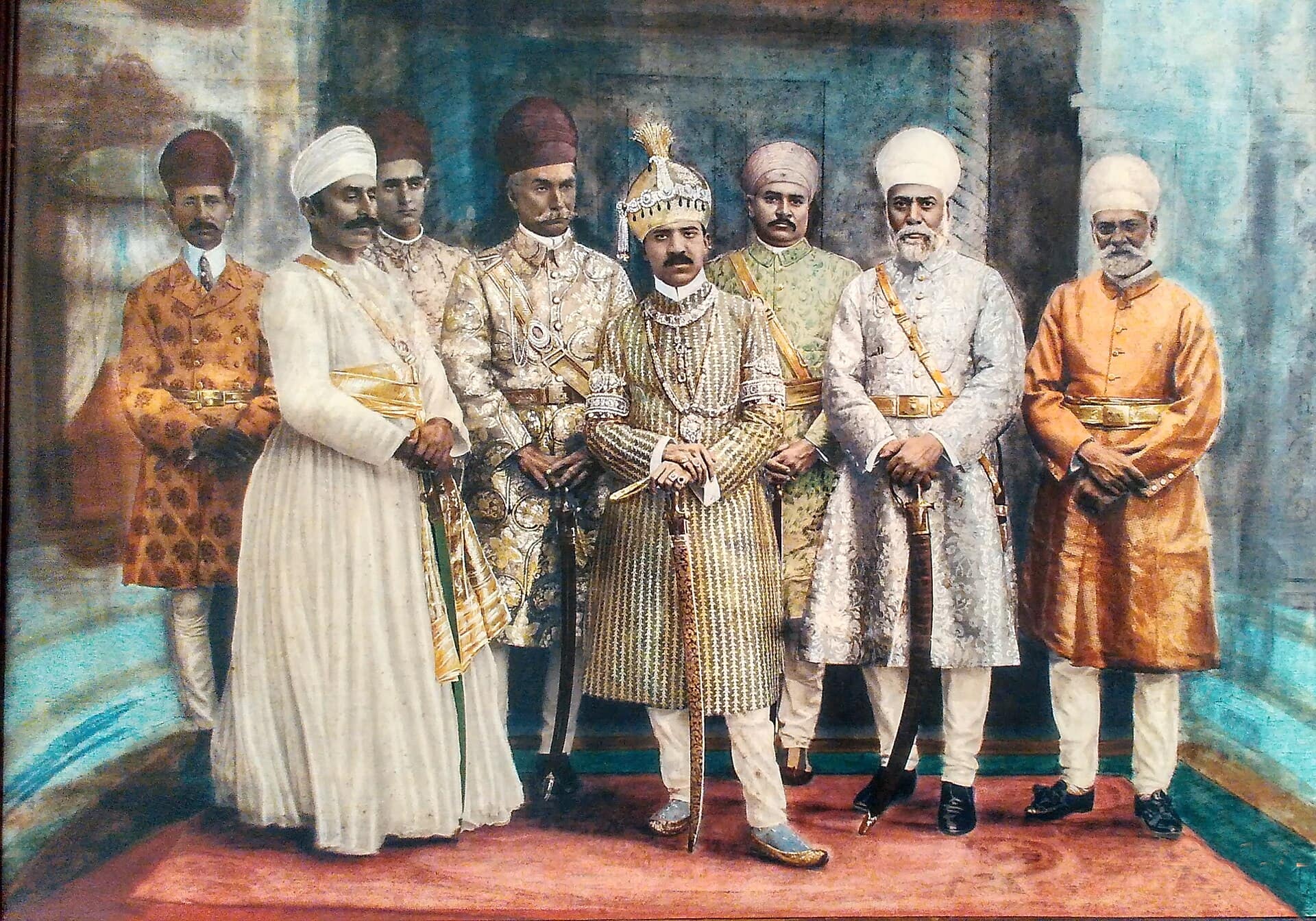
Traditional wear in Agra
Mughal-style sherwani
Best worn at Agra Fort
A regal men's sherwani for a Mughal-monument portrait.
Best colours
Paid links. We may earn a commission if you buy — it costs you nothing extra, and it never decides what we recommend.
Price range
₹2,500–12,000 (rent from ₹1,000)
Comfort level
Medium
Best place
Agra Fort
Footwear
Mojari
Buy / rent nearby
Sadar Bazaar
Best colors
The story behind it
The sherwani, a long buttoned coat, became the formal court dress of Mughal and princely North India.
Styling guide
How to style this look
Accessories
Footwear
Mojari — comfortable, on-theme and easy for cobbled lanes and steps.
Shop footwear on AmazonBag suggestion
A potli (drawstring) bag or a small embroidered clutch keeps the look authentic with your phone within reach.
Hair & makeup (optional)
Soft kajal, a bold lip and loose waves or a braided bun with a maang tikka complete the traditional look.
Best colour combinations
Paid links. We may earn a commission if you buy — it costs you nothing extra, and it never decides what we recommend.
Where to shoot it
Best photo spots for this outfit
Spots in Agra where Mughal-style sherwani really works.
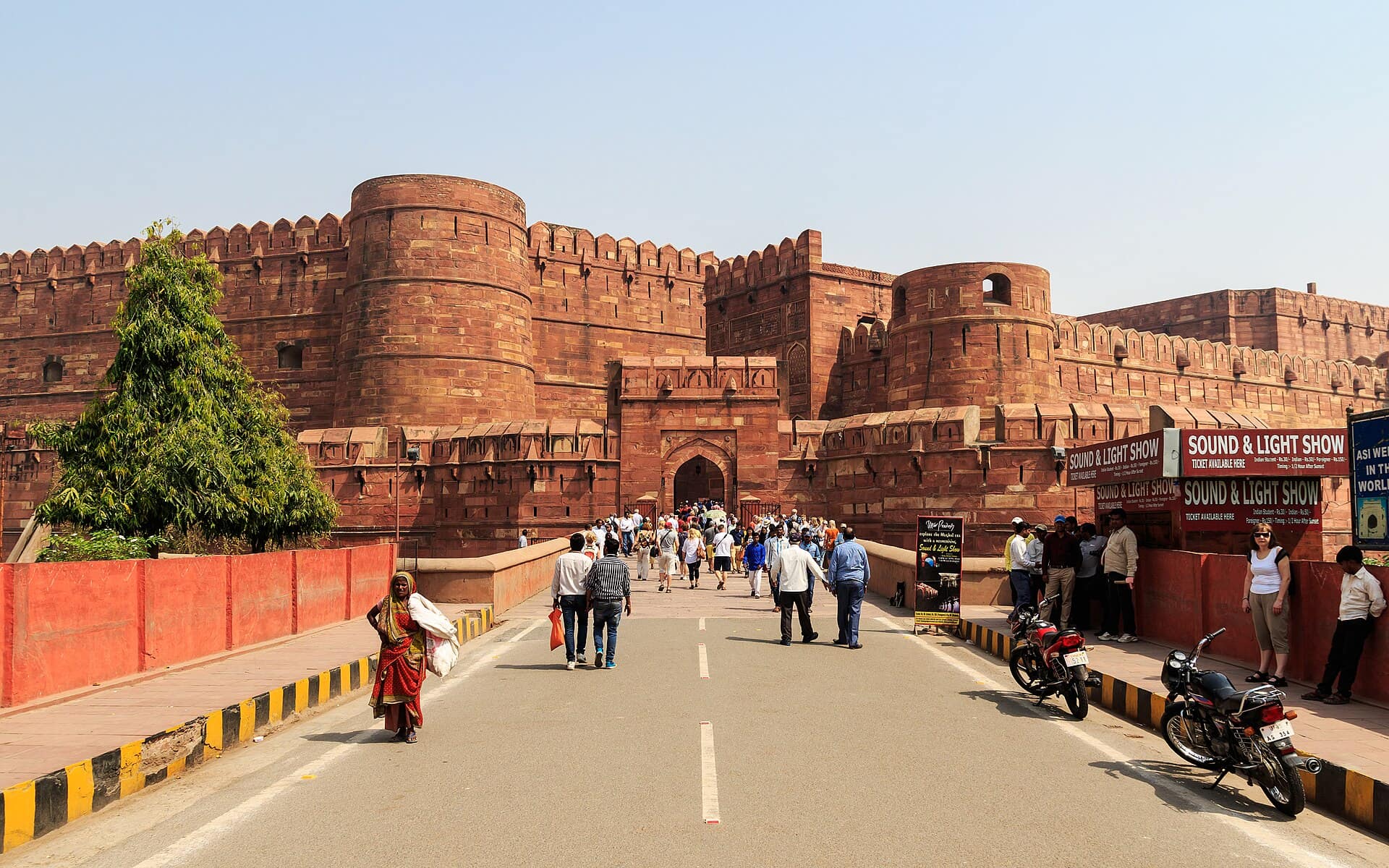 Great match
Agra Fort
- Best time
- Best time: Late afternoon, when the red sandstone warms to orange and the Taj glows down the river; early morning for soft light and empty courtyards.
- Best angle
- Best angle: Stand in the Diwan-i-Am and take a photo through a row of scalloped arches towards the throne alcove, then walk to the Musamman Burj terrace to zoom in on the Taj.
Akbar's Tomb, Sikandra
- Best time
- Best time: 6:00–7:30 AM for empty courtyards, low raking light on the red sandstone, and deer on the lawns. Late afternoon gives warm stone but more visitors. Avoid 10:00 AM – 3:00 PM: harsh overhead light, heat haze, and the sandstone goes flat.
- Best angle
- Best angle: Shoot the Jami Darwaza south gate straight-on from the centre of the approach for the four white minarets in symmetry, then move to a corner for a three-quarter view that shows the gate's depth. For the tomb itself, get distance — from the far end of the garden the five receding terraces read as a pyramid, which is the point of the building. Inside the courtyard, shoot up at the marble chhatris against sky. Deer on the lawn at dawn need a long lens or a phone zoom from a low crouch.
Chini Ka Rauza
- Best time
- Best time: Late afternoon, roughly 4:00 – 5:45 PM, when low raking sun brings out the surviving glazed-tile colour on the upper walls and dome. Midday light flattens the building completely because the surface has no deep relief to cast shadows.
- Best angle
- Best angle: Tight shots of the surviving tile fragments on the upper walls and around the arches beat any attempt at a full facade, because most of the cladding is gone. From the north-east corner you get the dome and two walls in one frame. Inside, the painted plaster in the chambers is best shot straight-on with a wide lens in available light — flash is usually prohibited and the interiors are dim.
Shop the look
Where to buy or rent nearby
Typical price · ₹2,500–12,000 (rent from ₹1,000)
Wear it well
Practical tips for tourists
Heavy layers on a hot afternoon
Carry mojari or comfortable flats — you'll be on your feet a lot.
Great for a morning or late-afternoon shoot; pace longer days.
Golden hour light flatters rich traditional colours — plan the shoot early or late.
The full guide
Styling Mughal-style sherwani in Agra
Mughal-style sherwani is a traditional wear favourite in Agra, and looks its best in ivory, gold and deep maroon. It pairs naturally with a shoot at Agra Fort, worn with mojari.
Comfort is medium, so plan your route accordingly. You can buy or rent it around sadar bazaar from about ₹2,500–12,000 (rent from ₹1,000). Check the photo spots above for the best time and angle to capture the look.
Mughal-Style Sherwani
The sherwani is a long buttoned coat worn over a kurta and churidar, and it became the formal court dress of Mughal and princely north India. Wearing one at Agra's monuments is the most anachronistic thing you can do photographically, which is exactly why people do it — the silhouette belongs to the buildings.
Why it suits Agra specifically
The sherwani's straight vertical line, high closed neck and knee-length hem echo the proportions of Mughal architecture: the arch, the minaret, the pishtaq. Against the red sandstone of Agra Fort or the marble of Itimad-ud-Daulah, an ivory or deep-maroon sherwani reads as belonging to the frame rather than standing in front of it. It is the strongest single menswear choice for this city.
Fabric and colour
- Ivory or cream raw silk — the classic, and the best against red sandstone.
- Deep maroon or bottle green — richer, better against white marble.
- Gold-toned brocade — formal, and heavy; a winter or evening choice only.
- Cotton or linen sherwani — the practical summer version, and the one to choose if you are actually walking around rather than posing for twenty minutes.
The embroidery to look for is zardozi — metal-thread work, which is Agra's own craft and is sold by the metre in Kinari Bazaar. A sherwani with genuine Agra zardozi on the placket and cuffs is the correct local buy.
The heat warning
A sherwani is a warm garment and Agra is a hot city. A lined raw-silk sherwani at 2:00 PM in May at Agra Fort is genuinely unpleasant and will ruin your day. Wear it for an early-morning or late-afternoon shoot only, and bring something cooler to change into. Do not plan to sightsee in it. If you want one garment all day, choose an unlined cotton kurta with a light Nehru jacket instead.
What goes with it
- Churidar — the tightly gathered trouser — or a straight-cut pyjama.
- Mojari on the feet. You will remove them repeatedly at monuments, so anything with laces is a mistake.
- Safa (turban) if you want the full court look. Available in Kinari Bazaar.
- A brooch or kalgi at the collar.
- Optionally a dupatta or shawl draped over one shoulder.
Buying or renting
Sadar Bazaar has the ready-made range at ₹2,500–12,000. Made-to-measure from a Kinari Bazaar tailor using fabric and zardozi bought in the same market takes two to four days and costs ₹4,000–15,000 — worth it only if you are in Agra that long.
Rental runs from about ₹1,000, and there are photographers near the Taj East Gate who operate a dress-and-shoot package: sherwani rental, a photographer, and an hour at a monument. If your interest is the photograph rather than the garment, renting is the right answer and buying is a waste of money. Agree the total price, the number of edited images and the location before anything else, and confirm whether monument entry is included — it usually is not, and professional-looking photography equipment can attract questions at the Taj gates.
Questions
Mughal-style sherwani — FAQ
Can I wear Mughal-style sherwani at Agra Fort?
Yes — Mughal-style sherwani suits Agra Fort beautifully. Comfort is medium, so you can explore at an easy pace. Pair it with mojari for the walk up.
Where can I buy or rent traditional wear in Agra?
Try Sadar Bazaar in Agra. Expect roughly ₹2,500–12,000 (rent from ₹1,000). Many shops rent festive outfits by the day, which is ideal for a single shoot.
Which colours look best for Agra photos?
Ivory, gold and deep maroon photograph especially well against old stone in Agra — they stand out without clashing with the setting.
Is Mughal-style sherwani comfortable for sightseeing?
Comfort level is medium. It works for a relaxed day of sightseeing as long as your footwear is comfortable. Mojari keeps it easy on the feet.