
Traditional wear in Agra
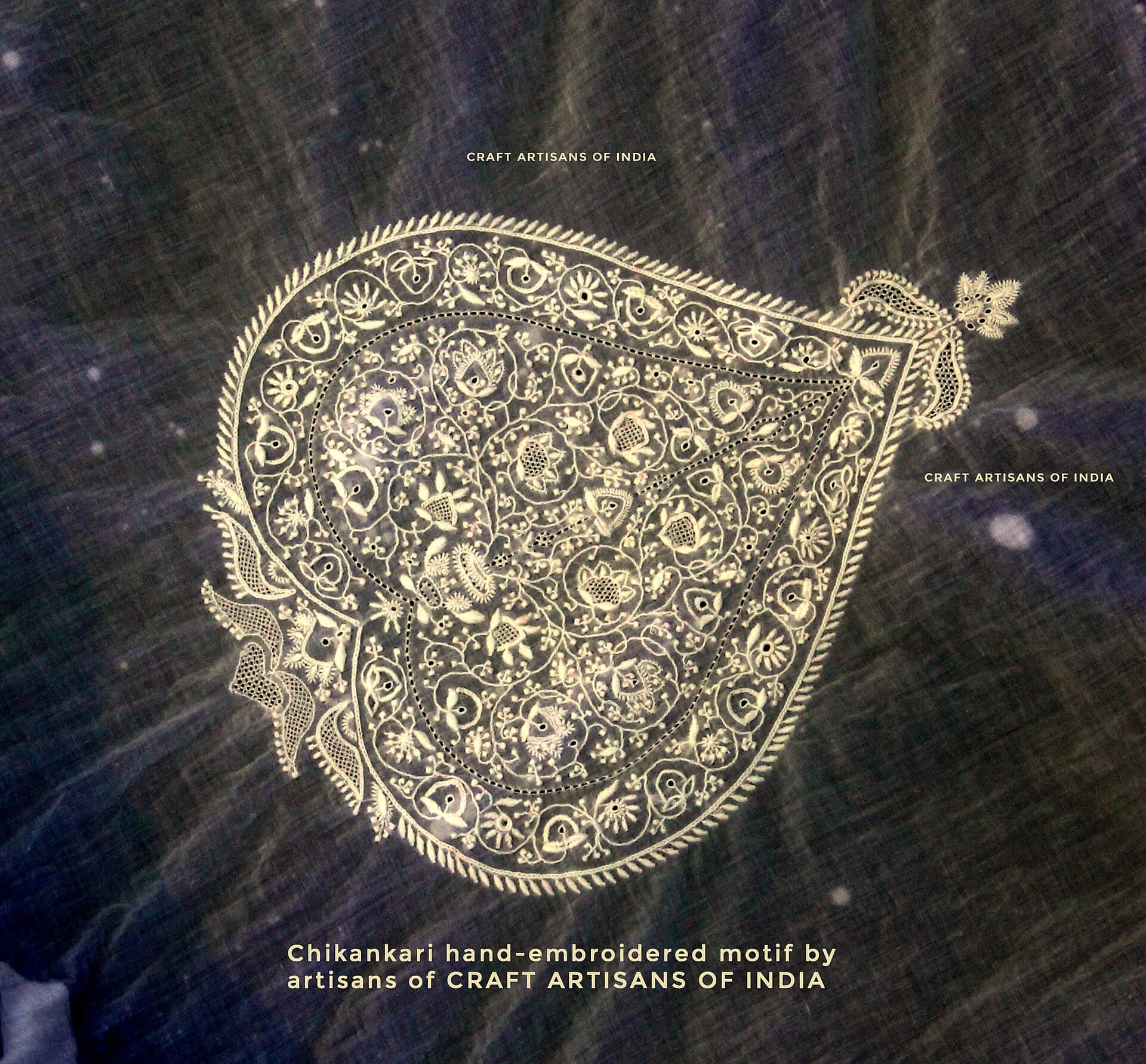
Chikankari kurta set
Best worn at Itimad-ud-Daulah (Baby Taj)
Delicate white-on-pastel shadow-work Chikankari — elegant and cool against the marble monuments.
Best colours
Paid links. We may earn a commission if you buy — it costs you nothing extra, and it never decides what we recommend.
Price range
₹1,500–6,000
Comfort level
High
Best place
Itimad-ud-Daulah (Baby Taj)
Footwear
Juttis
Buy / rent nearby
Sadar Bazaar (and Lucknow nearby)
Best colors
The story behind it
Chikankari is a centuries-old fine hand-embroidery of the Awadh region of Uttar Pradesh, traditionally white thread on soft muslin.
Styling guide
How to style this look
Accessories
Footwear
Juttis — comfortable, on-theme and easy for cobbled lanes and steps.
Bag suggestion
A potli (drawstring) bag or a small embroidered clutch keeps the look authentic with your phone within reach.
Hair & makeup (optional)
Soft kajal, a bold lip and loose waves or a braided bun with a maang tikka complete the traditional look.
Best colour combinations
Where to shoot it
Best photo spots for this outfit
Spots in Agra where Chikankari kurta set really works.
 Great match
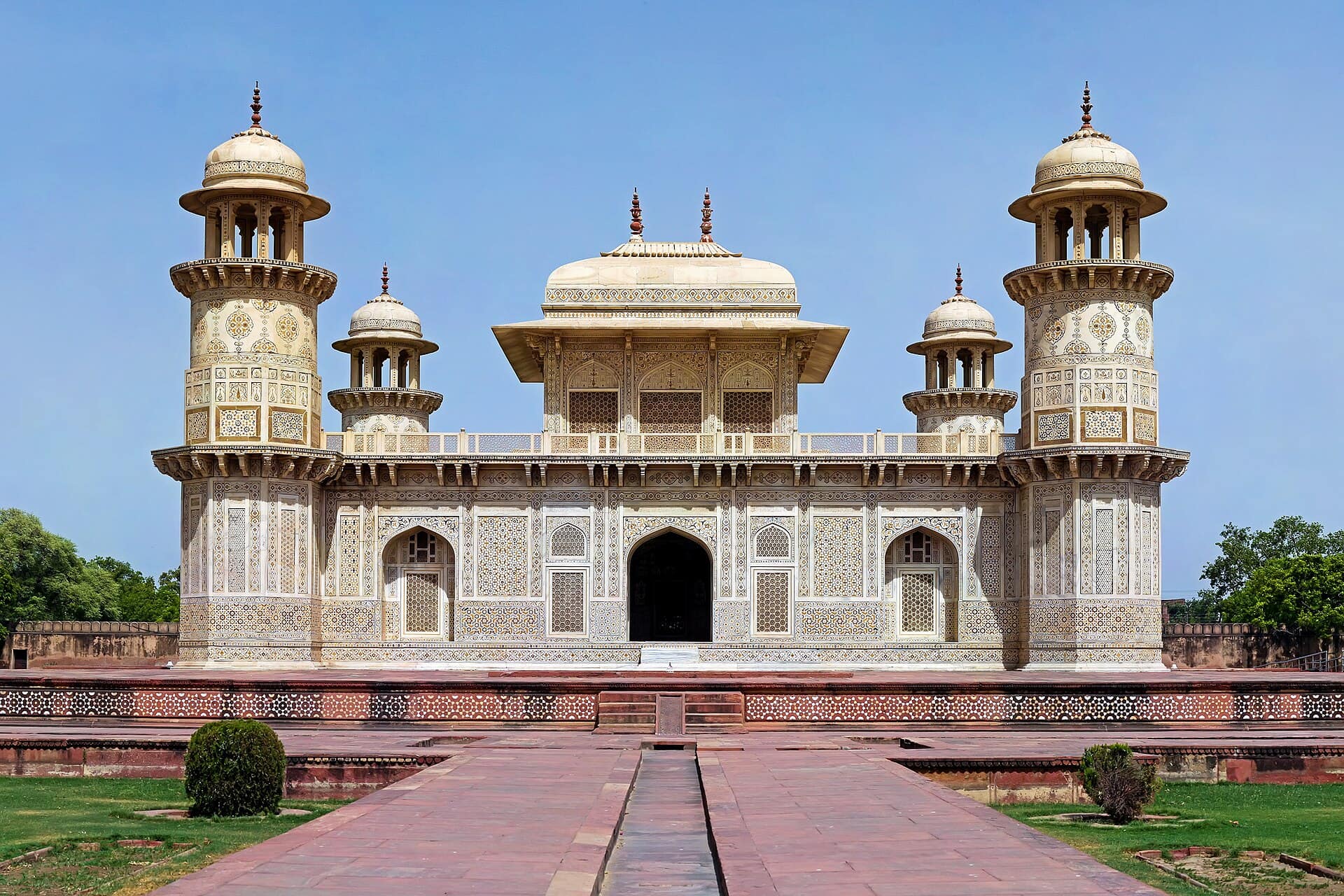
Itimad-ud-Daulah (Baby Taj)
- Best time
- Best time: Late afternoon, when warm light picks out the colours in the inlay; early morning for an empty garden and soft, even light.
- Best angle
- Best angle: Walk through the east gateway and take a straight photo of the tomb along the central water channel, then step close to fill the frame with the inlaid wall.
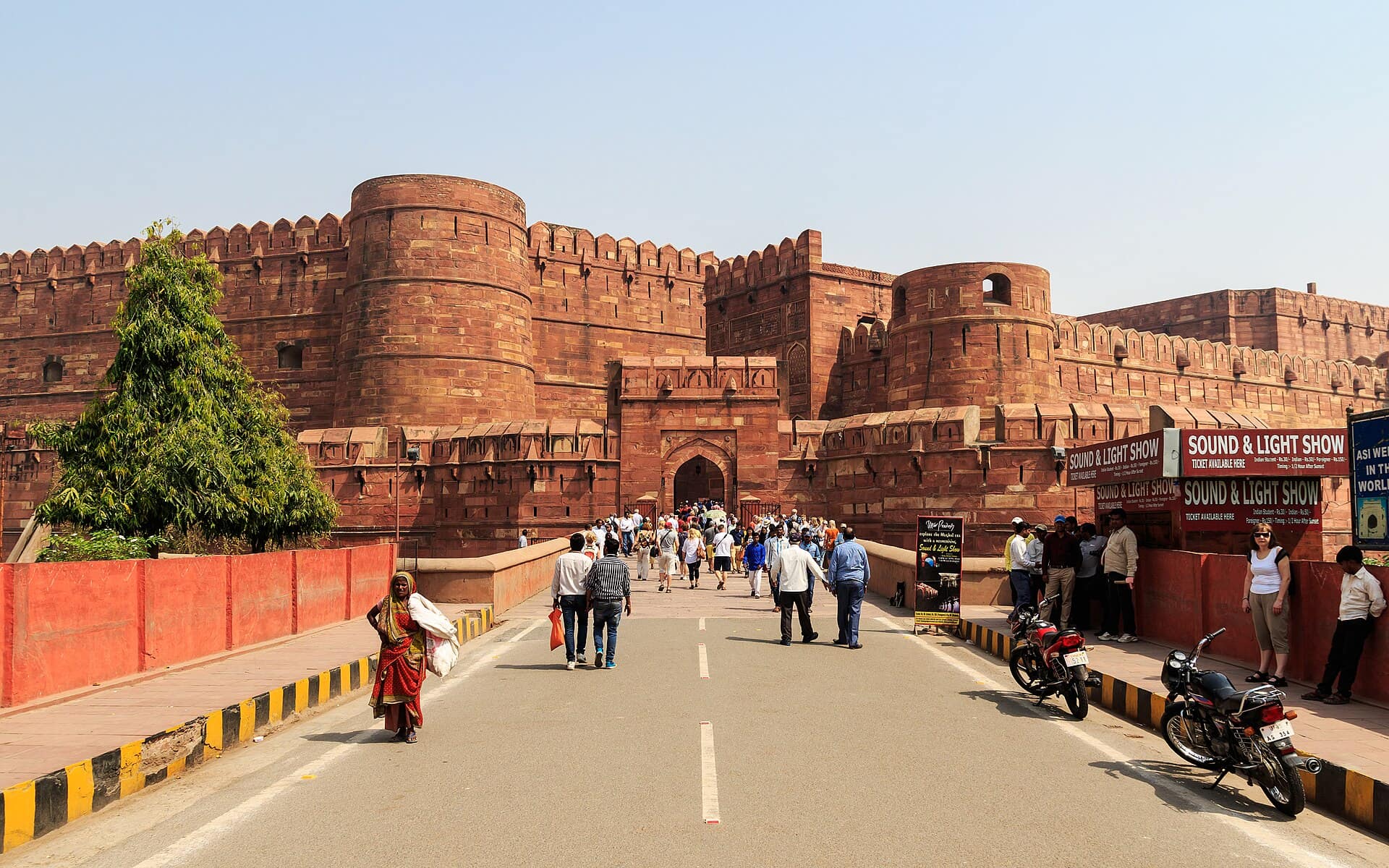
Agra Fort
- Best time
- Best time: Late afternoon, when the red sandstone warms to orange and the Taj glows down the river; early morning for soft light and empty courtyards.
- Best angle
- Best angle: Stand in the Diwan-i-Am and take a photo through a row of scalloped arches towards the throne alcove, then walk to the Musamman Burj terrace to zoom in on the Taj.
Akbar's Tomb, Sikandra
- Best time
- Best time: 6:00–7:30 AM for empty courtyards, low raking light on the red sandstone, and deer on the lawns. Late afternoon gives warm stone but more visitors. Avoid 10:00 AM – 3:00 PM: harsh overhead light, heat haze, and the sandstone goes flat.
- Best angle
- Best angle: Shoot the Jami Darwaza south gate straight-on from the centre of the approach for the four white minarets in symmetry, then move to a corner for a three-quarter view that shows the gate's depth. For the tomb itself, get distance — from the far end of the garden the five receding terraces read as a pyramid, which is the point of the building. Inside the courtyard, shoot up at the marble chhatris against sky. Deer on the lawn at dawn need a long lens or a phone zoom from a low crouch.
Shop the look
Where to buy or rent nearby
Typical price · ₹1,500–6,000
Wear it well
Practical tips for tourists
Over-accessorising — let the embroidery be the hero
Carry juttis or comfortable flats — you'll be on your feet a lot.
Comfortable enough for longer sightseeing and walking days.
Golden hour light flatters rich traditional colours — plan the shoot early or late.
The full guide
Styling Chikankari kurta set in Agra
Chikankari kurta set is a traditional wear favourite in Agra, and looks its best in white, powder blue and mint. It pairs naturally with a shoot at Itimad-ud-Daulah (Baby Taj), worn with juttis.
Comfort is high, so plan your route accordingly. You can buy or rent it around sadar bazaar (and lucknow nearby) from about ₹1,500–6,000. Check the photo spots above for the best time and angle to capture the look.
Chikankari Kurta Set
Chikankari is fine white-thread shadow-work embroidery on soft cotton or muslin, and it is the one garment that solves Agra's central problem: you need to be covered for the mosques and temples, cool for 40°C monument courtyards, and photographed against white marble without disappearing into it.
Why it works here
The technique is white thread on white or pale cloth, so the pattern reads through shadow and backlighting rather than through colour. In hard midday sun at the Taj, a white-on-white chikankari kurta photographs as texture rather than as a flat white shape — which is the difference between a good portrait and a silhouette.
It is also genuinely cool. The cloth is light cotton and the embroidery is openwork in places, so it breathes far better than a synthetic print. For a day that starts at 5:00 AM and ends at sunset with no air conditioning in between, that is not a style point.
Where it is from
Chikankari is Lucknow's craft, not Agra's — it belongs to the Awadh region of Uttar Pradesh, and the best work still comes from Lucknow, about 330 km east. It is widely sold in Agra because both cities are on the same tourist circuit and the garment suits the climate and the monuments. If you want the real thing at the real price, buy it in Lucknow rather than Agra; in Agra you are paying for the convenience and often for machine embroidery sold as hand work.
How to tell hand work from machine
- Look at the reverse. Hand chikankari has irregular, slightly uneven stitching and visible thread ends on the back. Machine work is perfectly uniform and the reverse is almost as clean as the front.
- Check the stitch types. Hand work mixes several — bakhiya (shadow work), phanda, murri, jaali (net-like drawn-thread work). Machine work repeats one stitch.
- Feel the jaali. A real hand-made jaali is a hole pulled open by drawing threads apart, with the edges buttonholed. A machine imitation is a printed or embroidered grid on intact cloth.
- Price is the tell. A full hand-embroidered kurta set takes weeks. Under ₹2,000 it is not hand work, whatever the label says.
What to wear it with
White, powder blue or mint are the classic chikankari grounds and all work against marble. Pair with jutti or mojari on your feet — you will be removing shoes constantly at monuments, so slip-on footwear is not a style choice, it is a practical one. Jhumka earrings and a small potli bag complete it without competing with the embroidery.
Avoid over-accessorising. Chikankari is a subtle craft; heavy jewellery fights it. Let the needlework be the subject.
Buying in Agra
Sadar Bazaar has the widest selection and the most competition, which keeps prices honest. Kinari Bazaar in the old city is better for fabric and embroidery borders, and for having a garment made. Shilpgram near the Taj East Gate is curated but pricier.
Prices run ₹1,500–6,000 for a kurta set depending on cloth quality and embroidery density. Haggle 20–40% off the first quote in the bazaars; do not haggle at Shilpgram.
Care
Hand wash cold, do not wring, dry in shade, and iron on the reverse with a cloth between iron and embroidery. White chikankari yellows if left in direct sun wet. It should last years if you do not machine wash it.
Questions
Chikankari kurta set — FAQ
Can I wear Chikankari kurta set at Itimad-ud-Daulah (Baby Taj)?
Yes — Chikankari kurta set suits Itimad-ud-Daulah (Baby Taj) beautifully. Comfort is high, so you can explore at an easy pace. Pair it with juttis for the walk up.
Where can I buy or rent traditional wear in Agra?
Try Sadar Bazaar (and Lucknow nearby) in Agra. Expect roughly ₹1,500–6,000. Many shops rent festive outfits by the day, which is ideal for a single shoot.
Which colours look best for Agra photos?
White, powder blue and mint photograph especially well against old stone in Agra — they stand out without clashing with the setting.
Is Chikankari kurta set comfortable for sightseeing?
Comfort level is high. It works for a relaxed day of sightseeing as long as your footwear is comfortable. Juttis keeps it easy on the feet.