
Best Photo Spots in Gwalior
Gwalior packs a lot of photo variety into a small area. Up on the fort hill you have sheer sandstone walls, a palace decorated with blue and yellow tiles, finely carved 11th-century temples and giant Jain figures cut into the rock. Down in the city, Jai Vilas Palace adds gilded halls and huge chandeliers, while the Tomb of Tansen has carved stone screens in a quiet garden.
Most of the best shots are on the fort, so give it a full morning and save the palace and the tomb for later in the day. These are the photo spots in Gwalior that are worth your time.
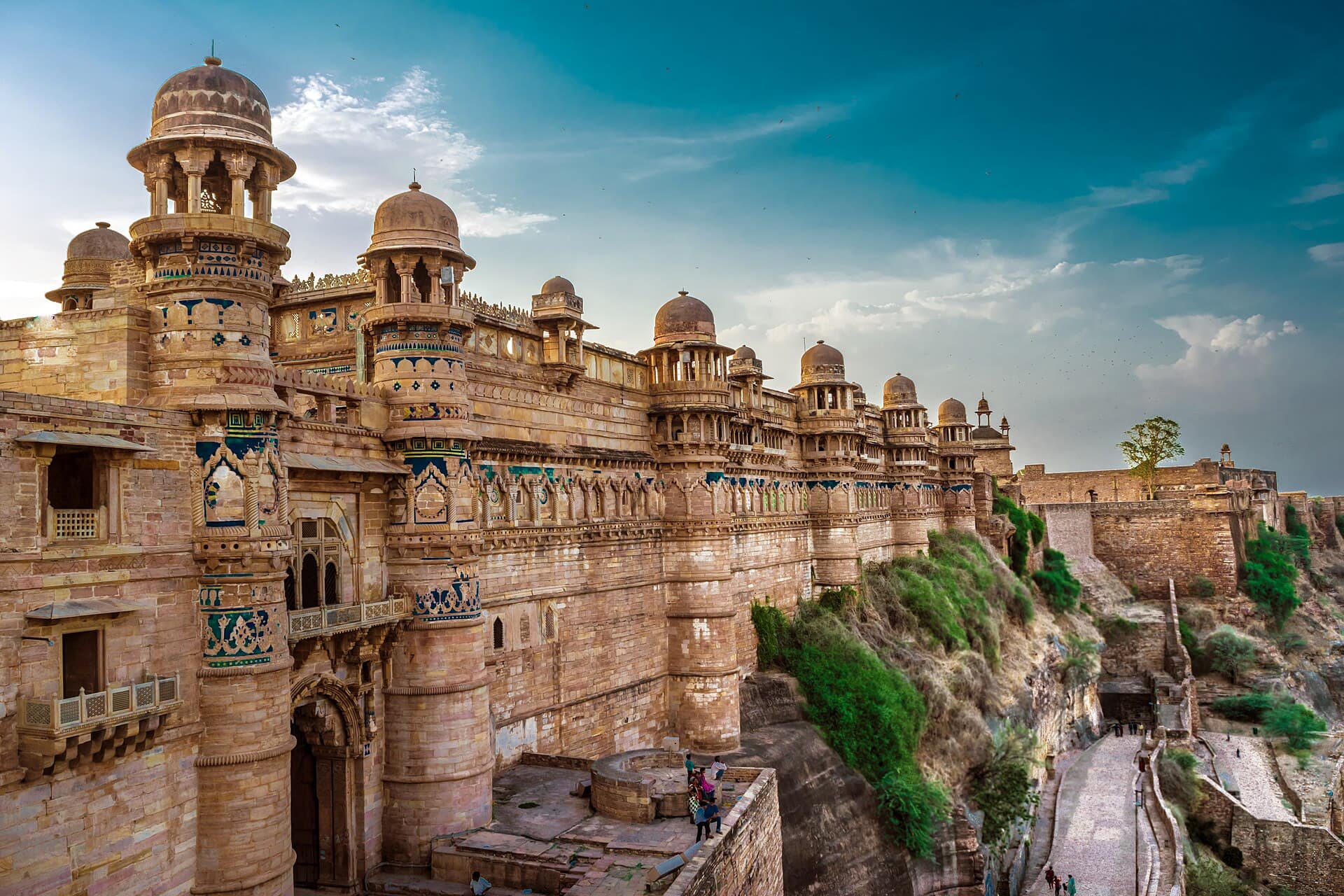 Medium crowd
Entry ₹75 (Indian) / ₹250 (foreign)
Gwalior Fort
- Best timeEarly morning, when the paths are quiet and soft light falls on the sandstone walls; late afternoon for warm light and long views over the city.
- ColorsTurquoiseWhiteRust
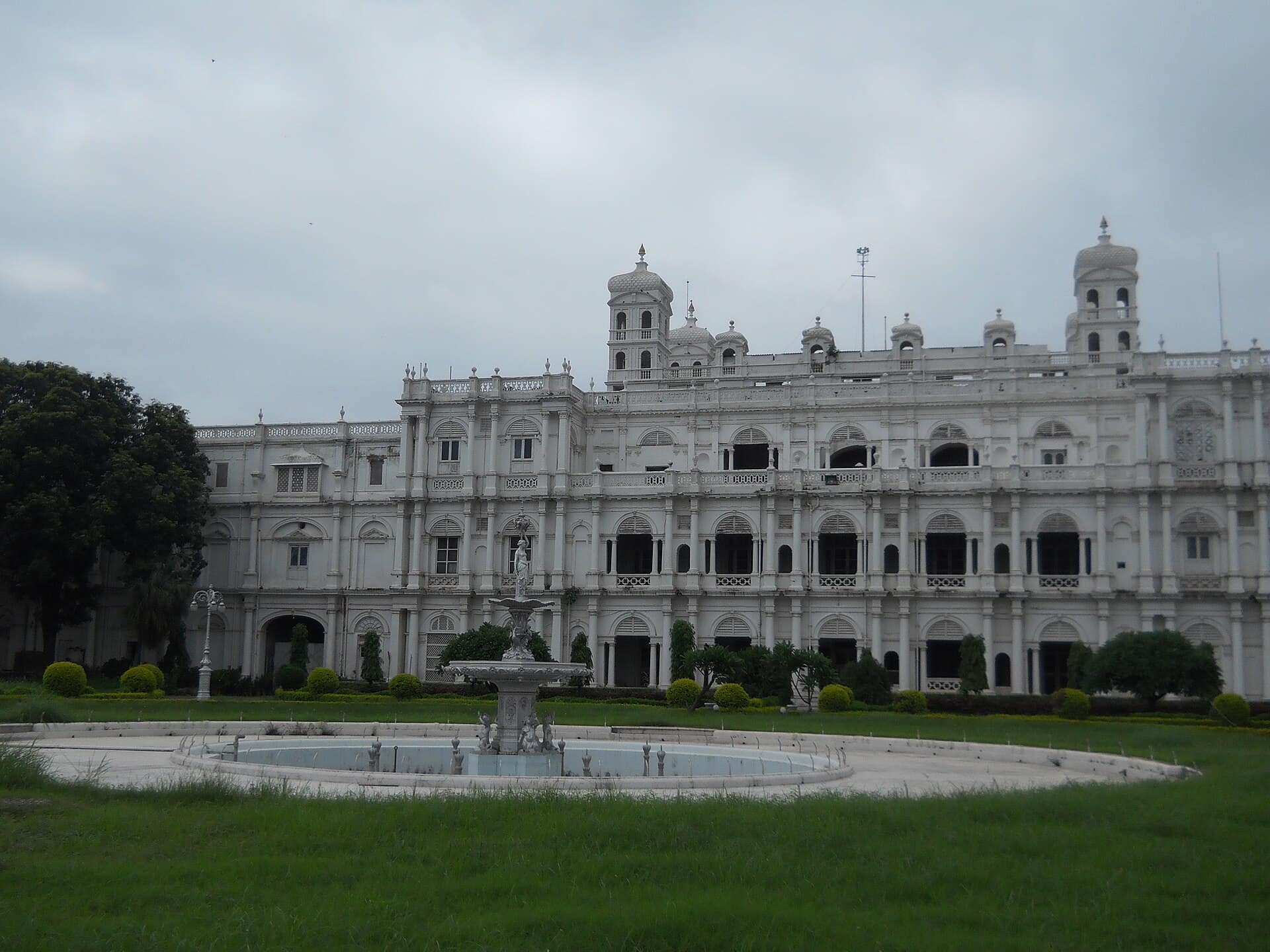 Medium crowd
Entry ₹150 (Indian)
Jai Vilas Palace
- Best timeMid-morning, soon after the museum opens, when the Durbar Hall is quieter and the white façade is not yet in harsh midday sun.
- ColorsIvoryEmeraldWine
Entry Covered by fort ticket
Man Mandir Palace
- Best timeMorning, when the light is soft and the tiled walls are quiet enough to photograph without crowds; after dark for the sound-and-light show.
- ColorsTurquoiseYellowWhite
Entry Covered by fort ticket
Sas-Bahu Temples
- Best timeMorning, when soft light brings out the depth of the carving and the temples are quiet.
- ColorsOchreCreamRust
Entry Free
Tomb of Tansen
- Best timeMorning, when the garden is quiet and soft light falls on the carved stone screens and domes.
- ColorsRustCreamMaroon
Why Gwalior Is Great for Photography
Few Indian cities fit so much history into one hill. From the fort walls you can look down over the whole city, and within a short walk you move from an 8th-century temple to a pair of 11th-century temples and a 15th-century palace. The colours are what make Gwalior different: turquoise, green and yellow tiles on warm sandstone at the fort, and white and gold inside the Scindia palace.
The city also rewards a little planning. The tiled walls of Man Mandir are best in soft morning light, the Jain figures along the Urvai Gate road are easy to miss if you drive straight past, and the fort takes on a completely different look after dark, when the sound-and-light show plays across the palace walls.
Photography Tips for Gwalior
- Start early at the fort: The paths are quiet, the air is cool and the low sun brings out the texture of the sandstone.
- Stop on the way up: If you drive in through the Urvai Gate, pull over to photograph the giant Jain figures carved into the cliff beside the road.
- Get a camera ticket at Jai Vilas Palace: You need an extra ticket for a camera or phone to take photos inside the museum.
- Carry a light: The underground rooms of Man Mandir Palace are dark, so a torch or phone light helps.
- Leave the drone at home: Drones are not allowed at protected monuments without official permission.
- Ask before photographing people: This matters most at the gurdwara, the Jain figures and the Tomb of Tansen, where people come to pray.
- Expect haze in winter: December and January mornings can be hazy or foggy, so views over the city are often clearer by late morning.
Best Time for Photography in Gwalior
November to February gives the most comfortable days and the clearest light for long walks around the fort. From April to June the light is harsh and the heat makes midday photography hard work, so shoot at dawn and in the last hour before sunset. The monsoon, from July to September, brings dramatic skies and green hills around the fort, but also slippery stone paths.
Photography rules and ticket options can change, so check them at the counter before you start shooting inside museums and palaces.
Questions
Gwalior — FAQ
What are the best photo spots in Gwalior?
The best photo spots in Gwalior are Gwalior Fort, Man Mandir Palace, the Sas-Bahu Temples, Jai Vilas Palace and the Tomb of Tansen. Together they cover a hilltop fort, colourful tiled walls, carved temples, palace interiors and a Mughal-era tomb garden.
What is the best time of day for photography in Gwalior?
Early morning is best at the fort, when the paths are quiet and the low sun lights up the sandstone. Visit Jai Vilas Palace soon after it opens, and go back up to the fort after dark if you want to see Man Mandir Palace lit up for the sound-and-light show.
Can I take photos inside Jai Vilas Palace?
Yes. Photography is usually allowed inside the museum if you buy an extra camera or phone ticket at the counter. Follow the staff's instructions, as the rules can differ from room to room.
Where are the giant Jain statues at Gwalior Fort?
The best-known group lines the road up from the Urvai Gate, on the western side of the fort hill. The figures were carved into the cliff in the 15th century, and the tallest is about 17 m high. Stop on the way up if you are driving, and be respectful, as Jains still revere them.
Is Gwalior good for Instagram photos?
Yes. The turquoise and yellow tiles of Man Mandir Palace, the gilded Durbar Hall of Jai Vilas Palace with its giant chandeliers and the carved pillars of the Sas-Bahu Temples all make striking backdrops for photos and reels.