
Best Photo Spots in Kumbakonam
Kumbakonam is a town of tall painted gopurams, stone-pillared halls and wide temple tanks. Walk a few streets from the bus stand and you pass a temple tower at almost every corner, with flower sellers, brass shops and coffee stalls in between.
For temple architecture, Chola carving and street life, these are the best photo spots in and around Kumbakonam.
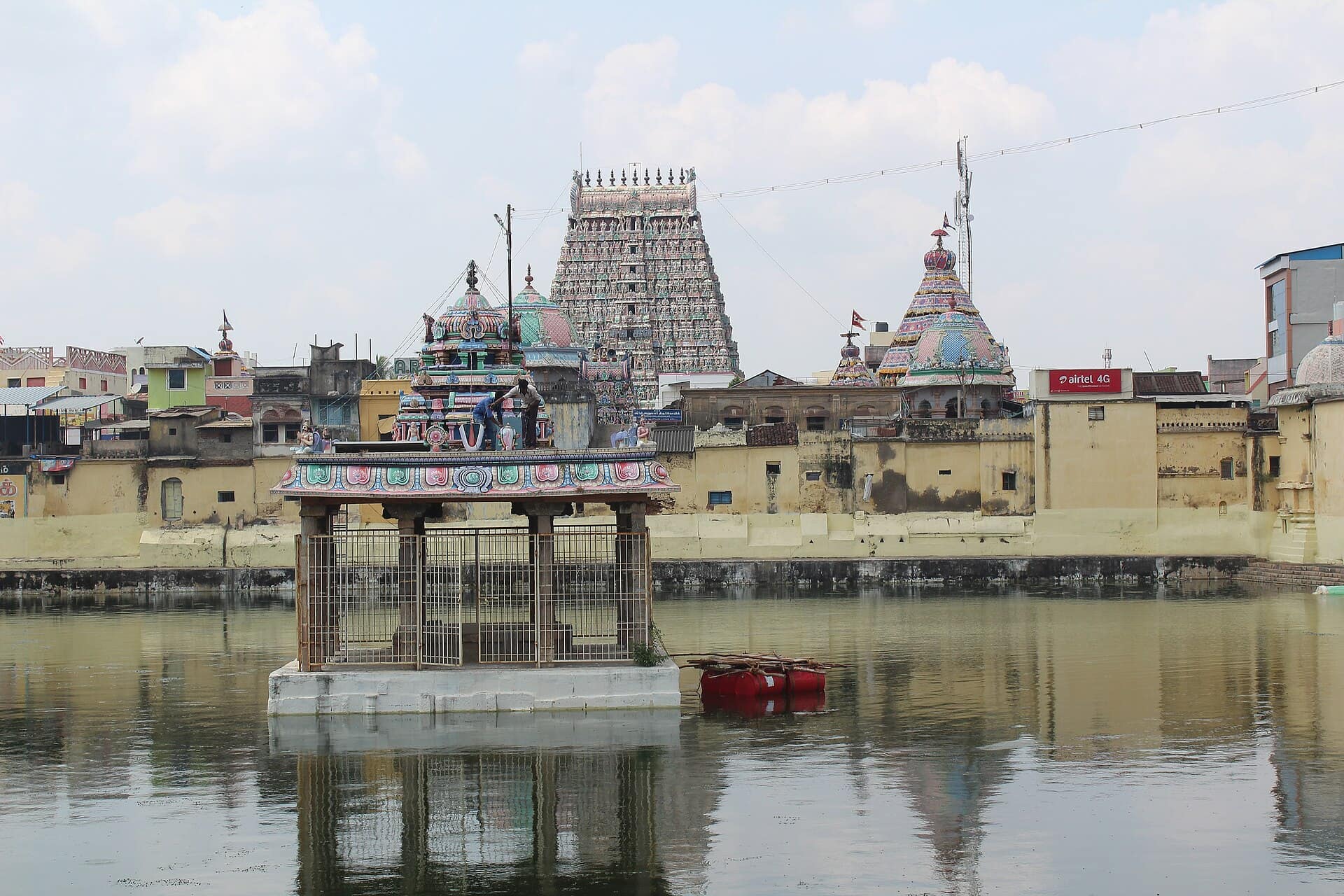 High crowd
Entry Free
Adi Kumbeswarar Temple
- Best timeEarly morning for soft light on the painted gopuram and a quieter street; late afternoon when the temple reopens and the tower glows warm.
- ColorsSaffronRedWhite
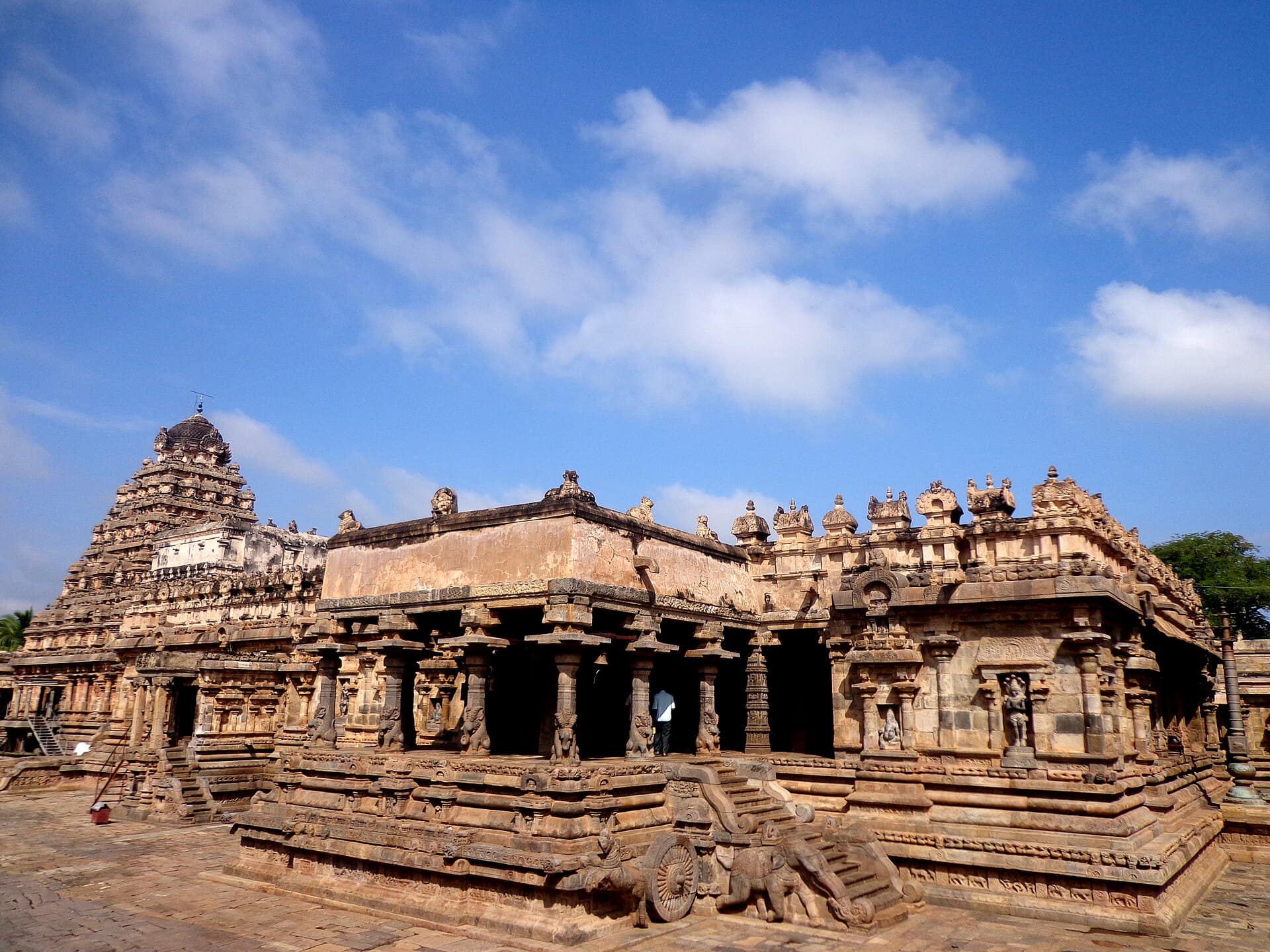 Medium crowd
Entry Free
Airavatesvara Temple
- Best timeEarly morning or late afternoon, when low sunlight picks out the carvings and the courtyard is quiet.
- ColorsSaffronCreamMaroon
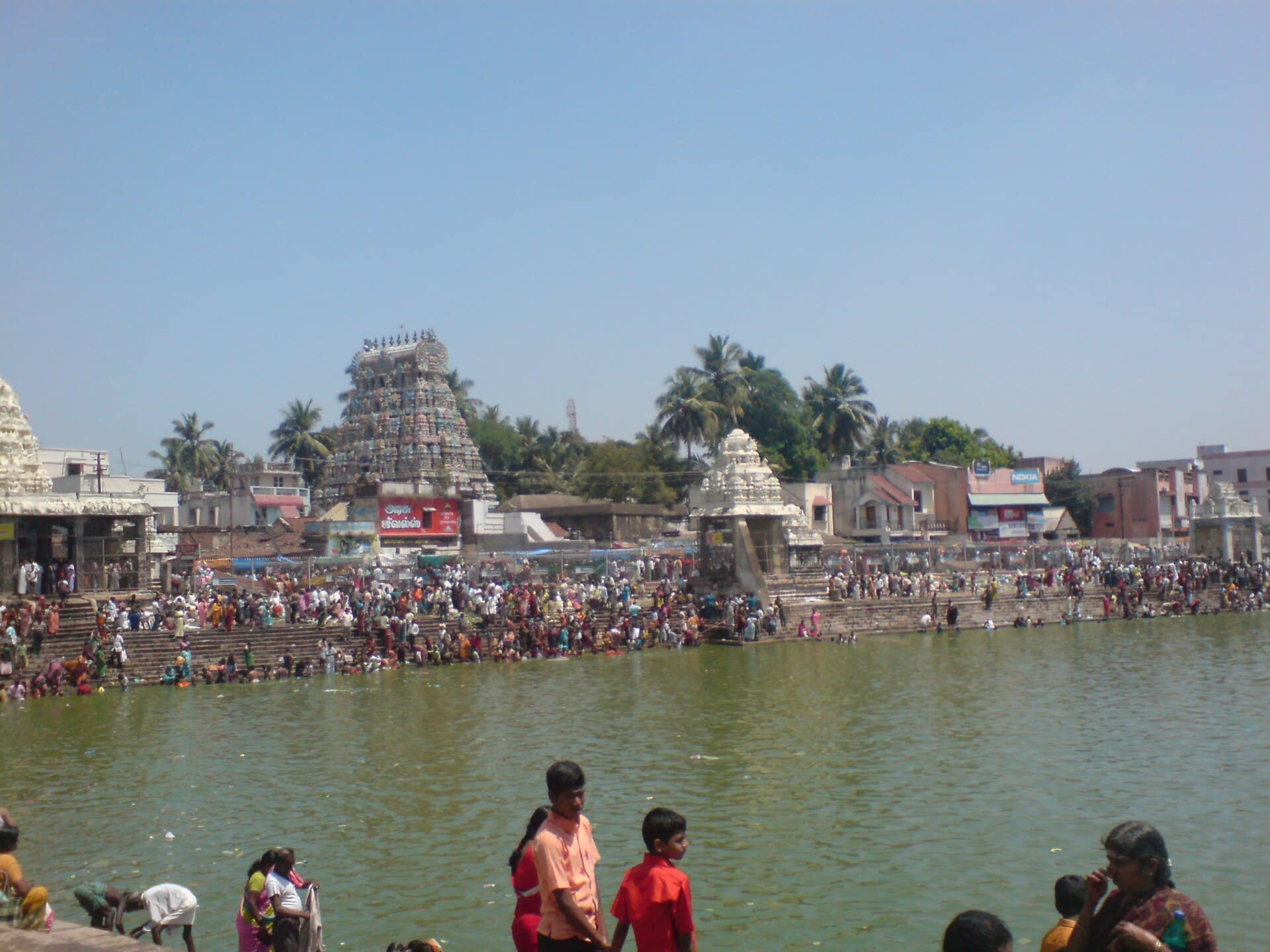 Medium crowd
Entry Free
Mahamaham Tank
- Best timeSunrise or sunset, when the light is soft and the mandapas reflect in the still water.
- ColorsSaffronWhiteTeal
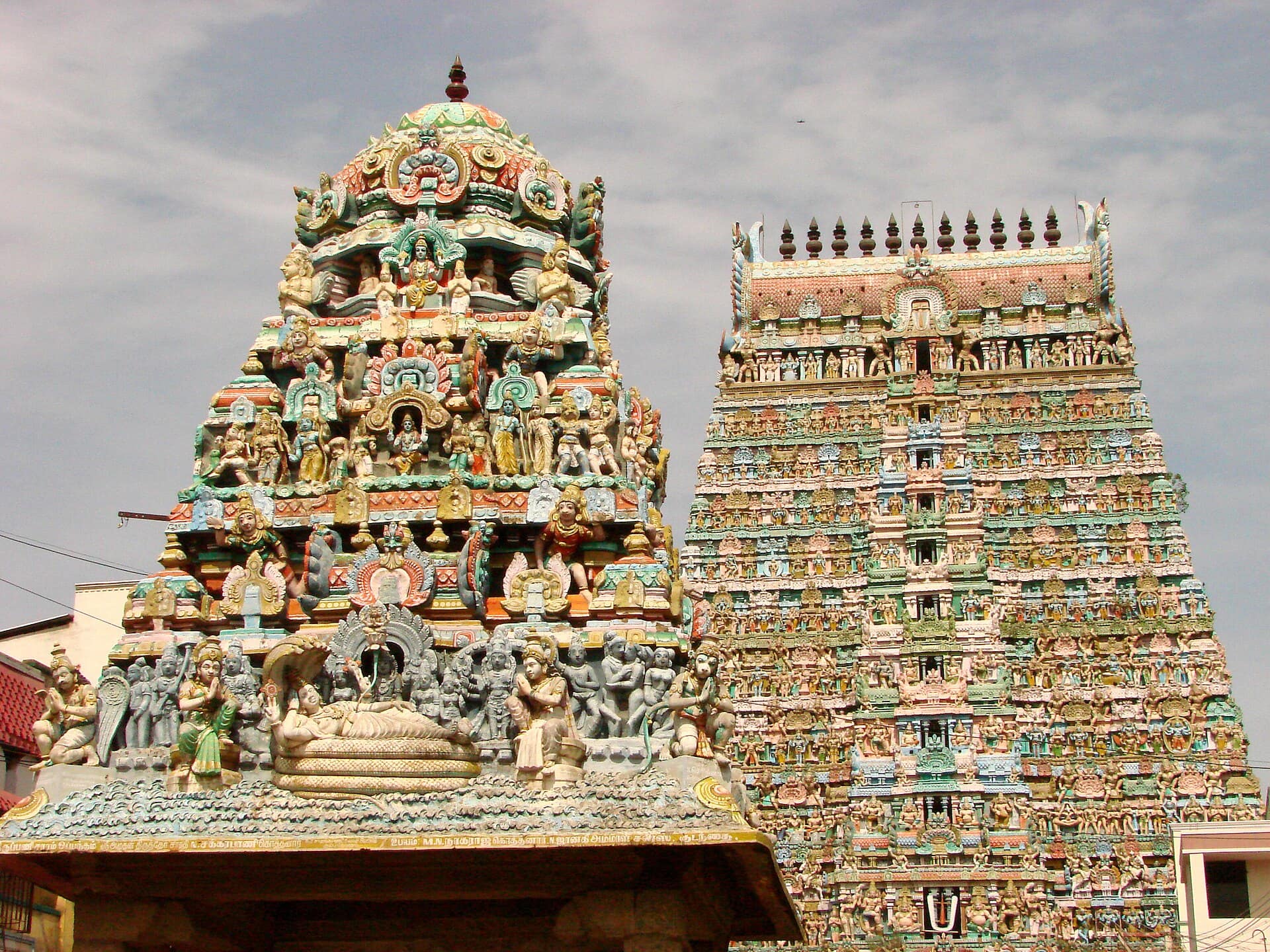 High crowd
Entry Free
Sarangapani Temple
- Best timeEarly morning for soft light and a quiet street; evening for warm light on the painted tower.
- ColorsSaffronWhiteGold
 Medium crowd
Entry Free
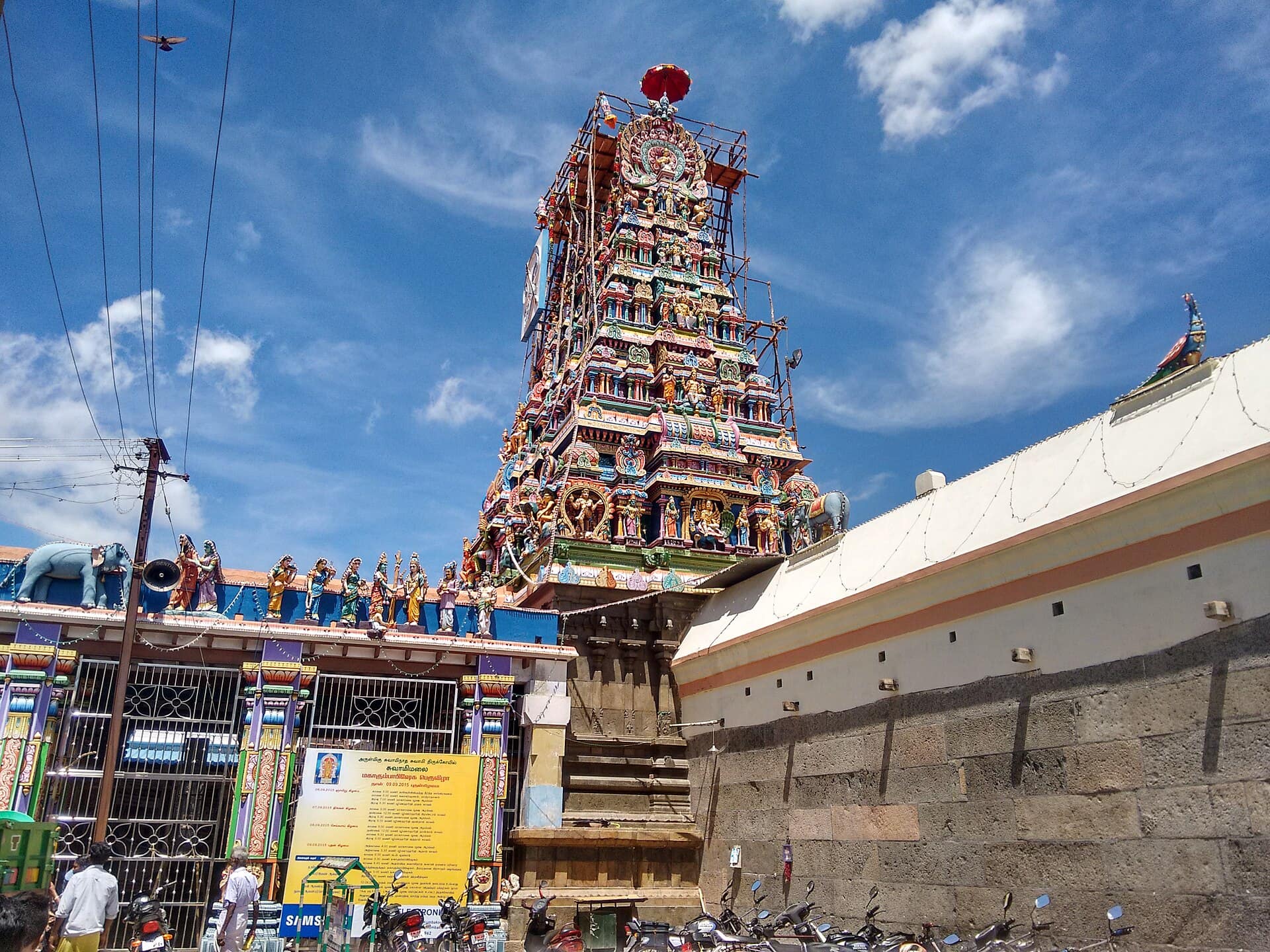
Swamimalai
- Best timeEarly morning for soft light on the temple steps and fewer pilgrims; late afternoon for warm light in the bronze workshops.
- ColorsSaffronRedWhite
Why Kumbakonam Is Great for Photography
Kumbakonam gives you two kinds of temple photos. In town, the Adi Kumbeswarar and Sarangapani temples have huge, brightly painted gopurams that fill the sky above busy streets. A few kilometres away, the Airavatesvara Temple at Darasuram is quieter, older and made of carved stone, with a stone chariot and fine sculpture on every wall.
The Mahamaham Tank adds open space and reflections, while Swamimalai gives you a hillock temple and the bronze-casting workshops of the village.
Photography Tips for Kumbakonam
- Shoot the gopurams from the street: Stand back along the approach road to fit the whole tower in one frame.
- Plan for rules inside: Photos of the inner shrines are not allowed, and many temples limit phones and cameras inside, so plan your shots for the outside.
- Go early: The town temples are busiest in the evening and on festival days, and the light is harsh from late morning.
- Use the soft light at Darasuram: The carvings at the Airavatesvara Temple show their detail best in low morning or late-afternoon light.
- Ask before photographing people: Priests, pilgrims and artisans at the Swamimalai workshops usually appreciate being asked first.
- Carry water and a cap: Much of the walking between gopurams is in full sun.
Best Time for Photography in Kumbakonam
January to March usually gives dry weather and clear skies. The months of the northeast monsoon, October to December, bring grey skies and heavy rain but also a full tank and green paddy fields around Darasuram and Swamimalai.
Photography rules change from temple to temple and can be tightened at any time, so follow the signs and staff at each gate.
Questions
Kumbakonam — FAQ
What are the best photo spots in Kumbakonam?
The best photo spots are the Sarangapani and Adi Kumbeswarar gopurams, the Mahamaham Tank, the Airavatesvara Temple at Darasuram and Swamimalai. Together they cover painted temple towers, a sacred tank, Chola stone carving and a village of bronze-casters.
Can I take photos inside Kumbakonam temples?
Photos of the inner shrines are not allowed, and many temples in Tamil Nadu limit phones and cameras inside. The Airavatesvara Temple is more relaxed about photos of the courtyard and carvings, but always follow the signs and staff.
What is the best time of day for photos in Kumbakonam?
Early morning is best, with soft light and fewer people. Late afternoon also works well at Darasuram and the Mahamaham Tank, when the stone and the water take on a warm glow.
Is Kumbakonam good for Instagram photos?
Yes. The colourful gopurams, the carved stone chariot at Darasuram and the mandapas around the Mahamaham Tank make strong backdrops, especially with a bright saree or veshti.
Where can I photograph bronze-casting near Kumbakonam?
Swamimalai, a few kilometres west of Kumbakonam, has many small workshops that make bronze idols by the lost-wax method. Ask the artisans before you take photos inside a workshop.