
Best Photo Spots in Agra
Agra's five photo spots sit on both banks of the Yamuna, and several of them look at each other. Plan the day by the sun and the river: the Taj in the morning, the fort in the afternoon, and the far bank at sunset.
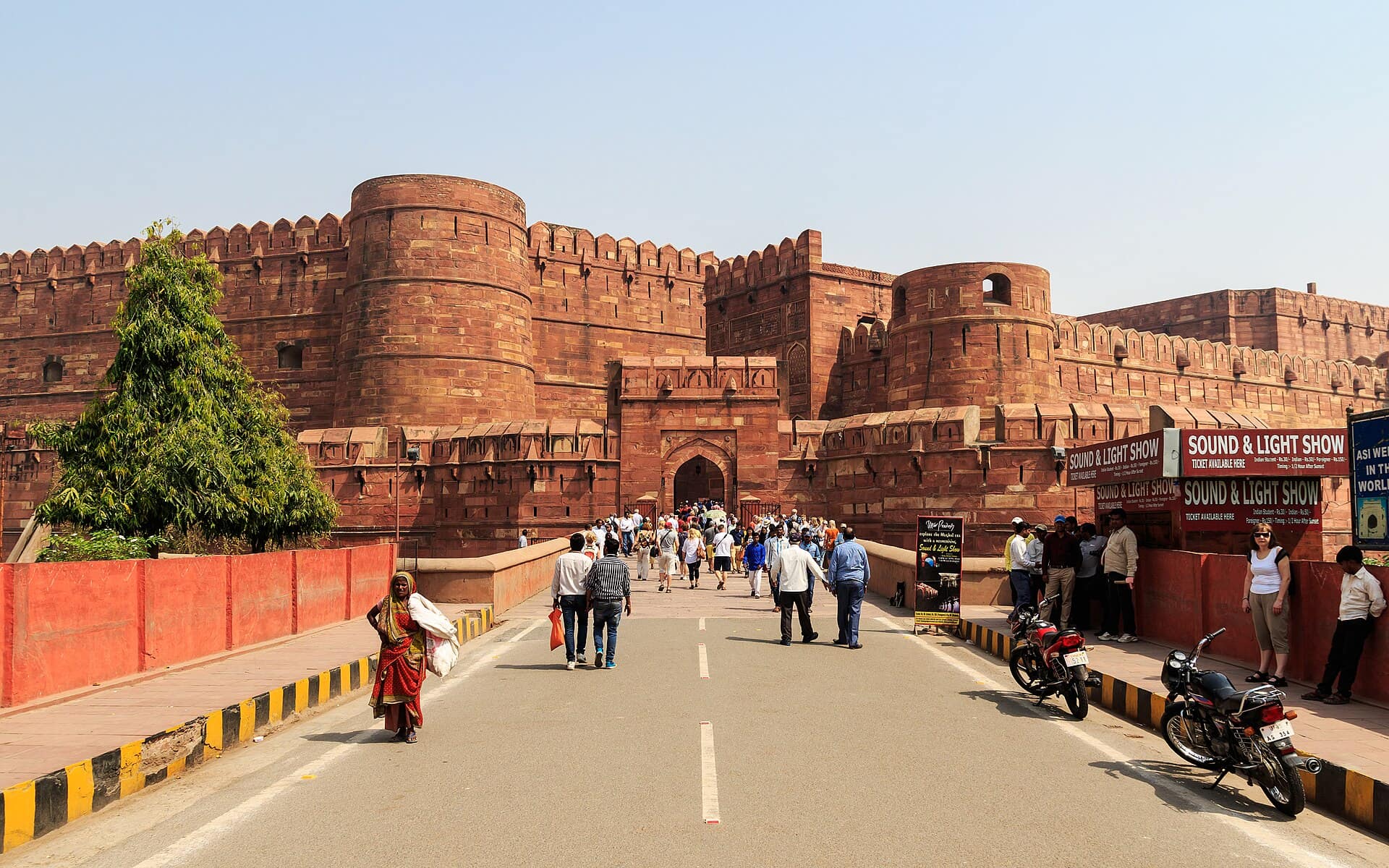 Medium crowd
Entry ₹50 (Indian) / ₹650 (foreign)
Agra Fort
- Best timeLate afternoon, when the red sandstone warms to orange and the Taj glows down the river; early morning for soft light and empty courtyards.
- ColorsWhiteEmeraldMustard
Entry ₹30 (Indian) / ₹310 (foreigner)
Akbar's Tomb, Sikandra
- Best time6:00–7:30 AM for empty courtyards, low raking light on the red sandstone, and deer on the lawns. Late afternoon gives warm stone but more visitors. Avoid 10:00 AM – 3:00 PM: harsh overhead light, heat haze, and the sandstone goes flat.
- ColorsWhiteMustardDeep green
Entry Nominal
Chini Ka Rauza
- Best timeLate afternoon, roughly 4:00 – 5:45 PM, when low raking sun brings out the surviving glazed-tile colour on the upper walls and dome. Midday light flattens the building completely because the surface has no deep relief to cast shadows.
- ColorsWhiteTurquoiseCobalt blue
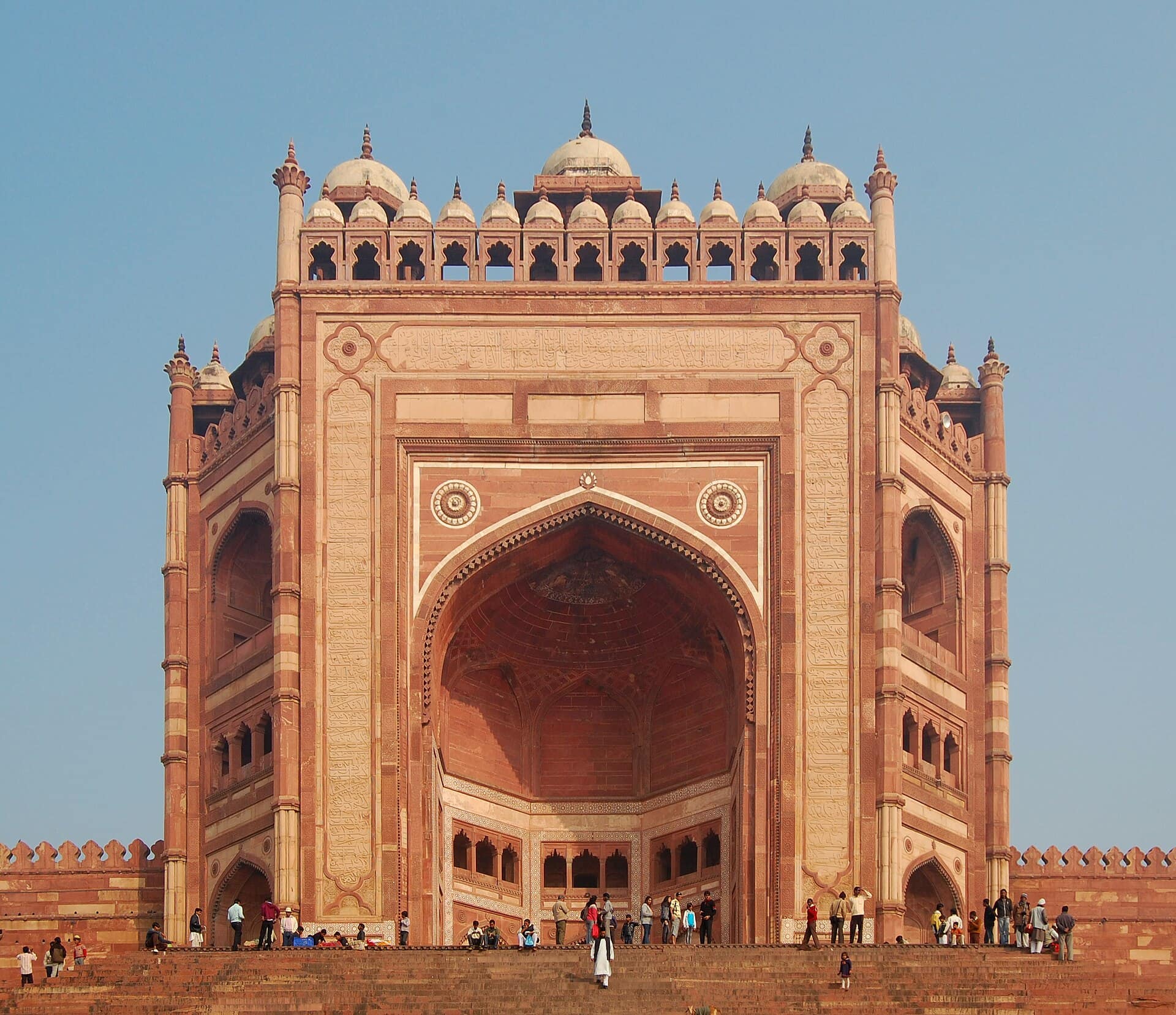 Medium crowd
Entry ₹50 (Indian) / ₹610 (foreign)
Fatehpur Sikri
- Best timeEarly morning, before the tour coaches arrive, when the light on the sandstone is soft and the courtyards are empty; late afternoon for warm light on the palace pavilions.
- ColorsWhiteRustIndigo
Entry Free
Guru ka Taal Gurudwara
- Best timeEarly morning for clear light on the gilded dome and a still sarovar, or late afternoon when the dome reflects in the water. Midday flattens the marble and the dome glare is harsh.
- ColorsWhiteSaffronDeep blue
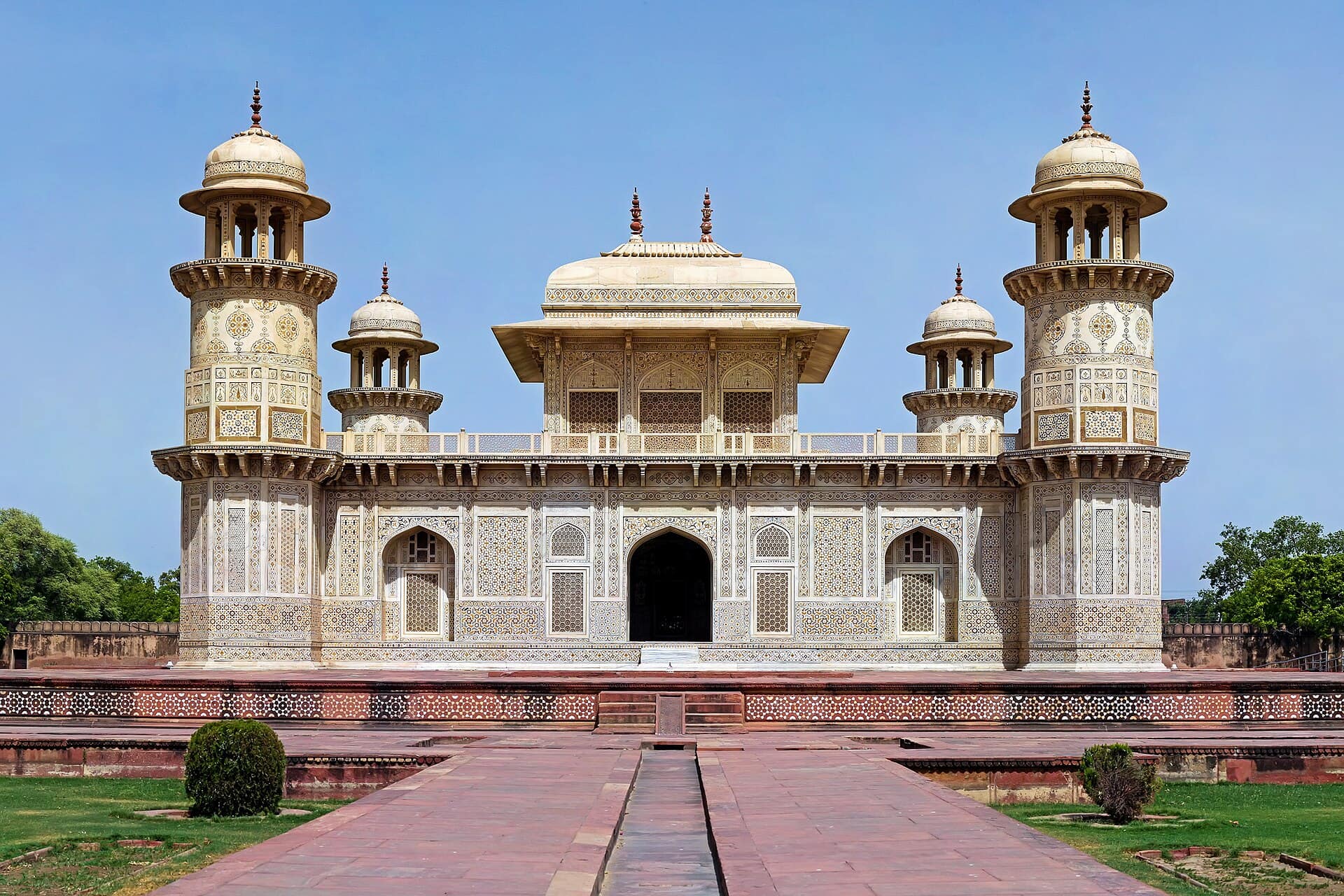 Low crowd
Entry ₹30 (Indian) / ₹310 (foreign)
Itimad-ud-Daulah (Baby Taj)
- Best timeLate afternoon, when warm light picks out the colours in the inlay; early morning for an empty garden and soft, even light.
- ColorsWhiteSoft pinkSage
Entry Free
Jama Masjid, Agra
- Best timeMid-morning, roughly 9:00 – 11:00 AM, when the sun is high enough to light the courtyard evenly but not so harsh that the red sandstone blows out — and outside the midday prayer. Late afternoon gives warm stone and long shadows across the courtyard. Never attempt photography at Friday midday.
- ColorsWhiteCreamDeep red
Entry Free
Kinari Bazaar and the Old City Markets
- Best timeLate afternoon into evening, roughly 4:30 – 7:30 PM, when the lanes are lit, the chaat stalls are running and there is real movement. Early morning gives empty lanes and the breakfast stalls but most shops are shut.
- ColorsWhiteSaffronTurquoise
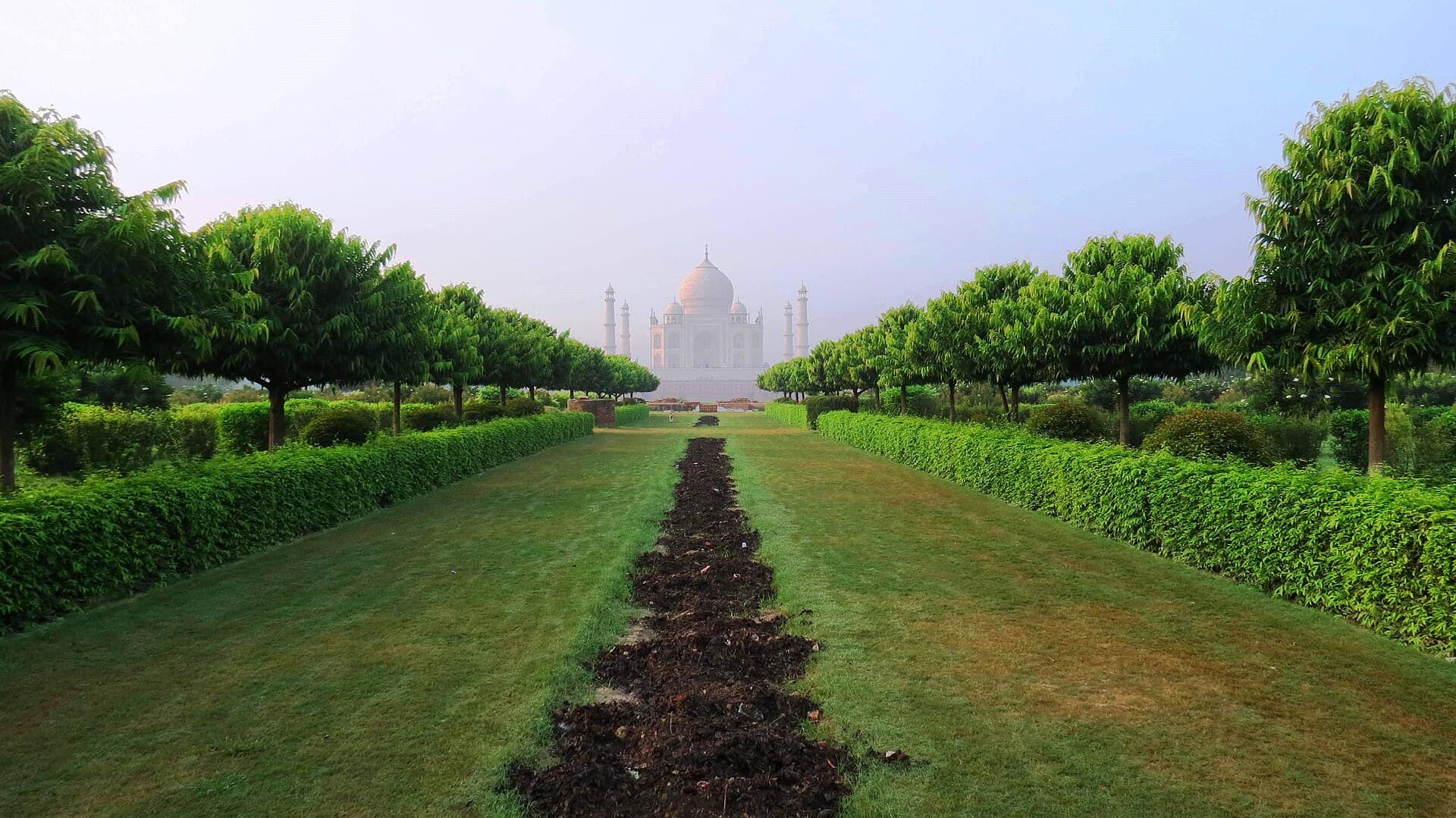 Low crowd
Entry ₹25 (Indian) / ₹300 (foreign)
Mehtab Bagh
- Best timeSunset, when the Taj turns gold and pink across the river; early morning for soft light and the chance of a still-water reflection.
- ColorsWhiteCoralPowder blue
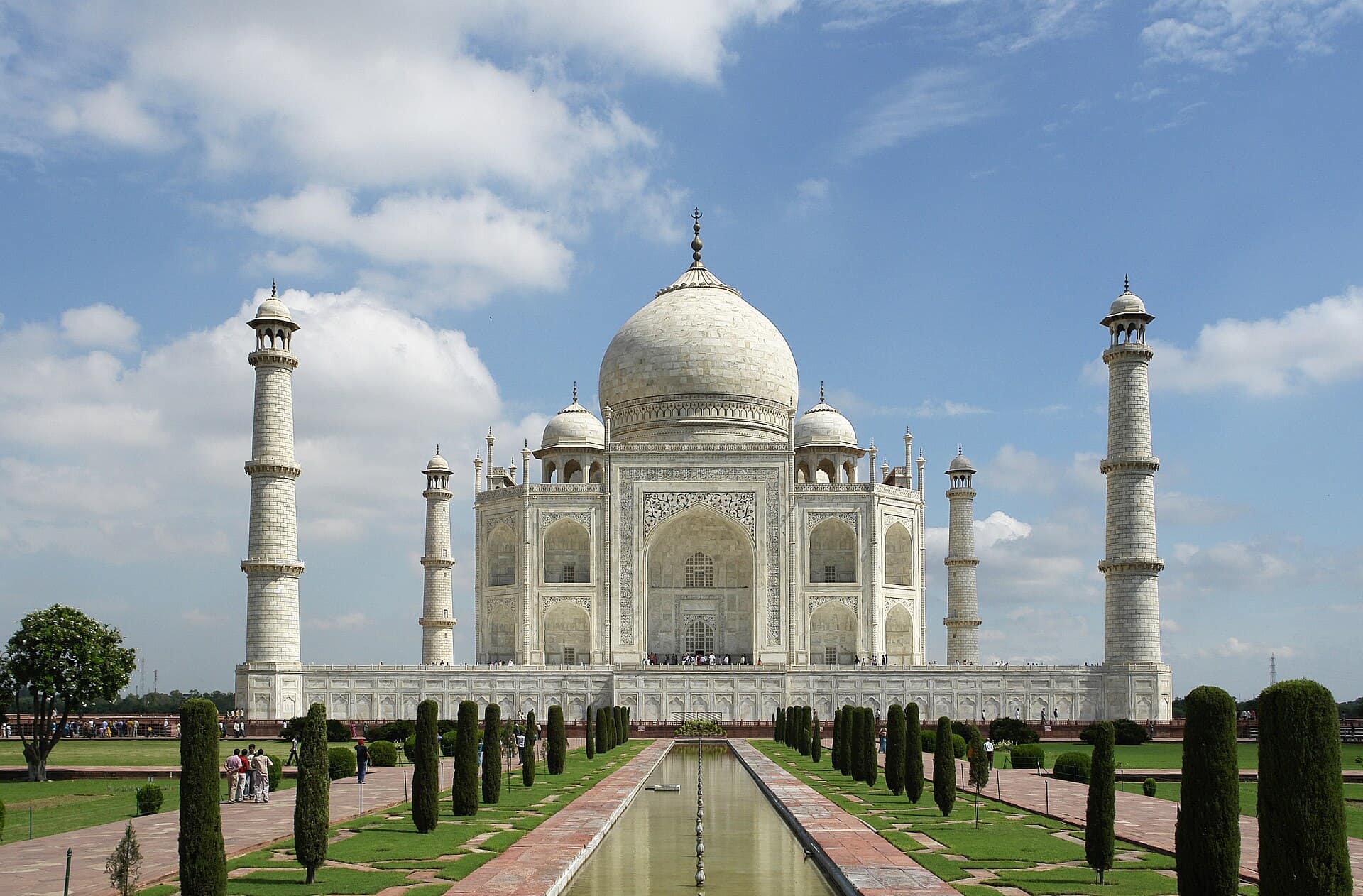 High crowd
Entry ₹50 (Indian) / ₹1,100 (foreign) + ₹200 for the main mausoleum
Taj Mahal
- Best timeSunrise, when the marble turns soft pink and the garden is still quiet; late afternoon for warm light on the tomb before the gates close.
- ColorsWhitePastelDeep red
Plan by the light
The Taj Mahal opens about half an hour before sunrise and closes about half an hour before sunset, so you cannot shoot a sunset from inside the complex. Go at opening for the soft first light and the emptiest garden. Save sunset for Mehtab Bagh, directly across the river, where the Taj sits in front of you with the sun going down to its right.
Agra Fort is best in the late afternoon, when the red sandstone warms up. Itimad-ud-Daulah is small and quiet enough to work at almost any hour, and late light brings out the colours in its inlay. Fatehpur Sikri is 40 km away, so leave at dawn and have the Buland Darwaza before the tour groups arrive.
Views from one monument to another
Agra's best frames often include a second monument. From the terraces of the fort's Khas Mahal and Musamman Burj you can see the Taj downstream, the view Shah Jahan is said to have had as a prisoner. From Mehtab Bagh you see the river side of the Taj, which few people photograph. From the riverside pavilion at Itimad-ud-Daulah you look straight out over the Yamuna, the view the pavilion was built for.
Fog, haze and season
From about mid-December to mid-January, thick morning fog can hide the Taj entirely until late morning. On those days, go later or try again the next dawn. Smog and dust haze are common in winter and before the monsoon. October, November, February and March usually give the clearest air.
Rules for cameras
Drones are banned in and around the Taj Mahal. Tripods are on the Taj's prohibited list and need special permission from the Archaeological Survey of India. Photography is not allowed inside the main mausoleum, so take your interior memories from the doorway and the platform outside. At the Jama Masjid in Fatehpur Sikri and at Salim Chishti's tomb, people are praying, so keep your camera down near worshippers and ask before photographing anyone.
Questions
Agra — FAQ
Where can I photograph the Taj Mahal at sunset?
From Mehtab Bagh, the garden directly across the Yamuna. The Taj itself closes about half an hour before sunset, so the evening glow is best seen from the far bank.
Can I fly a drone in Agra?
Not near the Taj Mahal. Drones are strictly prohibited in and around the monument, and flying near any protected monument needs official permission.
Can I take photos inside the Taj Mahal?
You can photograph the garden, gateway, mosque and the outside of the tomb. Photography is not allowed inside the main mausoleum chamber.
Which Agra monument has the fewest crowds for photos?
Itimad-ud-Daulah and Mehtab Bagh are usually the quietest. Both are across the river and see far fewer visitors than the Taj or the fort.